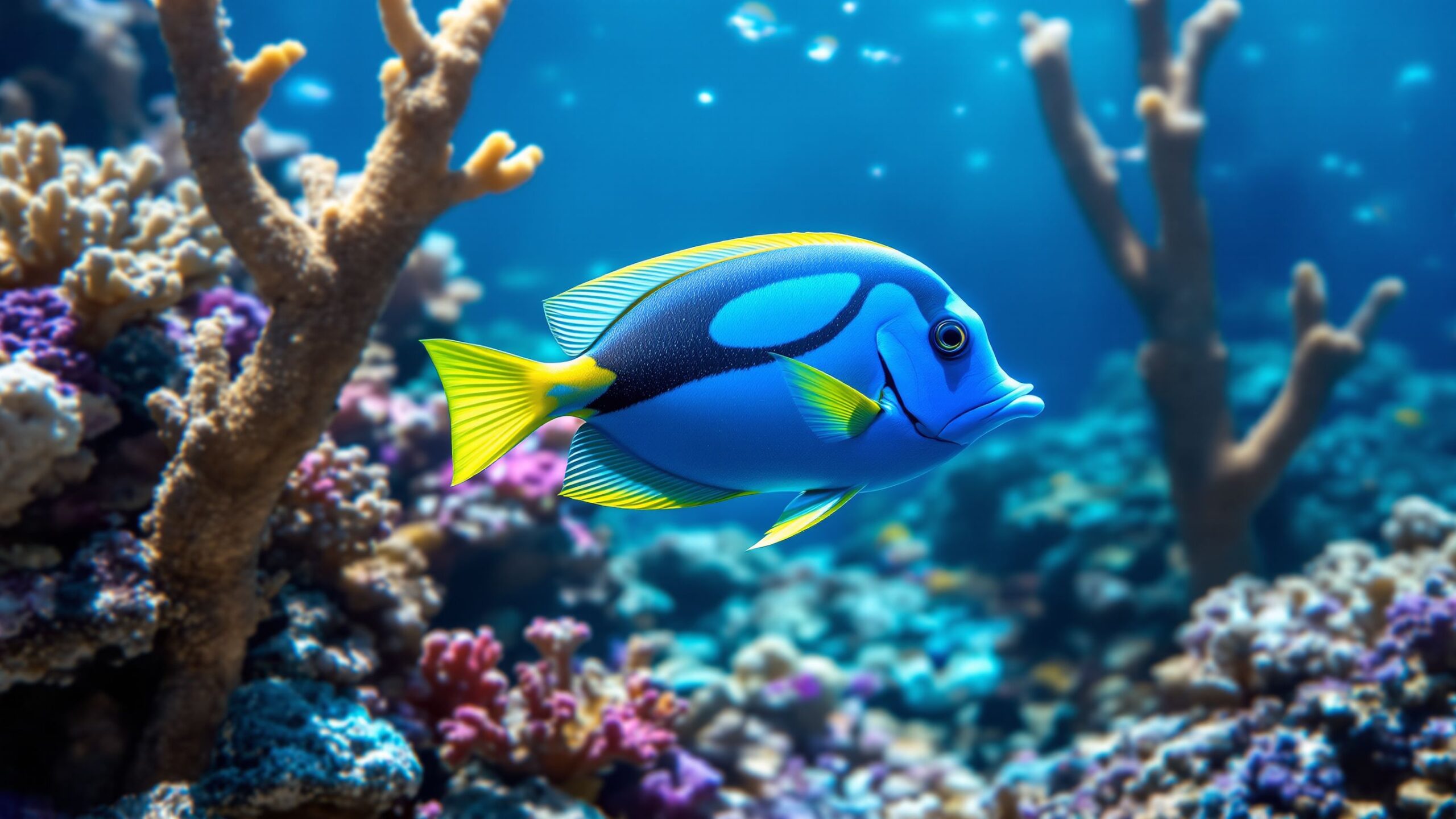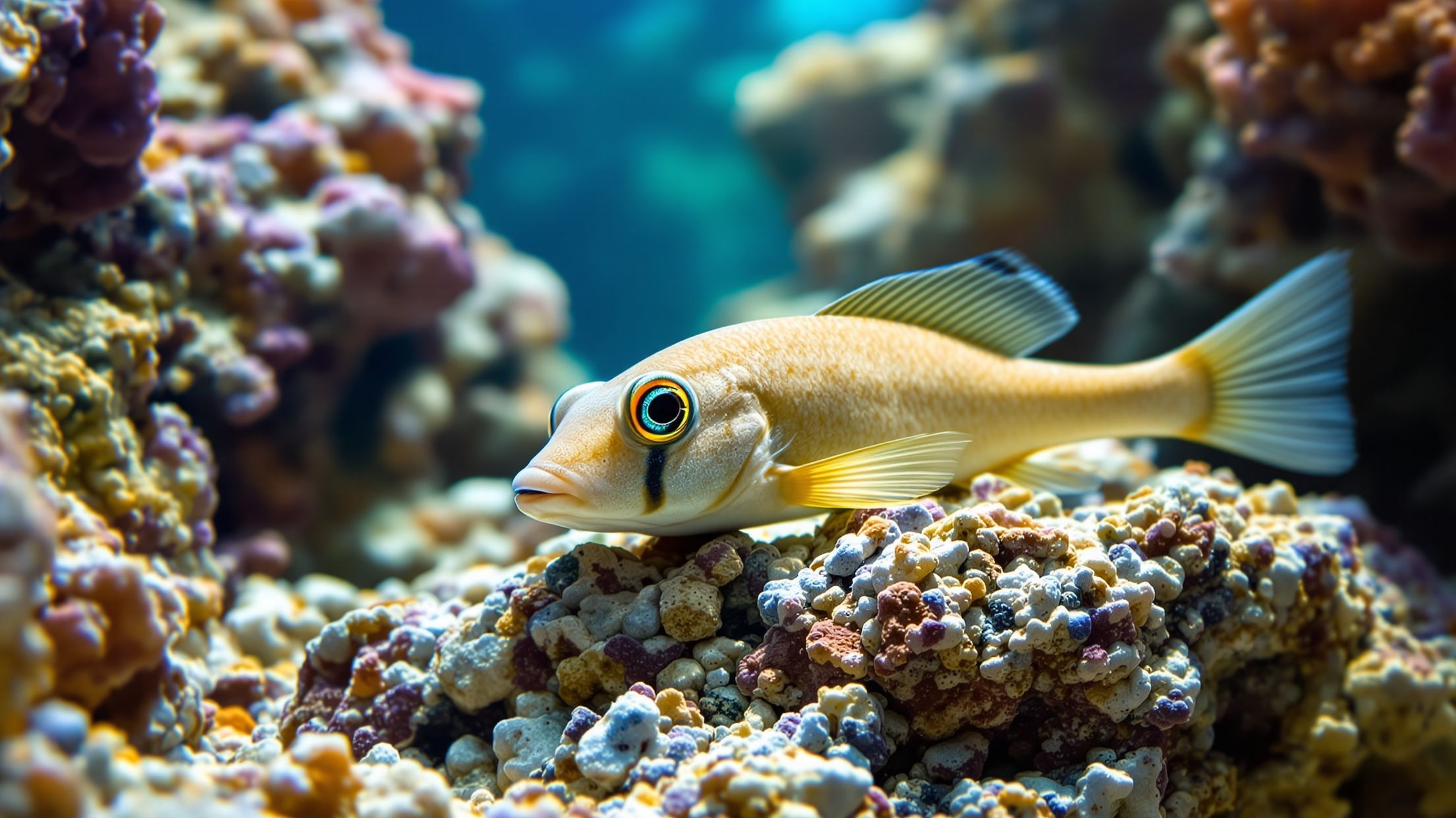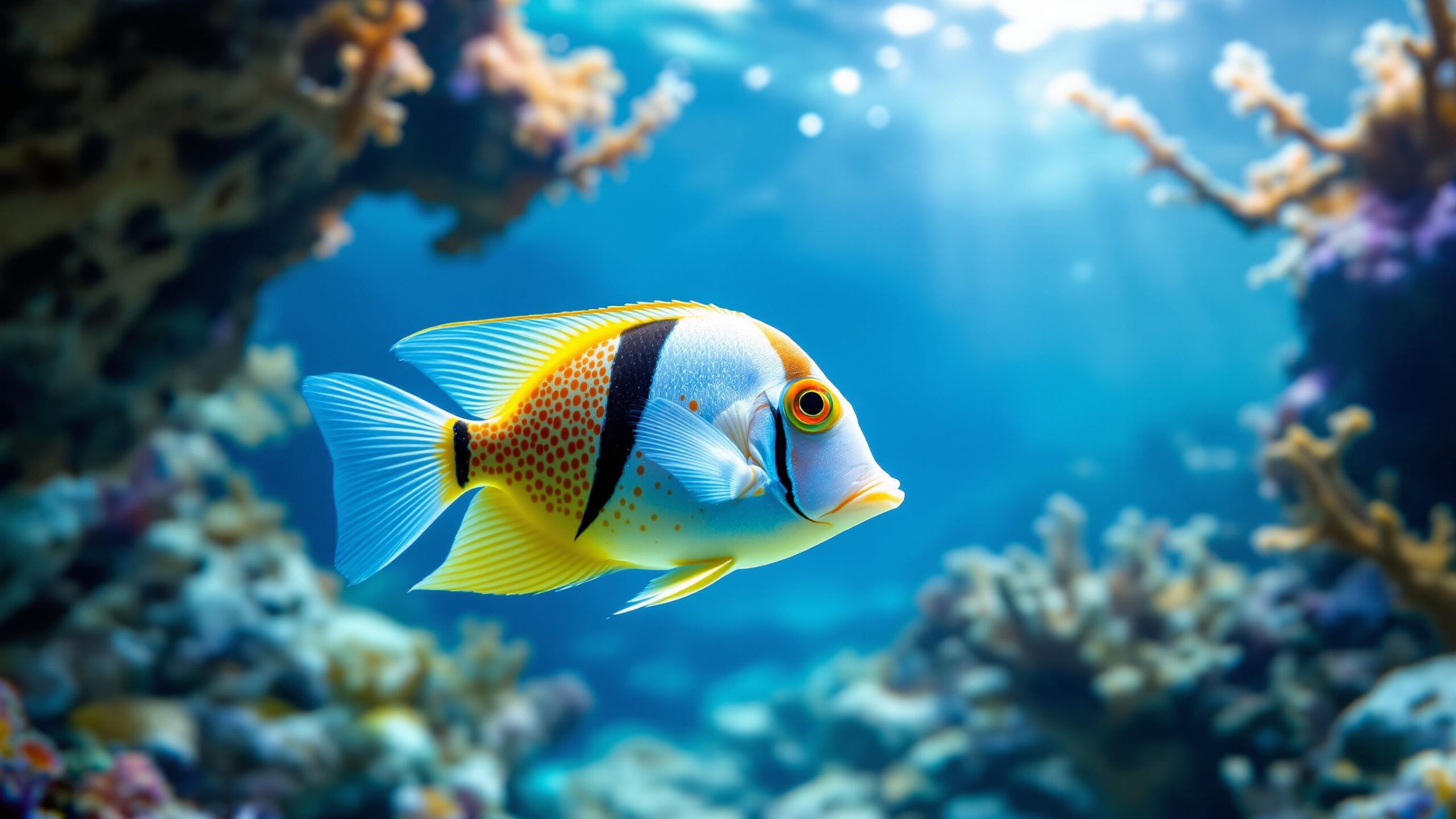
The Pajama Cardinalfish, scientifically known as Sphaeramia nematoptera, is one of the most peaceful and visually unique saltwater fish in the marine aquarium hobby. Known for its unusual color pattern, bright orange eyes, spotted rear body, and calm hovering behavior, this reef fish stands out immediately in both beginner and advanced marine aquariums. Its appearance looks almost hand-painted, which is exactly why it has become such a memorable favorite among reef keepers.
Unlike fast-moving reef fish that constantly dart through the tank, the Pajama Cardinalfish moves slowly and gracefully, often hovering in place with a calm and almost floating presence. This relaxed behavior creates a peaceful atmosphere in reef aquariums and makes it especially attractive for hobbyists who prefer tranquil community tanks.
Native to the Indo-Pacific region, the Pajama Cardinalfish lives among coral reefs, lagoons, and protected coastal waters where structure provides both shelter and feeding opportunities. In the wild, it often stays near branching corals, sea urchins, and reef ledges where it can remain protected while watching for food.
Its peaceful temperament, reef-safe behavior, and relatively easy care make it one of the best beginner-friendly saltwater fish. It generally coexists well with corals, shrimp, snails, and a wide variety of non-aggressive fish, making it ideal for mixed reef systems.
Beyond its appearance, the Pajama Cardinalfish is also fascinating because of its breeding behavior. Like the Banggai Cardinalfish, the male carries fertilized eggs in his mouth until the young are ready to be released, making it one of the more interesting parenting species in marine fishkeeping.
Understanding the Pajama Cardinalfish means appreciating both its unusual beauty and its quiet personality. It is a fish that adds calm elegance rather than constant motion.
A: Yes, they are peaceful, hardy, and excellent for beginner-friendly reef tanks.
A: Yes, they are considered reef safe and usually leave corals and invertebrates alone.
A: A tank around 30 gallons or larger is commonly recommended.
A: Yes, they can often be kept singly, in pairs, or in peaceful groups with enough space.
A: They eat frozen mysis shrimp, brine shrimp, marine pellets, and other small meaty foods.
A: They are generally peaceful but may show minor aggression in crowded tanks.
A: Yes, peaceful clownfish and Pajama Cardinals usually do well together.
A: This is normal—they naturally hover calmly rather than swim constantly.
A: They often live around 5 years or longer with proper care.
A: Yes, their unusual appearance and calm behavior make them excellent peaceful centerpiece fish.
Natural Habitat and Geographic Range
The Pajama Cardinalfish is found throughout the Indo-Pacific region, including areas around Indonesia, the Philippines, Fiji, the Great Barrier Reef, Papua New Guinea, and nearby tropical reef systems. It thrives in warm marine environments where coral reefs provide shelter and stable food sources.
In the wild, this species is commonly found in lagoons, sheltered reef flats, seagrass beds, and shallow coral zones where branching coral, sea urchins, and rocky ledges create protective structure. These areas help shield them from predators while allowing them to remain close to feeding opportunities.
Unlike highly active open-water fish, Pajama Cardinalfish prefer calm, protected spaces where they can hover safely rather than swim long distances. They often gather in loose groups, especially when young, creating small hovering schools near shelter.
The waters of their natural habitat are warm and stable, usually ranging between 76 and 82 degrees Fahrenheit, with clear visibility and consistent salinity. Healthy coral ecosystems are essential because they provide both physical protection and access to small drifting prey.
Juveniles often remain even closer to dense coral branches for extra safety, while adults become more confident around reef structures.
Because coral reef decline affects both food availability and shelter, long-term reef conservation remains important for supporting healthy wild populations of this species.
Physical Appearance and Identification
The Pajama Cardinalfish is instantly recognizable because of its unusual and colorful body pattern. The front half of the body is silver to pale white with a bold black vertical band running behind the head. This strong stripe creates a dramatic contrast against its bright orange eyes, which are one of its most striking features.
The rear half of the body changes completely, becoming yellow-green and covered with scattered red-orange spots that look almost like painted polka dots. This combination of patterns gives the fish its “pajama” appearance and makes it unlike almost any other reef fish.
Most adults grow to around three inches in length, making them small enough for beginner reef tanks while still being highly visible. Their body shape is rounded and slightly tall, giving them a soft and balanced appearance.
Their fins are mostly transparent and flowing, adding to their floating, graceful movement. Unlike fish with dramatic fin extensions, the Pajama Cardinalfish relies more on color and posture for visual impact.
They are sometimes confused with other cardinalfish species, but the black facial band, spotted rear body, and bright orange eyes make identification very easy.
Healthy specimens show strong contrast between body sections, bright clear eyes, and smooth hovering behavior. Faded color or clamped fins may indicate stress.
Behavior and Personality
The Pajama Cardinalfish is known for being peaceful, calm, and somewhat shy. It is not a fast swimmer or aggressive defender of territory. Instead, it prefers hovering quietly near rockwork, corals, or decorative branching structures where it feels secure.
This hovering behavior is one of its defining traits. It often remains nearly motionless in the water column, facing gently into the current with slow fin movement. This creates a calm and relaxing presence in the aquarium.
They are generally peaceful toward other fish and work especially well in community reef tanks. They rarely cause problems with tankmates and are especially compatible with other peaceful species.
Small groups can often be kept successfully, particularly in larger tanks where enough space and shelter are available. Unlike some fish that become highly territorial with age, Pajama Cardinalfish often remain group-friendly when properly housed.
They are more active during feeding time and often become bolder once they feel comfortable in the aquarium. Lower lighting periods may also encourage more visible activity.
Because they are gentle feeders, they should not be housed with highly aggressive fish that may intimidate them or prevent proper feeding.
Their personality is often described as relaxing and elegant rather than playful or bold.
Diet in the Wild and Aquarium
In the wild, Pajama Cardinalfish are carnivorous feeders that consume zooplankton, copepods, amphipods, shrimp larvae, and other tiny drifting organisms found around reef environments. They feed by making short, precise strikes at nearby prey rather than actively chasing food over long distances.
Because they remain close to protective structures, they rely on nearby food availability rather than wide roaming. This feeding style helps conserve energy and supports their calm hovering behavior.
In aquariums, they adapt well to prepared foods and are considered easy to feed once settled. Frozen mysis shrimp, enriched brine shrimp, finely chopped seafood, marine pellets, and high-quality flakes are commonly accepted.
Frozen foods are often especially useful for helping new arrivals begin feeding comfortably. Smaller food sizes are usually easier for them to handle and digest.
Feeding once or twice daily in moderate portions is usually ideal. A varied diet helps maintain strong coloration, immune health, and long-term vitality.
Because they are not aggressive feeders, it is important to observe feeding sessions and make sure faster fish are not taking most of the food.
Healthy Pajama Cardinalfish are alert, maintain good body weight, and show steady appetite without excessive hiding.
Aquarium Care and Tank Requirements
Pajama Cardinalfish are excellent beginner saltwater fish because they are peaceful, reef-safe, and adaptable. A minimum tank size of around 30 gallons is often suitable for a single fish or a small group, although larger tanks provide better stability and more comfortable social space.
A reef tank with live rock, branching coral structures, caves, and calm open swimming areas is ideal. They appreciate both visible hovering space and secure shelter where they can retreat if stressed.
Water temperature should remain stable between 76 and 80 degrees Fahrenheit, with salinity around 1.023 to 1.025 specific gravity. Ammonia and nitrite should always remain at zero, while nitrate should be kept low for long-term health.
As with all marine fish, stability matters more than perfection. Sudden swings in salinity, pH, or temperature can create serious stress. A fully cycled aquarium is essential before adding this species.
They are reef-safe and generally do not bother corals, shrimp, snails, or most invertebrates. This makes them ideal for mixed reef aquariums where peaceful compatibility is important.
Compatible tankmates often include clownfish, Firefish Gobies, Royal Grammas, gobies, blennies, Chalk Bass, and other peaceful reef-safe species. Large aggressive predators or highly territorial fish should be avoided.
With proper care, Pajama Cardinalfish commonly live five years or longer in captivity.
Breeding and Reproduction
The Pajama Cardinalfish is especially interesting because of its paternal mouthbrooding behavior, which is one of the most fascinating reproductive strategies in marine fishkeeping.
During courtship, the female produces eggs which are fertilized and then transferred to the male. The male carries the fertilized eggs inside his mouth, protecting them from predators and environmental danger while they develop.
During this incubation period, the male may eat very little or stop eating entirely while caring for the brood. This makes breeding physically demanding and highlights the species’ strong parental investment.
After development is complete, the male releases miniature fully formed juveniles rather than tiny fragile larvae. These babies are much more developed and capable of survival than many reef fish larvae.
Because of this direct-release method, breeding is more achievable in captivity than with many broadcast-spawning reef fish. However, successful pairing and safe rearing still require careful planning.
Many hobbyists enjoy observing this behavior even if they are not actively breeding the species. Captive breeding also supports sustainability by reducing pressure on wild populations.
Choosing responsibly sourced or captive-bred Pajama Cardinalfish helps support ethical marine fishkeeping.
Common Health Issues
Pajama Cardinalfish are generally hardy, but like all marine fish, they can develop illness if stressed or kept in poor conditions. Prevention remains the best long-term strategy.
Marine ich is one of the most common diseases, causing white spots, scratching behavior, appetite loss, and breathing difficulty. Marine velvet is another serious illness that progresses rapidly and requires immediate attention.
Stress caused by poor water quality, aggressive tankmates, overcrowding, or unstable environmental conditions can weaken the immune system and make disease more likely.
Because Pajama Cardinalfish are calm and somewhat shy, early signs of illness may first appear as unusual hiding, reduced feeding response, or isolation from the group.
Bacterial infections, fin damage, and internal parasites may also occur if quarantine procedures are skipped or tank conditions decline.
Quarantining new fish before adding them to the display tank is one of the best preventive steps. Stable water quality, proper nutrition, and peaceful tankmate selection greatly reduce health risks.
Healthy Pajama Cardinalfish are alert, visible, maintain strong body weight, and hover calmly without labored breathing or clamped fins.
Why the Pajama Cardinalfish Remains So Popular
Few saltwater fish combine peaceful behavior, unique beauty, and beginner-friendly care as successfully as the Pajama Cardinalfish. Its unusual body pattern makes it instantly memorable, while its calm hovering behavior creates a peaceful presence that transforms the mood of a reef aquarium.
Its reef-safe nature allows it to coexist with corals and invertebrates without causing damage, making it highly valuable for balanced mixed reef systems.
Its gentle personality makes it ideal for peaceful community tanks, especially for hobbyists who prefer calm elegance over constant aggressive movement.
Its mouthbrooding breeding behavior adds a deeper level of fascination, turning it from a simple display fish into one of the more biologically interesting species in marine aquariums.
For beginners, it offers reliability and easy compatibility. For experienced aquarists, it remains a timeless favorite because of its beauty and unusual life cycle.
For general readers, the Pajama Cardinalfish proves that some of the most remarkable reef fish are not the brightest swimmers, but the quiet observers with the most distinctive stories.
Whether hovering among coral branches in the Indo-Pacific or thriving in a peaceful home aquarium, Sphaeramia nematoptera continues to earn its place as one of the best peaceful saltwater fish in the hobby. Its beauty is unforgettable, but its true charm lies in its calm presence and fascinating natural behavior.
Pet Product Reviews
Explore Duffy Street’s Pet Product Reviews! Sniff out the top-rated toys, treats, gear, and gadgets for your pets with our fun, easy-to-read comparisons. We’ve done the digging so you can find the perfect products for your pet friends!