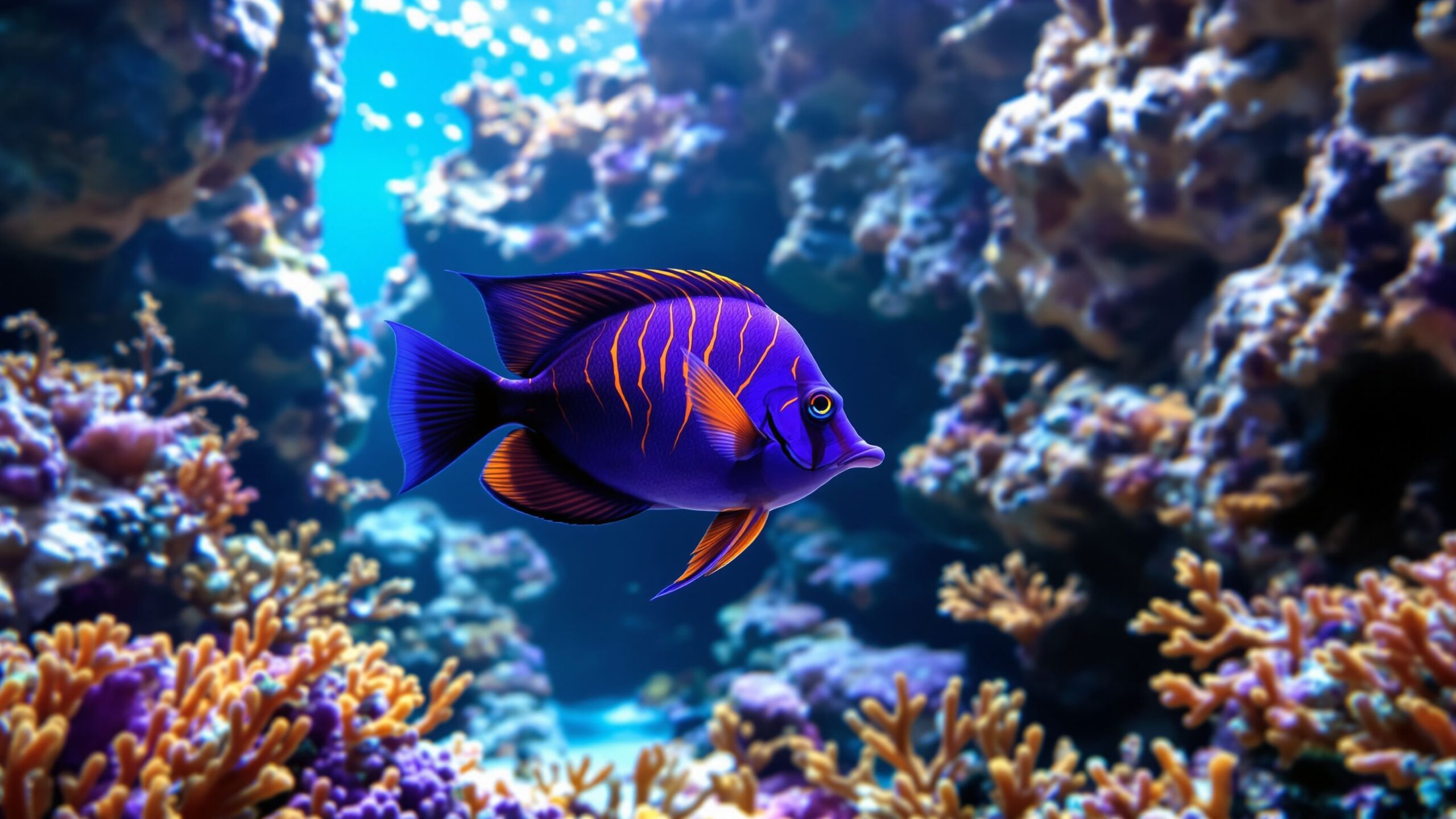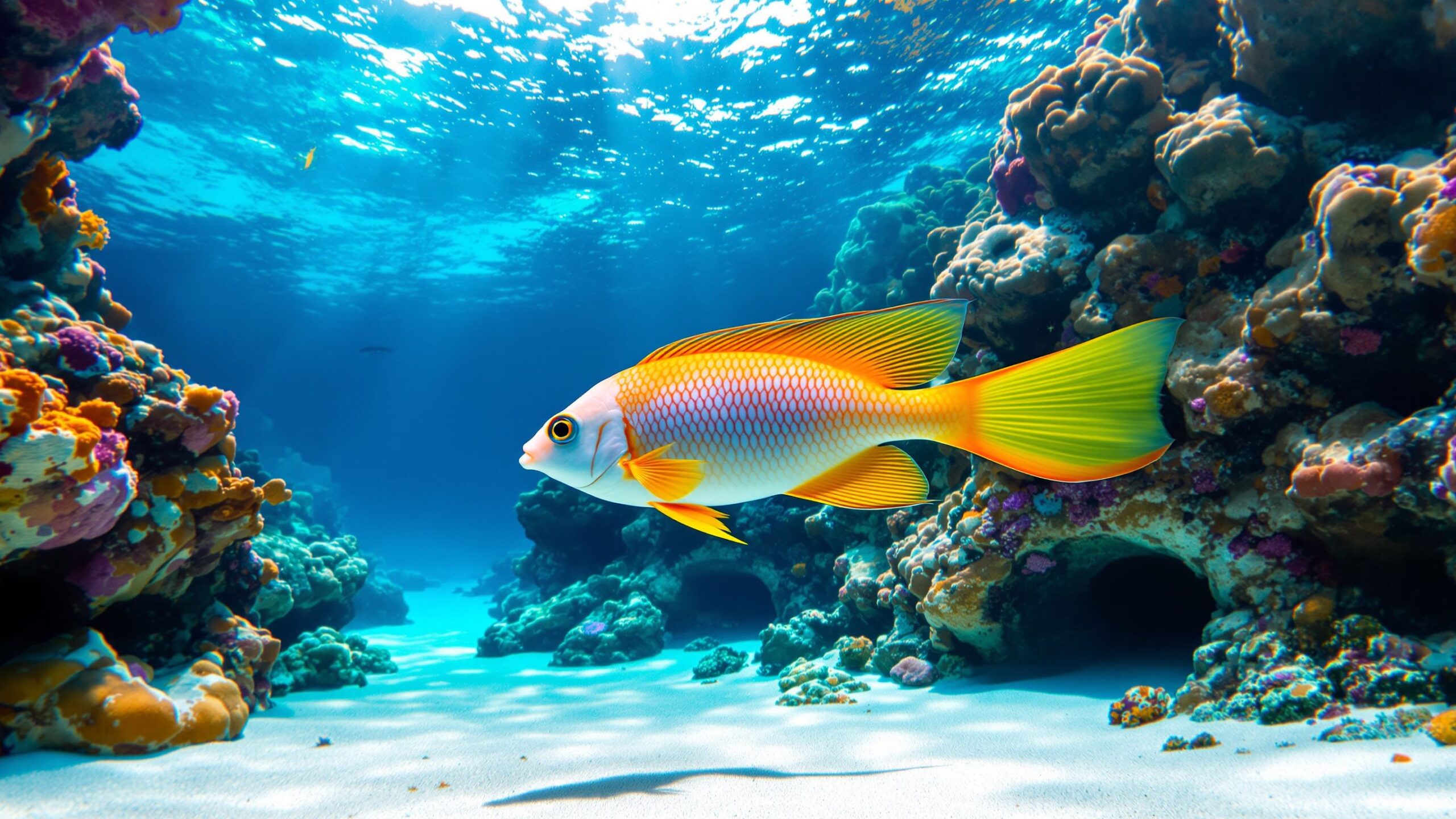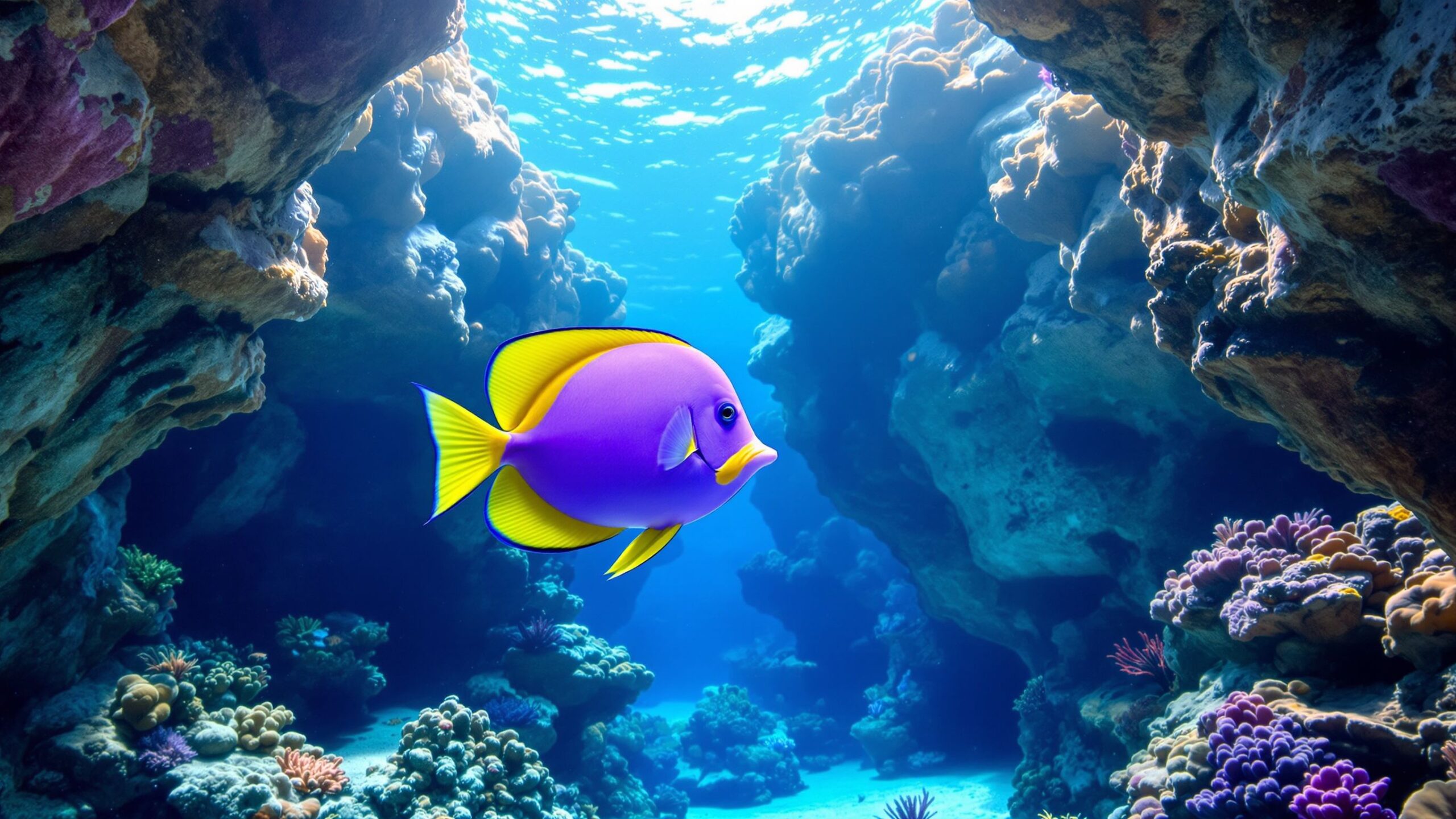
The Royal Gramma, scientifically known as Gramma loreto, is one of the most striking and beginner-friendly saltwater fish in the marine aquarium hobby. Famous for its dramatic color split—vivid purple in the front and bright golden yellow toward the tail—this small reef fish brings both beauty and personality to saltwater tanks. Its peaceful temperament, manageable size, and reef-safe nature make it a favorite for both first-time marine aquarists and experienced reef keepers.
Native to the warm waters of the tropical western Atlantic, particularly around the Caribbean and the Gulf of Mexico, the Royal Gramma thrives among rocky reef walls, caves, and coral formations. In the wild, it spends much of its time hovering near shelter, darting quickly into crevices when threatened. This natural behavior carries over into aquariums, where it often becomes a bold but cautious resident with a strong sense of territory around its chosen hiding place.
Unlike many brightly colored marine fish that can be difficult to care for, the Royal Gramma is known for being relatively hardy and adaptable. It accepts a wide variety of prepared foods, adjusts well to aquarium life, and generally coexists peacefully with other non-aggressive tankmates. Its calm nature makes it especially valuable in community reef tanks where harmony matters.
Beyond its beauty, the Royal Gramma is also fascinating from a biological perspective. Its habitat preferences, feeding behavior, and reproductive patterns reveal a fish that is both practical for hobbyists and scientifically interesting for marine enthusiasts. It represents the perfect balance of color, personality, and manageable care.
Understanding the Royal Gramma means appreciating more than just its appearance. From its Caribbean reef origins to its role in home aquariums, this fish has earned its place as one of the most respected species in saltwater fishkeeping.
A: Yes, they are hardy, colorful, and peaceful when kept in a stable saltwater tank.
A: Yes, they are generally considered reef safe and usually leave corals alone.
A: A tank around 30 gallons or larger is commonly recommended for one Royal Gramma.
A: Yes, they often do well with peaceful clownfish in a properly sized tank.
A: They are usually peaceful but may defend their cave or hiding spot.
A: They eat frozen mysis shrimp, brine shrimp, marine pellets, and other small meaty foods.
A: Yes, especially when new, but they usually become more visible once comfortable.
A: It is safest to keep one unless the aquarium is large and carefully planned.
A: They often live around 5 years or longer with good care.
A: Royal Grammas are usually more peaceful, while Royal Dottybacks can be much more aggressive.
Natural Habitat and Geographic Range
The Royal Gramma is native to the tropical western Atlantic Ocean, with a natural range that includes the Caribbean Sea, the Bahamas, Bermuda, Florida, northern South America, and parts of the Gulf of Mexico. It is especially common around coral reef systems where rocky formations provide shelter and protection.
In the wild, Royal Grammas are typically found at depths ranging from around 10 to over 100 feet, although they are often most visible in shallower reef zones where caves, ledges, and coral overhangs create ideal hiding spaces. They prefer areas with strong structure rather than open swimming zones, and they are often seen hovering upside down beneath ledges or close to reef walls.
These fish rely heavily on shelter for survival. Their bold coloration may make them stand out to humans, but their quick reflexes and access to narrow crevices help protect them from predators. They are highly territorial around these spaces and will defend a chosen cave or hiding spot from intruders.
The waters they inhabit are warm, clear, and stable, usually ranging between 75 and 82 degrees Fahrenheit. Like many reef fish, they depend on healthy coral ecosystems for both safety and food availability. Declining reef health from pollution, coral bleaching, and habitat destruction can directly affect local populations.
Because of their popularity in the aquarium trade, responsible collection practices and captive care have become increasingly important in protecting their wild populations.
Physical Appearance and Identification
The Royal Gramma is instantly recognizable because of its dramatic two-tone coloration. The front half of the body is a rich, electric purple or violet, while the back half transitions sharply into brilliant yellow or gold. This color contrast is one of the most iconic looks in the saltwater aquarium world.
Most adults grow to around three inches in length, making them a relatively small marine fish. Their compact body, rounded fins, and graceful hovering movement give them a unique presence in both reef tanks and natural reef environments. They often appear to glide rather than swim rapidly, especially when calmly exploring rockwork.
A thin black stripe may run from the mouth through the eye, and some individuals display a small black patch near the front of the dorsal fin. Their eyes are large and expressive, helping them navigate shadowy reef crevices where visibility may be limited.
They are sometimes confused with the Royal Dottyback, another purple-and-yellow fish that looks somewhat similar. However, the Royal Dottyback is usually more aggressive and has a different body shape and color transition pattern. The Royal Gramma’s purple-to-yellow fade is more distinct and natural-looking, while its temperament is significantly more peaceful.
Their vivid coloration does not fade easily when they are healthy. Bright, bold colors are often a sign of good nutrition, low stress, and proper water quality in captivity.
Behavior and Personality
Royal Grammas are known for their peaceful but territorial personalities. They are not aggressive in the way many larger marine fish can be, but they do like to claim a specific area of the tank as their own. Usually, this means a cave, rock crevice, or overhang where they feel secure.
Once established, they spend much of their day hovering near this home base, darting out to feed or explore before returning quickly to shelter. This behavior reflects their natural instincts from the wild, where protection from predators is essential.
They are generally peaceful toward other species, especially fish that occupy different parts of the tank. However, they may become defensive toward similar-looking fish or others that compete for the same hiding spaces. Keeping multiple Royal Grammas together can be difficult unless the tank is very large and carefully structured.
One of their most interesting behaviors is their habit of swimming upside down under ledges and caves. This unusual posture is normal and reflects how they navigate reef overhangs in nature. Many new hobbyists find this behavior surprising at first, but it is a classic Royal Gramma trait.
They are also known for being curious observers. Once comfortable, many become visible and active during feeding time, often learning routines and becoming confident around their owners.
Diet in the Wild and Aquarium
In their natural reef habitat, Royal Grammas are carnivorous planktivores. They feed primarily on zooplankton, tiny crustaceans, copepods, amphipods, and other small drifting organisms carried by ocean currents. They also consume small benthic invertebrates found around rocks and coral surfaces.
Their feeding style is based on quick, precise strikes rather than constant grazing. They hover near shelter and dart out to capture food before retreating to safety. This makes them efficient feeders in reef environments.
In aquariums, they adapt well to prepared foods and are considered easy to feed. High-quality marine pellets, frozen mysis shrimp, brine shrimp, finely chopped seafood, and enriched frozen foods are all commonly accepted. Variety is important for maintaining bright coloration and strong immune health.
Feeding once or twice daily is usually enough for healthy adults. Smaller, controlled portions are better than overfeeding, especially in reef tanks where excess food can quickly reduce water quality.
Supplementing with vitamin-enriched frozen foods can be especially beneficial, particularly during acclimation or when improving recovery after stress. A well-fed Royal Gramma is usually active, brightly colored, and eager to emerge during feeding time.
Because they are not aggressive feeders, they should not be housed with highly competitive species that may outcompete them for food.
Aquarium Care and Tank Requirements
Royal Grammas are widely considered excellent beginner saltwater fish because they are hardy, peaceful, and relatively easy to maintain. A single adult can thrive in a tank as small as 30 gallons, although larger systems offer greater stability and better compatibility with additional tankmates.
A reef tank with plenty of live rock is ideal. Rock structures provide hiding places, caves, and ledges that mimic their natural habitat and help reduce stress. Without proper shelter, Royal Grammas may become shy, stressed, or less active.
Water temperature should remain stable between 76 and 80 degrees Fahrenheit, with salinity around 1.023 to 1.025 specific gravity. Ammonia and nitrite should always be zero, and nitrate levels should be kept low to maintain long-term health.
As with all marine fish, stability is critical. Sudden changes in temperature, pH, or salinity are more dangerous than small stable imperfections. A properly cycled tank is essential before introducing a Royal Gramma.
They are reef-safe, meaning they generally do not bother corals, anemones, or most invertebrates. This makes them highly desirable for coral-focused reef aquariums where peaceful coexistence is important.
Compatible tankmates often include clownfish, gobies, blennies, firefish, smaller wrasses, and peaceful tangs in larger tanks. Highly aggressive fish, large predators, or extremely territorial species should be avoided.
With good care, Royal Grammas commonly live five to seven years in captivity, and some individuals live even longer.
Why the Royal Gramma Remains So Popular
Few reef fish combine bold color, peaceful behavior, and beginner-friendly care as perfectly as the Royal Gramma. It stands out immediately in any aquarium, but its lasting popularity comes from much more than appearance.
Its brilliant purple and yellow body creates instant visual impact, while its calm personality makes it easy to include in community reef tanks. Unlike many flashy marine fish, it does not demand overly specialized care or create constant aggression problems.
Its hovering behavior, cave-dwelling habits, and upside-down swimming under ledges add personality and charm that many aquarists love. It feels active and present without being chaotic.
For beginners, it offers confidence and beauty in one package. For experienced hobbyists, it remains a timeless reef favorite that never loses its appeal. It is one of those rare fish that works equally well as a first marine fish or a permanent resident in advanced reef displays.
For general readers, the Royal Gramma represents the incredible diversity of coral reef life. It proves that even small fish can be biologically fascinating, ecologically important, and visually unforgettable.
Whether admired in the wild Caribbean reefs or thriving in a carefully maintained home aquarium, Gramma loreto continues to earn its reputation as one of the finest peaceful saltwater fish available. Its beauty is obvious, but its true value lies in the balance of elegance, personality, and resilience that makes it unforgettable.
Pet Product Reviews
Explore Duffy Street’s Pet Product Reviews! Sniff out the top-rated toys, treats, gear, and gadgets for your pets with our fun, easy-to-read comparisons. We’ve done the digging so you can find the perfect products for your pet friends!