

Farm Animal Species explores the remarkable animals that have shaped human life for thousands of years, from the familiar faces of barns and pastures to the lesser-known breeds quietly sustaining farms around the world. This section dives into cattle, sheep, goats, pigs, poultry, and working animals, revealing how each species contributes uniquely to food systems, land management, and rural culture. You’ll discover how different breeds evolved for milk, meat, fiber, labor, or companionship, and how climate, geography, and tradition influence their care. Beyond basic facts, these articles spotlight behavior, social dynamics, intelligence, and the fascinating relationships farm animals form with both humans and each other. Whether you’re curious about heritage breeds, modern farming practices, ethical animal care, or the surprising personalities found in farmyards, Farm Animal Species offers a rich, engaging gateway. It’s a place to learn how these animals live, thrive, and adapt, connecting age-old agricultural roots with today’s sustainable and innovative farming future.
A: Many beginners start with chickens (eggs) and a small group of goats or sheep—depending on fencing, space, and local rules.
A: Goats and pigs are top contenders—goats climb and squeeze, pigs push and root under weak spots.
A: Yes for most species—many livestock animals are social and do best with at least one compatible buddy.
A: It depends on the area, but poultry often face the most pressure—secure night housing and strong latches are critical.
A: Hay is feed (dried grasses/legumes). Straw is bedding (dried stalks after grain harvest) and is less nutritious.
A: Use species-appropriate feeders, keep feed dry, and offer amounts matched to the group—spilled feed attracts pests.
A: Often, yes—if space, shelter, and feeding stations prevent bullying and you manage health risks and parasites.
A: Use calm movement, proper gates/pens, and never rely on strength alone—handling equipment and routine matter.
A: Reduced appetite, isolation, abnormal droppings, limping, labored breathing, or sudden behavior changes.
A: Water check, feed check, quick headcount, manure/bedding spot clean, and a short behavior scan for anything “off.”
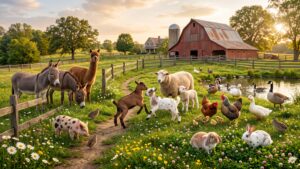
Top 10 Farm Animals for Beginners
Dreaming of fresh eggs, playful goats, fluffy sheep, and a backyard full of barnyard charm? Discover the top 10 farm animals for beginners, from easygoing chickens to surprisingly affectionate donkeys. Explore their personalities, fascinating histories, practical care requirements, and little-known behaviors to find the perfect animals for your first farm