The Ocellaris Clownfish, scientifically known as Amphiprion ocellaris, is one of the most recognizable and beloved saltwater fish in the world. With its bright orange body, bold white bands, and playful swimming style, this fish has become an icon of reef aquariums and marine life itself. Often called the “False Percula Clownfish,” the Ocellaris Clownfish is famous for its beauty, peaceful personality, and fascinating relationship with sea anemones. Native to the warm tropical waters of the Indo-Pacific, Ocellaris Clownfish are found among coral reefs where they live in close partnership with specific species of sea anemones. This unusual bond has fascinated marine biologists for decades. The clownfish receives protection from predators among the stinging tentacles of the anemone, while the anemone benefits from cleaning, nutrients, and defense from certain threats. For aquarium keepers, Ocellaris Clownfish are often considered one of the best beginner saltwater fish because they are hardy, adaptable, and relatively easy to care for compared to many marine species. Their manageable size, peaceful temperament, and willingness to accept prepared foods make them a top choice for first-time reef hobbyists and experienced aquarists alike. Beyond the aquarium world, Ocellaris Clownfish have become cultural symbols of the ocean. Their popularity has introduced countless people to marine conservation and reef education. However, there is much more to these fish than their colorful appearance. Their biology, behavior, social structure, and reproduction are remarkably complex and endlessly interesting. Understanding the Ocellaris Clownfish means exploring not just a beautiful aquarium fish, but an important part of coral reef ecosystems. From their wild habitat to tank care, breeding behavior, and conservation challenges, these fish offer a fascinating window into marine life.
A: Yes, they are one of the best beginner saltwater fish when the tank is fully cycled.
A: No, they can live happily without one in a home aquarium.
A: A pair is commonly kept in tanks around 20 gallons or larger.
A: Yes, two young clownfish often form a bonded pair.
A: Yes, Ocellaris Clownfish are considered reef safe.
A: They eat marine pellets, frozen mysis shrimp, brine shrimp, and varied meaty foods.
A: They are usually peaceful but can defend their territory.
A: With proper care, they often live 6–10 years or more.
A: It is usually best not to mix clownfish species in small or medium tanks.
A: Yes, captive-bred Ocellaris Clownfish are usually hardier and better for conservation.
Natural Habitat and Geographic Range
Ocellaris Clownfish are native to the Indo-Pacific region, where they inhabit shallow tropical reefs with warm, stable water conditions. Their range stretches across parts of the eastern Indian Ocean and western Pacific Ocean, including areas near northern Australia, Indonesia, the Philippines, Thailand, Malaysia, Japan, and the waters surrounding the Andaman and Nicobar Islands.
They are most commonly found in lagoons, sheltered coastal reefs, and coral-rich environments where sea anemones thrive. Unlike fast-swimming open-water fish, clownfish prefer the safety of reef structures and rarely stray far from their chosen host anemone. Their world is often surprisingly small, with many individuals spending most of their lives within a few feet of the same home.
The water conditions in these natural habitats are typically warm, ranging between 75 and 82 degrees Fahrenheit, with stable salinity and excellent water clarity. Coral reefs provide both shelter and food opportunities, supporting the small crustaceans, plankton, and algae-associated organisms that contribute to the clownfish diet.
Their dependence on reef health makes them closely tied to the survival of coral ecosystems. When reefs decline due to bleaching, pollution, or habitat destruction, clownfish populations can also suffer. Because of this, the Ocellaris Clownfish is often seen as a small but important ambassador for coral reef conservation.
Physical Appearance and Identification
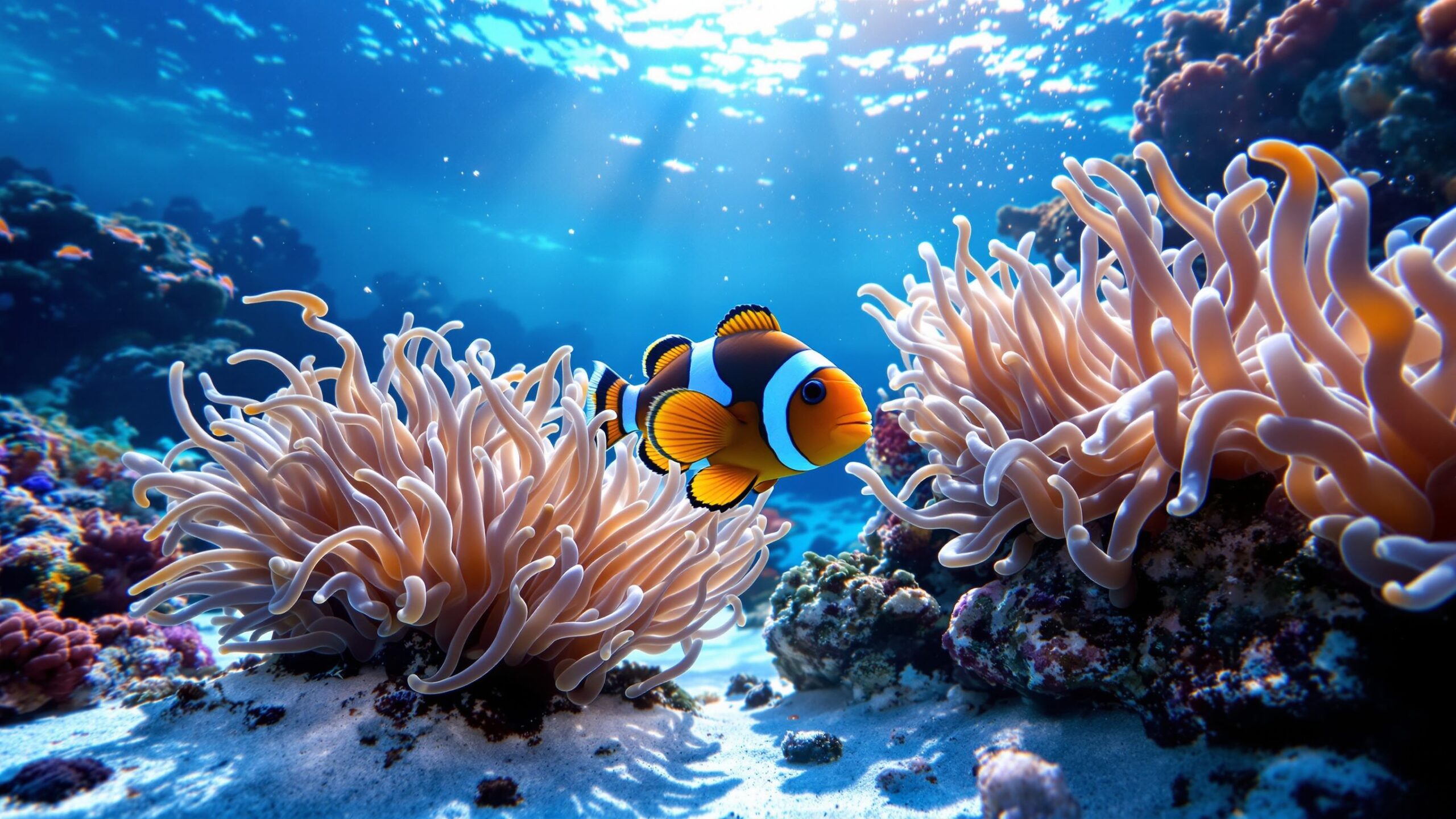
The classic appearance of the Ocellaris Clownfish is instantly recognizable. Most wild specimens display a vivid orange body with three vertical white bars outlined in thin black margins. One white band sits behind the head, another in the middle of the body, and the third near the tail. The fins are generally orange with subtle black edging, although the amount of black can vary.
Adult Ocellaris Clownfish usually grow to around three to four inches in length, making them a relatively small marine species. Females are typically larger than males, especially in established breeding pairs. Their compact body shape and rounded fins give them a distinctive swimming motion that appears almost bouncing or hovering compared to other fish.
They are often confused with the closely related Percula Clownfish (Amphiprion percula). While the two species look similar, Ocellaris Clownfish usually have thinner black outlines around their white bands and slightly different dorsal fin spine counts. To casual observers, however, the differences can be subtle.
Selective breeding in the aquarium trade has also produced many designer varieties. Snowflake, Wyoming White, Black Ocellaris, Storm, Picasso-style patterns, and other morphs have become extremely popular among hobbyists. These variations showcase unusual white markings, darker coloration, or nearly complete black pigmentation while still belonging to the same species or closely related lines.
Despite these color variations, the natural wild-type orange Ocellaris remains one of the most popular and recognizable marine fish in the hobby.
The Famous Relationship with Sea Anemones
Perhaps the most fascinating aspect of the Ocellaris Clownfish is its symbiotic relationship with sea anemones. Few marine partnerships are as famous or as scientifically interesting.
Sea anemones possess stinging tentacles armed with specialized cells called nematocysts, which can immobilize prey and deter predators. Most fish avoid these tentacles entirely, but clownfish are able to live safely among them.
Scientists believe clownfish develop a protective mucus coating that prevents the anemone from recognizing them as prey. When a clownfish first encounters a host anemone, it often performs a careful “acclimation dance,” gently touching the tentacles repeatedly before fully entering. This gradual contact helps establish tolerance.
For the clownfish, the benefits are enormous. The anemone provides shelter from predators, a safe place to sleep, and a secure site for breeding. In return, the clownfish help clean debris, improve water circulation through movement, provide nutrients through waste, and may defend the anemone from certain fish that might nibble on it.
Ocellaris Clownfish most commonly associate with host anemones such as the Magnificent Sea Anemone (Heteractis magnifica), the Leather Sea Anemone (Heteractis crispa), and the Giant Carpet Anemone (Stichodactyla gigantea).
Interestingly, clownfish can survive in aquariums without an anemone, and many do very well without one. While the partnership is natural and beautiful to observe, it is not required for successful tank care in captivity.
Social Structure and Behavior
Ocellaris Clownfish have a highly organized social structure based on dominance and hierarchy. In the wild, a group living within a single anemone usually consists of a dominant breeding female, a smaller breeding male, and several even smaller non-breeding juveniles.
The largest fish is always the female. The second largest becomes the breeding male. The smaller fish remain sexually immature and submissive. This system reduces conflict and maintains stability within the group.
One of the most remarkable biological features of clownfish is that they are protandrous hermaphrodites. This means all individuals are born male, and the dominant male can change sex and become female if the breeding female dies. The next subordinate fish then rises to become the breeding male.
This transformation is not temporary. It is a complete and permanent change in reproductive role. The process helps ensure that the group can continue breeding even after losing its dominant female.
Behaviorally, Ocellaris Clownfish are generally peaceful compared to many saltwater species. They may defend their territory, especially near spawning sites or host anemones, but they are rarely aggressive on a large scale. Their curious personalities often make them highly interactive aquarium pets, and many owners notice that clownfish quickly recognize feeding routines and human presence.
Diet in the Wild and Aquarium
In the wild, Ocellaris Clownfish are opportunistic omnivores. Their diet includes zooplankton, tiny crustaceans, algae, copepods, amphipods, larvae, and bits of organic matter drifting through the reef. Living near an anemone allows them to feed safely while staying protected.
They may also consume leftovers from the anemone’s captured prey, adding another layer to their mutual relationship. This flexible feeding strategy helps them survive in competitive reef environments.
In aquariums, they are considered easy feeders and readily accept a wide range of foods. High-quality marine pellets, flakes, frozen mysis shrimp, brine shrimp, finely chopped seafood, and specialized reef foods are all commonly used. A varied diet supports stronger coloration, better immune health, and breeding success.
Feeding small portions once or twice daily is usually sufficient. Overfeeding should be avoided, as excess food can quickly reduce water quality in marine systems. Because stable water chemistry is essential for clownfish health, controlled feeding is just as important as food quality.
Many aquarists also supplement with vitamin-enriched frozen foods to improve nutrition, especially in breeding pairs or newly introduced fish adjusting to captivity.
Aquarium Care and Tank Requirements
Ocellaris Clownfish are widely recommended for beginner saltwater aquariums because they are hardy and forgiving compared to many reef fish. However, successful care still requires proper marine tank setup and attention to water quality.
A minimum tank size of around 20 gallons is often suitable for a bonded pair, although larger tanks provide more stability and flexibility for community setups. Reef tanks with live rock are ideal because they offer hiding spaces, biological filtration, and a more natural environment.
Water temperature should remain stable between 76 and 80 degrees Fahrenheit. Salinity should typically stay around 1.023 to 1.025 specific gravity, and ammonia and nitrite should always remain at zero. Nitrate should be kept as low as reasonably possible, especially in reef systems.
Consistency matters more than perfection. Sudden swings in salinity, temperature, or pH are far more dangerous than minor stable variations. A properly cycled tank is essential before adding clownfish.
They do not require a host anemone, and beginners are often advised to wait before keeping one. Sea anemones are far more demanding than clownfish and need mature, stable reef systems with strong lighting and excellent water conditions.
Tankmates should be chosen carefully. Peaceful community fish such as gobies, blennies, firefish, and certain wrasses often work well. Extremely aggressive fish or large predators should be avoided. Housing multiple clownfish can be complicated unless introducing a known pair, as territorial disputes may occur.
With good care, Ocellaris Clownfish can live for 10 years or longer in captivity, and some individuals exceed this lifespan significantly.
Breeding and Reproduction
Ocellaris Clownfish are among the most successfully bred marine fish in the aquarium hobby, which has greatly reduced pressure on wild populations. Their breeding behavior is both accessible for aquarists and fascinating to observe.
A bonded pair will usually select a flat surface near their territory, often close to their host anemone or chosen shelter. The pair carefully cleans this area before spawning. The female then lays hundreds of bright orange eggs, which the male fertilizes immediately afterward.
The male takes primary responsibility for egg care. He fans the eggs with his fins to improve oxygen flow, removes unhealthy eggs, and guards the nest aggressively. This parental behavior continues until hatching.
Depending on temperature, eggs usually hatch within six to ten days, often shortly after lights go out in the evening. The larvae are extremely small and require specialized care, including live foods such as rotifers and later baby brine shrimp.
Breeding clownfish successfully at home requires planning, but it is achievable even for dedicated hobbyists outside of commercial breeding operations. Captive breeding has also produced the many designer clownfish morphs seen in the aquarium trade today.
Because tank-bred clownfish are generally hardier, better adapted to aquarium life, and reduce wild collection pressure, many aquarists prefer them over wild-caught specimens.
Common Health Issues
Although Ocellaris Clownfish are hardy, they are not immune to disease. Like all marine fish, they are vulnerable to stress-related illness when water quality declines or when new fish introduce pathogens.
Marine ich, caused by the parasite Cryptocaryon irritans, is one of the most common concerns. Symptoms include white spots, scratching behavior, labored breathing, and reduced appetite. Marine velvet is another serious disease that progresses quickly and can be fatal if untreated.
Brooklynella, often called clownfish disease, is especially associated with clownfish species. It causes heavy mucus production, skin irritation, rapid breathing, and lethargy. Immediate treatment is critical.
Bacterial infections, fin damage, and internal parasites can also occur. Prevention is always easier than treatment. Quarantining new fish, maintaining stable water quality, and avoiding overcrowding are the best defenses.
Healthy clownfish are active, alert, and eager to eat. They should display strong coloration, normal breathing, and smooth swimming patterns. Early detection of abnormal behavior often makes the difference between recovery and serious illness.
Conservation and Responsible Ownership
The popularity of clownfish has brought both positive awareness and conservation concerns. In the past, heavy collection from wild reefs raised questions about sustainability, especially in areas with weak regulation.
Fortunately, Ocellaris Clownfish are now widely bred in captivity, making them one of the best examples of sustainable aquarium trade progress. Supporting captive-bred fish helps reduce pressure on natural reef populations while often providing healthier aquarium specimens.
The larger conservation issue lies in reef destruction. Climate change, coral bleaching, pollution, destructive fishing practices, and habitat loss threaten the ecosystems clownfish depend on. Even if a species is not immediately endangered, habitat decline creates long-term risks.
Responsible aquarium ownership includes researching species before purchase, avoiding impulse buying, supporting ethical breeders, and understanding that marine life requires long-term commitment. Clownfish may be beginner-friendly, but they are still living reef animals with specific needs.
Education also plays a major role. Many people first become interested in marine conservation through clownfish, and that curiosity can lead to broader awareness about protecting coral reefs worldwide.
Why Ocellaris Clownfish Remain So Popular
Few marine fish combine beauty, personality, scientific fascination, and beginner-friendly care as successfully as the Ocellaris Clownfish. Their bright colors immediately attract attention, but their true appeal goes much deeper.
They represent one of nature’s most remarkable partnerships through their bond with sea anemones. Their unusual social hierarchy and sex-changing biology challenge assumptions about fish behavior. Their success in captive breeding demonstrates how aquarium keeping can move toward sustainability rather than environmental harm.
For aquarists, they offer reliability and charm. They are often the first saltwater fish someone keeps, and for many hobbyists, they remain favorites for life. Watching a pair establish territory, interact with an anemone, or raise eggs creates a level of connection many people do not expect from fish.
For general readers, the Ocellaris Clownfish is a reminder that even small reef animals can have extraordinary stories. Behind the familiar orange-and-white stripes is a species shaped by evolution, cooperation, and survival in one of the planet’s most delicate ecosystems.
Whether admired in the wild, studied in marine biology, or cared for in a home aquarium, Amphiprion ocellaris continues to inspire fascination across generations. Its popularity is well deserved, and its story remains one of the most compelling in the world of marine life.
Pet Product Reviews
Explore Duffy Street’s Pet Product Reviews! Sniff out the top-rated toys, treats, gear, and gadgets for your pets with our fun, easy-to-read comparisons. We’ve done the digging so you can find the perfect products for your pet friends!