
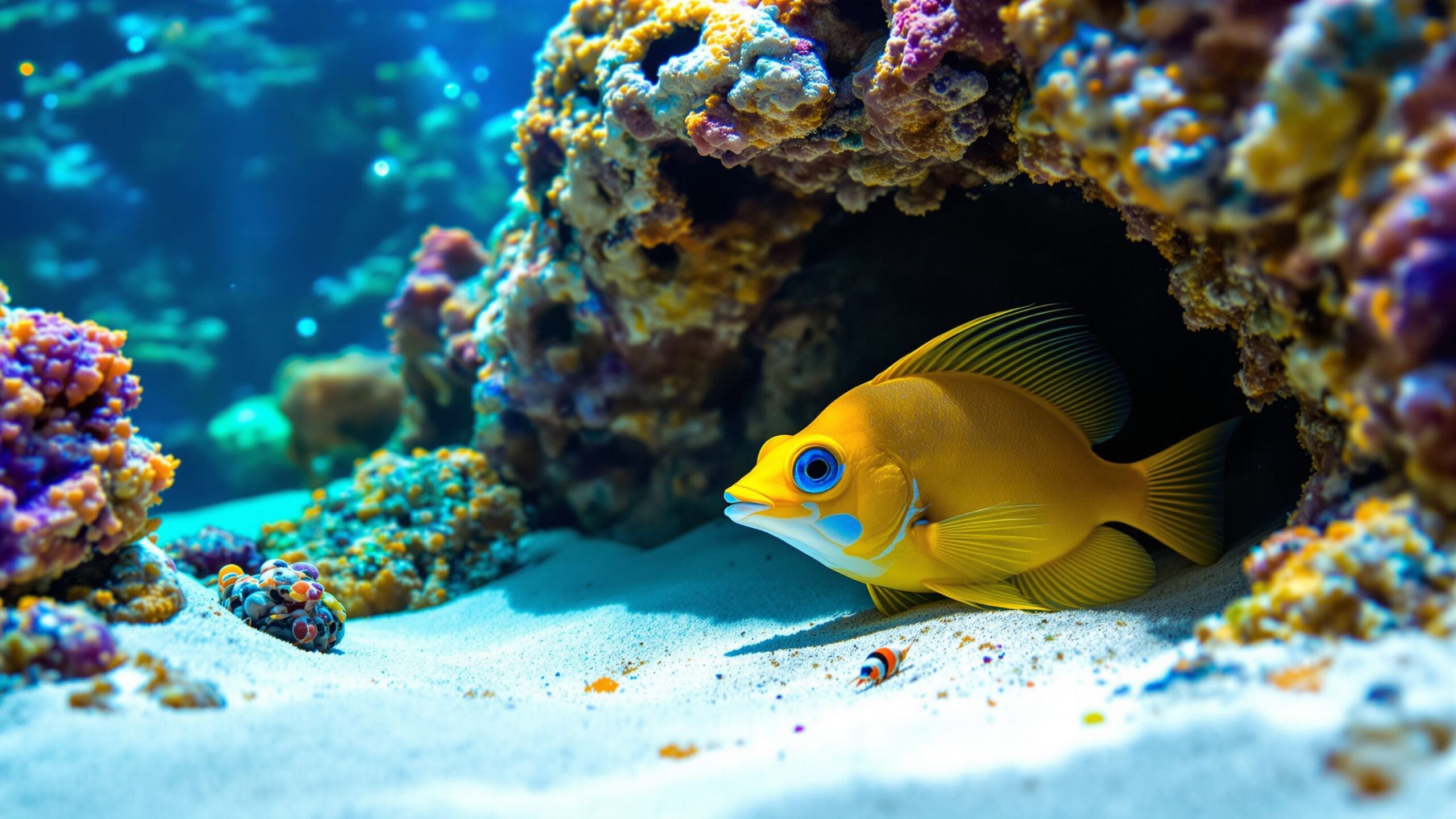
The Yellow Watchman Goby, scientifically known as Cryptocentrus cinctus, is one of the most popular and beginner-friendly saltwater gobies in the marine aquarium hobby. Known for its bright yellow body, expressive eyes, and calm personality, this reef-safe fish is loved for both its appearance and its fascinating behavior. It is especially famous for its unique partnership with pistol shrimp, creating one of the most interesting natural relationships seen in home aquariums.
Native to the Indo-Pacific region, the Yellow Watchman Goby is commonly found in sandy reef flats, lagoons, and coral rubble zones where it lives close to the ocean floor. Unlike fast-swimming open-water fish, this goby spends much of its time perched near the entrance of a burrow, carefully watching its surroundings. Its alert posture and watchful behavior are the reason behind its common name.
This species is highly valued because it combines hardiness with peaceful behavior. It adapts well to aquarium life, accepts prepared foods easily, and rarely causes problems with corals or invertebrates. Its manageable size and simple care requirements make it an excellent first saltwater fish for beginners while still being appreciated by advanced reef keepers.
Beyond its bright color and peaceful nature, the Yellow Watchman Goby is fascinating from a biological perspective. Its burrow-sharing relationship with pistol shrimp, territorial instincts, and breeding behavior make it far more interesting than its small size might suggest.
Understanding the Yellow Watchman Goby means looking beyond its appearance and appreciating how it fits into the larger world of coral reef ecosystems. It is a fish that brings both personality and natural behavior into the home aquarium.
A: Yes, they are hardy, peaceful, and beginner-friendly in stable reef tanks.
A: Yes, they are considered reef safe and usually leave corals alone.
A: A tank around 20–30 gallons or larger is commonly recommended.
A: No, but many hobbyists enjoy pairing them because of their natural symbiotic behavior.
A: They eat frozen mysis shrimp, brine shrimp, pellets, and other small meaty foods.
A: They are usually peaceful but may defend their burrow area.
A: This is normal—they prefer guarding territory rather than constant swimming.
A: Yes, peaceful clownfish and Watchman Gobies often do well together.
A: They often live 5 years or longer with proper care.
A: Less often than Firefish, but a secure lid is still recommended for safety.
Natural Habitat and Geographic Range
The Yellow Watchman Goby is found throughout the Indo-Pacific region, including areas around Indonesia, the Philippines, Japan, Australia, Fiji, and other tropical reef systems across the western Pacific Ocean. It thrives in warm, shallow marine environments where sandy bottoms meet coral rubble and reef structures.
In the wild, this goby is most often seen in lagoons, sheltered reef flats, and coastal coral zones where loose substrate allows easy burrow construction. It depends heavily on the seafloor rather than open water, preferring to stay close to shelter where it can retreat quickly from predators.
Unlike fish that spend their time actively swimming across the reef, the Yellow Watchman Goby is a bottom-dwelling species. It often remains stationed near its burrow entrance, scanning for danger while maintaining access to safety below the sand.
Its natural habitat usually includes warm water temperatures between 75 and 82 degrees Fahrenheit, stable salinity, and plenty of hiding places among rocks and coral rubble. These stable tropical conditions are important for both feeding and breeding success.
Healthy reef ecosystems are essential to its survival because the fish depends on both physical shelter and the small crustaceans and plankton available around reef zones. Habitat damage from pollution or reef destruction can reduce suitable living areas for this species.
Physical Appearance and Identification
The Yellow Watchman Goby is instantly recognizable because of its bright lemon-yellow body and large, expressive eyes. Its body is thick and slightly elongated, giving it a sturdy appearance compared to slimmer goby species. Its head is broad and rounded, with a strong jaw and an alert expression that gives it a surprisingly bold personality.
Most adults grow to around three to four inches in length, making them a medium-sized goby that is highly visible in reef tanks without requiring large aquarium space. Their body size also makes them sturdy enough for beginner aquarists compared to more delicate nano species.
Many individuals display light blue or turquoise markings around the face and eyes, adding extra detail to their appearance. These subtle facial patterns make each fish feel unique and highly expressive.
Their fins are generally translucent to pale yellow, and their dorsal fin stands upright when the fish feels alert or territorial. Their pectoral fins help them perch comfortably on rocks, sand, and burrow entrances.
They are sometimes confused with other yellow gobies, but the Yellow Watchman Goby’s thicker body, broad head, and characteristic watchful posture make identification fairly easy. Its tendency to sit still near burrow openings also helps distinguish it from more active goby species.
Healthy specimens show strong bright coloration, clear eyes, and confident behavior. A pale body or constant hiding may signal stress or illness.
Behavior and Personality
The Yellow Watchman Goby is known for its calm, peaceful, and observant personality. It is not an aggressive swimmer and spends much of its life close to the substrate, watching the world from a safe perch near its burrow.
Its name comes from its behavior of standing guard at the entrance of its shelter, appearing almost like a sentry protecting its home. It often rests with only its head and upper body visible while carefully observing nearby movement.
This species is generally peaceful toward other fish, especially those that occupy different areas of the tank. However, it may become territorial toward similar gobies or fish that invade its chosen burrow space.
One of the most fascinating behaviors is its partnership with pistol shrimp. In this symbiotic relationship, the nearly blind shrimp digs and maintains the burrow while the goby acts as a lookout for predators. The goby often keeps physical contact with the shrimp using its tail or fins, signaling danger when needed. This relationship is one of the most rewarding natural behaviors to observe in reef aquariums.
They are usually best kept singly or as a bonded pair unless the tank is large enough to support multiple territories. Once comfortable, many become surprisingly bold and will sit openly in view rather than hiding constantly.
Their calm personality makes them excellent additions to peaceful reef communities.
Diet in the Wild and Aquarium
In the wild, Yellow Watchman Gobies are carnivorous feeders that consume small crustaceans, worms, copepods, amphipods, and other tiny benthic organisms found around sandy reef zones. They feed close to the substrate, picking food from the sand and nearby rock surfaces.
Their hunting style is patient rather than aggressive. They rely on short, quick feeding movements instead of active chasing, making them efficient bottom feeders in reef environments.
In aquariums, they adapt very well to prepared foods and are considered easy to feed. Frozen mysis shrimp, brine shrimp, finely chopped seafood, marine pellets, sinking foods, and quality flakes are commonly accepted.
Because they spend most of their time near the bottom, foods that sink are often more successful than floating foods. Spot feeding near their chosen territory can help shy individuals feel secure during meals.
Feeding once or twice daily in moderate portions is usually ideal. Variety helps maintain strong coloration, healthy immune function, and long-term vitality.
Vitamin-enriched frozen foods are especially useful for new arrivals adjusting to captivity. A healthy Yellow Watchman Goby is alert, brightly colored, and eager to emerge during feeding time.
Because they are peaceful feeders, aggressive fish that steal food too quickly should be avoided.
Aquarium Care and Tank Requirements
Yellow Watchman Gobies are excellent beginner saltwater fish because they are hardy, reef-safe, and adaptable. A minimum tank size of around 20 to 30 gallons is usually suitable for a single fish or a goby-shrimp pair, although larger tanks provide better stability and more natural territory options.
A reef tank with sandy substrate is highly recommended because this species depends on the bottom of the tank for comfort and natural behavior. Fine sand allows burrowing and helps support the natural shrimp partnership if a pistol shrimp is included.
Live rock is also important because it creates caves, shelter, and secure spaces around burrow entrances. A combination of rock structure and open sand is the ideal setup.
Water temperature should remain stable between 76 and 80 degrees Fahrenheit, with salinity around 1.023 to 1.025 specific gravity. Ammonia and nitrite should always remain at zero, while nitrate should be kept low for long-term health.
As with all marine fish, stability matters more than perfection. Sudden changes in temperature, pH, or salinity can cause major stress. A fully cycled aquarium is essential before adding this species.
They are reef-safe and do not bother corals, shrimp, snails, or most invertebrates. This makes them excellent for coral reef displays.
Compatible tankmates often include clownfish, Firefish Gobies, Royal Grammas, blennies, smaller wrasses, and peaceful reef-safe fish. Large aggressive predators or highly territorial bottom dwellers should be avoided.
With proper care, Yellow Watchman Gobies commonly live five years or longer in captivity.
Breeding and Reproduction
Breeding Yellow Watchman Gobies in captivity is possible and has been successfully achieved by experienced aquarists. Their reproductive behavior is closely tied to their burrow-based lifestyle and secure territory.
Pairs usually form strong bonds, especially when established in peaceful environments with stable hiding spaces. Courtship often includes shared burrow activity, close hovering, and territorial defense around the nesting area.
Spawning usually occurs inside the burrow where eggs are protected from predators. The female deposits adhesive eggs on the walls of the nest, and the male guards them closely until hatching.
The male fans the eggs to improve oxygen flow and protects the nest from threats. This parental care is important for survival and reflects the fish’s strong territorial instincts.
Eggs usually hatch within several days depending on temperature and water conditions. The larvae are very small and require specialized live foods such as rotifers and plankton-sized prey, making successful home raising more advanced than beginner-level breeding.
While breeding is possible, many hobbyists keep Yellow Watchman Gobies mainly for their behavior and compatibility rather than active breeding projects.
Common Health Issues
Yellow Watchman Gobies are hardy fish, but like all marine species, they can experience illness when stressed or exposed to poor water quality. Prevention is always easier than treatment.
Marine ich is one of the most common diseases, causing white spots, flashing behavior, reduced appetite, and breathing difficulty. Marine velvet is another serious disease that can progress quickly and requires immediate treatment.
Stress caused by bullying, poor tank conditions, or lack of proper shelter can weaken the immune system and make disease more likely. Because these gobies rely heavily on territory and burrow security, environmental stress is often the biggest health risk.
Bacterial infections, fin damage, and internal parasites may also occur. Fish that stop eating, hide excessively, or lose coloration should be observed carefully.
Quarantining new fish before adding them to the display tank is one of the best preventive measures. Stable water parameters, peaceful tankmates, and proper nutrition greatly reduce disease risk.
Healthy Yellow Watchman Gobies are alert, visible, and confident near their burrow entrance. They should show strong appetite, smooth breathing, and bright coloration.
Why the Yellow Watchman Goby Remains So Popular
Few beginner saltwater fish combine personality, beauty, and fascinating behavior as successfully as the Yellow Watchman Goby. Its bright yellow body makes it visually appealing, but its real charm comes from the way it interacts with its environment.
Its peaceful nature makes it easy to keep in reef tanks, while its reef-safe habits allow it to live safely with corals and invertebrates. It adds character without causing trouble.
Its watchful posture and famous partnership with pistol shrimp create one of the most interesting natural displays available in home aquariums. Many hobbyists consider this goby-shrimp relationship one of the highlights of reef keeping.
For beginners, it offers confidence and reliability. For experienced aquarists, it remains a timeless favorite because of its behavior and personality rather than just color.
For general readers, the Yellow Watchman Goby shows that even small reef fish can have complex lives and extraordinary partnerships. Its quiet intelligence and natural instincts make it far more memorable than its size suggests.
Whether resting at the entrance of a burrow in a tropical reef or thriving in a peaceful home aquarium, Cryptocentrus cinctus continues to earn its place as one of the finest beginner-friendly saltwater fish in the hobby. Its beauty is obvious, but its true appeal lies in its character, resilience, and remarkable connection to reef life.
Pet Product Reviews
Explore Duffy Street’s Pet Product Reviews! Sniff out the top-rated toys, treats, gear, and gadgets for your pets with our fun, easy-to-read comparisons. We’ve done the digging so you can find the perfect products for your pet friends!


