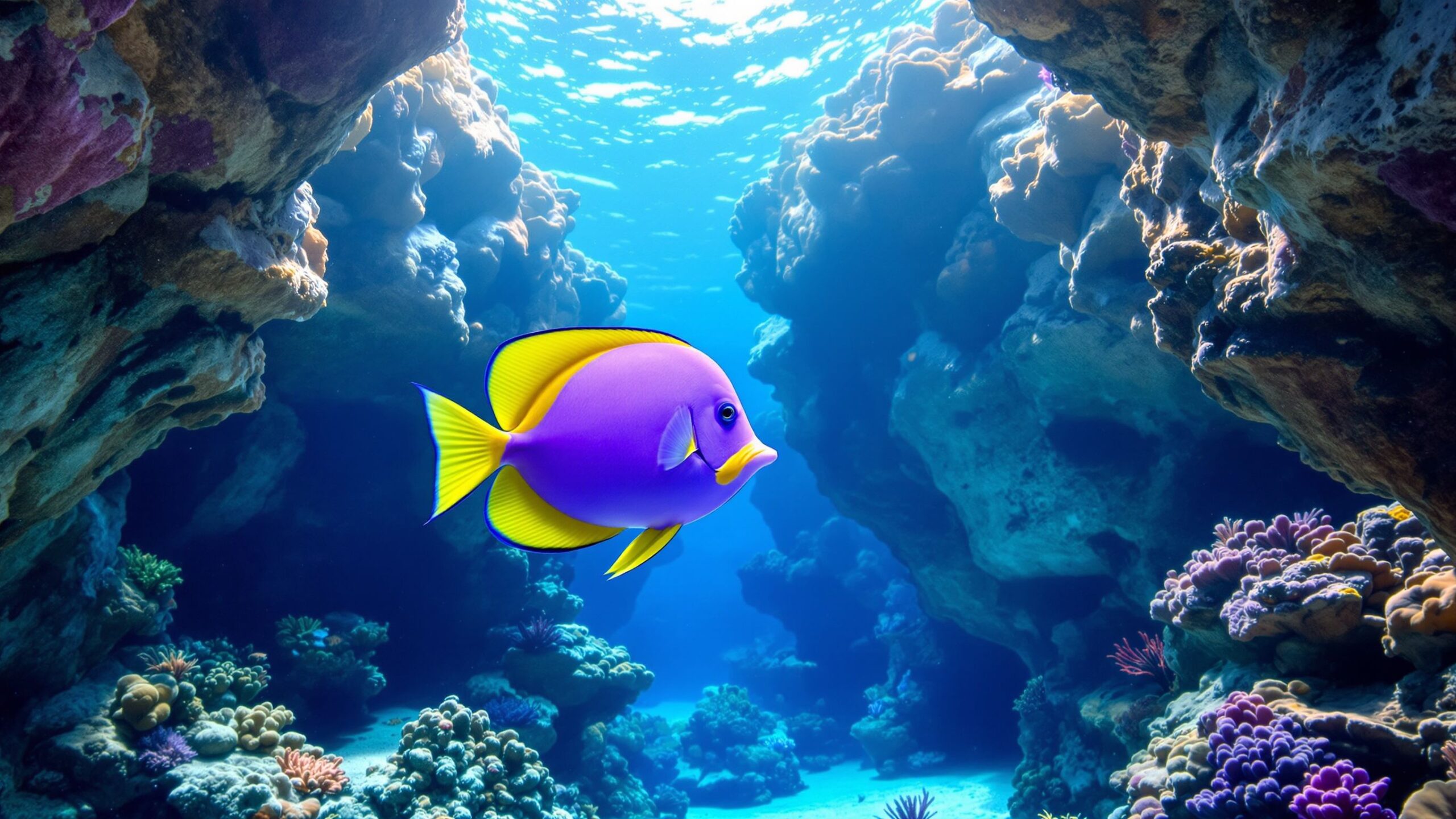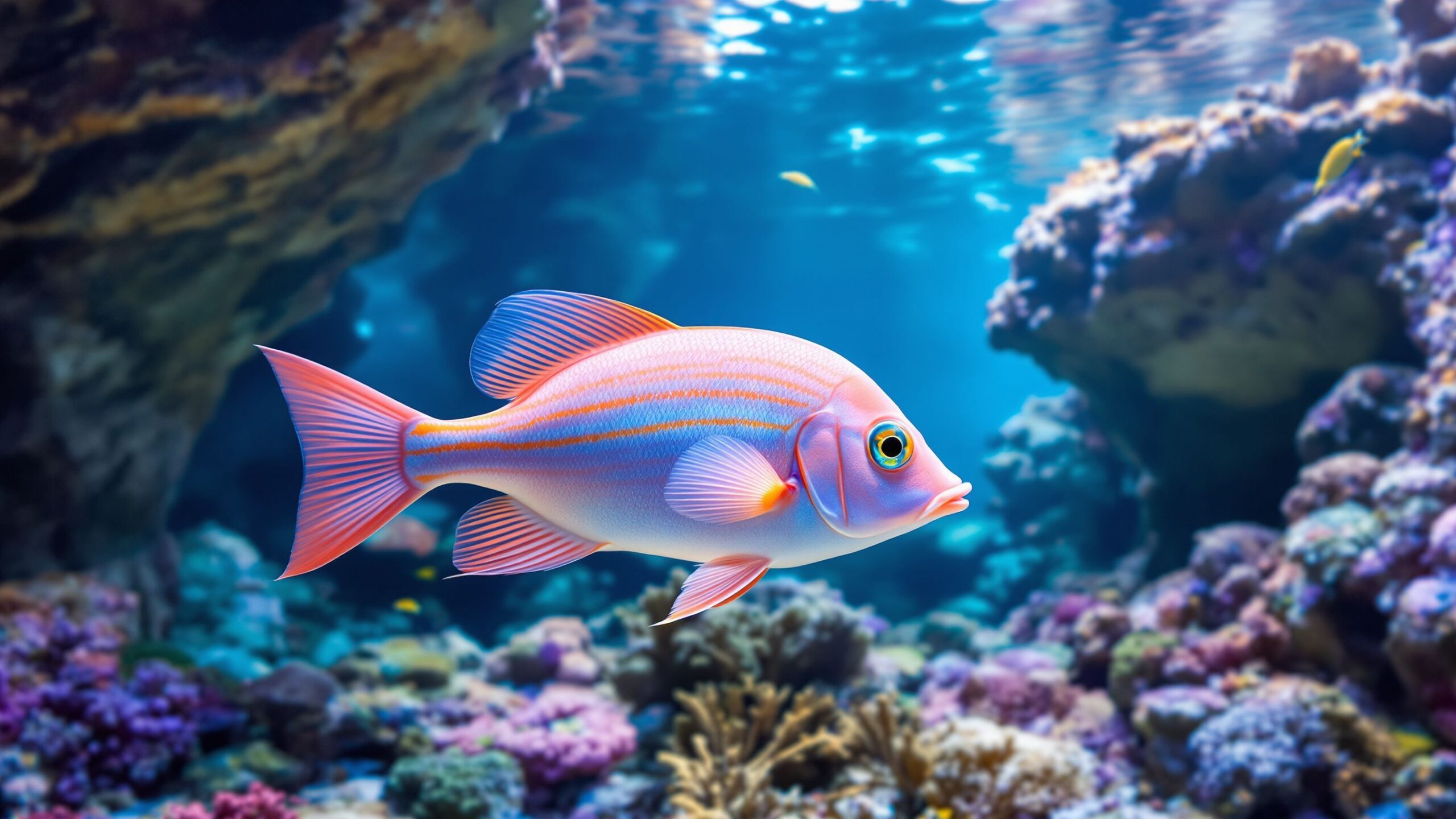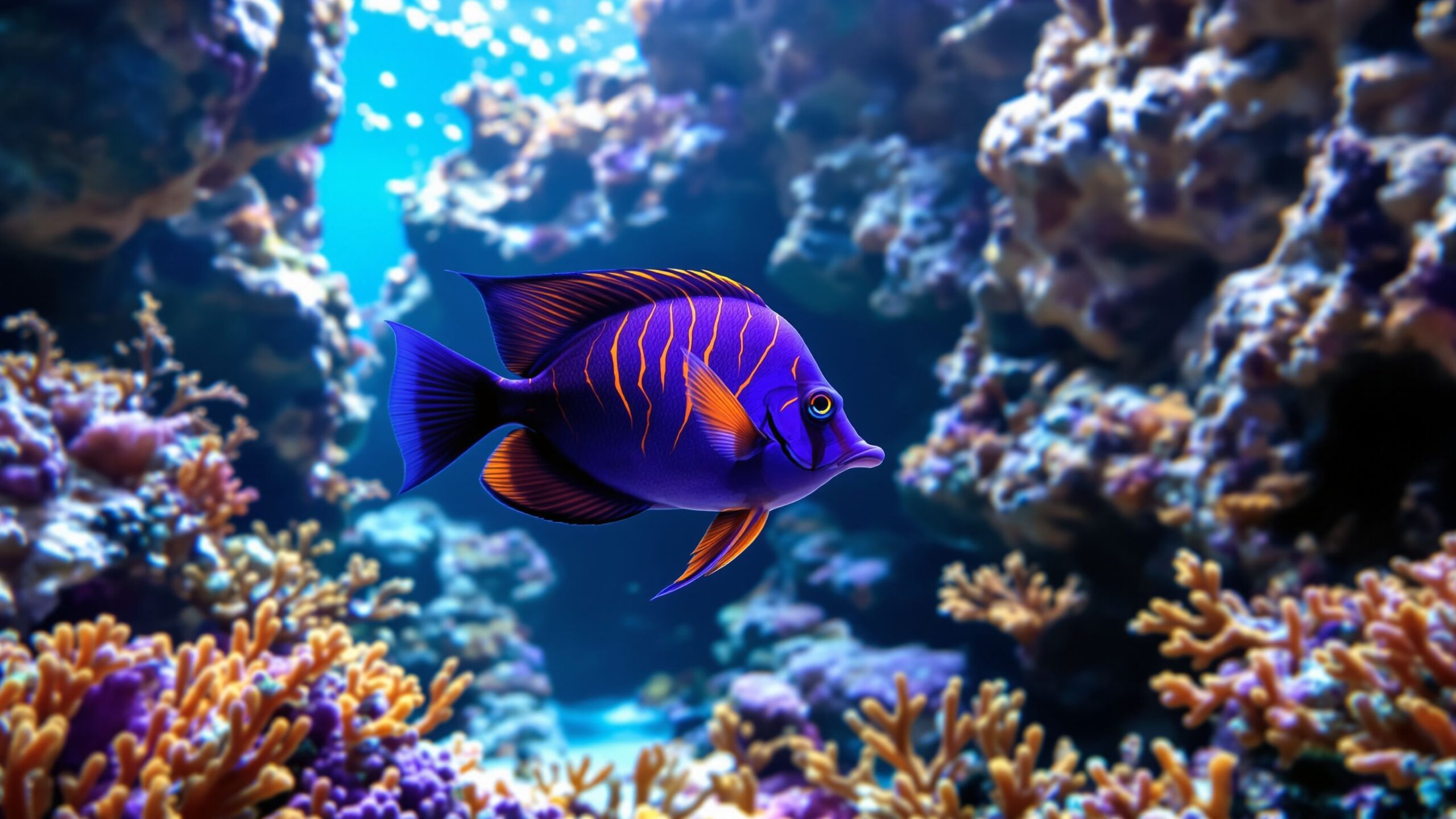
The Coral Beauty Angelfish, scientifically known as Centropyge bispinosa, is one of the most popular and visually striking dwarf angelfish in the marine aquarium hobby. Known for its brilliant blend of deep purple-blue coloration and bright orange vertical highlights, this reef fish brings both movement and dramatic beauty to saltwater aquariums. Its vivid colors, active swimming style, and manageable size make it a favorite for hobbyists who want the elegance of an angelfish without the space demands of larger species.
Native to the Indo-Pacific region, the Coral Beauty Angelfish thrives among coral reefs, rocky ledges, and lagoon environments where live rock provides constant shelter and grazing opportunities. In the wild, it spends much of its day weaving through coral structures, searching for algae, sponges, and small organisms while staying close to protective reef cover.
Unlike some large marine angelfish that require massive aquariums and specialized care, the Coral Beauty is considered relatively hardy and adaptable. It adjusts well to aquarium life, accepts a wide variety of foods, and can thrive in both fish-only and reef tank systems when properly managed. This balance of beauty and practicality has made it one of the most trusted dwarf angelfish for marine hobbyists.
Its personality is bold and confident, often becoming one of the most active and visible fish in the aquarium. However, like many angelfish, it also has territorial instincts and requires thoughtful tank planning to ensure compatibility with tankmates and reef invertebrates.
Understanding the Coral Beauty Angelfish means appreciating both its beauty and its strong personality. It is a fish that rewards careful planning with years of color, movement, and character.
A: Yes, they are one of the best beginner-friendly dwarf angelfish for stable marine tanks.
A: Mostly, but some individuals may nip at soft corals, LPS corals, or clam mantles.
A: A tank around 55 gallons or larger is commonly recommended.
A: They are semi-aggressive and may defend territory, especially against similar fish.
A: They eat algae-based foods, spirulina, mysis shrimp, marine pellets, and angelfish formulas.
A: Yes, they often do well with clownfish and other peaceful reef fish.
A: This is normal—they naturally graze for algae and tiny organisms.
A: Usually not unless the tank is very large and carefully planned.
A: They often live 5–7 years or longer with proper care.
A: Yes, their bright colors and bold personality make them excellent centerpiece fish for reef tanks.
Natural Habitat and Geographic Range
The Coral Beauty Angelfish is found throughout the Indo-Pacific region, including areas around Indonesia, the Philippines, Fiji, the Great Barrier Reef, Micronesia, and islands across the western Pacific Ocean. It thrives in warm tropical marine environments where coral reefs provide structure, shelter, and abundant feeding surfaces.
In the wild, this species is most commonly found in lagoons, outer reef slopes, coral gardens, and reef flats where live rock and coral formations create dense habitat. It usually stays close to rocky reef structures rather than swimming far into open water, using caves and crevices for both protection and territory.
These angelfish are often seen grazing continuously along rock surfaces, feeding on algae, detritus, sponges, and tiny invertebrates. Their constant movement and foraging behavior make them important participants in reef ecosystems.
They typically inhabit waters ranging from 75 to 82 degrees Fahrenheit, with stable salinity and excellent water quality. Healthy reef systems are essential because they provide both nutrition and the natural grazing surfaces the species depends on.
Juveniles often remain closer to protected rockwork for safety, while adults become more confident and establish stronger territories around reef structures.
Because coral reef decline affects feeding opportunities and shelter availability, reef conservation remains important for maintaining healthy wild populations of Coral Beauty Angelfish.
Physical Appearance and Identification
The Coral Beauty Angelfish is instantly recognizable because of its intense and vibrant coloration. Its body is typically a deep royal blue, purple, or violet with bright orange to golden vertical bands running across the sides. This contrast creates one of the most dramatic and elegant color patterns among dwarf angelfish.
Most adults grow to around four inches in length, making them larger than many beginner reef fish but still small enough for medium-sized aquariums. Their compact but rounded body shape gives them the classic angelfish appearance with smooth curves and strong swimming ability.
Their fins are edged with glowing blue and purple tones that intensify under proper aquarium lighting. The dorsal and anal fins are long and flowing, giving the fish a graceful but powerful look while swimming.
Their face often carries subtle purple shading around the eyes, and healthy specimens display bright, clean color separation between the blue and orange sections of the body.
They are sometimes confused with similar dwarf angelfish such as the Flame Angelfish, but the Coral Beauty’s purple-blue body and softer orange striping make identification much easier.
Healthy Coral Beauty Angelfish show rich coloration, full fins, active grazing behavior, and confident movement around live rock. Faded colors or hiding behavior may indicate stress or poor conditions.
Behavior and Personality
The Coral Beauty Angelfish is known for being active, bold, and highly curious. It spends much of the day swimming through rockwork, inspecting surfaces, and grazing constantly. Unlike shy reef fish that remain hidden, the Coral Beauty often becomes a central visual feature of the aquarium.
It is generally semi-aggressive rather than fully peaceful. It may defend its territory against similar-shaped fish, especially other dwarf angelfish, blennies, or fish that compete for the same rockwork and grazing areas.
In larger tanks with enough space and live rock, aggression is usually manageable. In smaller tanks, territorial disputes can become more noticeable, especially after the fish becomes fully established.
This species is intelligent and observant, often learning feeding routines quickly and becoming highly visible when food is introduced. Many owners notice that Coral Beauty Angelfish seem to recognize activity outside the tank and respond confidently.
Because of its active personality, it works best with tankmates that are neither overly timid nor extremely aggressive. Balanced community planning is important.
Its personality is often described as confident and energetic rather than aggressive for the sake of aggression. It wants territory and activity, not constant conflict.
Diet in the Wild and Aquarium
In the wild, Coral Beauty Angelfish are omnivorous grazers with strong herbivorous tendencies. They feed on algae, detritus, sponge material, tunicates, and tiny invertebrates found across reef rock surfaces. Their constant grazing behavior is one of their most important natural habits.
Unlike fish that feed only during specific periods, Coral Beauty Angelfish spend much of the day picking at surfaces for food. This continuous feeding style supports their active metabolism and helps explain why mature live rock is so valuable in aquariums.
In captivity, they accept a wide variety of prepared foods. High-quality marine pellets, frozen mysis shrimp, brine shrimp, spirulina-based foods, marine algae preparations, and angelfish formulas containing sponge material are all excellent options.
A varied diet is important for maintaining strong coloration, immune health, and long-term vitality. Tanks with natural algae growth and mature live rock provide helpful supplemental grazing opportunities.
Feeding once or twice daily along with natural grazing access is usually ideal. Because they are confident eaters, they usually adapt quickly to feeding routines.
Proper nutrition is especially important for preventing coral nipping caused by hunger or boredom in reef tanks.
Healthy Coral Beauty Angelfish are active grazers, eager feeders, and maintain strong body condition with bright, saturated colors.
Aquarium Care and Tank Requirements
Coral Beauty Angelfish require a stable, mature marine aquarium with plenty of live rock and structured territory. A minimum tank size of around 55 gallons is often recommended for a single adult, although larger tanks provide better long-term stability and reduce territorial stress.
A reef tank with caves, ledges, and open swimming space is ideal. Live rock is especially important because it provides both natural grazing surfaces and secure hiding areas. This species thrives when it can move freely while still maintaining access to protected retreat zones.
Water temperature should remain stable between 76 and 80 degrees Fahrenheit, with salinity around 1.023 to 1.025 specific gravity. Ammonia and nitrite should always remain at zero, while nitrate should be kept low for long-term health.
As with all marine fish, stability matters more than chasing perfect numbers. Sudden changes in salinity, pH, or temperature create unnecessary stress. A fully cycled and mature aquarium is essential before introduction.
Coral Beauty Angelfish are often considered “reef-safe with caution.” Many individuals coexist peacefully with corals, while others may nip at soft corals, large-polyp stony corals, clam mantles, or certain invertebrates. Personality varies from fish to fish.
Compatible tankmates often include clownfish, tangs, gobies, wrasses, blennies, cardinalfish, and other semi-peaceful reef-safe species. Keeping multiple dwarf angelfish together is usually more difficult unless the tank is large and carefully planned.
With proper care, Coral Beauty Angelfish commonly live seven years or longer in captivity and often become long-term centerpiece fish.
Breeding and Reproduction
Breeding Coral Beauty Angelfish in captivity is possible but significantly more challenging than breeding beginner species like clownfish. Their reproductive behavior is tied closely to space, maturity, and complex social interaction.
In the wild, these fish often form loose harems where one dominant male may interact with several females. They are protogynous hermaphrodites, meaning individuals begin life as female and can change into males depending on social hierarchy and environmental conditions.
Courtship usually occurs during evening hours and involves circling displays, rising into the water column, and synchronized swimming before spawning.
Unlike nest-building species, Coral Beauty Angelfish are broadcast spawners. Eggs and sperm are released into open water where fertilization occurs externally. The eggs then drift with currents until hatching.
Because the larvae are extremely small and require specialized plankton-sized live foods, successful captive rearing is difficult and usually limited to advanced breeders or professional operations.
Most hobbyists keep Coral Beauty Angelfish for their beauty and personality rather than breeding projects, but captive breeding efforts remain important for long-term sustainability.
Supporting responsibly sourced and captive-conditioned fish helps reduce pressure on wild reef populations.
Common Health Issues
Coral Beauty Angelfish are generally hardy once established, but like all marine fish, they can develop illness when stressed or introduced to unstable environments. Prevention is always the best strategy.
Marine ich is one of the most common diseases, causing white spots, scratching behavior, breathing difficulty, and appetite loss. Marine velvet is another serious illness that progresses rapidly and requires immediate treatment.
Stress caused by poor water quality, aggressive tankmates, lack of grazing surfaces, or sudden environmental changes can weaken the immune system and make disease more likely.
Because Coral Beauty Angelfish are usually active and visible, behavioral changes such as hiding constantly, refusing food, or reduced grazing are often early warning signs.
Bacterial infections, fin damage, internal parasites, and stress-related coral nipping may also occur if tank conditions decline.
Quarantining new fish before adding them to the display tank is one of the best preventive steps. Stable water parameters, quality food, and thoughtful tankmate selection greatly reduce long-term health risks.
Healthy Coral Beauty Angelfish are alert, brightly colored, constantly grazing, and confidently visible throughout the aquarium.
Why the Coral Beauty Angelfish Remains So Popular
Few dwarf angelfish combine color, personality, and practicality as successfully as the Coral Beauty Angelfish. Its glowing purple-blue body and bright orange highlights create instant visual impact, making it one of the most beautiful fish available for medium-sized reef tanks.
Its active swimming and constant grazing behavior make it feel alive and involved in the entire aquarium rather than simply decorative. It becomes part of the system’s personality.
Its manageable size allows hobbyists to enjoy the elegance of an angelfish without needing a massive tank, while its relative hardiness makes it more approachable than many delicate marine species.
Its reef-safe compatibility, even with caution, gives it flexibility for both fish-only and mixed reef setups depending on individual temperament.
For beginners moving into intermediate marine fishkeeping, it offers a rewarding step forward. For experienced aquarists, it remains a timeless favorite because of its beauty and presence.
For general readers, the Coral Beauty Angelfish shows how much complexity and personality can exist in even a four-inch reef fish.
Whether weaving through coral gardens in the Indo-Pacific or becoming the centerpiece of a peaceful home aquarium, Centropyge bispinosa continues to earn its reputation as one of the finest dwarf angelfish in the hobby. Its beauty is immediate, but its lasting appeal comes from its intelligence, confidence, and unforgettable color.
Pet Product Reviews
Explore Duffy Street’s Pet Product Reviews! Sniff out the top-rated toys, treats, gear, and gadgets for your pets with our fun, easy-to-read comparisons. We’ve done the digging so you can find the perfect products for your pet friends!