
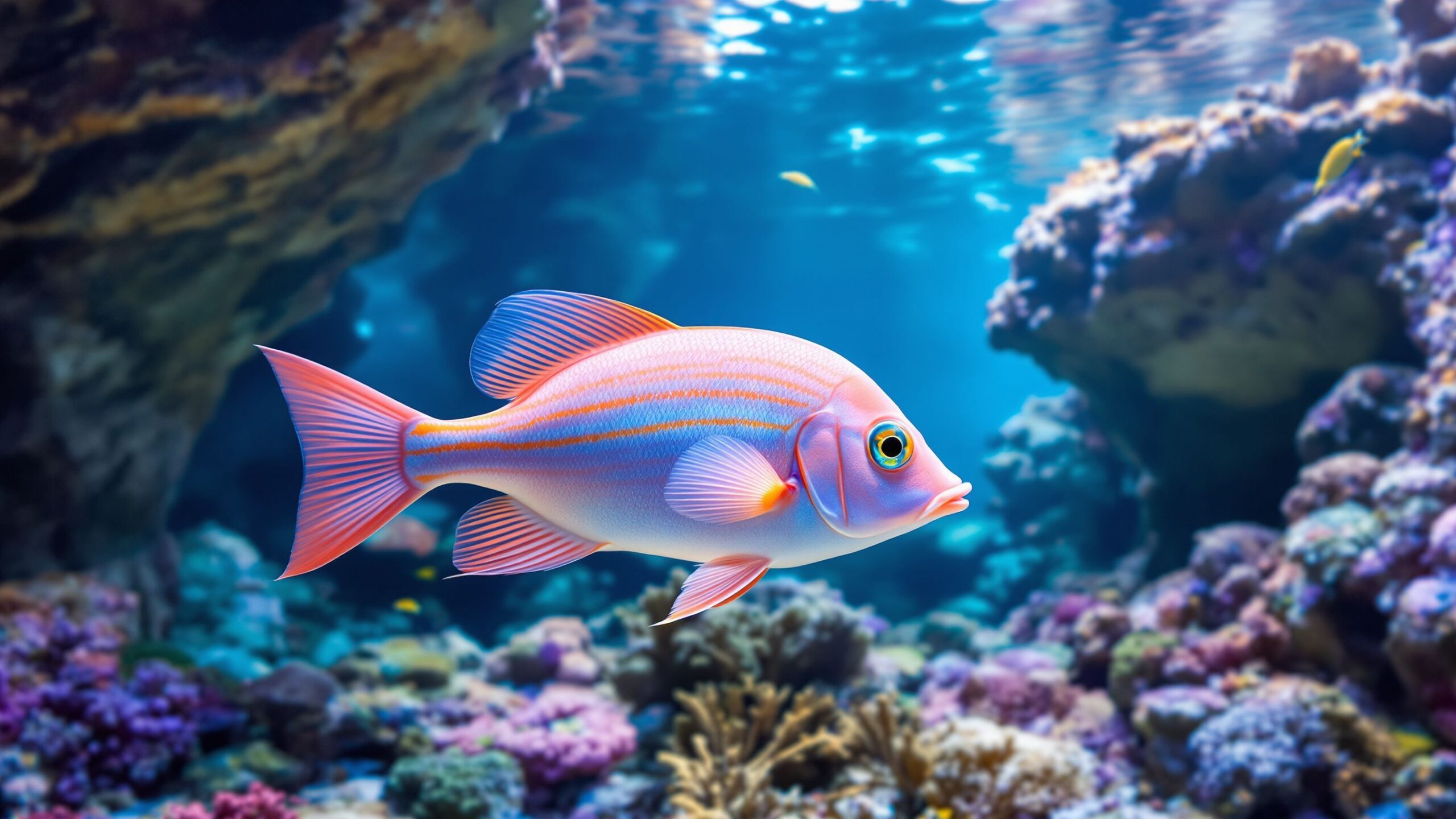
The Chalk Bass, scientifically known as Serranus tortugarum, is one of the most underrated peaceful saltwater fish in the marine aquarium hobby. Known for its soft pastel coloration, active swimming style, and surprisingly calm temperament, this small reef fish is an excellent choice for aquarists who want movement and personality without excessive aggression. Its subtle beauty may not be as flashy as some reef fish, but its peaceful behavior and reliable hardiness make it a favorite for experienced reef keepers.
Native to the warm tropical waters of the western Atlantic and Caribbean, the Chalk Bass thrives among coral reefs, rocky ledges, and sheltered reef slopes where structure provides both protection and feeding opportunities. In the wild, it often swims in loose groups near caves and overhangs, staying close to the reef while actively searching for food.
Unlike many members of the basslet and grouper family that can be territorial or aggressive, the Chalk Bass is notably more peaceful and adaptable. It is often recommended for reef tanks because it coexists well with corals, invertebrates, and a wide range of peaceful tankmates. Its constant activity and open swimming behavior make it much more visible than many shy reef fish.
One of the reasons hobbyists appreciate the Chalk Bass is its balance between personality and practicality. It is hardy, accepts prepared foods easily, and adapts well to aquarium life without requiring highly specialized care. This makes it suitable for both beginners moving into reef tanks and advanced aquarists building peaceful community systems.
Understanding the Chalk Bass means recognizing that not every standout reef fish needs dramatic colors. Sometimes personality, movement, and compatibility create the strongest long-term value in an aquarium
A: Yes, they are hardy, peaceful, and excellent for beginner-friendly reef tanks.
A: Yes, they are considered reef safe and usually leave corals and invertebrates alone.
A: A tank around 30 gallons or larger is commonly recommended.
A: Yes, they can often be kept singly or in small peaceful groups with enough space.
A: They eat frozen mysis shrimp, brine shrimp, marine pellets, and other small meaty foods.
A: They are generally peaceful and much calmer than many other bass species.
A: Yes, peaceful clownfish and Chalk Bass usually do well together.
A: This is normal—they are confident midwater swimmers and often stay visible.
A: They often live around 5 years or longer with proper care.
A: Yes, their small size and calm behavior make them suitable for many medium-sized reef setups.
Natural Habitat and Geographic Range
The Chalk Bass is native to the western Atlantic Ocean, particularly around the Caribbean Sea, the Bahamas, southern Florida, Bermuda, and the Gulf of Mexico. It is especially common around coral reef systems where rocky structures and reef ledges provide shelter and stable feeding grounds.
In the wild, this species is usually found in shallow to moderate reef depths, often between 20 and 100 feet. It prefers areas with strong rock formations, coral rubble, caves, and overhangs where it can retreat quickly if threatened while still maintaining access to open swimming space.
Unlike strictly bottom-dwelling fish, the Chalk Bass spends much of its time actively swimming in the water column just above reef structures. It often forms small groups in nature, especially around protected reef zones where food is abundant and predators can be avoided.
The waters of its natural habitat are warm and stable, generally ranging between 75 and 82 degrees Fahrenheit, with clear visibility and consistent salinity. Healthy reef ecosystems are essential because they provide both feeding opportunities and the structural shelter the species depends on.
Because coral reef decline affects food availability and habitat security, long-term reef conservation remains important even for hardy and adaptable species like the Chalk Bass.
Responsible collection and sustainable aquarium trade practices help protect wild populations while supporting healthy reef ecosystems.
Physical Appearance and Identification
The Chalk Bass is admired for its soft and elegant coloration rather than bold contrast. Its body usually displays a pale lavender, pinkish, or light peach tone with subtle horizontal lines of orange, gold, or blue running across the sides. This pastel look gives it a calm and refined appearance that stands out differently from brighter reef fish.
Most adults grow to around three inches in length, making them a compact but highly visible addition to reef aquariums. Their streamlined body shape supports active swimming, and their open-water behavior helps them remain easy to observe.
Their eyes are relatively large and alert, and their fins are smooth and rounded rather than dramatically extended. The overall appearance is clean, balanced, and elegant rather than flashy.
They are sometimes confused with other small basslets or anthias-like fish, but their soft striping pattern and more solid body shape help distinguish them. Unlike many basslets that hide constantly, the Chalk Bass is often visible in the open, which also helps with identification.
Healthy specimens show strong pastel coloration, smooth swimming, full body weight, and confident movement around rockwork. Pale coloration or constant hiding may indicate stress or illness.
Because of their understated beauty, many aquarists grow to appreciate the Chalk Bass more over time rather than immediately.
Behavior and Personality
The Chalk Bass is known for being active, peaceful, and confident. Unlike shy reef fish that disappear into caves for most of the day, this species often swims openly around the tank, giving the aquarium constant movement and life.
It is generally peaceful toward other fish and works especially well in community reef tanks. It may show mild territorial behavior around favorite caves or shelters, but serious aggression is uncommon compared to many similar reef species.
This fish often hovers and patrols the area around live rock structures, using caves and ledges as safe retreat points while spending much of its time visible in the open water nearby. This combination of security and confidence makes it highly enjoyable to watch.
In larger aquariums, small groups may sometimes be kept successfully, especially when enough territory and rockwork are available. However, in smaller systems, individuals are often kept singly to avoid territorial tension.
They are bold during feeding time and usually adapt quickly to tank routines, often becoming one of the first fish to respond when food is introduced.
Their personality is often described as balanced—they are active without being chaotic, confident without being aggressive, and peaceful without being overly timid.
Because of this temperament, they work well with a wide variety of reef-safe species.
Diet in the Wild and Aquarium
In the wild, Chalk Bass are carnivorous feeders that consume small crustaceans, zooplankton, shrimp larvae, copepods, amphipods, and other tiny drifting organisms found around reef environments. They feed actively throughout the day by making quick strikes at nearby prey.
Because they spend time swimming just above reef structures, they are positioned perfectly to catch both free-floating prey and small organisms moving close to the reef surface.
In aquariums, they are considered easy to feed and quickly adapt to prepared foods. Frozen mysis shrimp, enriched brine shrimp, finely chopped seafood, marine pellets, and high-quality flakes are commonly accepted.
A varied diet helps maintain strong coloration, healthy immune function, and long-term vitality. Protein-rich foods are especially valuable because of their active metabolism and natural feeding style.
Feeding once or twice daily in moderate portions is usually ideal. Because they are confident eaters, they rarely struggle to compete during feeding unless housed with highly aggressive predators.
Vitamin-enriched frozen foods can be especially useful for new arrivals adjusting to aquarium life. Healthy Chalk Bass are alert, active, and eager to feed.
Because they are energetic swimmers, consistent feeding and stable nutrition are important for maintaining strong body condition.
Aquarium Care and Tank Requirements
Chalk Bass are excellent beginner-friendly reef fish because they are hardy, peaceful, and adaptable. A minimum tank size of around 30 gallons is often recommended for a single fish, although larger tanks provide greater stability and allow better compatibility with groups or additional tankmates.
A reef tank with live rock is ideal because it provides caves, ledges, and protected spaces that mimic their natural environment. They appreciate having both open swimming areas and secure hiding spots rather than a tank that is too open or too crowded.
Water temperature should remain stable between 76 and 80 degrees Fahrenheit, with salinity around 1.023 to 1.025 specific gravity. Ammonia and nitrite should always remain at zero, while nitrate should be kept low for long-term health.
As with all marine fish, stability matters more than perfection. Sudden swings in temperature, salinity, or pH can cause unnecessary stress. A fully cycled aquarium is essential before adding this species.
They are reef-safe and generally do not bother corals, shrimp, snails, or most invertebrates. This makes them excellent choices for mixed reef tanks where peaceful compatibility is important.
Compatible tankmates often include clownfish, gobies, Firefish Gobies, Royal Grammas, blennies, cardinalfish, and other peaceful reef-safe species. Large aggressive predators or highly territorial fish should be avoided.
With proper care, Chalk Bass commonly live five years or longer in captivity and often become long-term stable residents of reef aquariums.
Breeding and Reproduction
Breeding Chalk Bass in captivity is possible but not commonly attempted by casual hobbyists. Their reproductive biology is especially interesting because members of the Serranus genus are simultaneous hermaphrodites, meaning individuals possess both male and female reproductive organs at the same time.
Rather than changing sex like clownfish, Chalk Bass can function as both male and female depending on pairing and spawning conditions. This makes their breeding behavior unique among popular marine aquarium species.
Courtship often involves close swimming displays, circling behavior, and pair interactions near secure reef structures. Spawning usually takes place in protected areas where eggs can be released safely.
Like many marine fish, the eggs and larvae require specialized care and live foods such as rotifers and plankton-sized prey, making successful home rearing more advanced than beginner-level breeding.
Because larval care is difficult, most hobbyists keep Chalk Bass for their peaceful personality and reef compatibility rather than active breeding projects.
Captive breeding remains valuable because it supports sustainability and helps reduce pressure on wild populations, especially for species with limited collection zones.
Supporting responsibly sourced fish remains an important part of ethical marine fishkeeping.
Common Health Issues
Chalk Bass are generally hardy fish, but like all marine species, they can develop illness if stressed or exposed to poor water conditions. Prevention is always the best strategy.
Marine ich is one of the most common diseases, causing white spots, scratching behavior, breathing difficulty, and appetite loss. Marine velvet is another serious illness that can progress quickly and requires immediate treatment.
Stress caused by poor water quality, unstable tank conditions, overcrowding, or aggression from incompatible tankmates can weaken the immune system and make disease more likely.
Because the Chalk Bass is usually active and visible, behavioral changes are often easy to notice early. Fish that stop swimming openly, hide constantly, lose appetite, or show faded coloration should be observed carefully.
Bacterial infections, fin damage, and internal parasites may also occur if quarantine procedures are skipped or tank conditions decline.
Quarantining new fish before adding them to the display tank is one of the best preventive measures. Stable water quality, proper nutrition, and peaceful tankmates greatly reduce long-term health risks.
Healthy Chalk Bass are alert, active, brightly colored, and confident in open swimming areas.
Why the Chalk Bass Remains So Popular
Few reef fish combine peaceful behavior, reliability, and constant activity as successfully as the Chalk Bass. Its beauty may be subtle rather than dramatic, but its value becomes clear quickly once it settles into an aquarium.
Its open swimming behavior adds movement and life to reef tanks without the aggression often associated with similarly active fish. It feels present and involved rather than hidden.
Its reef-safe nature allows it to coexist peacefully with corals and invertebrates, making it ideal for balanced mixed reef systems where compatibility matters most.
Its hardiness makes it approachable for beginners, while its unique personality and unusual breeding biology keep it interesting for advanced hobbyists.
For aquarists who value peaceful community tanks, the Chalk Bass often becomes one of the most dependable and enjoyable fish in the system.
For general readers, it is a reminder that not every remarkable reef fish needs bright neon colors to be memorable. Grace, personality, and stability can be just as impressive.
Whether swimming above coral ledges in the Caribbean or thriving in a peaceful home reef aquarium, Serranus tortugarum continues to earn its place as one of the best peaceful saltwater fish in the hobby. Its beauty is understated, but its charm is lasting.
Pet Product Reviews
Explore Duffy Street’s Pet Product Reviews! Sniff out the top-rated toys, treats, gear, and gadgets for your pets with our fun, easy-to-read comparisons. We’ve done the digging so you can find the perfect products for your pet friends!


