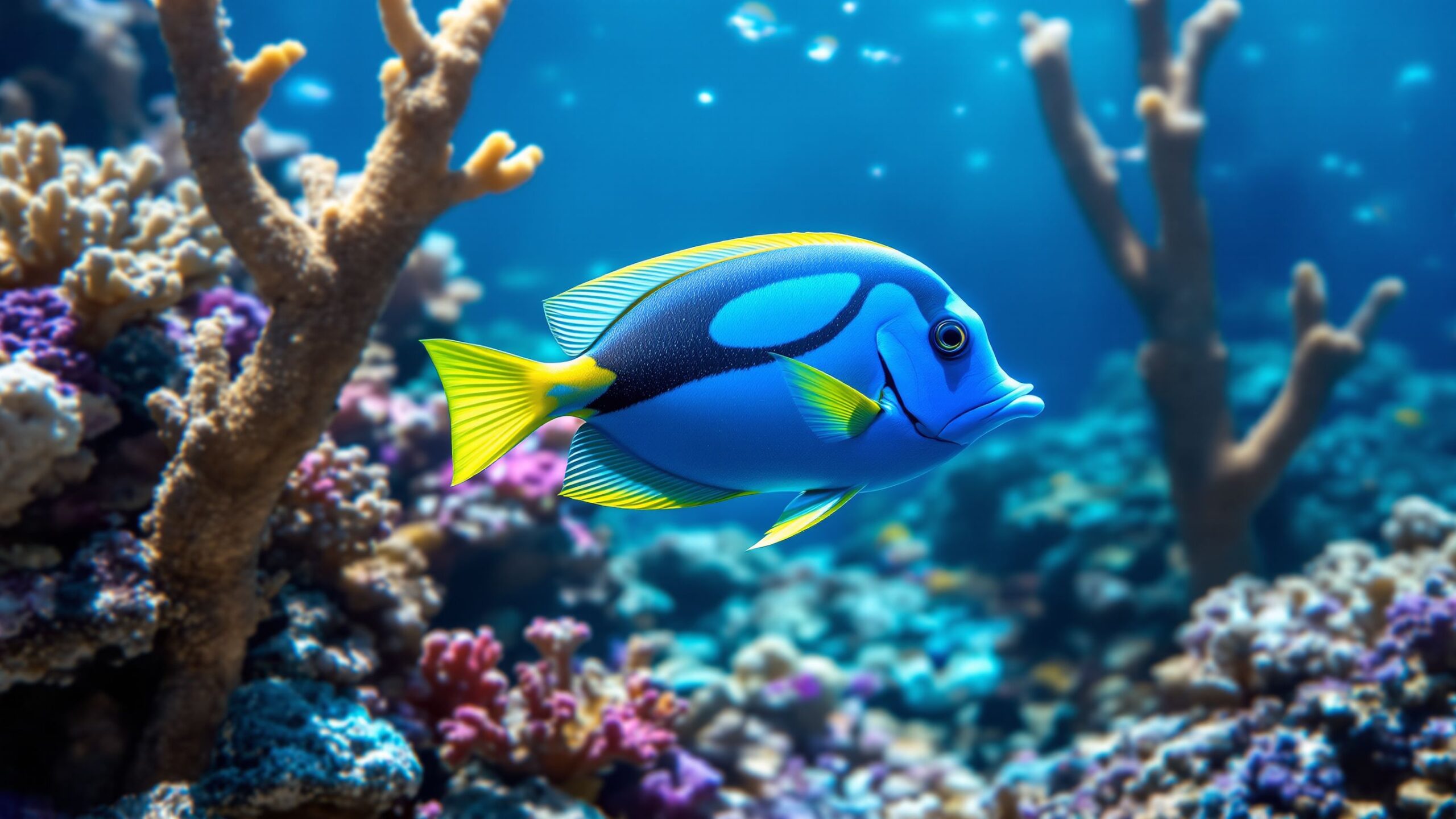
The Yellowtail Damselfish, scientifically known as Chrysiptera parasema, is one of the most popular beginner saltwater fish in the marine aquarium hobby. Known for its brilliant electric blue body and bright yellow tail, this small reef fish offers bold color, strong personality, and impressive hardiness. Its vivid contrast makes it one of the most eye-catching fish for reef aquariums, especially for hobbyists building their first saltwater setup.
Unlike some damselfish species that are famous for extreme aggression, the Yellowtail Damselfish is considered one of the more peaceful members of the damselfish family. While it still has territorial instincts, it is generally easier to manage than larger or more aggressive damsels, making it a better choice for community reef tanks.
Native to the Indo-Pacific region, this fish thrives in coral-rich reef environments where rock structures provide shelter and territory. In the wild, it spends much of its time darting among coral branches and rocky crevices, using speed and agility to avoid predators. This active behavior carries over into home aquariums, where it becomes a lively and visible tank resident.
One of the main reasons for its popularity is its resilience. The Yellowtail Damselfish adapts well to aquarium life, tolerates beginner mistakes better than many delicate reef species, and readily accepts prepared foods. This makes it a strong introduction to marine fishkeeping for new hobbyists.
Understanding the Yellowtail Damselfish means recognizing both its beauty and its bold personality. It is a fish that brings energy, movement, and strong color to reef tanks while remaining manageable for properly planned community setups.
A: Yes, they are hardy, colorful, and one of the best beginner-friendly damselfish.
A: Yes, they are considered reef safe and usually leave corals alone.
A: A tank around 20–30 gallons or larger is commonly recommended.
A: They are less aggressive than many damselfish but still territorial.
A: They eat marine pellets, frozen mysis shrimp, brine shrimp, and other prepared foods.
A: Yes, they often do well with clownfish if the tank has enough space and structure.
A: Sometimes, but space and careful introduction are important to reduce fighting.
A: They may be defending territory, especially around their chosen rock area.
A: They often live around 5 years or longer with proper care.
A: Yes, many hobbyists choose them as one of their first marine fish because of their hardiness.
Natural Habitat and Geographic Range
The Yellowtail Damselfish is found throughout parts of the western Pacific Ocean, especially around Indonesia, the Philippines, Japan, the Great Barrier Reef, and nearby Indo-Pacific reef systems. It thrives in warm tropical marine environments where coral reefs provide both shelter and feeding opportunities.
In the wild, this species is most commonly found in shallow lagoons, reef slopes, coral gardens, and protected reef flats where branching coral and live rock create dense structure. These areas offer hiding spaces and natural territories that help the fish avoid predators and establish secure living zones.
Unlike open-water swimmers, Yellowtail Damselfish prefer to stay close to reef cover. They move quickly between rock crevices and coral branches, rarely venturing far from shelter. This behavior helps explain why live rock is so important for them in captivity.
They usually inhabit waters with temperatures between 75 and 82 degrees Fahrenheit, stable salinity, and strong oxygenation. Healthy coral ecosystems are essential because these reefs provide both food sources and protection.
Juveniles often stay even closer to branching coral for extra security, while adults become more confident in defending small territories around reef structures.
Because coral reef decline affects both shelter and feeding opportunities, habitat conservation remains important for maintaining healthy wild populations of this species.
Physical Appearance and Identification
The Yellowtail Damselfish is instantly recognizable because of its bold and simple color pattern. Its body is a brilliant royal blue to electric blue, while the tail fin is a vivid bright yellow that creates a dramatic contrast. This clean color split makes it one of the easiest reef fish to identify.
Most adults grow to around two and a half to three inches in length, making them a compact but highly visible addition to reef aquariums. Their small size makes them suitable for smaller marine tanks while still allowing them to stand out visually.
Their body shape is oval and slightly compressed, typical of many damselfish species, allowing quick movement through tight reef spaces. Their fins are smooth and streamlined, supporting fast bursts of speed when defending territory or avoiding threats.
Unlike some similar blue damselfish species, the Yellowtail Damselfish has its signature bright yellow tail rather than fully blue coloration. This makes it much easier to distinguish from more aggressive relatives.
Their eyes are dark and alert, and healthy specimens display strong color saturation with no fading or dullness. Bright blue coloration is often a sign of good water quality, proper nutrition, and low stress.
Because of their constant movement and bold colors, they often become one of the first fish noticed in a reef aquarium.
Behavior and Personality
The Yellowtail Damselfish is active, confident, and full of personality. It spends much of the day swimming openly around the tank, weaving through rock structures, and defending its chosen territory. This constant movement makes it one of the most visible and energetic fish in a reef setup.
Compared to other damselfish, it is considered relatively peaceful, but it is still a damselfish and should not be mistaken for completely passive species. It may defend its territory from fish that enter its preferred space, especially if the tank is small or overcrowded.
It usually does well with other semi-peaceful reef fish that are not overly timid. Extremely shy fish may become stressed if housed with a particularly bold individual, while highly aggressive predators can create problems in the opposite direction.
Keeping multiple Yellowtail Damselfish together is possible in larger tanks with enough rockwork and separate territories, but in smaller aquariums, aggression between individuals may become a challenge.
Once established, they become confident and often seem to recognize feeding routines quickly. Their fearless attitude and constant activity make them enjoyable to watch.
Their personality is often described as bold rather than aggressive—they are active residents rather than hidden background fish.
Diet in the Wild and Aquarium
In the wild, Yellowtail Damselfish are omnivorous feeders. They consume zooplankton, tiny crustaceans, algae, and various organic material found around coral reef environments. Their diet is flexible, which helps them survive in changing reef conditions.
They feed throughout the day, picking at available food sources and making quick movements to capture drifting prey. Their active swimming behavior matches this constant feeding style.
In aquariums, they are considered very easy to feed and quickly adapt to prepared foods. High-quality marine pellets, flakes, frozen mysis shrimp, brine shrimp, finely chopped seafood, and algae-based foods are all commonly accepted.
A varied diet helps maintain strong coloration, healthy immune function, and long-term vitality. Including both protein-rich foods and some plant-based options supports their natural omnivorous needs.
Feeding once or twice daily in moderate portions is usually ideal. Because they are eager feeders, overfeeding should be avoided to protect water quality.
They are rarely shy during meals and often become one of the fastest fish to respond when food enters the tank. This makes monitoring appetite and health relatively easy.
Healthy Yellowtail Damselfish are active, brightly colored, and consistently eager to feed.
Aquarium Care and Tank Requirements
Yellowtail Damselfish are excellent beginner saltwater fish because of their hardiness and adaptability. A minimum tank size of around 20 to 30 gallons is often suitable for a single fish, although larger tanks provide better long-term stability and reduce territorial stress in community setups.
A reef tank with live rock is strongly recommended because this species depends on rockwork for shelter, territory, and security. Plenty of caves, ledges, and coral-like structures help reduce aggression by giving fish clear boundaries.
Water temperature should remain stable between 76 and 80 degrees Fahrenheit, with salinity around 1.023 to 1.025 specific gravity. Ammonia and nitrite should always remain at zero, while nitrate should be kept low for long-term health.
Like all marine fish, they benefit most from stable conditions rather than constant adjustments. Sudden swings in temperature, salinity, or pH create unnecessary stress. A fully cycled aquarium is essential before introduction.
They are generally reef-safe and do not bother corals, shrimp, snails, or most invertebrates. This makes them suitable for mixed reef tanks where peaceful compatibility is important.
Compatible tankmates often include clownfish, gobies, blennies, Royal Grammas, Firefish Gobies, and other semi-peaceful reef-safe species. Extremely timid fish or highly aggressive predators should be chosen carefully.
With proper care, Yellowtail Damselfish commonly live five years or longer in captivity, and some individuals exceed this lifespan significantly.
Breeding and Reproduction
Breeding Yellowtail Damselfish in captivity is possible and follows a nesting behavior common among damselfish species. Their reproductive process is interesting and often centered around territory and nest defense.
Males establish and defend a nesting area, usually on a flat rock surface or protected location near the substrate. During courtship, the male displays brighter coloration, increased activity, and territorial behavior to attract a female.
After spawning, the female deposits adhesive eggs onto the prepared surface. The male then takes over primary parental care, guarding the nest closely and fanning the eggs with his fins to improve oxygen flow.
This protective behavior continues until the eggs hatch, usually within a few days depending on temperature and water conditions. The male aggressively defends the nest from potential threats during this period.
The larvae are extremely small and require specialized live foods such as rotifers and plankton-sized prey, making successful home rearing more advanced than beginner-level breeding.
While breeding can happen in established reef systems, most hobbyists keep Yellowtail Damselfish for their color and hardiness rather than active breeding projects.
Supporting responsibly sourced or captive-bred fish remains valuable for sustainability and ethical marine fishkeeping.
Common Health Issues
Yellowtail Damselfish are known for being hardy, but like all marine fish, they can still experience disease if stressed or exposed to poor water conditions. Prevention remains the best long-term strategy.
Marine ich is one of the most common diseases, causing white spots, scratching behavior, breathing difficulty, and appetite loss. Marine velvet is another serious disease that progresses quickly and requires immediate attention.
Stress caused by overcrowding, territorial conflict, poor water quality, or unstable parameters can weaken the immune system and make illness more likely. Because this species is bold and territorial, aggression-related stress can sometimes be overlooked.
Bacterial infections, fin damage, and parasite issues may also occur. Fish showing faded color, clamped fins, reduced appetite, or unusual hiding behavior should be monitored carefully.
Quarantining new fish before adding them to the display tank is one of the best preventive steps. Stable water parameters, quality nutrition, and thoughtful stocking choices greatly reduce health risks.
Healthy Yellowtail Damselfish are active, alert, brightly colored, and confidently visible throughout the aquarium.
Why the Yellowtail Damselfish Remains So Popular
Few beginner saltwater fish combine color, hardiness, and personality as successfully as the Yellowtail Damselfish. Its bright blue body and vivid yellow tail create instant visual impact, making even small reef tanks feel more vibrant and alive.
Its resilience makes it especially valuable for beginners learning marine aquarium care. It tolerates common beginner mistakes better than many delicate reef species while still delivering striking beauty.
Its active personality adds constant motion and energy to the aquarium. Unlike shy fish that remain hidden, the Yellowtail Damselfish becomes a visible part of daily tank life.
Its reef-safe behavior allows it to coexist with corals and most invertebrates, making it practical for mixed reef systems without sacrificing personality.
For beginners, it offers confidence and durability. For experienced aquarists, it remains a classic choice because of its reliability and color.
For general readers, the Yellowtail Damselfish proves that small reef fish can be just as visually impressive and behaviorally interesting as larger showpiece species.
Whether darting through coral branches in the Indo-Pacific or thriving in a peaceful home aquarium, Chrysiptera parasema continues to earn its place as one of the best beginner-friendly saltwater fish in the hobby. Its beauty is immediate, but its true value lies in its resilience, energy, and unmistakable presence.
Pet Product Reviews
Explore Duffy Street’s Pet Product Reviews! Sniff out the top-rated toys, treats, gear, and gadgets for your pets with our fun, easy-to-read comparisons. We’ve done the digging so you can find the perfect products for your pet friends!