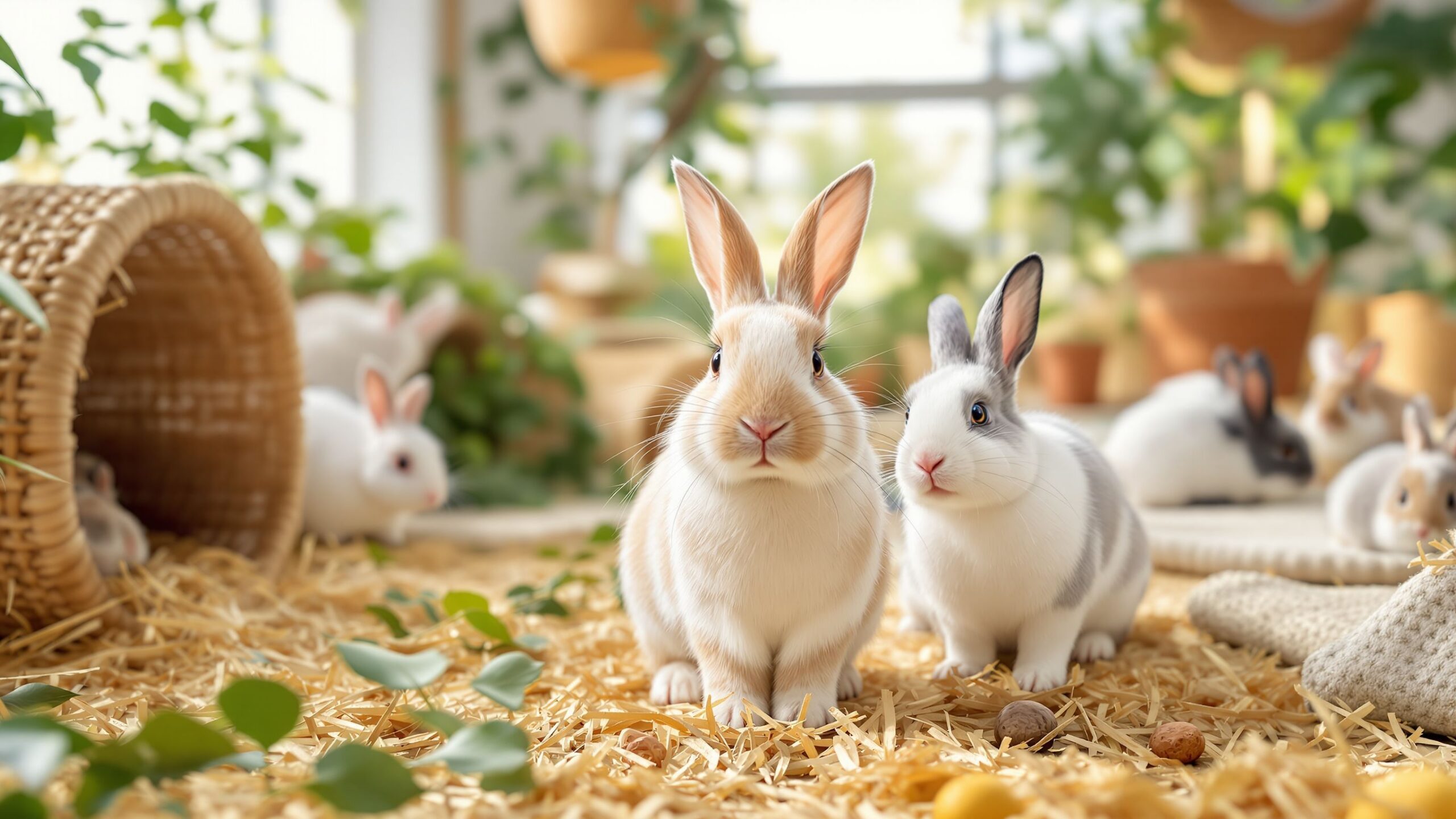
Rabbits are intelligent, social, curious mammals that have lived alongside humans for centuries and have become some of the most recognizable companion animals in the world. The domestic rabbit is descended from the European rabbit, scientifically known as Oryctolagus cuniculus. Although rabbits are often casually grouped with rodents, they actually belong to the order Lagomorpha, which also includes hares and pikas. This distinction is more than scientific trivia because rabbits have unique anatomy, digestion, dental needs, and behavior that set them apart from rodents such as hamsters, rats, and guinea pigs. Rabbits are often portrayed as quiet cage pets that eat carrots and sit still, but that image leaves out almost everything that makes them fascinating. A healthy rabbit may race through a room, leap into the air, dig blankets, rearrange toys, investigate furniture, groom a bonded companion, stretch out in total relaxation, and communicate with subtle body language. Many learn household routines, recognize familiar people, respond to their names, and can even be litter trained. Their personalities vary enormously. Some are bold and mischievous, some are calm and affectionate, and others are cautious until they feel safe. Rabbits require far more than a small cage and a bowl of pellets. They need abundant hay, room to move, social interaction, enrichment, veterinary care, safe housing, and a deep understanding of their prey-animal instincts.
A: Rabbits can be wonderful companions, but they require considerably more space, specialized nutrition, enrichment, rabbit-proofing, and veterinary care than many first-time owners expect.
A: Well-cared-for domestic rabbits commonly live around 8 to 12 years, with some individuals reaching their teens.
A: Yes. Unlimited grass hay is a crucial part of an adult rabbit's diet and supports both digestive and dental health.
A: Yes. Many rabbits develop excellent litter-box habits, particularly after being spayed or neutered.
A: This behavior is called a binky and is commonly associated with excitement, playfulness, and positive energy.
A: Rabbits commonly thump when frightened, suspicious, annoyed, or attempting to warn others about something they perceive as dangerous.
A: Many rabbits dislike being lifted because being restrained above the ground can trigger their prey-animal instincts, even when they enjoy petting and human companionship.
A: Yes. Compatible, properly introduced rabbits can form extremely close bonds, but bonding should be gradual and carefully supervised.
A: Chewing is normal rabbit behavior. Providing hay, rabbit-safe chew materials, enrichment, and proper rabbit-proofing helps redirect it appropriately.
A: Loss of appetite, fewer or absent droppings, lethargy, unusual posture, difficulty breathing, diarrhea, tooth grinding associated with pain, or sudden behavioral changes warrant prompt veterinary attention.
Where Do Domestic Rabbits Come From?
Domestic rabbits descend from the European rabbit, a species native to the Iberian Peninsula and parts of southwestern Europe. Over time, rabbits spread into other regions through both natural movement and human activity. Their ability to reproduce quickly and adapt to a wide range of environments made them successful in many areas. Humans began keeping rabbits for food and practical purposes long before they became household companions. Organized domestication and selective breeding accelerated in Europe, especially during the Middle Ages and later centuries, eventually producing rabbits with different body sizes, coat colors, fur types, ear shapes, and temperaments. By the 19th century, rabbit breeding for appearance and exhibition had become increasingly popular. Today, domestic rabbits range from tiny dwarf breeds weighing only a few pounds to giant breeds that can weigh well over 10 pounds. Despite their diversity, all domestic breeds share the same basic species ancestry. Their domestication has changed their appearance dramatically, but many natural behaviors remain deeply rooted. Digging, chewing, scent marking, social grooming, hiding, running, and maintaining secure resting areas are all behaviors connected to their wild ancestors.
Rabbits Are Lagomorphs, Not Rodents
One of the most common misunderstandings about rabbits is that they are rodents. Rabbits were historically classified near rodents, but modern taxonomy places them in the separate order Lagomorpha. One major anatomical difference is their teeth. Rodents have one pair of upper incisors, while rabbits have a second smaller pair of upper incisors positioned behind the front teeth. These small secondary teeth are sometimes called peg teeth. Rabbits also have continuously growing teeth, making proper dental wear essential throughout life. Their digestive systems are equally distinctive. Rabbits are hindgut fermenters, meaning much of the digestion of fibrous plant material occurs in the cecum, a specialized section of the digestive tract. This system allows them to extract nutrients from a diet that is heavily based on grasses and other fibrous plants. Understanding rabbits as lagomorphs rather than oversized rodents helps explain why their care should never simply copy the care of hamsters or rats.
What Do Rabbits Look Like?
Rabbits are instantly recognizable by their long ears, compact bodies, powerful hind legs, short tails, and large eyes positioned toward the sides of the head. Their bodies are designed for rapid acceleration and escaping predators. Strong hindquarters allow rabbits to sprint, leap, and change direction quickly, while long ears help detect sounds from a wide area. Their nearly panoramic field of vision allows them to monitor much of their surroundings without moving the head. Domestic rabbits vary dramatically in size and appearance. Some dwarf rabbits are extremely small and compact, while giant breeds can approach the size of a small dog. Ears may stand upright, fall to the sides in lop breeds, or differ in length and shape according to genetics. Coats may be short, long, plush, woolly, satin-like, or extremely dense. Color variations include white, black, brown, gray, blue-toned, cream, red, tan, agouti, spotted, shaded, and countless combinations. Their visible differences are enormous, but their basic physical needs remain strongly connected to their natural biology.
Popular Rabbit Breeds and Varieties
Domestic rabbits have been selectively bred into dozens of recognized breeds, each with its own characteristic appearance. The Holland Lop is known for its compact size and floppy ears, while the Mini Rex has a distinctive velvety coat. Netherland Dwarfs are extremely small and often have compact heads and short ears. Lionhead rabbits are famous for a mane-like ring of longer fur around the head and neck. Flemish Giants are among the largest domestic rabbits and can be impressively heavy. English Angoras and other wool breeds have long, dense coats that require substantial grooming. Rex rabbits have plush coats with an unusually soft texture, while Dutch rabbits are famous for their distinctive color pattern. Although breed can influence grooming requirements, size, and some physical characteristics, individual temperament varies widely. Choosing a rabbit based solely on appearance can lead to unexpected care challenges, especially when long coats or giant body sizes create additional maintenance and housing needs.
Rabbit Personality and Temperament
Rabbits can have remarkably distinct personalities. Some are confident and approach people immediately, while others prefer to observe from a safe distance before interacting. Some rabbits enjoy gentle petting for long periods, while others are more interested in exploring than cuddling. Their behavior is strongly shaped by the fact that they are prey animals. Sudden movement, loud noises, being grabbed from above, or unfamiliar environments can trigger fear. A rabbit that freezes or runs away when approached is not necessarily unfriendly. It may simply be following instinct. Building trust usually requires patience. Sitting quietly at floor level, allowing the rabbit to approach voluntarily, offering appropriate food by hand, and avoiding forced handling can help create positive associations. Many rabbits become extremely affectionate once secure. They may nudge for attention, lower their heads to request grooming, lie beside a trusted person, or follow someone around the house.
Rabbits Are Social Animals
Wild European rabbits live in social groups, and domestic rabbits retain strong social instincts. Compatible rabbits can form deep bonds, spending hours grooming, resting, eating, and exploring together. A bonded pair may sleep pressed against one another, take turns grooming faces and ears, and seek each other out during unfamiliar situations. Human interaction can be valuable, but another rabbit communicates in ways people cannot fully reproduce. Bonding rabbits should be handled carefully because territorial behavior can cause conflict. Unfamiliar rabbits should not simply be placed together and expected to become friends. Neutral territory, gradual introductions, supervision, and spaying or neutering can play important roles in successful bonding. Same-sex and opposite-sex pairs can both work depending on personality and reproductive status. Once a stable bond is formed, separating rabbits unnecessarily can cause significant stress.
Why Spaying and Neutering Matter
Spaying or neutering can offer both behavioral and medical benefits for many companion rabbits. Unaltered rabbits may display stronger territorial behavior, spraying, mounting, aggression, and reproductive frustration. Neutering can reduce some of these hormone-driven behaviors and may make bonding easier. For females, spaying is especially important because unspayed rabbits have a significant risk of reproductive disease, including uterine cancer, as they age. Surgery should always be performed by a veterinarian experienced with rabbits because their anesthesia and medical needs differ from those of dogs and cats. The appropriate timing depends on age, sex, breed, size, and health. Responsible rabbit ownership often includes discussing reproductive surgery early with a rabbit-savvy veterinarian.
Creating the Right Rabbit Living Space
The traditional image of a rabbit living permanently inside a small hutch or cage is outdated. Rabbits need enough room to stand fully upright, stretch out, hop several times in a row, explore, and exercise. Many successful indoor rabbit setups use exercise pens, dedicated rooms, large enclosures, or carefully rabbit-proofed sections of the home. A rabbit’s space should include hay, fresh water, litter areas, hiding places, comfortable resting surfaces, and enrichment. Flooring matters because rabbits can struggle on slick surfaces. Rugs, mats, or other non-slip materials can help them move naturally. Wire flooring should be avoided because it can cause discomfort and foot injuries. The enclosure should be secure but not barren. Rabbits benefit from tunnels, cardboard boxes, digging areas, chew toys, and objects that can be rearranged. A good rabbit habitat should feel more like a small living environment than a cage.
Indoor Versus Outdoor Rabbits
Rabbits can be kept in different environments, but indoor housing often provides greater protection from extreme weather, predators, parasites, and sudden health changes. Outdoor rabbits are vulnerable to heat, cold, storms, insects, wildlife, and predators that may frighten or injure them even without direct contact. Heat is especially dangerous because rabbits tolerate high temperatures poorly. Indoor rabbits also tend to receive more social interaction because caregivers see them more frequently throughout the day. If rabbits are housed outdoors, the setup must provide substantial protection, secure shelter, temperature management, predator resistance, enrichment, and daily observation. Regardless of location, rabbits should not be isolated in a small hutch with minimal exercise.
Hay Is the Foundation of Rabbit Nutrition
Hay is the single most important component of an adult rabbit’s diet. High-quality grass hay should generally be available at all times because it supports both digestive and dental health. Timothy, orchard, meadow, and other appropriate grass hays can provide the long fibers rabbits need. Rabbits naturally spend much of their day grazing, and hay encourages this normal feeding pattern. The constant chewing also helps wear continuously growing teeth. Alfalfa is richer in protein and calcium than typical grass hays and may be appropriate for young growing rabbits or certain animals with specific needs, but it is generally not the default hay for healthy adults. Good hay should smell fresh, dry, and grassy rather than damp or moldy. A rabbit that suddenly stops eating hay may be experiencing dental pain, gastrointestinal illness, or another health problem and should be monitored closely.
Vegetables, Pellets, and Treats
A balanced rabbit diet usually includes unlimited grass hay, measured pellets, and a variety of suitable leafy greens. Pellets should be formulated for rabbits and offered in appropriate portions rather than kept constantly overflowing. Too many pellets can reduce hay intake and contribute to weight gain. Leafy vegetables provide variety, moisture, and nutrients. Romaine lettuce, cilantro, parsley, certain herbs, and other rabbit-safe greens may be offered as part of a varied diet. New foods should be introduced gradually. Carrots, despite their famous connection with rabbits, are relatively high in sugar and are better treated as occasional foods rather than dietary staples. Fruit is also best offered sparingly. A rabbit enthusiastically begging for banana or berries does not mean those foods should be unlimited. Their digestive systems are built primarily around fiber, not sugar.
Why Rabbit Digestion Is So Unique
Rabbits have a highly specialized digestive system designed to extract nutrition from fibrous plant material. Food passes through the stomach and small intestine before reaching the cecum, where microorganisms help ferment certain components. Rabbits produce two types of droppings. The familiar dry round fecal pellets are waste, while softer nutrient-rich cecotropes are produced separately and normally eaten directly from the anus. This behavior, called cecotrophy, allows rabbits to obtain vitamins, proteins, and other nutrients created during fermentation. Owners may rarely notice cecotropes because healthy rabbits consume them immediately. Finding large amounts left behind can indicate obesity, pain, mobility problems, dental issues, or an overly rich diet. Cecotrophy is completely normal and essential to rabbit health.
Why Appetite Changes Can Be an Emergency
A rabbit that stops eating should be taken seriously. Rabbits are designed to consume fibrous food frequently, and prolonged reductions in food intake can contribute to gastrointestinal stasis, a potentially life-threatening condition in which normal gut movement slows dramatically. Signs may include reduced appetite, fewer or smaller droppings, lethargy, abdominal discomfort, hunched posture, or refusal of favorite foods. Gastrointestinal stasis is not a single disease but can result from pain, dental disease, dehydration, stress, poor diet, obstruction, or other medical problems. Because rabbits often hide illness, owners should not wait days to see whether appetite returns. Significant decreases in eating or stool production warrant prompt veterinary attention.
Rabbit Teeth and Dental Health
Rabbit teeth grow continuously throughout life. Their incisors are visible at the front of the mouth, but the cheek teeth deeper inside are just as important. A fiber-rich diet encourages the prolonged chewing motion needed to support normal dental wear. Dental disease can develop when teeth become misaligned, overgrown, sharp, infected, or otherwise abnormal. Signs may include drooling, wet fur around the mouth, selective eating, dropping food, weight loss, eye discharge, reduced hay consumption, or changes in stool. Normal-looking front teeth do not rule out deeper problems. A veterinarian familiar with rabbit dentistry may need specialized equipment to examine the mouth properly.
Litter Training Rabbits
Many rabbits can be successfully litter trained, especially after spaying or neutering. Rabbits naturally tend to choose particular areas for urination and defecation, making it possible to place litter boxes where they already prefer to go. A litter box should be large enough for the rabbit to sit comfortably and may be filled with rabbit-safe litter. Hay is often positioned inside or directly beside the box because rabbits frequently eat while using it. Pelleted paper or other safe absorbent products are common choices. Clumping cat litter and strongly scented litters should generally be avoided because of ingestion and respiratory risks. Occasional droppings outside the box are normal, especially in territorial rabbits, but many indoor rabbits become remarkably reliable.
Rabbit-Proofing the Home
A rabbit allowed to explore indoors will eventually test the environment with its teeth. Chewing is not disobedience; it is a normal behavior connected to dental maintenance and exploration. Electrical cords are especially dangerous and should be covered or made completely inaccessible. Houseplants must be checked for toxicity because many common species can be harmful if eaten. Baseboards, furniture, rugs, books, and fabric may also become targets. Rabbit-proofing works better than trying to punish natural behavior. Providing safe chew alternatives such as untreated wood, cardboard, woven grass toys, and appropriate branches can help redirect chewing. Blocking dangerous areas and supervising exploration are essential.
Digging and Why Rabbits Love It
Digging is deeply rooted in rabbit behavior. Wild European rabbits construct complex underground warrens where they sleep, raise young, and escape danger. Domestic rabbits may dig carpets, blankets, bedding, couches, or corners because the instinct remains strong. Providing a digging box can offer a safer outlet. Cardboard boxes filled with shredded paper, clean packing paper, hay, or other suitable materials can encourage natural digging. Some rabbits become intensely focused on rearranging their environment and may spend long periods pushing blankets, tossing toys, or excavating boxes. These behaviors are normal forms of enrichment rather than signs of misbehavior.
Binkies, Zoomies, and Happy Rabbit Behavior
One of the most joyful rabbit behaviors is the binky, a sudden leap into the air accompanied by twists, kicks, or body turns. Rabbits often perform binkies when excited or playful. Zoomies are bursts of high-speed running in which the rabbit may race around furniture, change direction suddenly, and repeat laps through the same area. Another positive behavior is the flop, in which a relaxed rabbit suddenly rolls onto its side and stretches out. This can look alarming to first-time owners because the rabbit may appear to have collapsed, but it often indicates deep relaxation. Rabbits may also “loaf” by tucking their feet beneath the body and resting in a compact position. Understanding these behaviors helps owners appreciate the emotional richness of rabbit life.
Understanding Rabbit Body Language
Rabbits communicate heavily through posture and movement. A relaxed rabbit may stretch out with its legs behind it, lie on its side, or rest in a loose loaf. A rabbit that lowers its head toward another rabbit or person may be requesting grooming. Gentle nudging can ask for attention or request that someone move. Ears provide valuable clues but must be interpreted according to breed. Upright ears may rotate toward interesting sounds, while ears pinned tightly back can accompany fear or aggression. Lop-eared rabbits communicate less obviously through ear position, making other body signals more important. Thumping the hind feet can function as an alarm warning. A frightened rabbit may freeze, crouch low, widen its eyes, or run for cover. Learning these subtle signals makes interaction safer and more respectful.
Why Rabbits Thump
The dramatic thump of a rabbit’s hind foot is one of its most distinctive behaviors. In wild colonies, thumping can warn nearby rabbits about possible danger. Domestic rabbits may thump after hearing an unfamiliar sound, smelling something unusual, becoming frightened, feeling irritated, or occasionally demanding attention. A single thump may mean the rabbit noticed something suspicious, while repeated thumping can indicate significant stress. Owners should consider the surrounding environment rather than assuming the rabbit is simply being dramatic. New pets, construction noises, vacuum cleaners, outdoor predators visible through windows, or sudden changes can all trigger alarm behavior.
Do Rabbits Like Being Held?
Many rabbits enjoy affection but do not enjoy being picked up. This distinction is important. As prey animals, rabbits are naturally uncomfortable being lifted off the ground because being grabbed and carried can resemble capture by a predator. Some become accustomed to handling, but many prefer interaction at floor level. Sitting beside a rabbit and allowing it to approach often produces a more relaxed relationship than constantly picking it up. When lifting is necessary, the body and powerful hindquarters must be fully supported. Rabbits can kick with tremendous force when frightened and may seriously injure their spine if they struggle without support. They should never be lifted by the ears or scruff.
Grooming and Coat Care
Rabbits are naturally clean animals and spend significant time grooming themselves. They do not require routine bathing, and full water baths can be stressful and potentially dangerous. Regular brushing is important, especially during heavy shedding periods, because rabbits cannot vomit hairballs in the way cats can. Swallowed fur must pass through the digestive system. Long-haired breeds may require extensive grooming to prevent mats and skin problems. Nails also need regular trimming because they do not always wear down enough indoors. Grooming sessions provide an opportunity to inspect the skin, feet, ears, eyes, teeth, and body for unusual changes. Rabbits with mobility problems, obesity, or illness may need additional assistance keeping themselves clean.
Rabbit Ears and Temperature Regulation
A rabbit’s ears are not only important for hearing; they also play a significant role in temperature regulation. Blood vessels running through the ears can help release body heat. This is particularly important because rabbits do not sweat efficiently like humans. Their sensitivity to heat means warm environments can become dangerous quickly. Signs of overheating may include rapid breathing, extreme lethargy, weakness, or unusually hot ears combined with distress. Rabbits should always have access to shade, fresh water, airflow, and comfortable temperatures. Direct sunlight through windows can create unexpectedly hot conditions indoors.
Common Rabbit Health Problems
Rabbits can develop dental disease, gastrointestinal stasis, respiratory infections, urinary disorders, parasites, skin disease, sore hocks, reproductive disease, ear problems, and other medical conditions. Gastrointestinal issues and dental disease are particularly important because both can quickly affect appetite. Urinary problems may cause straining, abnormal urine, wet fur around the rear, or changes in litter-box habits. Sore hocks, also known as pododermatitis, can develop when the skin on the feet becomes irritated or ulcerated, particularly on inappropriate flooring. Ear disease may be especially important in lop breeds because their ear structure can affect ventilation and drainage. Any sudden change in appetite, stool production, breathing, mobility, posture, or behavior deserves attention.
Why Rabbits Hide Illness
Rabbits are prey animals and may conceal signs of illness until a condition is advanced. This makes daily observation extremely important. Owners should learn how much hay their rabbit normally eats, how often it visits the litter box, what normal droppings look like, and how active it usually is. A rabbit that suddenly hides, becomes unusually still, refuses food, produces fewer droppings, grinds its teeth loudly, or sits hunched may be experiencing pain or illness. Regular weight checks can help identify gradual changes. Finding a rabbit-experienced veterinarian before an emergency occurs is wise because not every general veterinary practice treats rabbits routinely.
Vaccinations and Preventive Veterinary Care
Vaccination recommendations for rabbits vary according to country, region, and disease risk. In areas where rabbit hemorrhagic disease virus type 2, commonly called RHDV2, is present, vaccination can be an important preventive measure. Myxomatosis vaccination is also used in some countries where the disease is a significant threat. Rabbit owners should discuss local recommendations with an experienced veterinarian because disease risk and vaccine availability can change over time. Routine wellness examinations can also help detect dental disease, weight changes, reproductive problems, and other conditions before obvious symptoms develop.
Rabbit Reproduction and Baby Rabbits
Female rabbits are called does, males are bucks, and baby rabbits are called kits. Rabbits are famous for their reproductive ability, and the phrase “breeding like rabbits” exists for good reason. Pregnancy is short, usually around one month, and females can produce multiple offspring in a litter. Newborn kits are very different from baby guinea pigs. Rabbit kits are born blind, mostly hairless, and dependent on the mother. The mother usually nurses only briefly once or twice a day, which can surprise people who expect her to remain constantly with the nest. Casual breeding is strongly discouraged because pregnancy, birth, genetics, housing, and placement of young rabbits require significant expertise and resources. Spaying and neutering also help prevent accidental litters.
How Long Do Rabbits Live?
Domestic rabbits can live considerably longer than many people expect. With appropriate care, many companion rabbits live around eight to twelve years, and some live even longer. Lifespan varies with breed, size, genetics, diet, housing, preventative medicine, and access to veterinary care. This makes rabbit ownership a long-term commitment closer to owning a cat than a short-lived pocket pet. A rabbit adopted for a child may still be living years after that child’s interests or living situation change. Senior rabbits may need modifications such as softer flooring, easier litter-box access, lower entry points, and closer monitoring of weight, mobility, teeth, and kidney function.
Rabbits as Family Pets
Rabbits can make wonderful family companions, but they are often misunderstood as ideal low-maintenance children’s pets. In reality, rabbits are physically delicate, behaviorally complex, and frequently uncomfortable with being carried. Young children may unintentionally frighten or injure them. Adults should remain responsible for feeding, cleaning, veterinary care, grooming, and ensuring safe interaction. Children can participate by preparing greens, replenishing hay, sitting calmly with the rabbit, and helping with enrichment. Families that respect a rabbit’s boundaries often discover a companion that is affectionate, entertaining, and deeply engaging.
Can Rabbits Live With Other Pets?
Rabbits can sometimes live in households with cats or dogs, but compatibility should never be assumed. Rabbits are prey animals, while cats and dogs are predators with instincts that can activate unexpectedly. Even playful chasing can cause severe stress or injury. Introductions require supervision, careful management, and an honest assessment of the larger animal’s temperament. Rabbits should always have secure areas where other pets cannot reach them. Historically, guinea pigs were sometimes housed with rabbits, but this is generally discouraged because the species have different nutritional, behavioral, and medical needs, and rabbits can accidentally injure guinea pigs with their powerful hind legs.
Rabbit Intelligence and Training
Rabbits are capable learners and often respond well to positive reinforcement. Many learn their names, feeding routines, litter-box habits, and household schedules. Some can be trained to come when called, stand on cue, spin, jump over low obstacles, enter carriers, or touch a target. Food rewards can be effective, but portions should remain small and healthy. Training can also improve veterinary care and daily handling by teaching a rabbit to voluntarily enter a carrier or step onto a scale. Punishment is ineffective and can damage trust. Rabbits learn best when desired behaviors are rewarded and unwanted behaviors are managed through environmental changes.
Enrichment and Mental Stimulation
Rabbits need opportunities to chew, dig, forage, hide, explore, and solve simple problems. Cardboard boxes are among the most versatile enrichment items because rabbits can crawl inside, chew entrances, dig at the floor, and rearrange them. Tunnels, woven grass toys, untreated wood, food puzzles, digging boxes, and scatter feeding provide additional stimulation. Rotating safe enrichment can keep the environment interesting without constantly changing everything. Rabbits also benefit from opportunities to explore supervised spaces beyond their primary enclosure. A mentally stimulated rabbit is more likely to express natural behavior and less likely to direct all of its energy toward destructive chewing.
Fascinating Rabbit Facts
Rabbits have a number of remarkable biological abilities. Their eyes are positioned to provide an extremely wide field of vision, helping them detect predators from multiple directions. They can rotate their ears independently to locate sounds. Their powerful hind legs enable impressive acceleration and jumping. Their noses may twitch rapidly as they sample scents in the environment. Rabbits also communicate through scent glands located under the chin, around the anus, and elsewhere on the body. When a rabbit rubs its chin against furniture, toys, or people, it may be marking the object with scent in a behavior called chinning. Their digestive system produces nutrient-rich cecotropes that they consume directly, and their teeth grow continuously throughout life. Far from being simple animals, rabbits are highly specialized herbivores with complex social and survival strategies.
Choosing Between Adoption and Buying
Rabbits are frequently available through animal shelters and dedicated rescues because many are surrendered after owners underestimate their lifespan, space requirements, or medical needs. Adoption can be especially valuable because rescues may already know the rabbit’s temperament, litter-box habits, health history, and compatibility with other rabbits. Some rescues also offer already bonded pairs. Responsible breeders may provide detailed information about genetics and breed characteristics, but prospective owners should carefully evaluate welfare standards. Regardless of source, rabbits should appear alert, clean, and comfortable, with clear eyes, quiet breathing, healthy fur, and normal movement. The rear should be clean, and the rabbit should show interest in food when appropriate. The complete habitat should be prepared before the rabbit comes home.
What to Know Before Getting a Rabbit
Prospective rabbit owners should think carefully about the commitment involved. Rabbits need generous living space, unlimited suitable hay, fresh vegetables, appropriate pellets, enrichment, grooming, veterinary care, and regular cleaning. They may chew furniture, dig carpets, dislike being carried, and require expensive medical treatment from an experienced veterinarian. Spaying or neutering may be part of responsible care, and some rabbits thrive best with a bonded companion. Vacations require reliable pet care, and housing changes must account for an animal that may live more than a decade. These realities do not make rabbits poor pets. They simply mean rabbits deserve the same thoughtful planning given to dogs and cats.
The Remarkable World of Rabbits
Rabbits are far more than fluffy animals with long ears and a love of vegetables. Beneath their gentle appearance is a highly specialized prey species with complex social relationships, sophisticated communication, powerful instincts, distinctive digestion, continuously growing teeth, and an impressive capacity to learn. Understanding Oryctolagus cuniculus means moving beyond the outdated idea of a rabbit spending its life in a backyard hutch or small cage. Rabbits need room to run, abundant hay, safe places to hide, opportunities to chew and dig, compatible companionship, enrichment, attentive health monitoring, and access to experienced veterinary care. In return, owners may discover an animal that races through the house in joyful zoomies, leaps into spontaneous binkies, flops dramatically onto the floor, nudges a hand for attention, rearranges every blanket in sight, and quietly settles beside a trusted person. Their combination of intelligence, sensitivity, independence, and affection makes rabbits some of the most rewarding companion animals for people willing to understand the world from a rabbit’s point of view.
Pet Product Reviews
Explore Duffy Street’s Pet Product Reviews! Sniff out the top-rated toys, treats, gear, and gadgets for your pets with our fun, easy-to-read comparisons. We’ve done the digging so you can find the perfect products for your pet friends!