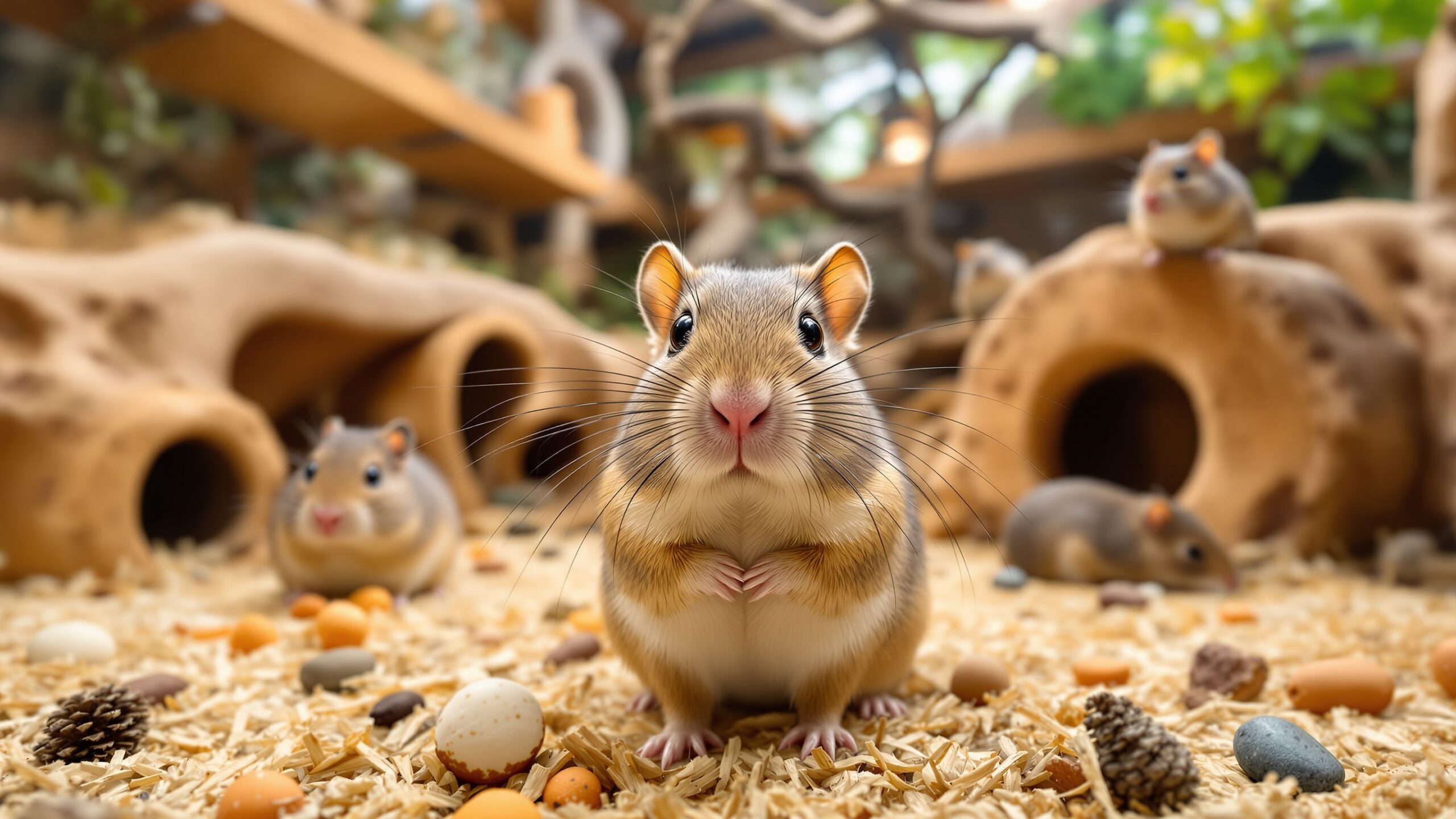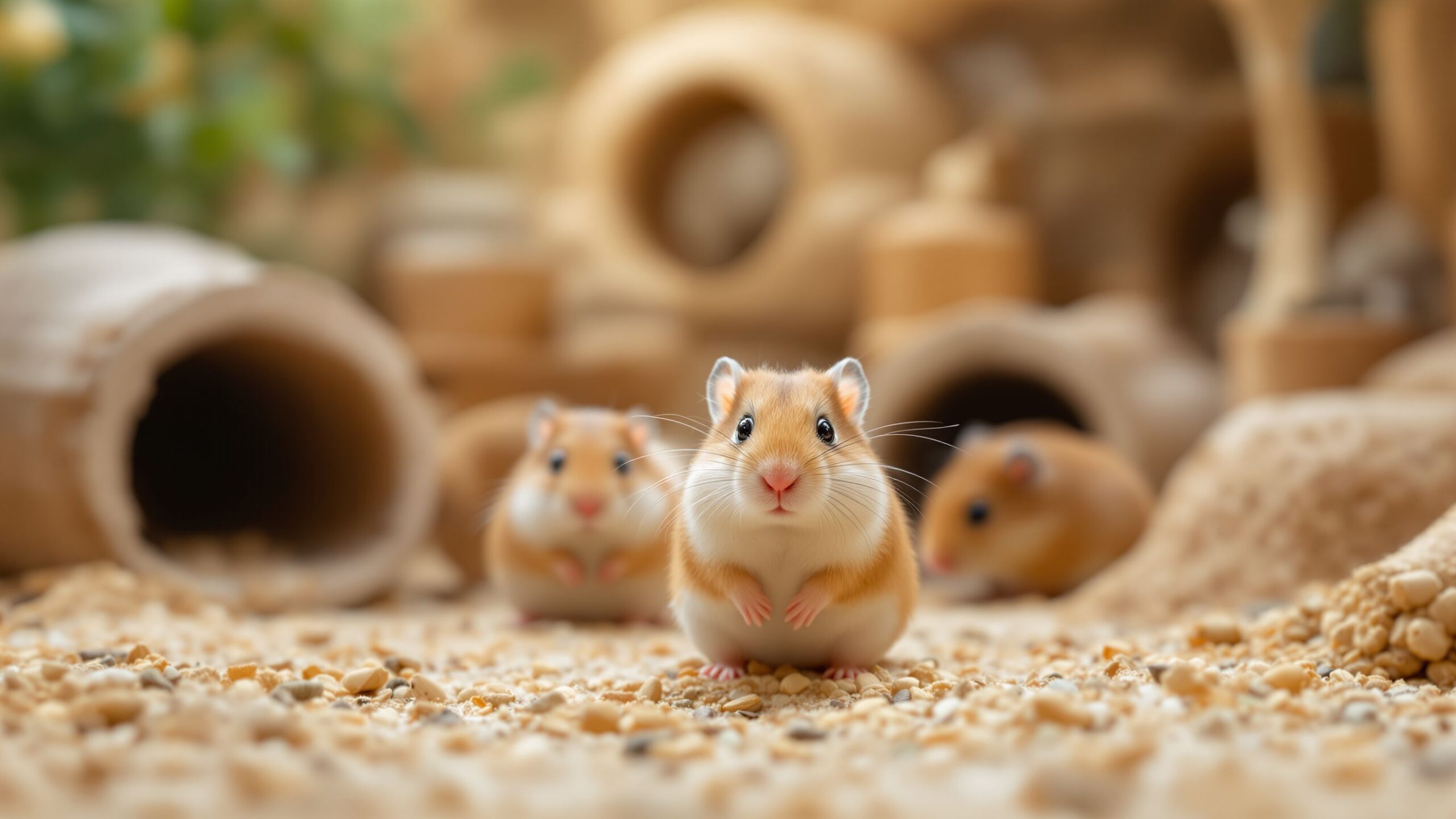
Gerbils are energetic, social, intelligent small mammals known for their digging, chewing, upright posture, and seemingly endless curiosity. The species most commonly kept as a pet is the Mongolian gerbil, scientifically known as Meriones unguiculatus. Although many people casually group gerbils together with hamsters and mice, gerbils have a distinct set of behaviors and care requirements that make them unique companion animals. They are naturally social, highly active, and adapted to dry environments where digging complex burrow systems is essential for survival. A healthy gerbil may spend hours tunneling through bedding, shredding cardboard, rearranging nesting material, storing food, grooming a companion, and standing upright to investigate unfamiliar sounds. Unlike Syrian hamsters, which should generally live alone, gerbils usually thrive with a compatible same-sex companion or bonded group. Their social nature, relatively low odor, playful behavior, and fascinating burrowing habits make them appealing pets for people willing to provide enough space and enrichment. However, they should never be treated as simple cage decorations. Gerbils need deep bedding, safe chewing materials, nutritious food, companionship, regular exercise, and careful handling. When their natural instincts are supported, these small desert rodents reveal surprisingly complex personalities.
A: Yes. Gerbils can be engaging beginner pets for owners prepared to provide deep bedding, enrichment, appropriate companionship, and regular care.
A: Gerbils are social animals and usually do best with a compatible same-sex companion, although introducing unfamiliar gerbils requires careful techniques.
A: Mongolian gerbils commonly live around 3 to 4 years, although genetics, diet, environment, and veterinary care can affect lifespan.
A: Foot-thumping is a form of communication that may signal danger, excitement, stress, or a response to another gerbil.
A: Yes. Providing an appropriate sand bath allows gerbils to clean excess oils from their coats while enjoying a natural activity.
A: Chewing is a normal rodent behavior that helps satisfy natural gnawing instincts and contributes to maintaining continuously growing teeth.
A: Many gerbils become comfortable climbing onto hands and interacting with people, although they are often more interested in exploring than sitting still.
A: No. Pulling or lifting a gerbil by the tail can cause a serious injury. Instead, gently scoop and support the animal's body with your hands.
A: Not strictly. Gerbils commonly alternate between periods of sleeping and activity throughout both the daytime and nighttime.
A: Warning signs can include reduced appetite, weight loss, breathing changes, diarrhea, unusual lumps, poor grooming, lethargy, or a sudden change in normal behavior.
Where Do Gerbils Come From?
The Mongolian gerbil originated in the grasslands, steppes, and semi-arid regions of Mongolia and northern China. These environments can be harsh, with dramatic temperature changes, dry soil, sparse vegetation, and limited access to water. Gerbils adapted by developing efficient ways to conserve moisture and avoid environmental extremes. Much of their life takes place underground, where burrow systems provide more stable temperatures and protection from predators. These burrows can include tunnels, sleeping chambers, food-storage areas, and multiple entrances. Mongolian gerbils entered scientific research and eventually the pet trade during the 20th century. Their calm temperament, social behavior, ease of breeding, and interesting physiology contributed to their popularity in laboratories before they became widely available as companion animals. Selective breeding gradually produced a wide range of coat colors and patterns beyond the original wild-type agouti coloring. Today, pet gerbils may appear golden-brown, black, white, cream, gray, silver, spotted, pied, and other variations, yet their basic instincts remain strongly connected to their desert ancestry.
What Do Gerbils Look Like?
Gerbils are small, streamlined rodents with long hind legs, short front legs, large dark eyes, prominent whiskers, and long tails covered with fur. Their tails help with balance and movement and are one of the most noticeable physical differences between gerbils and hamsters. Mongolian gerbils often have long, tufted tails that can approach the length of the body itself. Their hind legs are powerful and adapted for rapid movement, digging, and upright standing. Gerbils frequently rise onto their back feet to survey their environment, a behavior that makes them look especially alert and curious. Their front paws are smaller and highly useful for holding food, grooming, and digging. Like other rodents, gerbils have continuously growing incisors, meaning chewing is a normal and necessary part of their biology. Their teeth naturally remain worn through gnawing and eating. Coat texture is generally soft and dense, and the underside is often lighter than the back. Adult size varies according to sex, genetics, age, and diet, but gerbils remain compact enough to move rapidly through tunnels and narrow burrows.
Gerbil Colors and Coat Varieties
Wild Mongolian gerbils generally have agouti coloring that provides camouflage against dry soil and grasslands, but domestication has produced a much wider range of appearances. Pet gerbils may be black, golden, cream, white, gray, silver, cinnamon-toned, or various combinations. Some have solid coats, while others display spotted or pied markings. Their eyes may be dark, ruby, or pinkish depending on genetics. Although coat color can be exciting for enthusiasts, appearance has very little to do with whether a gerbil will make a good companion. Temperament, health, social compatibility, and responsible breeding are far more important than obtaining a particular color. Gerbils should be chosen based on overall condition and personality rather than novelty alone.
Gerbils Are Naturally Social Animals
One of the most important differences between gerbils and Syrian hamsters is their social structure. Mongolian gerbils naturally live in family groups and typically do best with compatible companions. A same-sex pair is often an excellent arrangement for pet ownership because it allows the animals to groom, sleep, play, explore, and communicate together. Gerbils frequently sleep curled beside one another and may spend significant time grooming each other’s faces and coats. Keeping a gerbil alone can lead to boredom or reduced social stimulation, especially if it previously lived with companions. However, introducing unfamiliar adult gerbils is not as simple as placing them together. Gerbils are territorial and can fight seriously if introductions are rushed. The widely used split-cage method allows unfamiliar gerbils to become accustomed to each other’s scent gradually while remaining physically separated. Bonded pairs should also be monitored for signs of conflict because relationships can occasionally break down. Stable companionship is extremely valuable, but compatibility and careful introductions matter.
Understanding Gerbil Personality and Temperament
Gerbils are often lively, alert, and curious. Many are less likely to sit still for long periods than larger small mammals, preferring to explore rather than cuddle. A confident gerbil may race toward the front of the enclosure when it hears a familiar person or food container, while a shy individual may disappear into a tunnel and observe from a safe distance. Gerbils can learn routines and recognize familiar people, particularly when interactions are calm and predictable. Some enjoy climbing onto an open hand, while others prefer investigating hands only when food is involved. Because gerbils are prey animals, sudden movements, loud sounds, or being grabbed from above can frighten them. Trust develops through patience. Allowing a gerbil to approach voluntarily, offering tiny treats, and keeping early interactions low and gentle can help build confidence. Once comfortable, many gerbils become bold enough to explore sleeves, hands, play areas, and new objects with enthusiasm.
Why Gerbils Love to Dig
Digging is one of the most fundamental gerbil behaviors. In their natural environment, burrows provide safety, shelter, stable temperatures, and places to store food. A shallow layer of bedding does not allow this instinct to be expressed properly. Gerbils should have a deep section of compactable bedding where they can create tunnels and chambers. Watching a pair of gerbils build an underground network is one of the most rewarding parts of keeping them. They may create sleeping chambers, storage areas, and several connected tunnels, often redesigning the entire system repeatedly. Paper-based bedding, safe hay, and other compatible materials can help provide structure. Bedding should be low in dust and safe for burrowing. Because gerbils are enthusiastic excavators, owners should expect bedding to be moved constantly. A beautifully arranged enclosure may look completely different by morning, and that is often a sign the animals are doing exactly what they are supposed to do.
Creating the Right Gerbil Enclosure
Gerbils need an enclosure that combines generous floor space with enough depth for burrowing. Tank-style enclosures with secure ventilated tops are commonly used because they allow deep bedding without it being thrown across the room. Hybrid setups with an upper wire section can also work when safely designed. The enclosure should provide room for digging, a wheel, sand bath, food, water, hides, and enrichment without becoming crowded. Good ventilation remains important even in a tank-style habitat because stale air and ammonia can contribute to respiratory problems. Heavy objects such as ceramic hides, platforms, or wheels should be supported from the base rather than resting loosely on deep bedding, since gerbils may tunnel underneath and cause them to collapse. Plastic furnishings are often poor choices because gerbils are intense chewers and can destroy them quickly. Wood, cardboard, cork, and other safe chewable materials usually fit their natural behavior better.
Why Chewing Is So Important
Gerbils are relentless chewers, and this is completely normal. Their incisors grow continuously, so gnawing helps maintain healthy tooth length. Chewing also provides mental stimulation and allows them to manipulate their environment. Cardboard tubes, plain cardboard boxes, untreated wood, safe chew toys, and appropriate natural branches can provide useful outlets. Many gerbils can reduce a cardboard tube to shredded pieces within minutes. This is not destructive behavior in the negative sense; it is a biologically appropriate activity. Owners should expect to replace chew items regularly. Plastic accessories should be used cautiously because gerbils may gnaw them extensively. Damaged plastic can create sharp edges or small pieces that may be swallowed. A gerbil enclosure should almost always include something safe to chew.
Gerbil Diet and Nutrition
Gerbils are omnivorous rodents that naturally eat seeds, grains, grasses, plant material, and occasional insects or other small sources of animal protein. A high-quality commercial gerbil food should usually form the nutritional foundation. Balanced mixes or laboratory-style blocks can provide essential protein, fat, vitamins, and minerals. Some seed mixtures encourage natural foraging but may allow selective eating if certain ingredients are especially appealing. Scatter feeding can be useful because it encourages gerbils to search through bedding rather than simply eating from a bowl. Small portions of suitable vegetables can provide additional variety and enrichment. Foods such as broccoli, cucumber, bell pepper, leafy greens, and tiny pieces of carrot may be offered in moderation. Fruit should generally remain an occasional treat because of its sugar content. Fresh water must always be available even though gerbils evolved in dry environments and naturally obtain some moisture from food. Their ability to conserve water does not mean pet gerbils can go without it.
Why Gerbils Produce Less Odor Than Some Other Rodents
One reason gerbils are popular pets is that their enclosures can produce less odor than those of some other small rodents when properly maintained. Their desert ancestry allows them to conserve water efficiently, resulting in relatively concentrated urine and lower total urine volume. This does not mean gerbil habitats never need cleaning. Waste still accumulates, and soiled bedding must be removed. However, deep bedding systems can often be maintained through regular spot cleaning and partial changes rather than constant complete replacement. Completely removing every familiar scent can be stressful and may encourage excessive scent marking. Leaving some clean old bedding during larger cleanouts can help maintain familiar odors. The goal is to keep the enclosure sanitary without destroying the entire scent landscape every time.
Sand Baths and Grooming
Gerbils are naturally clean animals and groom themselves frequently. They generally do not require water baths, which can be stressful and may interfere with the natural oils in their coat. Instead, they benefit from access to a suitable sand bath. Gerbils may roll, dig, kick, or simply sit in the sand. The sand helps absorb excess oils and provides another opportunity for natural behavior. The material should be low in dust because fine dust can irritate the respiratory system. Many gerbils also use part of the sand bath as a toilet, making it useful for spot cleaning. The container should be sturdy enough that it cannot be easily overturned and large enough for the gerbil to roll comfortably.
Exercise Wheels for Gerbils
A running wheel can provide valuable exercise, especially during active periods. The wheel should have a solid running surface rather than exposed wire or mesh, which can create injury risks. It must also be large enough for the gerbil to run without sharply curving its back. Because gerbils are active and can run for long periods, a stable wheel is important. Some individuals love wheels, while others spend much more time digging and chewing. Exercise should not depend entirely on the wheel. Deep bedding, tunnels, enrichment, and supervised exploration all contribute to physical and mental activity. The wheel works best as one part of a varied environment.
Gerbil Enrichment and Foraging
Gerbils thrive in environments where they can search, dig, chew, climb modestly, and manipulate objects. Enrichment can be simple and inexpensive. Cardboard boxes, toilet paper tubes, cork tunnels, hay piles, seed sprays, paper bags, shredded paper, and safe wooden items can all provide stimulation. Scatter feeding turns ordinary meals into foraging opportunities. Hiding small portions of food beneath bedding or inside cardboard encourages problem solving. Multi-chamber hides can mimic the divided spaces found in underground burrows. Rearranging the entire habitat too frequently should be avoided because familiar scent pathways and burrow structures matter, but introducing new safe objects periodically can keep the environment interesting.
Can Gerbils Climb?
Gerbils can climb, but they are primarily ground-oriented burrowers rather than highly specialized climbers like rats. Their powerful hind legs allow them to jump and scramble over obstacles, while their front paws can grip surfaces. Low platforms and gentle climbing opportunities can provide variety, but tall, exposed structures create unnecessary fall risks. Gerbil enclosures should prioritize deep bedding and horizontal exploration over extreme height. Mesh ramps, ladders, or narrow wire shelves can also injure feet or tails. Stable, solid platforms are generally safer.
Handling a Gerbil Safely
Gerbils are fast and lightweight, so handling requires care. The safest approach is often allowing the animal to climb onto an open hand rather than grabbing it. Scooping gently from below is less frightening than approaching from above. Gerbils should never be lifted by the tail. Their tails are delicate, and pulling can cause serious injury, including skin loss. This type of injury can be permanent and may require veterinary treatment. When handling a new gerbil, sitting close to the floor or over a secure play area reduces the risk of injury if it jumps. Young children should always be supervised because gerbils can be startled easily and may leap unexpectedly. Gentle, predictable handling usually leads to greater confidence over time.
Why Gerbils Sometimes Bite
Gerbils are not generally known for frequent biting when properly socialized, but they can bite if frightened, cornered, handled roughly, or startled. A new gerbil may also confuse fingers with food if hands smell strongly of treats. Biting can sometimes occur when a gerbil feels territorial about a nest or enclosure. Owners should avoid punishment because it increases fear. Instead, the cause should be identified. Was the gerbil awakened suddenly? Was it trapped in a corner? Was a hand pushed into its burrow? Slow interaction and voluntary approaches usually reduce defensive behavior. Washing hands before handling can also reduce food-related confusion.
Gerbil Communication and Body Language
Gerbils communicate using scent, body posture, touch, grooming, vocalizations, and foot drumming. One of their most distinctive behaviors is thumping the hind feet rapidly against the ground. This drumming can function as an alarm signal when danger is perceived, but it may also appear in mating or social situations. Other gerbils can feel the vibrations and respond. Grooming is another important form of communication and helps maintain social bonds. Bonded gerbils often groom each other’s faces, ears, and coats. Nose touching, chasing, wrestling, and sleeping together can all be part of normal social interaction. Owners should learn the difference between playful behavior and serious conflict. Persistent aggressive chasing, biting, blood, or one animal being excluded can indicate that a bond is breaking down.
What Is a Gerbil Declan?
A breakdown in a gerbil social bond is commonly called a declan, short for “declanning.” This occurs when previously bonded gerbils begin rejecting one another and may escalate into serious aggression. Declanning is one of the most important social problems gerbil owners should understand because fights can become severe quickly. Warning signs may include persistent chasing, one gerbil preventing another from entering the nest, separate sleeping, aggressive scent marking, or visible injuries. Some gerbils can no longer safely live together after a serious declan. Owners should never assume the animals will simply “work it out” once blood is drawn. Separating fighting gerbils and consulting experienced small-animal resources or a veterinarian may be necessary. Stable pairs generally have lower social complexity than larger groups, which is one reason pairs are often recommended for companion homes.
Common Health Problems in Gerbils
Gerbils can develop dental disease, respiratory infections, skin problems, tumors, injuries, parasites, digestive disorders, and neurological conditions. Their continuously growing incisors can become overgrown or misaligned if normal chewing is impaired. Signs of dental trouble may include drooling, weight loss, difficulty eating, or excessively long teeth. Respiratory problems may cause persistent sneezing, discharge, noisy breathing, or reduced activity. Skin irritation or hair loss can result from parasites, fighting, allergies, or other conditions. Gerbils can also develop tumors, including growths near scent glands. Male gerbils have a visible scent gland on the abdomen that can occasionally become irritated or develop abnormal growths. Any lump, ulceration, or persistent change should be examined by a veterinarian familiar with small mammals.
Seizures in Gerbils
Some gerbils can experience seizure-like episodes, particularly when young or under stress. These episodes may involve freezing, twitching, trembling, or temporary loss of coordination. Genetics can play a role in susceptibility. Mild episodes may resolve quickly, but repeated or severe events should always be discussed with a veterinarian. Stress reduction, gentle handling, and avoiding sudden startling events may help susceptible animals. Owners should not attempt to restrain a gerbil forcefully during an episode, as this can increase injury risk. Veterinary evaluation is important because not every unusual movement is necessarily a benign inherited seizure.
Why Gerbils Hide Illness
Like many small prey animals, gerbils may conceal signs of illness until a condition becomes advanced. Changes in behavior can therefore be extremely important. A gerbil that suddenly stops digging, remains isolated, ignores food, becomes hunched, or no longer interacts with a companion may be unwell. Regular observation helps owners notice what is normal for each animal. Weight monitoring can be useful because gradual weight loss may occur before an illness becomes visually obvious. Breathing changes, diarrhea, unusual thirst, lumps, weakness, balance problems, or significant coat changes should receive veterinary attention. Because small mammals can deteriorate quickly, delaying treatment can reduce options.
Gerbil Reproduction
Gerbils can reproduce quickly, which is why accurate sexing and responsible housing are essential. Males and females housed together may produce repeated litters. Pregnancy lasts only a few weeks, and litters can contain multiple pups. Baby gerbils are born hairless, blind, and dependent on their parents. Unlike many other rodents, Mongolian gerbil fathers may remain involved in caring for offspring, but breeding still requires significant knowledge and planning. Young gerbils eventually need to be separated by sex to prevent accidental mating. Casual breeding can quickly result in more animals than an owner can house responsibly. Anyone considering breeding should understand genetics, maternal care, social grouping, pup development, potential complications, and lifelong placement.
How Long Do Gerbils Live?
Mongolian gerbils generally live longer than many people expect from such small rodents. A typical lifespan is around three to four years, although some individuals may live longer with favorable genetics and excellent care. Lifespan can be influenced by diet, housing, social stability, disease, veterinary treatment, and breeding history. Senior gerbils may become less active, lose muscle, sleep more, or develop age-related conditions. Their habitat may need adjustments as mobility declines, including easier access to food, water, and sleeping areas. Because gerbils live in bonded relationships, the death of one companion can also create challenges for the surviving animal. Owners should plan for how they will handle companionship when one gerbil outlives another.
Gerbils as Pets for Children
Gerbils can be fascinating family pets, but they are not ideal toys for very young children. Their speed and delicate bodies make them easy to drop, and they may become frightened by rough handling. Older children who can respect their boundaries and enjoy watching natural behavior may find them especially rewarding. Gerbils are often more entertaining to observe digging and interacting with a companion than to hold for long periods. Adults should remain responsible for enclosure cleaning, nutrition, social management, veterinary care, and monitoring health. Their social nature also means families must be prepared to care for at least two compatible animals rather than assuming one small pet will be enough.
Fascinating Gerbil Facts
Gerbils are remarkably well adapted to dry environments. Their kidneys are highly efficient at conserving water, helping them survive in habitats where moisture may be limited. They communicate through foot drumming, scent marking, grooming, and subtle body language. Their hind legs allow quick bursts of speed and powerful digging. Their long tails help with balance, while sensitive whiskers assist navigation. Gerbils can create complex tunnel networks and often divide underground spaces into sleeping chambers and food-storage areas. They also have strong memories for familiar environments and can learn daily routines. A bonded pair may coordinate activities, share nests, groom constantly, and respond quickly to each other’s alarm signals. Their tiny size hides a surprisingly sophisticated social and behavioral world.
Choosing Between Adoption and Buying
Gerbils can be found through animal shelters, small-animal rescues, responsible breeders, and some pet stores. Adoption is worth considering because gerbils are sometimes surrendered after accidental litters or when owners discover they require more space and social care than expected. Rescues may also offer already bonded pairs, which can simplify social housing. Responsible breeders may provide information about genetics, temperament, and family history. Regardless of source, gerbils should appear bright, alert, active, and clean when awake. Their breathing should be quiet, eyes clear, and coats healthy. The tail should appear intact without obvious injury. Owners should confirm the sex of each animal carefully and understand whether the pair is truly bonded before bringing them home.
What to Know Before Getting Gerbils
Prospective owners should plan for at least a compatible pair, a spacious enclosure with deep bedding, a solid exercise wheel, sand bath, chew materials, suitable food, fresh water, and plenty of enrichment. They should also understand that gerbils will chew almost everything that enters the habitat and may dramatically rearrange bedding every night. A veterinarian experienced with small mammals should be identified in advance because not every clinic treats gerbils. Owners also need a plan for social changes, particularly if one gerbil dies before its companion. Travel arrangements, veterinary costs, cleaning, and daily monitoring should all be considered before adoption. Gerbils may be small, but their care should be approached with the same seriousness given to any companion animal.
The Remarkable World of Gerbils
Gerbils are tiny animals with an extraordinary amount of activity packed into their lives. Beneath their soft coats and constantly twitching whiskers is a desert-adapted social rodent built to dig, chew, forage, communicate, and construct elaborate underground worlds. Understanding Meriones unguiculatus means moving beyond the outdated image of a gerbil in a tiny cage with a wheel and a handful of bedding. These animals need deep substrate, companionship, safe chewing materials, balanced nutrition, exercise, enrichment, careful handling, and attentive veterinary care. In return, owners get to watch a miniature society unfold beneath the bedding. Gerbils tunnel together, groom one another, thump warnings through the ground, collect food, shred cardboard, redesign their nests, and emerge on their hind legs to investigate every unfamiliar sound. Their lives are busy, social, and endlessly fascinating, making them one of the most entertaining small pets for people willing to provide an environment that respects their natural instincts.
Pet Product Reviews
Explore Duffy Street’s Pet Product Reviews! Sniff out the top-rated toys, treats, gear, and gadgets for your pets with our fun, easy-to-read comparisons. We’ve done the digging so you can find the perfect products for your pet friends!