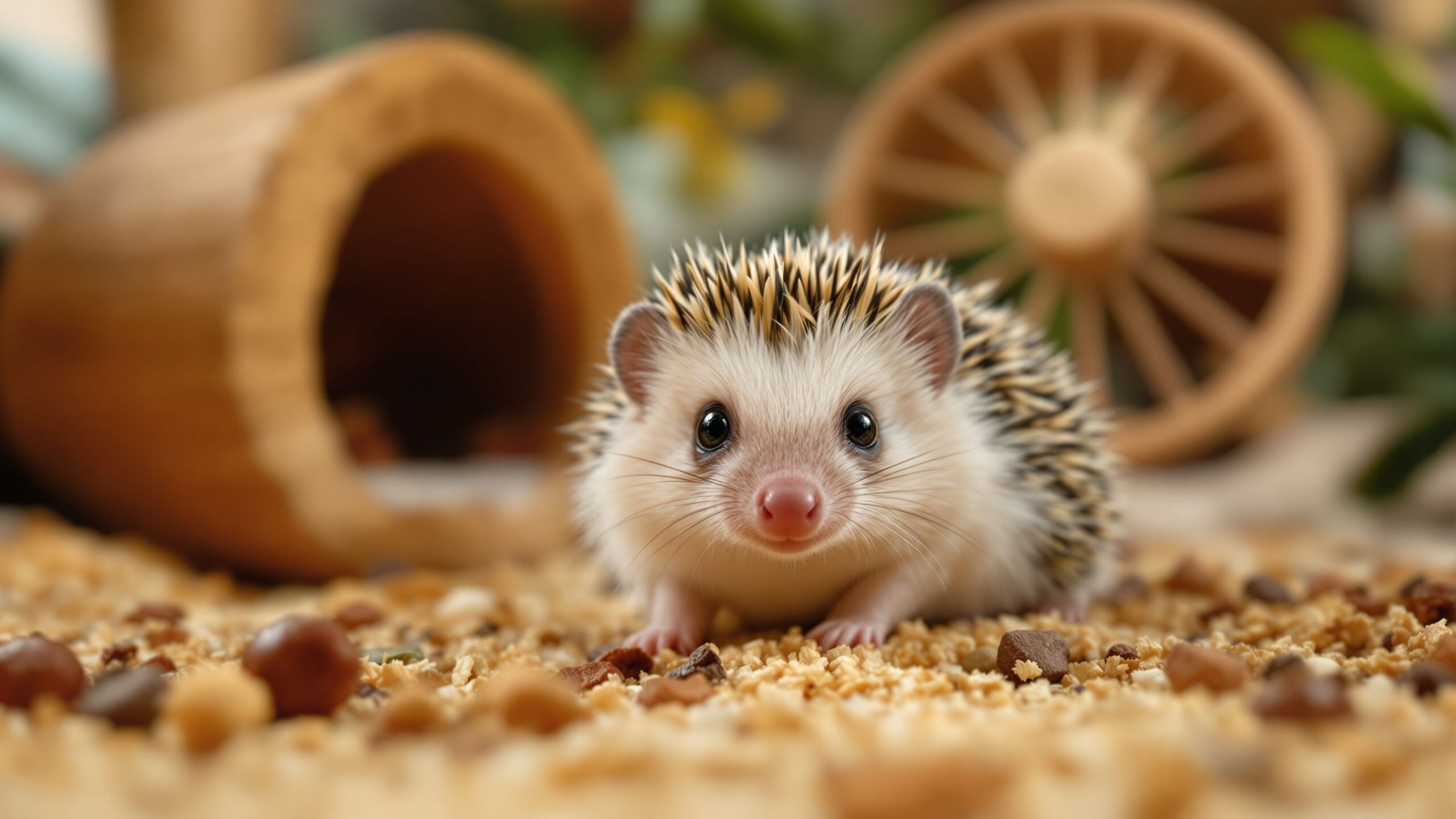
African pygmy hedgehogs are distinctive small companion animals known for their pointed faces, tiny paws, curious noses, and thousands of stiff protective spines. The hedgehogs commonly kept as pets are generally domestic hybrids descended primarily from the four-toed hedgehog, Atelerix albiventris, with other African hedgehog ancestry historically contributing to captive lines. The name “African pygmy hedgehog” is therefore commonly used in the pet world rather than referring neatly to one universally recognized wild species. These unusual mammals are very different from hamsters, guinea pigs, rats, and other familiar small pets. Hedgehogs are primarily solitary, insect-eating omnivores with strong nocturnal instincts and an extraordinary defensive ability to curl themselves into a tight ball of spines. A comfortable pet hedgehog may spend much of the daylight hours sleeping inside a dark hide before emerging in the evening to run, investigate scents, search for food, rearrange bedding, and explore its surroundings. Some become calm and comfortable around familiar people, but they are not naturally social animals that need a same-species companion. Their care also involves requirements that are easy to underestimate, including reliable warmth, a large exercise wheel, appropriate nutrition, safe bedding, regular health monitoring, nail care, and access to a veterinarian familiar with exotic mammals. For the right owner, their combination of independence, unusual biology, and unmistakable personality can make them fascinating companions.
A: They can be rewarding pets, but their temperature needs, nocturnal schedule, specialized diet, solitary nature, and requirement for exotic veterinary care make them more demanding than many common small pets.
A: Many live around 4 to 6 years, although some may live longer with excellent nutrition, housing, genetics, and veterinary care.
A: Their quills can feel sharp when raised, but a relaxed hedgehog usually lays its quills flatter and can be handled comfortably with gentle support.
A: Curling is a natural defense response used when a hedgehog feels frightened, threatened, startled, or uncertain.
A: Self-anointing occurs when a hedgehog encounters an interesting scent or taste, produces foamy saliva, and spreads it across its quills.
A: Generally no. They are naturally solitary and are usually safest when housed individually.
A: Yes. African Pygmy Hedgehogs are primarily active during the evening and nighttime and normally sleep for much of the day.
A: A large solid-surface wheel is highly beneficial because captive hedgehogs often spend significant portions of the night running.
A: Many can learn to tolerate or enjoy gentle handling, but some remain more independent and prefer exploring rather than cuddling.
A: Warning signs include weight loss, poor appetite, wheezing, diarrhea, unusual lumps, excessive scratching, weakness, difficulty walking, or sudden changes in normal behavior.
Where Do African Pygmy Hedgehogs Come From?
The ancestors of domestic African pygmy hedgehogs come from parts of sub-Saharan Africa, where several species of hedgehogs inhabit savannas, grasslands, scrublands, agricultural areas, and other relatively warm environments. The four-toed hedgehog, Atelerix albiventris, occurs across a broad region of central and eastern Africa. These animals have evolved to spend much of their time searching across the ground for insects and other foods while using vegetation, burrows, natural cavities, and sheltered spaces for protection. Their warm-climate ancestry is especially important in captivity. Domestic African pygmy hedgehogs do not tolerate prolonged cold well, and temperatures that feel comfortable to humans can sometimes be too cool for them. Unlike European hedgehogs, which may naturally hibernate under certain conditions, captive African pygmy hedgehogs should not be encouraged to hibernate. Attempts to enter torpor because of low temperatures can become dangerous.
What Do African Pygmy Hedgehogs Look Like?
African pygmy hedgehogs have compact oval bodies, short legs, small rounded ears, dark eyes, pointed noses, and coats of stiff spines covering most of the back and sides. Their face, belly, and legs are covered with softer fur rather than spines. Adults generally remain small enough to hold comfortably in two hands, although individual size varies according to genetics, sex, age, and body condition. Their legs can seem surprisingly long when the animal stretches or runs because they are usually concealed beneath the rounded body. The pointed snout is constantly used for investigating scents, and the nose may twitch almost continuously while the hedgehog explores. Their eyesight is not their strongest sense, but smell and hearing are highly important. The spines are modified hairs made primarily of keratin, the same basic structural protein found in human hair and nails. Unlike porcupine quills, hedgehog spines are not barbed and do not detach easily when touched.
Hedgehog Spines Versus Porcupine Quills
Hedgehogs and porcupines are often confused because both have defensive coverings, but they are very different mammals. A hedgehog’s spines are relatively short, densely packed, and attached securely to the skin. A hedgehog cannot shoot them, and healthy spines do not simply launch from the body when the animal is frightened. Porcupines have much longer specialized quills, and many species possess quills that detach relatively easily when embedded in a predator. Hedgehogs defend themselves primarily by tightening specialized muscles and curling into a ball, positioning their spines outward in every direction. This strategy creates an extremely difficult package for many predators to bite.
How Many Spines Does a Hedgehog Have?
An adult hedgehog can have several thousand individual spines covering its back. Exact numbers vary among animals, but estimates commonly fall in the range of roughly 5,000 to 7,000 spines. Each spine grows from the skin much like a hair and eventually falls out as part of a normal replacement cycle. Young hedgehogs also go through periods known as quilling, during which old spines are replaced by larger adult spines. Quilling can make a young hedgehog particularly sensitive and irritable because new spines are pushing through the skin. An animal that previously tolerated handling may suddenly become much more defensive during this stage.
African Pygmy Hedgehog Colors and Patterns
Domestic hedgehogs have been selectively bred into many color variations. Their spines can appear salt-and-pepper, brown, cinnamon, gray, cream, apricot, or much lighter depending on genetics. Some hedgehogs have extensive white areas or distinctive facial markings. Skin tone, mask coloration, nose color, and eye color can also vary. Albino hedgehogs have very pale spines, pink skin, and red or pinkish eyes because of reduced pigmentation. Although unusual colors may be appealing, appearance should never be prioritized above health, temperament, and responsible breeding. Some inherited conditions can be amplified when breeding programs focus excessively on particular traits without maintaining genetic diversity.
African Pygmy Hedgehog Personality and Temperament
Hedgehogs are often independent, cautious, curious animals. One may uncurl within seconds of being picked up and immediately begin exploring, while another may remain tightly balled for several minutes before deciding that the situation is safe. Some become highly relaxed with regular handling and may crawl across a person’s lap or sleep beneath a blanket. Others remain much more interested in exploring than cuddling. A hedgehog’s behavior is strongly influenced by its prey-animal instincts. Sudden movements, loud noises, unfamiliar smells, or being awakened unexpectedly can cause defensive huffing, popping, and curling. Patience is one of the most important parts of building trust. Regular calm handling helps many hedgehogs become comfortable with familiar people, but owners should respect individual personality differences rather than expecting every hedgehog to become affectionate in the same way.
African Pygmy Hedgehogs Are Solitary
Unlike rats, guinea pigs, degus, and many other small mammals, African pygmy hedgehogs are naturally solitary and generally should be housed individually. Two hedgehogs do not need to share an enclosure to prevent loneliness. In fact, placing unfamiliar adults together can lead to stress, competition, or serious fighting. Males should not be kept together, and males and females should not share housing unless breeding is intentionally and responsibly managed. Even females that sometimes tolerate one another can have unpredictable relationships. Separate housing allows each hedgehog to control its own food, wheel, sleeping area, and territory. Human interaction and environmental enrichment can provide additional stimulation without forcing unnatural companionship.
Hedgehogs Are Nocturnal Explorers
African pygmy hedgehogs are primarily nocturnal. They commonly sleep for much of the daylight period and become active after dusk. A hedgehog that appears extraordinarily lazy at 2 p.m. may spend hours running on a wheel after midnight. Their nighttime activity reflects their natural lifestyle, when cooler conditions and darkness provide opportunities to search for food while avoiding many threats. Owners should avoid repeatedly waking a sleeping hedgehog during the middle of the day simply for entertainment. Gentle handling can sometimes be scheduled during late afternoon or evening when the animal is naturally beginning to wake. Their nocturnal schedule also means a hedgehog enclosure in a bedroom can become surprisingly noisy once the wheel begins spinning.
Creating the Right African Pygmy Hedgehog Enclosure
A hedgehog needs much more floor space than its small body might suggest. The enclosure should provide enough uninterrupted room for a large running wheel, sleeping hide, food, water, enrichment, and open exploration. Because hedgehogs are primarily ground-dwelling animals, usable floor space generally matters more than tall climbing structures. Enclosures may include appropriately designed solid-sided habitats, large bins modified for safe ventilation, or other secure setups capable of maintaining proper temperature. Wire cages can provide ventilation, but drafts, bar climbing, and foot safety must be considered. The floor should always be solid. Hedgehogs are surprisingly determined escape artists, so lids and doors must be secure. Any openings should be small enough to prevent the animal from squeezing through or becoming trapped.
Why Hedgehogs Need Warm Temperatures
Temperature control is one of the most important aspects of African pygmy hedgehog care. These animals come from warm regions and can become dangerously cold when housed at inappropriate temperatures. Many owners maintain their hedgehog’s environment around the mid-70s Fahrenheit, although individual needs and veterinary recommendations may vary. Temperatures that fall too low can trigger a dangerous torpor-like state sometimes referred to by owners as a hibernation attempt. A cold, lethargic hedgehog that is reluctant to uncurl may need immediate warming and veterinary guidance. Heating systems should be thermostatically controlled so they maintain stable temperatures without creating burns or overheating. Heat lamps, ceramic heat emitters, or other systems must be installed safely and monitored with reliable thermometers.
Why Hibernation Attempts Are Dangerous
Wild hedgehog species from colder climates may hibernate naturally, but domestic African pygmy hedgehogs are not adapted for normal prolonged hibernation. When a pet hedgehog becomes too cold, its metabolism can slow dramatically. The animal may feel cool, become weak, wobble, refuse to eat, or remain tightly curled and minimally responsive. This is not a harmless winter nap. A suspected hibernation attempt can become life-threatening. The hedgehog should be warmed gradually and monitored closely, with veterinary care sought when the animal does not return promptly to normal activity or appears ill. Preventing temperature drops is far safer than responding after the animal becomes dangerously chilled.
Bedding and Sleeping Areas
Hedgehog bedding should be absorbent, comfortable, low in dust, and safe if investigated or accidentally ingested in small amounts. Paper-based bedding is widely used, while fleece liners are another option when they are maintained carefully and checked for loose threads. Strongly scented or dusty bedding should be avoided because hedgehogs have sensitive respiratory systems. Every enclosure should contain at least one secure, dark sleeping area. Fleece sleeping sacks, igloo-style hides, tunnels, and enclosed boxes can all provide privacy. Hedgehogs often become attached to particular sleeping locations and may carry bedding into a preferred nest.
The Importance of a Large Exercise Wheel
A running wheel is one of the most important pieces of enrichment in a hedgehog enclosure. Wild hedgehogs can travel considerable distances while searching for food, and pet hedgehogs often run astonishing amounts during the night. The wheel should be large enough that the animal can run without strongly arching its spine. A solid running surface is essential because exposed wire or mesh can trap toes and cause injuries. Open-front bucket-style wheels are popular because they provide a wide solid surface. Wheels require frequent cleaning because many hedgehogs urinate and defecate while running. A wheel that looks pristine at bedtime may look dramatically different by morning.
Why Hedgehogs Poop on Their Wheels
One of the less glamorous realities of hedgehog ownership is that many animals eliminate while running. Movement stimulates the digestive system, and hedgehogs may simply continue running rather than stopping to use another area of the enclosure. As a result, wheels can become dirty quickly. This is normal and not a sign that the animal has failed at training. Daily wheel cleaning may become part of the owner’s routine. Some hedgehogs can learn to use litter areas for a portion of their waste, but complete litter training is not guaranteed.
Do Hedgehogs Need Litter Boxes?
Some African pygmy hedgehogs can develop consistent bathroom habits, particularly if a shallow litter tray is positioned beneath or near the exercise wheel. However, they are not as reliably litter trained as many rabbits. Owners may notice that an individual repeatedly eliminates in one corner and can place a suitable tray in that location. The litter should be safe, unscented, and non-clumping. Clumping cat litter can cause problems if swallowed or if it sticks to sensitive body areas. Even a relatively well-trained hedgehog may still leave droppings elsewhere.
What Do African Pygmy Hedgehogs Eat?
African pygmy hedgehogs are insectivorous omnivores. Wild African hedgehogs consume insects and other invertebrates along with occasional plant material and small animal prey. Domestic feeding should provide balanced nutrition rather than attempting to reproduce every wild food item. High-quality commercial hedgehog diets are available in some areas, while certain carefully selected cat foods have historically been used because they provide suitable animal protein and controlled fat levels. Nutritional recommendations continue to develop, so owners should discuss specific products and portions with an exotic-animal veterinarian. Hedgehogs can become overweight easily, particularly when calorie-dense foods and treats are offered freely. Fresh water should always be available.
Insects as Food and Enrichment
Appropriate feeder insects can provide excellent dietary enrichment because they encourage natural hunting and foraging behavior. Mealworms, crickets, dubia roaches, and other commercially raised feeders may be used in moderation depending on the diet plan. Insects should come from safe captive sources rather than being collected outdoors, where they may have been exposed to pesticides, parasites, or environmental contaminants. Some insects are relatively high in fat, so they should not become unlimited snacks. Watching a hedgehog investigate and capture moving prey can provide both physical and mental stimulation.
Why Mealworms Should Not Dominate the Diet
Mealworms are popular hedgehog treats because they are easy to find and many hedgehogs love them. However, enthusiasm does not make them nutritionally complete. Mealworms can be relatively high in fat and have an imbalanced calcium-to-phosphorus profile when fed excessively. They are better used as occasional treats or enrichment rather than the foundation of the diet. Offering a range of appropriate foods is more nutritionally sound than allowing a hedgehog to consume large quantities of one favorite insect.
Treats and Human Foods
Small amounts of certain plain cooked meats, egg, or suitable produce may sometimes be offered as treats, depending on the hedgehog’s primary diet and veterinary advice. Sugary, salty, heavily seasoned, fried, or highly processed foods should be avoided. Dairy products are also generally poor choices because hedgehogs may not digest lactose well. Grapes and raisins should be avoided because of potential toxicity concerns documented in other companion mammals and uncertainty about safety in hedgehogs. Avocado, chocolate, alcohol, caffeine, onions, and other potentially harmful foods should never be offered casually. Treat portions should remain tiny because the hedgehog itself is small.
Water Bottles Versus Water Bowls
Both bottles and bowls are used for hedgehogs, and each has advantages. A heavy ceramic bowl allows a natural drinking position and is easy to inspect, but it may become contaminated with bedding or waste. Water bottles stay cleaner in some enclosures but must be checked every day to ensure the drinking tube is functioning properly. Some owners prefer bowls because of concerns about teeth or tongue interactions with certain bottle designs. Whatever system is chosen, clean fresh water must always be available.
Why Obesity Is a Serious Concern
African pygmy hedgehogs can gain excessive weight when fed calorie-dense diets without enough exercise. Their rounded body shape can make gradual obesity difficult to recognize. A healthy hedgehog should still be capable of curling into a complete ball, and the body should not become so large that movement is impaired. Obesity can contribute to liver disease, joint stress, reduced activity, and other health problems. Regular weighing on a small digital scale is useful for monitoring changes. Food portions should be measured rather than continually topped off without consideration of consumption.
Hedgehog Enrichment and Foraging
A wheel is important, but it should not be the only source of enrichment. Hedgehogs benefit from opportunities to sniff, search, tunnel, push, carry, and investigate. Cardboard tubes cut safely along one side, tunnels, fleece strips, dig boxes, treat puzzles, safe balls, and scattered food can encourage exploration. Objects should not have small holes that could trap a hedgehog’s head or feet. Enrichment can be rotated periodically to maintain novelty, although familiar sleeping areas should remain available. Because scent is extremely important to hedgehogs, introducing new smells can be especially stimulating.
Dig Boxes and Natural Exploration
Many hedgehogs enjoy rooting through safe loose materials in search of hidden treats. A dig box can contain fleece strips, large smooth stones that cannot be swallowed, safe bedding, or other appropriate materials. Tiny treats can be hidden among the contents to encourage natural searching. The material should always be large or safe enough to prevent accidental ingestion or entanglement. Digging activities can be especially useful for animals that need additional mental stimulation beyond wheel running.
The Strange Behavior Called Self-Anointing
One of the most fascinating hedgehog behaviors is self-anointing. When a hedgehog encounters an unusual smell or taste, it may begin licking or chewing the object and then produce large amounts of foamy saliva. The animal twists its body into seemingly impossible positions and spreads the saliva across its own spines with its tongue. The first time an owner sees this behavior, it can look alarming. The exact purpose of self-anointing is still debated. Theories include scent camouflage, chemical defense, communication, and exploration. Whatever its evolutionary purpose, occasional self-anointing after encountering a novel scent is generally normal.
Why Hedgehogs Huff, Puff, and Pop
A frightened hedgehog can produce an impressive collection of defensive sounds. Huffing and puffing warn that the animal feels threatened. A defensive hedgehog may also tighten its muscles and perform sudden jerking or popping movements that drive its spines toward whatever is approaching. This behavior is especially common in newly adopted hedgehogs or animals awakened unexpectedly. It can make handling intimidating, but punishment only increases fear. Calm, regular interaction usually helps the hedgehog learn that familiar hands do not represent a predator.
How a Hedgehog Rolls Into a Ball
Hedgehogs have specialized muscles beneath the skin that allow them to pull the head, legs, and vulnerable underside inward while drawing the spiny skin around the body. A fully defensive hedgehog can become an almost complete sphere of outward-pointing spines. The face disappears, the feet are protected, and there is little exposed soft tissue for a predator to attack. Once the hedgehog feels safe, it gradually relaxes the muscles and uncurls. Some well-socialized pets rarely form a complete ball around familiar caregivers, while nervous individuals may do so frequently.
How to Handle an African Pygmy Hedgehog Safely
Handling is easiest when the hedgehog is allowed to smell and investigate the person first. Clean bare hands are often preferable to thick gloves because gloves can prevent the animal from learning a caregiver’s scent. Both hands can be slid underneath the hedgehog and used to scoop the entire body gently. The spines may feel sharp but usually become much easier to tolerate when the animal relaxes. Holding the hedgehog over a lap, bed, or other low safe surface reduces the risk of injury if it suddenly moves. The animal should never be squeezed or forced open when curled tightly.
Bonding With a Hedgehog
Building trust with a hedgehog often takes days or weeks rather than minutes. Consistent evening handling can help the animal become accustomed to a caregiver’s scent, voice, and movement. Some owners place a worn clean T-shirt or piece of fleece carrying their scent near the sleeping area, provided there are no loose threads or hazards. Sitting quietly with the hedgehog inside a fleece blanket can allow the animal to relax without demanding constant interaction. Treats may help create positive associations, but trust should not depend entirely on food. Progress may appear small at first—a nose emerging sooner, less huffing, or a willingness to walk across a hand—but these changes can indicate growing confidence.
Do African Pygmy Hedgehogs Like to Cuddle?
Some hedgehogs become relaxed enough to sleep on a person’s lap or beneath a blanket, but others remain much more independent. They are not naturally social cuddle animals in the same way some rats or rabbits may become. A hedgehog may tolerate being held while still preferring to spend most active time exploring. Their nocturnal instincts also mean that a hedgehog curled up quietly in a person’s lap during the evening may simply be trying to sleep. Owners who appreciate observation, routine interaction, and individual personality are often happier than those expecting constant affection.
Bathing an African Pygmy Hedgehog
Hedgehogs may occasionally need baths because waste from running wheels can soil their feet and underside. Full baths should not be excessive because frequent bathing can dry the skin. Lukewarm shallow water and a gentle animal-safe cleanser may be used when necessary, with the hedgehog dried thoroughly and returned promptly to a warm environment. Many owners also use quick foot baths to clean dirty feet without soaking the entire animal. Water should never be deep enough to create a drowning risk, and the hedgehog should never be left unattended.
Dry Skin and Quill Health
Dry or flaky skin is relatively common in pet hedgehogs, but the cause should be considered carefully. Excessive bathing, very dry air, poor nutrition, mites, fungal infection, or other skin conditions can all produce flaking. Owners should not automatically apply oils or home remedies without understanding the underlying problem because some products can worsen irritation. Excessive spine loss, bald areas, severe scratching, crusting, or inflamed skin warrant veterinary evaluation. Normal quilling in young hedgehogs should be distinguished from abnormal adult spine loss.
Nail Trimming
Hedgehog nails grow continuously and usually require routine trimming. Long nails can curl, snag on fabric, alter walking, or become painful. Nail trimming can be challenging because hedgehogs may curl their feet beneath the body. Some owners trim nails during a shallow foot bath when the hedgehog is less able to curl tightly. Only the clear tip should be removed while avoiding the blood vessel and nerve inside the nail. Owners uncomfortable with the procedure can ask an exotic-animal veterinarian or experienced professional for help.
Common African Pygmy Hedgehog Health Problems
African pygmy hedgehogs can develop dental disease, obesity, skin mites, respiratory infections, gastrointestinal disorders, tumors, heart disease, reproductive disease, eye problems, and neurological conditions. Cancer is unfortunately common in older hedgehogs, and masses can appear in the mouth, skin, reproductive tract, mammary tissue, and internal organs. Dental disease may cause drooling, bad breath, reduced appetite, or difficulty chewing. Respiratory disease may cause nasal discharge, sneezing, noisy breathing, or lethargy. Any significant change in appetite, weight, activity, breathing, walking, or normal behavior deserves veterinary attention.
Wobbly Hedgehog Syndrome
Wobbly Hedgehog Syndrome, commonly abbreviated WHS, is a progressive neurological disease recognized in African pygmy hedgehogs. Affected animals gradually lose coordination and muscle control, often beginning with weakness or wobbling in the hind limbs. Over time, the condition can progress to more severe paralysis. There is currently no known cure, and diagnosis may be difficult because other medical conditions can produce similar symptoms. Any hedgehog showing weakness, falling, dragging limbs, or major changes in movement requires veterinary evaluation rather than assuming WHS is the cause. Supportive care may improve comfort when neurological disease is present.
Tumors and Cancer in Hedgehogs
Tumors are an important health concern, particularly in middle-aged and older African pygmy hedgehogs. Both benign and malignant growths can occur. Oral tumors may cause facial swelling, drooling, bleeding, or reduced food intake. Reproductive tumors can develop in females, while skin and internal tumors can affect either sex. Regular handling makes it easier to notice new lumps, swelling, unexplained weight loss, or changes in body shape. Early veterinary evaluation may provide more treatment options than waiting until a mass becomes very large.
Dental Disease
Hedgehogs do not have continuously growing teeth like rodents, but dental disease can still become significant. Tartar buildup, gum disease, broken teeth, infections, and oral tumors may interfere with eating. Owners should watch for drooling, foul breath, pawing at the mouth, chewing on only one side, dropping food, or sudden preference for softer foods. Dental health is one reason regular veterinary examinations are useful even when the animal appears healthy.
Why Hedgehogs Hide Illness
African pygmy hedgehogs are prey animals and may conceal weakness. Their nocturnal lifestyle can also make subtle changes easier to miss because owners may not observe them for long periods during their active hours. Regular weighing is extremely valuable. A hedgehog can lose significant weight before the change becomes visually obvious beneath the spines. Owners should monitor food intake, water consumption, droppings, urine, wheel use, breathing, walking, and general behavior. A hedgehog that suddenly stops running at night, sleeps in unusual locations, refuses favorite foods, or becomes dramatically more defensive may be experiencing pain or illness.
Reproduction and Baby Hedgehogs
Female hedgehogs are called sows, males are boars, and babies are often called hoglets. Pregnancy is relatively short, generally lasting around five weeks, although timing varies. Newborn hoglets are tiny, blind, and initially have soft spines beneath swollen skin. The spines begin becoming more obvious soon after birth. Mother hedgehogs can become highly stressed when a nest is disturbed. Excessive interference may lead to abandonment or cannibalism of the litter. Breeding should therefore never be undertaken casually. Responsible breeding requires knowledge of genetics, maternal nutrition, nesting behavior, potential complications, and appropriate placement of offspring.
Baby Hedgehogs and Quilling
Young hedgehogs experience several stages of spine replacement as they grow. During quilling, new larger spines push through the skin while older spines fall out. This can be uncomfortable and may cause the youngster to become unusually grumpy or sensitive when touched. Owners should continue gentle interaction but may need to reduce pressure on the back and be patient during handling. Quilling is different from widespread abnormal spine loss accompanied by inflamed skin or bald patches.
How Long Do African Pygmy Hedgehogs Live?
African pygmy hedgehogs commonly live around three to six years in captivity, although some may live longer with favorable genetics and excellent care. Their lifespan is longer than that of many mice and hamsters but considerably shorter than that of rabbits or chinchillas. Genetics, diet, temperature stability, body condition, cancer risk, and veterinary care all influence longevity. A hedgehog can transition from energetic young adult to senior within only a few years, so owners should monitor aging closely. Older animals may run less, sleep more, lose muscle, or require easier access to food and water.
African Pygmy Hedgehogs as Pets for Children
Hedgehogs are generally better suited to adults and responsible older children than very young children. Their spines can feel intimidating, they are active primarily at night, and their defensive behavior requires patience. A frightened hedgehog may huff, curl, and jerk suddenly, which can cause a child to drop it. Their need for reliable heat and exotic veterinary care also requires adult responsibility. Children can help prepare food, observe evening activity, offer supervised treats, and participate in gentle handling, but adults should remain responsible for enclosure maintenance, temperature monitoring, nail trimming, and healthcare.
Can Hedgehogs Live With Other Small Pets?
African pygmy hedgehogs should not share enclosures with hamsters, guinea pigs, rabbits, rats, mice, gerbils, degus, or other small mammals. Their dietary, environmental, and social needs are different, and they are naturally solitary. Dogs and cats should also be kept away from unsupervised hedgehog interactions. A curious dog may injure a hedgehog despite the spines, while a cat can cause stress or injury. Each pet should have its own secure living area.
Are African Pygmy Hedgehogs Legal Everywhere?
Hedgehog ownership laws vary by location, and African pygmy hedgehogs are prohibited or regulated in some states, cities, and countries because of concerns involving wildlife, invasive species, agriculture, or animal welfare. Laws can change, so prospective owners should verify current local regulations before obtaining a hedgehog. Moving to another state or municipality later can also create complications if ownership rules differ. Legal requirements should be checked before purchasing an enclosure or committing to adoption.
Hedgehog Odor and Cleanliness
Healthy hedgehogs themselves generally do not have a strong body odor, but their enclosures can become smelly when waste accumulates. Wheel cleaning is often the biggest routine task because running and defecation frequently occur together. Wet bedding should be removed regularly, food dishes cleaned, and sleeping areas checked for waste. Full enclosure cleaning should be performed as needed without relying on heavily scented chemicals that may irritate the respiratory system. Good ventilation, appropriate bedding, and routine maintenance can keep odor manageable.
Fascinating African Pygmy Hedgehog Facts
African pygmy hedgehogs possess a collection of unusual adaptations. They can curl into nearly complete balls using specialized muscles beneath the skin. Their bodies are protected by several thousand keratin-based spines, yet their faces and bellies remain covered in soft fur. They rely heavily on smell and hearing and may explore unfamiliar scents through the mysterious behavior of self-anointing. They can run substantial distances during a single night despite their short legs. Their natural ancestry comes from warm African habitats, making cold temperatures particularly dangerous. They are also true hedgehogs rather than rodents, belonging to the family Erinaceidae within the order Eulipotyphla.
Choosing Between Adoption and Buying
African pygmy hedgehogs can sometimes be found through exotic-animal rescues, shelters, and responsible breeders. Adoption is worth considering because hedgehogs are occasionally surrendered when owners discover that their nocturnal schedule, heating requirements, cleaning needs, or veterinary costs are greater than expected. Responsible breeders should prioritize health, temperament, and genetic diversity rather than unusual colors alone. Prospective owners should ask about age, diet, veterinary history, lineage, temperament, and any known health concerns. A healthy hedgehog should be alert when awake, breathe quietly, have clear eyes and nose, move normally, and maintain a healthy body condition.
What to Know Before Getting an African Pygmy Hedgehog
Prospective owners should first determine whether hedgehogs are legal where they live and whether a veterinarian experienced with the species is accessible. The enclosure should be prepared in advance with reliable thermostatically controlled heat, appropriate bedding, a secure sleeping area, a large solid running wheel, food, water, and safe enrichment. Owners should understand that the animal will probably be sleeping during much of the day and active during the night. They should also budget for veterinary treatment because tumors, dental disease, neurological problems, and other illnesses can occur. Handling requires patience, nail trimming is an ongoing responsibility, and the wheel may need cleaning almost every day. A hedgehog’s unusual appearance can make it tempting as an impulse pet, but successful ownership requires careful preparation.
The Remarkable World of African Pygmy Hedgehogs
African pygmy hedgehogs are among the most distinctive animals kept as small companion pets. Beneath thousands of protective spines is a curious, scent-driven nocturnal mammal designed to travel, forage, hunt insects, hide from predators, and defend itself by transforming into a nearly impenetrable ball. Understanding the domestic African pygmy hedgehog and its primary ancestor, Atelerix albiventris, means moving beyond the novelty of owning a tiny spiny animal. Hedgehogs need warmth, floor space, a large exercise wheel, balanced nutrition, regular enrichment, gentle handling, nail care, careful weight monitoring, and veterinary attention. They do not need cage companions, constant cuddling, or elaborate climbing towers. In return, owners can watch an extraordinary little animal emerge from its nest each evening, sniff every new object, run astonishing distances on a wheel, hunt for insects, suddenly cover itself in foamy saliva after discovering an interesting smell, and gradually learn that familiar hands are safe. Their independence, strange behaviors, ancient defensive adaptations, and unmistakable appearance make African pygmy hedgehogs some of the most fascinating small mammals for owners prepared to meet their specialized needs.
Pet Product Reviews
Explore Duffy Street’s Pet Product Reviews! Sniff out the top-rated toys, treats, gear, and gadgets for your pets with our fun, easy-to-read comparisons. We’ve done the digging so you can find the perfect products for your pet friends!