Few farm animals possess the irresistible combination of charm, intelligence, and personality found in miniature donkeys. With their oversized ears, expressive eyes, compact bodies, and gentle expressions, these remarkable little equines have captured the hearts of animal lovers around the world. Whether standing peacefully beside a pasture fence, trotting enthusiastically toward a familiar caretaker, or communicating with their distinctive braying calls, miniature donkeys bring a special kind of character to the countryside. The miniature donkey is a small domestic donkey belonging to the species Equus asinus, which is also classified by some authorities as Equus africanus asinus. Like horses and zebras, donkeys belong to the family Equidae, a group of hoofed mammals known for their strength, endurance, and specialized grazing adaptations. Miniature donkeys are not simply young standard-sized donkeys or artificially dwarfed animals. They represent a naturally small type of domestic donkey developed from populations historically associated with Mediterranean islands, particularly Sicily and Sardinia. Their manageable stature, affectionate personalities, and relatively calm behavior have made them increasingly popular on hobby farms, small homesteads, and properties where larger equines may be impractical. However, their small size should never lead prospective owners to underestimate their needs. Miniature donkeys are intelligent, long-lived, highly social animals requiring appropriate companionship, nutrition, shelter, hoof care, and veterinary attention. Understanding their origins, anatomy, behavior, and daily care reveals why these delightful little donkeys deserve recognition as some of the most extraordinary animals in the farmyard.
A: Miniature Mediterranean Donkeys generally stand no taller than 36 inches at the withers and commonly weigh approximately 200–350 pounds.
A: Many miniature donkeys live approximately 25–35 years, although individual longevity depends on genetics, nutrition, housing, and veterinary care.
A: Yes. Their social, curious personalities make them appealing companion livestock, but they require compatible donkey companions, proper equine care, and a long-term commitment.
A: Donkeys are highly social animals and should generally live with at least one compatible equine companion, preferably another donkey.
A: Their diets generally emphasize low-calorie, high-fiber forage, such as suitable straw and measured grass hay, with balanced minerals and constant access to fresh water.
A: Yes. They require regular trimming by a farrier familiar with donkey hoof anatomy, with scheduling based on hoof growth and condition.
A: Land requirements depend on forage quality, drainage, exercise space, and management. Even small properties must provide adequate movement, shelter, and controlled grazing.
A: They may share some farm environments with other livestock when managed carefully, but they still need suitable equine companionship, separate nutritional arrangements, and safe interactions.
A: They should not be relied upon as guardians. Their small size makes them vulnerable to predators, and some donkeys may injure smaller livestock.
A: Warning signs include reduced appetite, unusual quietness, limping, weight changes, abnormal droppings, difficulty breathing, or reluctance to move. Contact an equine veterinarian promptly if illness is suspected.
The Ancient History and Mediterranean Origins of Miniature Donkeys
The history of miniature donkeys is closely connected to the broader domestication of donkeys, which began thousands of years ago in northeastern Africa. Domestic donkeys descend primarily from African wild asses, hardy animals adapted to dry environments where food and water could be difficult to obtain. Archaeological evidence suggests that donkeys were domesticated approximately 5,000–6,000 years ago, becoming valuable working animals for transportation, agriculture, and trade. Their strength, endurance, and ability to travel across challenging landscapes helped them become essential companions to early human communities. Over time, domestic donkeys spread throughout the Mediterranean region, where different populations developed characteristics suited to local environments and agricultural practices. Miniature donkeys are particularly associated with the Mediterranean islands of Sicily and Sardinia, where small donkeys were historically used for carrying loads, transporting goods, and performing agricultural tasks. Their compact bodies allowed them to navigate narrow pathways and rugged terrain while requiring fewer resources than larger working animals. During the twentieth century, miniature donkeys were introduced to the United States, where breeders began establishing organized populations and registration programs. The American Miniature Donkey Registry helped promote breed recognition and maintain pedigree records. As mechanized transportation replaced many traditional agricultural uses, miniature donkeys increasingly became valued for companionship, exhibition, and preservation of their distinctive characteristics. Today, these little equines are found on farms and private properties throughout North America and beyond. Their history reflects centuries of adaptation, human partnership, and the enduring appeal of an animal originally valued for practical work but now cherished for its intelligence and personality.
Miniature Donkey Size, Appearance, and Physical Characteristics
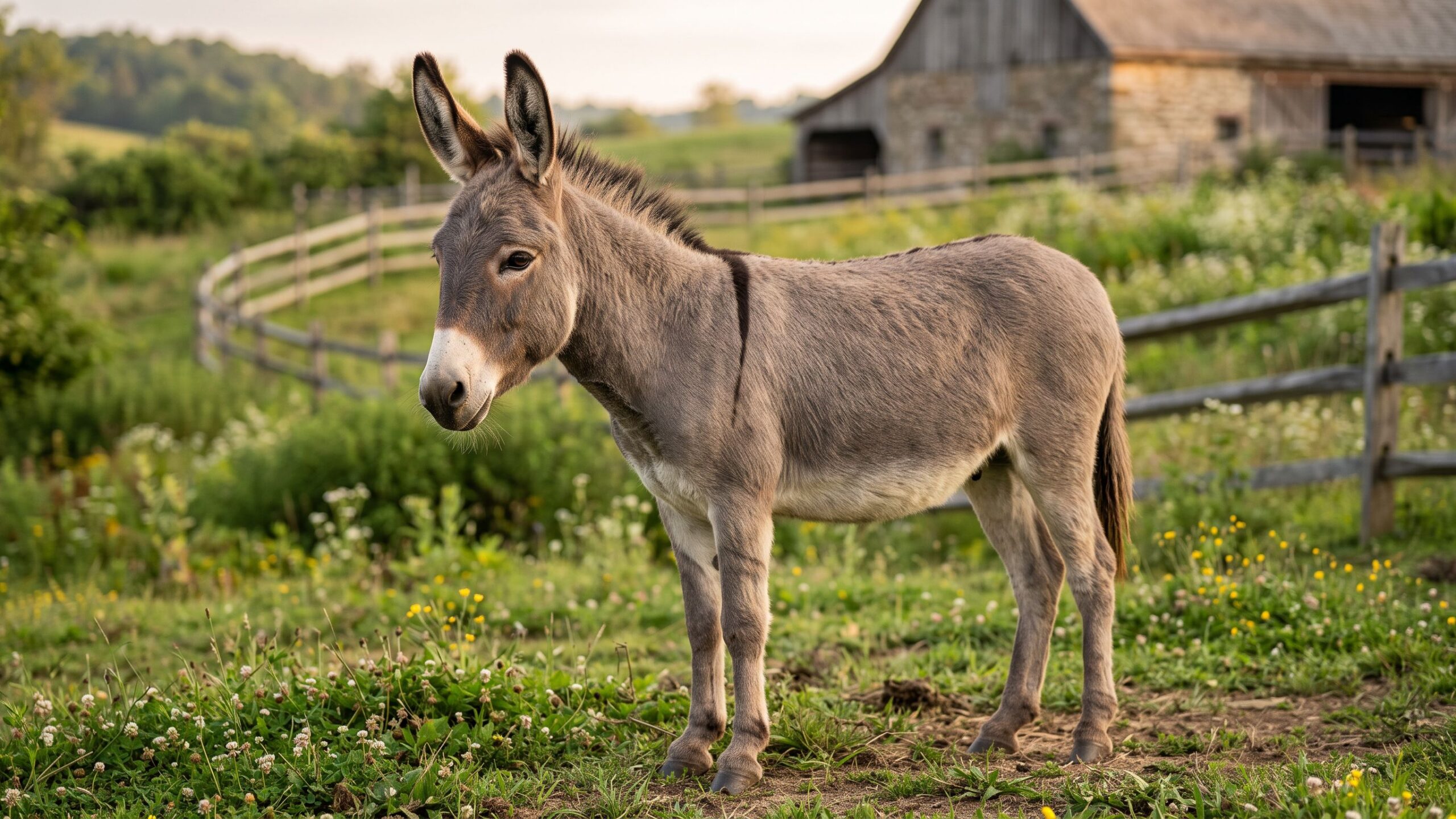
Miniature donkeys are distinguished by their compact stature, balanced proportions, and unmistakable equine features. Under commonly used American miniature donkey registration standards, a mature miniature donkey measures no more than 36 inches at the withers, the highest point of the shoulders. Many adults stand approximately 30–36 inches tall and weigh around 200–350 pounds, although individual size and body condition vary. Despite their small stature, miniature donkeys possess strong skeletal structures, muscular bodies, and sturdy legs designed for walking across uneven terrain. Their heads are relatively large in proportion to their bodies, with broad foreheads, expressive eyes, and long ears that contribute to their distinctive appearance. Their ears are not merely decorative. They help detect distant sounds and contribute to body temperature regulation. Miniature donkeys appear in several coat colors, including gray-dun, brown, black, reddish-brown, and spotted patterns. Gray-dun animals frequently display a dark stripe running along the back and another across the shoulders, creating the familiar cross pattern associated with donkeys. Their coats may become thicker during colder months, providing additional insulation. Their hooves are smaller and often more upright in shape than horse hooves, reflecting adaptations associated with donkey movement and natural environments. Unlike horses, donkeys have tails with relatively short hair along much of their length and a longer tuft near the end. Their compact bodies and appealing features make them instantly recognizable, but their anatomy also reflects the remarkable endurance and adaptability inherited from their wild ancestors.
Miniature Donkey Personality: Gentle, Curious, and Full of Character
One of the most appealing qualities of miniature donkeys is their distinctive personality. These little equines are often described as affectionate, curious, thoughtful, and highly aware of their surroundings. Many miniature donkeys develop strong relationships with familiar caretakers and eagerly approach people they associate with positive experiences. Some enjoy gentle grooming, scratches around the neck and shoulders, or simply standing quietly beside trusted companions. However, their personalities vary considerably. Certain individuals are outgoing and enthusiastic, while others are more reserved and cautious. Donkeys are frequently described as stubborn, but this reputation often reflects their tendency to evaluate unfamiliar situations before responding. Unlike horses, which may react quickly by fleeing from perceived danger, donkeys often pause and assess potential threats. This behavior can be interpreted as resistance by inexperienced handlers, but it is better understood as a natural survival strategy. Miniature donkeys are also remarkably curious. They may investigate unfamiliar objects, follow caretakers around enclosures, or examine new equipment with careful attention. Their playful side becomes especially apparent when young donkeys engage in running, bucking, and friendly interactions with companions. Although miniature donkeys are generally manageable when properly trained, they remain powerful animals capable of kicking, biting, or pushing when frightened or mishandled. Respectful handling and consistent routines help develop trust. Their combination of gentleness, intelligence, and individuality makes them rewarding companions for people prepared to understand their natural behavior.
Miniature Donkey Intelligence: Remarkable Memories and Problem-Solving Abilities
Miniature donkeys possess impressive cognitive abilities that contribute to their reputation as thoughtful and sometimes independent animals. Like other equines, they can learn routines, recognize familiar individuals, and remember important experiences. Donkeys are particularly known for their cautious approach to unfamiliar situations, which may involve observing, investigating, and evaluating an environment before proceeding. This behavior reflects their evolutionary history in challenging landscapes where careless movement could create serious risks. Miniature donkeys can learn to respond to verbal cues, walk calmly on a lead, stand for grooming, and cooperate during routine veterinary or hoof-care procedures. Positive reinforcement training can be especially effective because it encourages voluntary participation rather than relying on force. Their memories allow them to associate people, places, and activities with previous experiences. A donkey that has experienced rough handling may become hesitant or defensive, while one accustomed to gentle, predictable interactions may develop considerable confidence. Environmental enrichment also supports their mental well-being. Safe obstacles, varied walking areas, grooming activities, and opportunities to explore unfamiliar but non-threatening objects can provide stimulation. Donkeys may become bored when confined to monotonous environments without companionship or meaningful activity. Their intelligence means they often benefit from training sessions that introduce simple challenges and reward calm responses. Understanding their cognitive abilities helps caretakers appreciate miniature donkeys as thoughtful animals capable of learning, forming expectations, and developing strong relationships with their surroundings.
Social Behavior: Why Miniature Donkeys Need Companionship
Miniature donkeys are highly social animals that naturally seek companionship and develop strong relationships with other equines. In their ancestral environments, wild asses formed social associations that helped individuals navigate challenging landscapes and maintain awareness of potential threats. Domestic donkeys retain strong social instincts, and miniature donkeys often form particularly close bonds with familiar companions. These relationships may involve mutual grooming, resting near one another, coordinated movement, and vocal communication. Some donkeys develop such strong attachments that separation from a bonded companion can cause significant distress. For this reason, keeping a miniature donkey alone is generally inappropriate. Another compatible donkey is often the best companion, although individual circumstances and carefully managed relationships with other equines may sometimes provide suitable social interaction. Two miniature donkeys can develop a stable companionship that supports emotional well-being and encourages natural behavior. However, introductions should be gradual because unfamiliar animals may initially display territorial behavior or competition. Group composition also matters. Intact males, known as jacks, may demonstrate stronger reproductive or aggressive behaviors than castrated males, called geldings. Females are known as jennies or jennets. Miniature donkeys may also form relationships with horses or ponies, but differences in body size, feeding requirements, and behavior can create management challenges. Understanding their social needs is essential because companionship is not simply an enjoyable addition to donkey ownership. It is a fundamental component of their behavioral health.
Miniature Donkey Communication: Understanding Brays, Ears, and Body Language
Miniature donkeys communicate through a fascinating combination of vocalizations, ear movements, facial expressions, body posture, and physical interactions. Their most recognizable sound is the bray, a loud, distinctive vocalization often represented as “hee-haw.” Donkeys produce brays by combining inhaled and exhaled sounds, creating a characteristic call that can carry considerable distances. Braying may occur when donkeys seek companions, anticipate feeding, respond to unfamiliar situations, or communicate across separated areas. Individual donkeys may develop recognizable vocal patterns, allowing caretakers to distinguish one animal from another. Their ears are especially important communication tools. Upright, forward-facing ears may indicate attention or curiosity, while ears directed backward can reflect listening, discomfort, irritation, or other states depending on the surrounding behavior. Ear position should never be interpreted in isolation because the same movement can occur in different contexts. Donkeys also communicate through tail movements, head positioning, facial expressions, and changes in body tension. Mutual grooming can strengthen social relationships, while pushing, chasing, or kicking may occur during conflict. Miniature donkeys may nuzzle familiar companions or gently investigate people with their muzzles. Learning to recognize normal communication patterns helps owners identify stress, discomfort, and potential health concerns. Their expressive ears, thoughtful gaze, and unmistakable braying calls create a rich communication system that reflects their intelligence and social complexity.
What Do Miniature Donkeys Eat? Nutrition and Natural Grazing
Miniature donkeys are herbivorous hindgut fermenters whose digestive systems are adapted to extracting nutrients from fibrous vegetation. Their wild ancestors evolved in relatively dry environments where available forage was often coarse and nutritionally sparse. As a result, donkeys are generally efficient at utilizing lower-energy plant materials and may gain excessive weight when provided with rich pasture or concentrated feeds. For most healthy adult miniature donkeys, an appropriate diet centers on controlled access to suitable forage, often including mature grass hay or other relatively low-energy fiber sources. The exact feeding plan should reflect body condition, dental health, age, activity level, and veterinary recommendations. Lush pasture can present challenges because miniature donkeys may consume more calories than they require, increasing the risk of obesity and metabolic problems. Overweight donkeys are more susceptible to laminitis, a painful condition affecting the tissues that support the hoof. Concentrated grain feeds are generally unnecessary for many healthy adult companion donkeys unless specific nutritional needs justify their use. Fresh drinking water must always be available, along with appropriate mineral supplementation designed for equines. Owners should avoid feeding moldy hay, excessive treats, or potentially toxic plants. Certain ornamental species, including yew and oleander, can be dangerous to equines. Donkeys also benefit from opportunities to browse suitable shrubs and varied vegetation when carefully managed. Because their nutritional needs differ from those of many horses and ponies, feeding miniature donkeys as though they were simply smaller horses can lead to problems. Balanced, fiber-rich nutrition is essential for maintaining healthy weight, digestive function, and long-term well-being.
Miniature Donkey Reproduction: Breeding, Pregnancy, and Foaling
Miniature donkey reproduction follows the general biological patterns of domestic donkeys, although responsible breeding requires particular attention to body size, health, and genetic characteristics. Female donkeys, known as jennies, may reach sexual maturity before they are physically ready for breeding. Breeding decisions should therefore consider age, development, body condition, and veterinary guidance rather than reproductive capability alone. Male donkeys, called jacks, can become fertile relatively young and require careful management to prevent unintended breeding. The gestation period for donkeys is longer than that of horses, commonly averaging approximately 12 months, although individual pregnancies may vary. Jennies usually give birth to a single foal, while twins are uncommon and can create significant complications. During pregnancy, nutritional requirements change, particularly as fetal development progresses. However, excessive feeding should be avoided because obesity can create additional health risks. Pregnant jennies require appropriate veterinary monitoring, suitable shelter, and careful observation as foaling approaches. Signs of impending birth may include udder development, changes in behavior, and increasing interest in quiet resting areas. Most healthy jennies can deliver naturally, but difficult births may require urgent veterinary assistance. Newborn foals should stand and nurse promptly, receiving colostrum that provides essential antibodies and nutrients. Responsible breeding also involves considering the long lifespan of miniature donkeys and ensuring suitable homes for offspring. Their adorable appearance can make breeding appealing, but every foal represents a substantial commitment to animal welfare and long-term care.
Raising Miniature Donkey Foals: From Birth to Independence
Miniature donkey foals are among the most charming young animals found on farms. Their long ears, delicate legs, soft coats, and curious expressions make them instantly recognizable. Healthy newborn foals generally attempt to stand within a relatively short period after birth and begin nursing soon afterward. Their first milk, known as colostrum, is essential because it provides antibodies that help protect them during early life. Foals that fail to nurse adequately require prompt veterinary attention. During their first weeks, miniature donkey foals remain closely associated with their mothers, learning to recognize familiar individuals and developing the coordination necessary for confident movement. Their playful behavior becomes increasingly apparent as they grow. Young donkeys may race across pastures, perform energetic kicks, and investigate unfamiliar objects with curiosity. These activities help develop strength, balance, and social skills. As foals mature, they begin sampling forage while continuing to nurse. Their digestive systems gradually adapt to processing fibrous plant materials through hindgut fermentation. Weaning should be planned carefully to minimize stress and ensure adequate nutritional development. Young donkeys also require appropriate hoof care, parasite management, vaccinations, and veterinary monitoring. Gentle handling from an early age can help them become comfortable with routine procedures, including haltering, leading, grooming, and hoof inspection. However, training should remain appropriate for their physical and emotional development. Raising healthy miniature donkey foals requires patience, consistency, and an understanding of their long-term social and nutritional needs.
Miniature Donkey Housing: Creating a Safe and Comfortable Environment
Miniature donkeys require thoughtfully designed housing that provides protection from weather, safe movement, and opportunities for natural behavior. Although they are smaller than standard donkeys and horses, they still need sufficient outdoor space for walking, exploring, social interaction, and exercise. Their ancestral adaptation to dry environments makes prolonged exposure to wet, muddy conditions particularly undesirable. A well-designed shelter should provide a dry resting area, protection from rain and strong winds, and adequate ventilation. Miniature donkeys often appreciate access to a three-sided shelter or stable that allows them to escape unfavorable weather. Their coats may provide some insulation during colder months, but wet conditions can reduce comfort and increase health risks. Outdoor enclosures should contain secure fencing suitable for equines. Smooth, visible fencing materials are generally preferable to hazardous wire designs that may cause injuries. Barbed wire should be avoided because donkeys can become entangled or injured. Gates and latches should be secure, particularly because curious donkeys may investigate openings or equipment. Pasture management is also important. Rich grass can contribute to obesity, so grazing may need to be restricted through controlled turnout or appropriately managed dry lots. Shelter areas should contain clean bedding and surfaces that reduce prolonged hoof exposure to moisture. Fresh water, suitable forage, and mineral access must remain available. A thoughtfully managed miniature donkey environment supports physical health, natural movement, and the social relationships that are essential to their well-being.
Hoof Care, Grooming, and Everyday Miniature Donkey Maintenance
Routine hoof care is one of the most important responsibilities of miniature donkey ownership. Donkey hooves differ somewhat from horse hooves in their shape, structure, and natural wear patterns, making appropriate trimming techniques essential. Their hooves generally require professional attention at regular intervals, often approximately every six to ten weeks, although the ideal schedule varies according to individual growth, terrain, and hoof condition. Owners should work with a farrier experienced in donkey hoof care because inappropriate trimming can create discomfort or long-term structural problems. Regular inspection helps identify cracks, excessive growth, embedded debris, or signs of infection. Miniature donkeys also benefit from grooming, which removes loose hair, dirt, and debris while providing an opportunity to examine the skin. Their coats may become thicker during winter and shed substantially as temperatures rise. Brushing can help maintain coat condition and strengthen positive relationships with caretakers. Their ears, eyes, teeth, and skin should be observed for unusual changes. Dental care is particularly important because equine teeth continue erupting over much of their lives and may develop sharp points or other abnormalities. Periodic examinations by an equine veterinarian or qualified dental professional help identify problems before they interfere with eating. Routine care should also include monitoring body condition, movement, appetite, and behavior. Because miniature donkeys can develop obesity without obvious early warning signs, regular weight and body condition assessments are valuable. Consistent hoof care, grooming, dental attention, and veterinary guidance support comfort and longevity.
Miniature Donkey Health: Common Illnesses and Warning Signs
Miniature donkeys are generally hardy animals, but they remain vulnerable to several important health problems. Obesity is among the most common concerns because donkeys are efficient at utilizing fibrous forage and may gain weight rapidly when fed rich diets. Excess body condition can increase the risk of laminitis, a painful and potentially serious condition affecting the tissues that support the hoof. Donkeys may also develop dental disease, internal parasite burdens, respiratory problems, skin conditions, and digestive disturbances. Colic, a general term describing abdominal pain, can occur in donkeys just as it does in horses. Warning signs may be subtle because donkeys often display pain less dramatically than horses. A donkey experiencing illness may become unusually quiet, stop eating, separate from companions, or show reduced interest in normal activities. Hyperlipemia is another serious concern, particularly in overweight donkeys, pregnant or lactating jennies, and animals experiencing stress or reduced food intake. This metabolic condition involves excessive fat mobilization and can become life-threatening without prompt veterinary treatment. Because donkeys may conceal discomfort, even apparently mild behavioral changes deserve attention. Vaccination programs, parasite control, dental examinations, and hoof care should be developed with an experienced equine veterinarian. Owners should also maintain appropriate biosecurity when introducing new animals. Sudden loss of appetite, severe lameness, difficulty breathing, abdominal discomfort, or unusual weakness requires prompt veterinary assessment. Preventive care and careful daily observation are essential to maintaining healthy miniature donkeys throughout their long lives.
Miniature Donkeys Through the Seasons: Weather and Environmental Adaptation
Seasonal changes influence miniature donkey comfort, nutrition, coat condition, and management needs. Their ancestors evolved in relatively dry environments, making protection from prolonged wet weather particularly important. During winter, miniature donkeys benefit from dry shelter, wind protection, and access to unfrozen drinking water. Their coats often become thicker as temperatures fall, providing additional insulation, but heavy rain and persistent dampness can reduce comfort. Cold weather may also increase energy requirements, although feeding adjustments should be based on body condition rather than assumptions. Spring often brings fresh pasture growth, which can create nutritional challenges for animals prone to weight gain. Controlled grazing may be necessary to prevent excessive calorie intake and reduce laminitis risk. Summer introduces concerns involving heat stress, insects, and water availability. Donkeys use their large ears and behavioral adjustments to help regulate body temperature, but they still require shade, ventilation, and abundant clean water during hot weather. Fly control may become particularly important because insects can irritate the eyes, ears, and skin. Autumn often coincides with changes in coat growth and pasture availability. Regular grooming helps manage seasonal shedding, while appropriate forage supplementation maintains nutritional balance. Understanding these seasonal patterns allows caretakers to anticipate changes in housing, feeding, and health management. Thoughtful year-round care helps miniature donkeys remain comfortable and active across a wide range of environmental conditions.
Are Miniature Donkeys Good Pets?
Miniature donkeys can make wonderful companion animals for people who appreciate their intelligence, affectionate behavior, and distinctive personalities. Their manageable size and generally calm reputation make them appealing to hobby farmers and rural property owners. Many miniature donkeys develop strong relationships with familiar caretakers and enjoy gentle grooming, quiet attention, and predictable daily routines. However, their small stature should not be mistaken for minimal care requirements. Miniature donkeys are long-lived equines that need appropriate nutrition, secure fencing, shelter, companionship, hoof care, dental attention, and veterinary services. They should not be kept alone, and another compatible donkey is often the most suitable companion. Geldings are frequently popular companion animals because they do not require breeding management and may display fewer reproductive behaviors than intact jacks. Their intelligence also means they benefit from consistent training and environmental stimulation. Prospective owners should consider the financial responsibilities associated with farrier visits, veterinary care, forage, shelter maintenance, and emergency treatment. Miniature donkeys commonly live approximately 25–35 years with proper care, and some individuals survive even longer. Their lifespan makes ownership a substantial long-term commitment. Families should supervise interactions with children because even small donkeys can kick or push when startled. Local zoning regulations may also restrict equine ownership. For dedicated caretakers, miniature donkeys offer years of companionship, entertainment, and fascinating opportunities to observe intelligent animal behavior.
Fascinating Miniature Donkey Facts That May Surprise You
Miniature donkeys possess numerous remarkable characteristics that distinguish them from other farm animals. One of their most impressive features is their extraordinary hearing. Their large ears can rotate independently, helping them detect sounds from different directions. These ears also contribute to temperature regulation by providing surfaces through which heat can dissipate. Another fascinating characteristic is their long lifespan. With appropriate care, miniature donkeys may live for several decades, making them among the longest-lived animals commonly kept on small farms. Their strong social bonds are equally remarkable. Some donkeys become so closely attached to companions that separation can cause visible distress. Miniature donkeys also possess excellent memories and may remember familiar people, routines, and experiences over extended periods. Their reputation for stubbornness often reflects a cautious approach to unfamiliar situations rather than an unwillingness to cooperate. Donkeys are also efficient at extracting nutrients from relatively coarse forage, an adaptation inherited from ancestors that lived in dry environments. Their distinctive braying calls can travel considerable distances and play an important role in social communication. Gray-dun miniature donkeys frequently display a dark cross-shaped marking along their backs and shoulders, a natural coat pattern that has inspired cultural stories and symbolism. Despite their small bodies, miniature donkeys remain strong, athletic animals capable of impressive movement and determined behavior. These characteristics demonstrate that miniature donkeys are far more than adorable versions of larger equines.
Miniature Donkeys in Modern Farming, Education, and Animal Companionship
Miniature donkeys have developed a special place in modern agriculture and rural life. Although their ancestors were valued primarily as working animals, contemporary miniature donkeys are often kept for companionship, breeding, exhibitions, and educational programs. Their approachable appearance and manageable stature make them appealing participants in certain farm-based educational activities, where visitors can learn about equine anatomy, animal behavior, and responsible livestock care. Some miniature donkeys also participate in carefully managed animal-assisted activities, although suitability depends on temperament, training, welfare considerations, and the specific setting. Their presence on small farms can provide companionship for other compatible equines, but they should not automatically be considered suitable guardians for sheep, goats, or other livestock. While some donkeys display defensive behavior toward unfamiliar canines, others may ignore threats or become injured during confrontations. Miniature donkeys are generally too small to serve reliably as livestock guardians, and their own safety should remain a priority. Breeding programs and registration organizations contribute to maintaining miniature donkey characteristics and documenting pedigrees. Responsible breeding should prioritize sound structure, temperament, health, and genetic diversity. As interest in small-scale homesteading continues, miniature donkeys offer an opportunity to appreciate the intelligence and personality of equines without necessarily keeping full-sized horses. However, their popularity also highlights the importance of informed ownership and long-term welfare planning.
Conclusion: Why Miniature Donkeys Are Extraordinary Farm Animals
Miniature donkeys prove that some of the most remarkable animals in the countryside come in surprisingly small packages. Their ancient ancestry, Mediterranean history, expressive personalities, impressive intelligence, and strong social relationships make them extraordinary members of the farmyard. From their oversized ears and distinctive braying calls to their thoughtful behavior and remarkable memories, miniature donkeys possess characteristics that set them apart from many other domestic animals. Their small stature makes them visually charming, but their true appeal lies in their individuality, curiosity, and capacity to form lasting relationships. However, responsible ownership requires understanding that miniature donkeys are genuine equines with specialized nutritional, social, and medical needs. They require appropriate forage, secure shelter, compatible companions, regular hoof care, dental attention, and veterinary monitoring. Their potential lifespan of several decades also means that bringing miniature donkeys onto a property should be considered a long-term commitment rather than a temporary hobby. For people prepared to provide thoughtful care, miniature donkeys can offer years of companionship, entertainment, and unforgettable interactions. At Duffy Street, exploring farm animals means recognizing the remarkable qualities that make every species and breed unique. Miniature donkeys remind us that intelligence, loyalty, resilience, and personality are not measured by height, and that even the smallest equines can leave an enormous impression on the people fortunate enough to share their lives.
Pet Product Reviews
Explore Duffy Street’s Pet Product Reviews! Sniff out the top-rated toys, treats, gear, and gadgets for your pets with our fun, easy-to-read comparisons. We’ve done the digging so you can find the perfect products for your pet friends!