Small in size but extraordinary in their abilities, Coturnix quail have become some of the most fascinating birds in modern backyard farming. Their compact bodies, intricate feather patterns, gentle vocalizations, and remarkable reproductive efficiency make them especially appealing to people interested in raising small livestock. Unlike larger poultry species that require substantial housing and longer periods of development, Coturnix quail mature quickly and can begin producing eggs at a surprisingly young age. The domesticated Coturnix quail commonly raised on farms is the Japanese quail, scientifically known as Coturnix japonica. This species belongs to the family Phasianidae, which also includes chickens, pheasants, and several other ground-dwelling birds. Although the name Coturnix refers to a genus containing multiple quail species, the term is widely used in agricultural settings to describe domesticated Japanese quail and their numerous selectively bred color varieties. These birds are valued for their eggs, meat, breeding potential, and ornamental beauty. Their small size makes them particularly interesting for homesteaders with limited space, although their housing and welfare requirements should never be underestimated. Coturnix quail possess strong natural instincts, distinctive social behaviors, specialized anatomical adaptations, and a fascinating history involving domestication and agricultural development. Understanding their biology, behavior, nutrition, and daily care reveals why these tiny birds have become increasingly popular among poultry enthusiasts and small-scale farmers.
A: Many Coturnix Quail live approximately 2–4 years in captivity, although lifespan varies with genetics, housing, nutrition, and veterinary care.
A: Some females begin laying at approximately 6–8 weeks of age when nutrition, lighting, and environmental conditions are favorable.
A: Productive hens may lay approximately 200–300 eggs annually under favorable conditions, although production varies with genetics, age, and management.
A: Yes. Their compact size, rapid maturity, and relatively straightforward feeding requirements make them popular beginner poultry, provided their housing and health needs are met.
A: Separate housing is generally recommended because chickens can injure smaller quail and may expose them to pathogens or create competition for food and space.
A: They need complete game-bird or quail feed appropriate for their age and production stage, along with fresh water and limited suitable treats.
A: Yes. Coturnix Quail can perform short, sudden flights, particularly when startled, although domesticated birds generally spend most of their time on the ground.
A: They do not necessarily require traditional elevated nesting boxes, but sheltered ground-level laying areas can provide privacy and encourage more predictable egg collection.
A: Incubation typically takes approximately 17–18 days under appropriate temperature and humidity conditions.
A: Warning signs include reduced appetite, fluffed feathers, abnormal droppings, labored breathing, limping, unusual weakness, or sudden changes in egg production. Contact a poultry veterinarian promptly when illness is suspected.
The History and Origins of Coturnix Quail
The history of Coturnix quail is closely connected to the natural distribution of Japanese quail across East Asia. Wild Japanese quail inhabit grasslands, agricultural landscapes, and areas containing dense vegetation where they can forage and remain concealed from predators. Their mottled brown plumage provides excellent camouflage against dry grasses and soil, helping them survive in environments where ground-dwelling birds face numerous threats. Historical records indicate that Japanese quail were kept in Japan for centuries, initially attracting interest partly because of their distinctive vocalizations. Selective breeding later emphasized productive characteristics, particularly egg laying and meat production. By the twentieth century, domesticated Japanese quail had become increasingly important in agricultural systems and scientific research. Their rapid growth, early reproductive maturity, and relatively small housing requirements made them useful for studying genetics, reproduction, nutrition, and developmental biology. Domestic breeding programs gradually produced birds with larger bodies, improved egg production, and a variety of feather colors. Japanese quail also spread to Europe, North America, and other regions, where they became established in small-scale poultry production and hobby breeding. Their relationship with humans differs from that of chickens, which underwent domestication much earlier. Nevertheless, Coturnix quail have become remarkably successful domestic birds because of their reproductive efficiency and adaptability to carefully managed environments. Modern Coturnix quail retain many behaviors inherited from their wild ancestors, including ground foraging, dust bathing, hiding beneath vegetation, and reacting quickly to perceived danger. Their history illustrates how selective breeding can transform a small, naturally cautious bird into an important agricultural species while preserving many of its original instincts.
Coturnix Quail Anatomy: Understanding Their Tiny but Remarkable Bodies
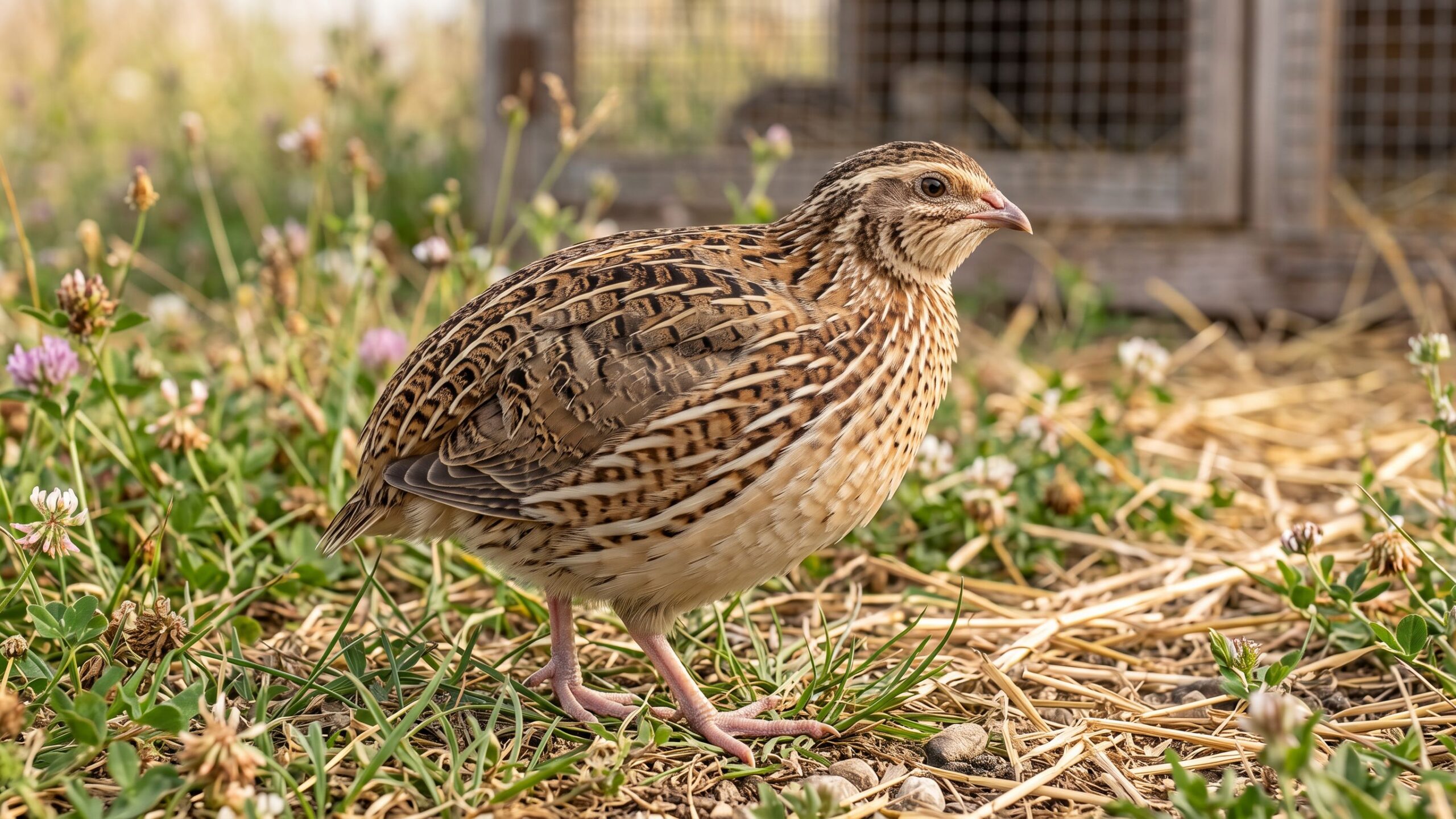
Coturnix quail possess compact, rounded bodies designed for life close to the ground. Their short legs, relatively small heads, and streamlined shapes allow them to move quickly through grasses and low vegetation. Unlike many domestic chicken breeds, Coturnix quail retain strong instincts to remain concealed and may react to sudden disturbances by launching themselves rapidly upward. Their wings are relatively short and rounded, supporting quick bursts of flight rather than prolonged soaring. Domestic Coturnix quail commonly weigh approximately 4–8 ounces, although selectively bred jumbo varieties may weigh 10–14 ounces or more. Their body size depends on genetics, age, sex, and management conditions. Their feathers are typically short and closely arranged, providing insulation and camouflage. Wild-type birds display intricate brown, tan, cream, and dark markings that help break up their outlines against natural vegetation. Coturnix quail possess short, slightly curved beaks adapted for picking up seeds, insects, and small food particles. Their feet contain slender toes equipped with small claws suitable for scratching and walking across soil or bedding. Like other birds, quail do not possess teeth. Instead, food passes through a specialized digestive system that includes a muscular gizzard, where material is ground into smaller particles. Their eyes are positioned toward the sides of their heads, providing a broad field of vision that helps detect movement and potential predators. These physical characteristics reflect their evolutionary origins as small, ground-dwelling birds that depend on camouflage, vigilance, and rapid movement for survival.
Popular Coturnix Quail Varieties and Their Beautiful Feather Colors
One of the most fascinating aspects of domestic Coturnix quail is the extraordinary diversity of feather colors and patterns developed through selective breeding. Although these birds belong to the same domesticated species, breeders have established numerous color varieties that create dramatically different appearances. The Pharaoh variety closely resembles the natural wild-type coloration, featuring brown feathers with intricate cream and dark markings. This pattern provides excellent camouflage and remains one of the most recognizable appearances among Coturnix quail. Italian or Golden Coturnix quail display lighter golden-brown plumage with attractive cream-colored markings. These birds are especially popular among enthusiasts who appreciate their warm, distinctive coloration. Tibetan varieties typically possess darker chocolate-brown feathers, sometimes with subtle reddish tones. Tuxedo Coturnix quail display contrasting white and colored feather patches, creating an appearance reminiscent of formal clothing. English White quail are predominantly white and may occasionally possess small colored markings. Silver varieties exhibit pale gray or silver-toned plumage, while other selectively bred lines display combinations of brown, cream, white, and patterned feathers. Jumbo Coturnix quail are generally selected for increased body size rather than representing a completely separate species. These larger birds are often associated with meat production, although they may also produce eggs. Color terminology can vary among breeders, and not every variety is standardized across organizations. When selecting Coturnix quail, owners should consider health, temperament, productive characteristics, and genetic diversity rather than focusing exclusively on appearance. Their remarkable variety demonstrates how selective breeding has expanded the visual diversity of a naturally camouflaged little bird.
Coturnix Quail Intelligence: Small Birds With Surprising Abilities
Coturnix quail may be tiny, but their behavior reveals an impressive capacity for learning, environmental awareness, and adaptation. As ground-dwelling birds, they depend heavily on recognizing potential threats, locating food, and navigating familiar surroundings. These natural demands have shaped their sensory abilities and behavioral responses. Coturnix quail can learn feeding routines, recognize familiar environmental cues, and associate particular activities with rewards. They may become accustomed to consistent caretakers, although many remain more cautious than domesticated chickens. Their strong startle responses reflect their evolutionary history as prey animals rather than a lack of intelligence. Quail often investigate unfamiliar objects carefully and may retreat toward sheltered areas when disturbed. Research involving Japanese quail has explored learning, memory, social behavior, reproductive preferences, and responses to environmental conditions. These studies demonstrate that quail behavior is influenced by experience as well as instinct. Individual birds may differ in boldness, activity levels, and willingness to explore. Some quail eagerly investigate new foraging materials, while others prefer remaining close to familiar hiding places. Environmental enrichment can encourage natural exploration and reduce stress. Scattered feed, safe dust-bathing areas, low shelters, and varied ground textures provide opportunities for investigation. Because Coturnix quail are sensitive to sudden disturbances, predictable routines and gentle handling are particularly valuable. Understanding their intelligence helps owners recognize that these small birds require more than basic food and shelter. They benefit from environments that allow them to learn, explore, and express natural behaviors.
Coturnix Quail Social Behavior: Understanding Flocks and Group Dynamics
Coturnix quail are social birds, but their group dynamics differ from those of chickens and some other domestic poultry species. Their social relationships are influenced by sex, age, available space, temperament, and reproductive activity. In managed environments, quail may live successfully in compatible groups when provided with sufficient room, hiding places, and appropriate resources. However, overcrowding and unsuitable male-to-female ratios can contribute to aggression, injuries, and stress. Male Coturnix quail may compete for access to females and establish dominance through chasing, posturing, or physical confrontations. Excessive mating pressure can result in feather loss or injuries to hens. For breeding groups, some keepers use approximately one male for every four to six females, although appropriate ratios vary according to individual temperament and housing conditions. Groups consisting entirely of females can also be maintained when breeding is not intended. Introducing unfamiliar quail should be approached carefully because established birds may respond aggressively to newcomers. Multiple feeding stations, visual barriers, and sheltered resting areas can help reduce competition. Quail naturally seek security near vegetation or covered spaces, making hiding opportunities important even in relatively small enclosures. Persistent chasing, repeated pecking, bleeding, or birds being prevented from eating are signs that group management needs immediate attention. Although Coturnix quail may not form the same visible social relationships as some larger farm animals, their interactions remain important to their welfare. Understanding flock behavior allows owners to create safer, calmer environments that support natural social activity.
Coturnix Quail Communication: Calls, Crowing, and Body Language
Coturnix quail communicate through a variety of vocalizations and subtle physical signals. Their sounds are generally different from the familiar clucking of chickens, and experienced keepers often learn to distinguish calls associated with different situations. Male Japanese quail produce distinctive crowing vocalizations that may sound like short, repeated phrases or sharp, rhythmic calls. These sounds are associated with reproductive behavior, social communication, and territorial interactions. Female quail typically produce softer contact calls and other vocalizations during feeding, movement, or social activity. Young chicks communicate through high-pitched peeping sounds that may indicate contact, discomfort, or distress. Body language also plays an important role in quail communication. Birds may lower their bodies, raise their heads, fluff their feathers, or move quickly toward shelter in response to environmental changes. Courtship behavior can involve distinctive movements, vocalizations, and interactions between males and females. Aggressive quail may chase, peck, or attempt to mount other birds. Because quail are naturally cautious, sudden silence or rapid movement may indicate that something has startled the group. Learning to recognize normal communication patterns helps owners identify stress, aggression, and potential health concerns. The quiet chirps, occasional male calls, and subtle movements of a Coturnix flock create a fascinating communication system that reflects their social and reproductive biology.
What Do Coturnix Quail Eat? Nutrition and Natural Foraging
Coturnix quail are omnivorous birds whose natural diets include seeds, grasses, insects, and other small invertebrates. Their feeding behavior involves walking close to the ground, pecking at small food particles, and investigating vegetation for edible materials. Domestic Coturnix quail require carefully balanced nutrition because their rapid growth and reproductive activity create substantial nutritional demands. Young quail chicks generally need a high-protein game bird or quail starter feed, commonly containing approximately 24–30% protein, depending on the formulation and developmental stage. Adult breeding and laying quail require diets that provide appropriate protein, energy, vitamins, minerals, and calcium. A commercial feed formulated for game birds or quail is generally preferable to relying on standard chicken feed without nutritional evaluation. Calcium is especially important for laying females because it supports eggshell formation. Fresh drinking water must always be available, and watering equipment should be designed to prevent contamination and reduce the risk of chicks becoming wet or drowning. Small quantities of appropriate greens, insects, or other treats can provide enrichment, but excessive treats may interfere with balanced nutrition. Quail that consume whole grains or fibrous materials may require suitable grit to support gizzard function. Owners should avoid moldy feed, spoiled food, and potentially toxic substances. Because Coturnix quail are small, nutritional deficiencies and dehydration can affect them relatively quickly. Proper feeding supports strong skeletal development, healthy feathers, egg production, immune function, and overall longevity.
Coturnix Quail Eggs: Tiny Shells With Remarkable Productivity
Coturnix quail are especially admired for their impressive egg-laying abilities. Despite their small bodies, productive female quail can lay eggs frequently under favorable management conditions. Many Coturnix hens begin laying at approximately six to eight weeks of age, although genetics, nutrition, lighting, and environmental conditions influence maturity. Productive birds may lay approximately 200–300 eggs annually, with some selectively bred lines performing especially well. Coturnix eggs are considerably smaller than typical chicken eggs, commonly weighing approximately 0.3–0.5 ounces each. Their shells are often cream-colored with distinctive dark brown speckles, creating beautiful patterns that vary among individual hens. Some varieties produce lighter or less heavily marked eggs. Quail eggs contain protein, fats, vitamins, and minerals, although their small size means several eggs may be needed to replace one chicken egg in recipes. They are popular in appetizers, salads, specialty dishes, and certain international cuisines. Female quail do not require males to produce eggs, although fertile eggs require successful mating. Egg production may decline with age, seasonal changes, nutritional deficiencies, or stressful conditions. Collecting eggs regularly helps maintain cleanliness and reduces the likelihood of breakage. Quail eggs should be handled, refrigerated, and cooked safely because they can carry harmful bacteria just like other poultry eggs. Their remarkable productivity makes Coturnix quail appealing to small-scale farmers interested in producing eggs without keeping larger poultry species.
Coturnix Quail Reproduction: Breeding, Fertility, and Incubation
Coturnix quail possess one of the fastest reproductive cycles among commonly raised domestic poultry. Their early maturity allows them to begin breeding at a relatively young age, making them attractive to small-scale breeders and agricultural researchers. Female quail may begin laying eggs at approximately six to eight weeks, while males can become reproductively active around a similar period. However, responsible breeding should prioritize healthy, appropriately developed birds rather than simply using the youngest animals capable of reproduction. Fertile Coturnix eggs typically require approximately 17–18 days of incubation, although hatch timing may vary slightly according to temperature, humidity, and incubation conditions. Unlike some domestic chickens, many selectively bred Coturnix quail show limited natural brooding behavior. As a result, artificial incubators are commonly used for controlled breeding programs. Successful incubation requires stable temperature, appropriate humidity, regular egg turning during most of the incubation period, and suitable ventilation. Eggs are generally no longer turned during the final days before hatching. Breeders should monitor incubator conditions carefully because temperature fluctuations and improper humidity can reduce hatch success. Newly hatched chicks are extremely small and require immediate access to suitable brooding conditions after drying. Responsible breeding also involves maintaining genetic diversity, selecting healthy parent birds, and avoiding overcrowding. Because Coturnix quail reproduce rapidly, owners should plan for housing, feeding, and long-term management before incubating eggs. Their reproductive efficiency is impressive, but it also creates responsibilities that should never be underestimated.
Raising Coturnix Quail Chicks: From Hatching to Independence
Newly hatched Coturnix quail chicks are among the smallest and most delicate young birds commonly raised on farms. Their tiny bodies, soft down, quick movements, and high-pitched peeping sounds make them fascinating to observe. However, their small size also creates important management challenges. Coturnix chicks require a carefully controlled brooding environment because they cannot regulate their body temperature effectively during early life. A conventional brooder commonly begins around 95°F during the first week, with temperatures gradually reduced as the chicks develop feathers. Their behavior should guide adjustments. Chicks that crowd tightly beneath the heat source may be cold, while those that consistently move away or pant may be overheated. Proper flooring is essential because slippery surfaces can contribute to leg development problems. Paper towels over suitable bedding or other non-slip surfaces may be used during the earliest period. Chicks also require appropriately sized feeders and waterers. Because Coturnix chicks are extremely small, open water containers can present drowning hazards. Shallow, chick-safe watering systems help reduce these risks. A high-protein game bird starter feed supports rapid growth, and feed particles may need to be appropriately sized for tiny beaks. Coturnix chicks develop quickly, beginning to replace their down with feathers within the first weeks of life. By approximately five to six weeks, many birds resemble miniature adults. Their rapid development makes careful early management essential because nutritional or environmental problems can affect growth quickly.
Coturnix Quail Housing: Creating a Safe and Comfortable Environment
Coturnix quail require secure, well-designed housing that reflects their natural behavior as small, ground-dwelling birds. Although their compact size allows them to occupy less space than chickens, overcrowding can contribute to aggression, stress, poor hygiene, and injuries. Housing should provide sufficient room for walking, resting, feeding, dust bathing, and escaping unwanted social interactions. Space requirements vary according to management systems, bird size, and environmental conditions, but generous allowances are preferable to minimum-density arrangements. Coturnix quail are particularly vulnerable to predators because of their small size. Secure enclosures should protect them from rodents, snakes, raccoons, cats, dogs, and birds of prey. Predator-resistant hardware cloth, reliable doors, and carefully sealed openings help reduce these risks. Quail may react to sudden disturbances by flying vertically upward, a behavior sometimes called flushing. This instinct can cause head injuries if birds strike hard ceilings. Housing design should therefore account for their startle response, using appropriately low, safe ceilings or sufficiently tall, carefully designed aviaries. Ground surfaces should remain dry and comfortable, with suitable bedding that allows natural scratching and dust bathing. Shelters, low vegetation, and visual barriers help quail feel secure. Unlike chickens, Coturnix quail do not require elevated roosting bars and generally prefer resting on the ground. Proper ventilation helps reduce moisture and ammonia buildup, while protection from drafts and extreme weather supports comfort. A well-designed quail enclosure combines security, sanitation, and opportunities for natural behavior.
Dust Bathing, Foraging, and Other Fascinating Coturnix Quail Behaviors
Coturnix quail display a variety of natural behaviors that reveal their evolutionary history as ground-dwelling birds. Dust bathing is among their most recognizable activities. A quail may lower itself into dry soil or suitable bathing material, spread its wings, kick dust through its feathers, and wriggle enthusiastically. This behavior helps maintain plumage condition and may assist with controlling certain external parasites. Quail also spend considerable time preening, using their beaks to arrange feathers and remove debris. Their feathers provide insulation, camouflage, and protection, making proper grooming essential. Foraging is another important activity. Quail naturally investigate the ground, peck at small particles, and search for edible materials. Providing scattered feed, appropriate vegetation, and safe enrichment materials encourages these instincts. Coturnix quail may also seek shelter beneath low structures or dense cover, reflecting their natural tendency to avoid exposed spaces. Their startle response is particularly distinctive. When frightened, quail may suddenly leap or fly upward with surprising force. This behavior helps wild birds escape predators but can create hazards in domestic housing. Young quail often display energetic movements and exploratory behavior as they develop coordination. Understanding these natural activities helps owners create environments that support physical and behavioral well-being. Rather than viewing quail simply as miniature egg-producing birds, caretakers can appreciate their complex instincts and provide opportunities for meaningful daily activity.
Coturnix Quail Health: Common Illnesses and Warning Signs
Maintaining healthy Coturnix quail requires careful attention to sanitation, nutrition, environmental conditions, and daily observation. Healthy quail are generally alert, active, and responsive to their surroundings. They should move comfortably, maintain appropriate body condition, and demonstrate normal feeding and grooming behaviors. However, their small size means that illness can progress rapidly, making early recognition especially important. Common concerns include respiratory infections, intestinal parasites, coccidiosis, nutritional deficiencies, injuries, and reproductive complications. Ulcerative enteritis, sometimes called quail disease, is a serious bacterial condition that can affect quail and other game birds. Symptoms may include weakness, diarrhea, reduced appetite, and sudden deaths. Poor ventilation and accumulated ammonia can contribute to respiratory irritation and increase susceptibility to illness. Overcrowding may encourage feather pecking, aggression, and injuries. Laying females may develop reproductive problems, including egg-binding, which can become life-threatening without prompt treatment. Coturnix quail can also be affected by avian influenza and other infectious poultry diseases, making biosecurity important. New birds should be quarantined appropriately before introduction, and equipment should be cleaned regularly. Warning signs of illness may include fluffed feathers, unusual inactivity, reduced feeding, difficulty breathing, persistent diarrhea, or separation from the group. Because quail naturally conceal weakness, subtle changes may be the first indication of a problem. Veterinary guidance, balanced nutrition, clean housing, and appropriate preventive care support long-term flock health.
Coturnix Quail Through the Seasons: Weather and Environmental Adaptation
Seasonal changes influence Coturnix quail behavior, egg production, and housing requirements. Although Japanese quail are relatively adaptable birds, domestic individuals require protection from extreme weather and unsuitable environmental conditions. During winter, dry bedding, adequate ventilation, and shelter from strong drafts are essential. Healthy adult quail can tolerate cool conditions when properly acclimated, but prolonged exposure to wet, windy, or freezing environments may create health risks. Their small bodies can lose heat relatively quickly, particularly when feathers become wet. Water supplies must remain accessible and unfrozen. Summer presents different challenges, including overheating, dehydration, and increased moisture around drinking areas. Quail may reduce activity, pant, or seek shaded locations during hot weather. Adequate ventilation, shade, and fresh drinking water help reduce heat stress. Seasonal daylight changes can also influence egg production. Under natural lighting conditions, laying may decline as days shorten, while controlled lighting programs are sometimes used in managed production systems. Such programs should account for animal welfare and provide appropriate dark periods for rest. Molting may occur as quail replace older feathers, temporarily affecting appearance and reproductive activity. Nutritional requirements can change during feather replacement because new plumage requires substantial protein. Understanding seasonal patterns allows owners to adjust housing, feeding, and management practices while supporting the natural biological rhythms of their birds.
Are Coturnix Quail Good for Beginners?
Coturnix quail are often recommended for people interested in raising small poultry because of their compact size, rapid maturity, and relatively straightforward feeding requirements. Their ability to produce eggs within a few months of hatching makes them particularly appealing to small-scale homesteaders. However, beginner-friendly does not mean maintenance-free. Coturnix quail require secure housing, balanced nutrition, clean drinking water, predator protection, and consistent observation. Their small size makes them vulnerable to injuries and environmental hazards that might be less serious for larger poultry. Their tendency to flush upward when startled also requires thoughtful enclosure design. Quail can be suitable for people with limited outdoor space, provided local regulations permit poultry keeping and adequate facilities are available. They are generally quieter than chickens, although males produce distinctive calls that may be noticeable in residential environments. Coturnix quail are not usually ideal pets for frequent handling because many individuals remain cautious and may become stressed by restraint. Nevertheless, they can become accustomed to familiar caretakers and provide considerable enjoyment through observation. Prospective owners should also consider their relatively short productive lifespan and the need for appropriate veterinary resources. Coturnix quail commonly live approximately two to four years under domestic conditions, although individual longevity varies. For people prepared to meet their specialized needs, these tiny birds offer an engaging introduction to poultry keeping and small-scale animal husbandry.
Fascinating Coturnix Quail Facts That May Surprise You
Coturnix quail possess numerous extraordinary characteristics that distinguish them from larger domestic poultry. One of their most remarkable features is their rapid development. Many females begin laying eggs at approximately six to eight weeks of age, making them among the fastest-maturing birds commonly raised for egg production. Their eggs are famous for their beautiful speckled shells, with patterns that can vary considerably among individual hens. Despite their small size, productive Coturnix quail may lay hundreds of eggs annually under favorable conditions. Another fascinating characteristic is their instinctive camouflage. Wild-type Coturnix feathers contain intricate patterns of brown, tan, and cream that help conceal birds among grasses and soil. Domestic breeding has produced an extraordinary variety of colors, including golden, white, silver, and dark chocolate varieties. Coturnix quail also possess a strong upward escape response, allowing them to launch themselves suddenly into the air when startled. Their compact bodies and short wings are adapted for rapid bursts of movement rather than sustained long-distance flight in most domestic settings. Japanese quail have also played important roles in scientific research because of their rapid reproductive cycles and manageable size. Their behavior has contributed to studies involving genetics, development, learning, and reproduction. These fascinating characteristics demonstrate that Coturnix quail are far more than miniature versions of chickens. They represent a distinctive and remarkable group of birds with their own biology, behaviors, and agricultural significance.
Coturnix Quail in Modern Farming and Homesteading
Coturnix quail have become increasingly popular in modern small-scale agriculture because of their reproductive efficiency, compact size, and versatility. Their relatively modest housing requirements make them appealing to homesteaders who may not have enough land for larger livestock. Quail eggs are valued in specialty cooking, while certain larger Coturnix lines are raised for meat production. Their rapid maturity allows breeders to manage relatively short production cycles, although responsible breeding requires careful attention to health, genetic diversity, and animal welfare. Coturnix quail are also popular among poultry enthusiasts interested in developing and preserving unusual feather colors. Their diverse varieties create opportunities for selective breeding and educational projects involving genetics and inheritance. Beyond agricultural production, Japanese quail have contributed significantly to scientific research. Their relatively short generation intervals and well-studied reproductive biology make them useful model organisms in certain fields. However, increasing popularity also highlights the importance of responsible husbandry. Overcrowding, poor sanitation, inadequate nutrition, and unsuitable breeding practices can quickly undermine their welfare. Small-scale quail keeping should prioritize healthy birds, secure environments, and realistic expectations about production. As more people explore backyard farming, Coturnix quail offer an opportunity to appreciate the remarkable diversity of domestic poultry while learning about animal behavior, nutrition, reproduction, and responsible agricultural management.
Conclusion: Why Coturnix Quail Are Extraordinary Farm Birds
Coturnix quail prove that remarkable abilities and fascinating personalities can exist in surprisingly small packages. From their origins in the grasslands of East Asia to their modern popularity on farms and homesteads, these tiny birds represent an extraordinary combination of natural adaptation, selective breeding, and agricultural usefulness. Their intricate feather patterns, rapid development, impressive egg production, and distinctive behaviors make them stand out among domestic poultry. Although they are often raised for practical purposes, Coturnix quail possess complex instincts and social needs that deserve careful attention. Their natural tendencies to forage, dust bathe, seek shelter, communicate, and respond quickly to danger reflect their evolutionary history as ground-dwelling birds. Responsible ownership requires more than providing a small enclosure and collecting eggs. Coturnix quail need balanced nutrition, clean water, secure housing, appropriate companionship, environmental enrichment, and veterinary care when necessary. Their sensitivity to stress, overcrowding, and environmental hazards makes thoughtful management especially important. For beginners and experienced poultry enthusiasts alike, Coturnix quail offer opportunities to learn about breeding, animal behavior, nutrition, and small-scale farming. At Duffy Street, exploring farm animals means recognizing the remarkable qualities that make every species unique. Coturnix quail remind us that some of the most extraordinary creatures in the barnyard are also among the smallest, transforming ordinary farm spaces into fascinating environments filled with delicate beauty, lively behavior, and endless opportunities for discovery.
Pet Product Reviews
Explore Duffy Street’s Pet Product Reviews! Sniff out the top-rated toys, treats, gear, and gadgets for your pets with our fun, easy-to-read comparisons. We’ve done the digging so you can find the perfect products for your pet friends!