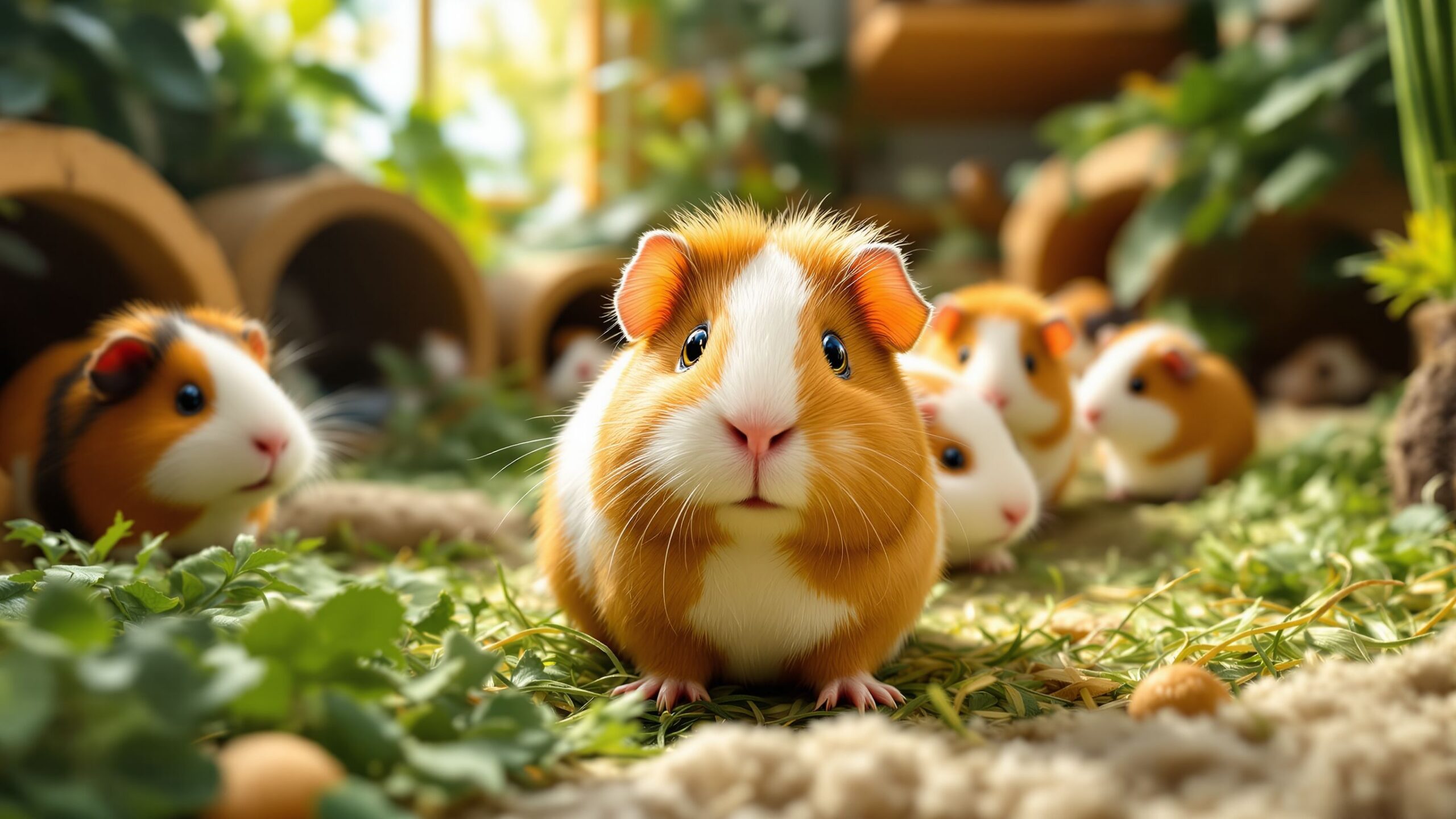
Guinea pigs are gentle, social, expressive little animals that have earned a place among the world’s most popular small companion pets. Known scientifically as Cavia porcellus, the domestic guinea pig belongs to the rodent family Caviidae and is also commonly called a cavy. Despite its familiar name, the guinea pig is neither a pig nor originally from Guinea. Its ancestors came from South America, where guinea pigs have shared an extraordinary relationship with humans for thousands of years. With their rounded bodies, tiny legs, alert eyes, twitching noses, and seemingly endless collection of squeaks, whistles, rumbles, and chirps, guinea pigs have personalities that can feel surprisingly large for such compact animals. A newly adopted guinea pig may initially disappear into a hideout whenever someone enters the room, yet the same animal may eventually race toward the sound of a refrigerator opening because it has learned that vegetables could be coming. Guinea pigs are often considered approachable pets, but they have much more specialized needs than their simple appearance suggests. They require a fiber-rich diet, reliable vitamin C, plenty of living space, social interaction, enrichment, careful handling, and access to appropriate veterinary care. Understanding these needs transforms guinea pig ownership from simply keeping a small animal into building a rewarding relationship with a fascinating species.
A: Yes. They can make wonderful companion animals, but they still require daily feeding, cleaning, social interaction, proper housing, and veterinary care.
A: Guinea pigs are highly social and generally benefit from living with a compatible guinea pig companion when introductions and housing are handled properly.
A: Their diet should center on unlimited grass hay along with appropriate fresh vegetables, vitamin C, fresh water, and a measured amount of quality guinea pig pellets.
A: A loud “wheek” is commonly associated with excitement, anticipation, attention seeking, or the expectation of food.
A: Some learn to enjoy cuddling, while others prefer keeping their feet on the ground. Gentle handling and patience help build trust.
A: Many live around 5 to 7 years, although genetics, diet, veterinary care, and living conditions can influence lifespan.
A: Routine bathing usually is not necessary. Occasional bathing may be appropriate when genuinely needed, particularly for long-haired or soiled guinea pigs.
A: No. Exercise wheels and balls are unsuitable for guinea pigs and can place unnecessary stress on their backs and bodies.
A: Sudden energetic jumps are often called “popcorning” and are commonly associated with excitement and playful energy.
A: Loss of appetite, weight loss, unusual breathing, diarrhea, reduced droppings, lethargy, difficulty urinating, or sudden behavioral changes warrant prompt veterinary attention.
Where Do Guinea Pigs Come From?
The guinea pig’s story begins thousands of years ago in South America. Domestic guinea pigs descended from wild cavies found in the continent’s Andean regions, and archaeological evidence shows that people began domesticating their ancestors thousands of years ago. Guinea pigs became particularly important among communities in areas associated with modern-day Peru, Bolivia, Ecuador, and neighboring regions. They were kept for practical, cultural, and ceremonial purposes, creating an ancient relationship between humans and cavies long before these animals appeared in European homes. European explorers and traders eventually transported guinea pigs across the Atlantic, and by the 1500s they had begun appearing in Europe. Their unusual appearance helped make them desirable curiosities and companion animals. Over generations, selective breeding resulted in the remarkable variety of coat colors, patterns, textures, and lengths seen in domestic guinea pigs today. The origin of the English name “guinea pig” remains uncertain. The animals did not originate in the African country of Guinea, and they are biologically unrelated to pigs. The “pig” portion may have developed because of their rounded bodies and squealing vocalizations, while historians have proposed several explanations for the “guinea” portion. Whatever its exact origin, the unusual name survived and became permanently associated with Cavia porcellus.
What Do Guinea Pigs Look Like?
Guinea pigs have a distinctive appearance that makes them easy to recognize. Their bodies are compact, rounded, and relatively low to the ground, with short legs and no visible external tail. Their heads are large in proportion to their bodies, and their expressive faces feature small ears, bright eyes, prominent whiskers, and noses that seem almost constantly busy investigating scents. Guinea pigs are considerably larger and heavier than many other rodents commonly kept as pets. Their sturdy size can make them easier to handle than tiny, extremely fast animals such as mice, although guinea pigs must still be supported carefully because falls can cause serious injuries. Their teeth are another defining characteristic. Guinea pigs possess continuously growing teeth that depend on normal chewing and wear to remain healthy. This is one reason appropriate grass hay is so important. Guinea pigs naturally spend significant amounts of time chewing fibrous plant material, which supports both their digestive and dental health. Domestic guinea pigs also display extraordinary coat diversity. Their fur may be smooth, coarse, curly, long, short, silky, swirled into rosettes, or almost entirely absent in hairless varieties. Colors range from white, cream, gold, red, brown, gray, and black to elaborate combinations and patterns.
Popular Guinea Pig Breeds and Coat Types
One of the joys of discovering guinea pigs is realizing how dramatically their appearance can vary. The American guinea pig is among the most recognizable varieties, featuring a short, smooth coat that lies close to the body. Its relatively straightforward grooming requirements can make it appealing to first-time owners. Abyssinian guinea pigs look completely different because their coats contain distinctive rosettes that create whorls and ridges across the body. Even when perfectly groomed, an Abyssinian can look charmingly tousled. Long-haired varieties such as Peruvians and Silkies have impressive flowing coats but generally require significantly more grooming to prevent tangles, mats, and contamination. Teddy guinea pigs are known for dense, plush coats that create an almost stuffed-animal appearance, while other varieties can have curls, satin-like finishes, unusual markings, or combinations of several characteristics. Hairless guinea pigs, including the popular Skinny Pig, have specialized environmental and skin-care considerations because they lack the protective insulation of a normal coat. Appearance is certainly part of the fun of choosing a guinea pig, but prospective owners should consider grooming requirements alongside looks. A spectacular long-haired guinea pig may require substantially more maintenance than a short-haired companion.
Guinea Pig Personality and Temperament
Guinea pigs are prey animals, and this fact explains much of their behavior. In the natural world, quickly reacting to possible danger is essential for survival. Domestic guinea pigs have retained powerful instincts to freeze, hide, or flee when confronted with sudden movement, unfamiliar sounds, or threatening situations. As a result, a newly adopted guinea pig may seem extremely shy. It might disappear whenever someone approaches or remain completely still when picked up. This does not necessarily mean the animal dislikes people. More often, it means the guinea pig has not yet learned that its new surroundings and caregivers are safe. Trust usually develops through consistency rather than force. Quiet conversation, predictable feeding routines, gently offering appropriate vegetables by hand, and careful handling can gradually build positive associations. Eventually, many guinea pigs begin approaching familiar people enthusiastically. Personalities vary enormously. One guinea pig may confidently investigate every new object placed in its enclosure, while another carefully watches from inside a tunnel before emerging. Some enjoy relaxing during lap time, while others prefer exploring. Recognizing and respecting these differences allows owners to build relationships based on the individual animal rather than expecting every guinea pig to behave identically.
Why Guinea Pigs Squeak, Wheek, Rumble, and Chatter
Few things reveal a guinea pig’s personality faster than its voice. Guinea pigs have an impressive vocabulary of whistles, squeaks, rumbles, purr-like sounds, chirps, and teeth chattering. Their most famous vocalization is probably the high-pitched whistle commonly called “wheeking.” Many guinea pigs learn to associate specific household sounds with food remarkably quickly. The refrigerator opening, a produce bag rustling, footsteps approaching at breakfast time, or even a familiar person’s voice may trigger an enthusiastic chorus of wheeks. Other sounds can communicate different emotions and social messages. Low rumbling may appear during courtship or dominance interactions, while teeth chattering can indicate irritation, tension, or a warning. Quieter vocalizations frequently occur while guinea pigs explore or interact socially. Sounds should always be interpreted together with body language and circumstances because similar noises can have different meanings depending on the situation. Owners who regularly observe their pets often become remarkably skilled at understanding their individual guinea pigs’ communication styles.
Guinea Pigs Are Social Animals
Guinea pigs are naturally social creatures, and companionship can play an important role in their quality of life. Human attention can be valuable, but people cannot completely reproduce the communication and companionship another compatible guinea pig provides. Guinea pigs living successfully with companions can eat together, rest near one another, communicate throughout the day, explore their surroundings, and participate in natural social behavior. Watching a compatible pair interact reveals a surprisingly complicated social world. However, companionship requires thoughtful management. Guinea pigs have individual personalities and social hierarchies, so unfamiliar animals should not simply be placed together without appropriate introductions and observation. Sex is also extremely important because housing an intact male with a female can quickly result in pregnancy. Adequate enclosure space, multiple hiding areas, sufficient food access, and carefully planned introductions can help reduce competition. Owners should also understand that some chasing, rumbling, mounting, and other dominance behaviors can occur while guinea pigs establish relationships. Genuine fighting or injury, however, requires intervention.
Creating the Perfect Guinea Pig Habitat
The outdated image of a guinea pig spending its entire life inside a tiny pet-store cage does not reflect what these active animals actually need. Guinea pigs require substantial horizontal floor space to walk, run, explore, eat, rest, and interact comfortably. A thoughtfully designed enclosure provides separate areas for hay, water, sleeping, hiding, and movement rather than forcing everything into a cramped space. Larger environments become even more important when multiple guinea pigs live together because individuals need opportunities to move away from each other when desired. Flooring should be solid rather than exposed wire because guinea pig feet are not designed to spend their lives standing on wire surfaces. Suitable bedding or properly maintained fleece systems can provide comfortable footing while helping manage moisture and waste. A clean enclosure does not need to be empty or boring. Tunnels, hideaways, hay piles, shelters, and safe objects to investigate create a more stimulating environment. Guinea pigs are ground-oriented animals, so enrichment should focus primarily on horizontal exploration rather than high climbing structures.
Temperature and Household Safety
Guinea pigs can be sensitive to environmental extremes, particularly excessive heat. Their enclosure should be located in a comfortable, temperature-controlled part of the home away from direct sunlight, strong drafts, heating vents, and dramatic temperature changes. A sunny window might appear pleasant, but direct sunlight can quickly increase enclosure temperatures. Garages, outdoor sheds, balconies, and other poorly regulated environments can also expose guinea pigs to dangerous weather conditions. Ideally, their habitat should be located where they can experience normal household activity without being surrounded by constant noise and disruption. Because guinea pigs are prey animals, repeated startling noises or unwanted attention from larger pets can create stress. Dogs and cats should never automatically be considered safe companions simply because they appear friendly. Even playful behavior from a much larger animal can seriously injure a guinea pig, so interactions must be managed with extreme care.
Hay: The Foundation of a Healthy Guinea Pig Diet
If there is one food every prospective guinea pig owner should understand, it is hay. Appropriate grass hay should generally make up the foundation of an adult guinea pig’s diet and should be consistently available. Hay performs two especially important functions. First, it provides the fiber necessary to support a guinea pig’s specialized digestive system. Guinea pigs are herbivores whose gastrointestinal tracts are designed for frequent consumption of fibrous plant material. Second, the repetitive chewing required to eat hay helps promote normal dental wear. Timothy hay is widely used for adult guinea pigs, although other appropriate grass hays can provide additional variety. Good hay should smell fresh and grassy and should never be damp, moldy, or noticeably musty. Alfalfa is nutritionally different from typical grass hay because it contains higher concentrations of nutrients such as calcium and protein. It may be useful during certain life stages, including growth or pregnancy, but it is generally not the everyday default hay for healthy adult guinea pigs unless recommended for a particular reason.
Why Guinea Pigs Need Vitamin C
One of the most important facts about guinea pig nutrition is that these animals cannot produce adequate vitamin C internally. They therefore depend on dietary sources, making vitamin C an essential part of responsible guinea pig care. Inadequate vitamin C can eventually lead to serious health problems. A thoughtfully designed diet usually combines appropriate guinea pig pellets with suitable fresh foods that provide vitamin C. Bell peppers are particularly popular because they can provide vitamin C without the high sugar levels associated with many fruits. Other suitable vegetables and leafy greens can add variety and additional nutrients. Pellets should be specifically formulated for guinea pigs rather than generic rodent or small-animal mixes. Food freshness also matters because vitamin C can degrade over time. Adding vitamin C directly to drinking water is generally considered less reliable because the vitamin can break down and the changed taste may affect water consumption. Owners who are uncertain about their guinea pig’s vitamin C intake should consult a veterinarian familiar with guinea pig nutrition.
Vegetables, Pellets, and Treats
A healthy guinea pig menu involves much more than keeping a pellet bowl full. Grass hay remains the dietary foundation, while appropriate fresh vegetables and measured portions of guinea pig-specific pellets contribute additional nutrients. Leafy greens can provide variety, hydration, and enrichment, while bell peppers are especially useful because of their vitamin C content. Different vegetables have different nutritional profiles, so variety and appropriate portions are important. Fruit should generally be treated as an occasional food rather than a major dietary component because many fruits contain considerable natural sugar. A guinea pig enthusiastically begging for something sweet does not mean that food should be provided frequently. Sudden dietary changes should also be avoided whenever possible. Guinea pig digestive systems can be sensitive, so new foods are best introduced gradually while the animal’s appetite, stool production, and overall behavior are observed.
Guinea Pig Digestion and Why Appetite Matters
A guinea pig’s digestive system is designed around frequent intake of fibrous foods, which makes changes in appetite especially important. A guinea pig that suddenly stops eating should never simply be assumed to be picky or temporarily uninterested in food. Reduced appetite can accompany dental problems, gastrointestinal disorders, pain, infection, or other illnesses, and prolonged reductions in food intake can become dangerous. Owners should learn what normal eating looks like for their individual animals. Knowing how enthusiastically a guinea pig approaches breakfast, how much hay normally disappears, and what its usual droppings look like provides valuable reference points. Regular weight monitoring can also help identify problems because guinea pigs may lose weight before illness becomes visually obvious beneath their fur. Any significant decrease in eating, stool production, or normal activity deserves prompt attention.
Exercise and Enrichment
Guinea pigs are not elaborate climbers, but they are active animals that benefit enormously from opportunities to explore. A spacious habitat naturally encourages movement, while tunnels, cardboard structures, hideaways with multiple entrances, fresh hay piles, and periodically rearranged enrichment can make the environment more interesting. Supervised floor time in a securely guinea-pig-proofed area can provide additional exercise. Electrical cords, toxic plants, narrow spaces, unsafe objects, and access to other animals should be eliminated before exploration begins. Food itself can become enrichment. Instead of always placing vegetables in one predictable bowl, owners can occasionally distribute appropriate pieces around a safe enclosure to encourage searching and exploration. Simple environmental changes can transform an ordinary habitat into a more stimulating space without requiring complicated equipment.
Grooming, Nail Trimming, and Routine Care
Grooming requirements depend greatly on coat type. Short-haired guinea pigs generally need relatively simple coat maintenance, while long-haired varieties can require frequent brushing and trimming to prevent mats, tangles, and contamination. Nails also require regular inspection and trimming because they continue growing and can eventually curve or interfere with comfortable movement. Owners who are nervous about trimming nails can ask a veterinarian or experienced guinea pig professional to demonstrate the technique. Guinea pigs generally do not require frequent full baths. Unnecessary bathing can cause stress and potentially irritate or dry the skin. Maintaining a clean enclosure and performing appropriate spot cleaning often reduces the need for bathing. Grooming sessions also provide an excellent opportunity to examine the coat, skin, ears, eyes, feet, and body for changes that might otherwise go unnoticed.
Common Guinea Pig Health Problems
Guinea pigs can experience dental disease, respiratory infections, skin disorders, parasites, urinary problems, digestive illnesses, vitamin deficiencies, reproductive conditions, and other medical concerns. Respiratory problems deserve particular attention because guinea pigs can deteriorate quickly when seriously ill. Difficulty breathing, abnormal respiratory sounds, discharge around the nose or eyes, unusual lethargy, or appetite loss should receive prompt veterinary attention. Dental disease may cause drooling, difficulty chewing, selective eating, dropping food, or weight loss. Normal-looking front teeth do not necessarily mean the entire mouth is healthy because problems can develop in the less-visible cheek teeth. Urinary disease may cause discomfort, blood in the urine, vocalizing while urinating, repeated attempts to urinate, or changes in normal behavior. Owners should establish a relationship with a veterinarian experienced in guinea pig medicine before an emergency occurs because not every veterinary clinic routinely treats this species.
Why Guinea Pigs Can Hide Illness
Guinea pigs are naturally skilled at concealing weakness. As prey animals, appearing obviously sick in the wild could attract predators, so their instincts may encourage them to hide signs of illness until a problem has become significant. This makes everyday observation one of the owner’s most valuable tools. Changes in body weight, appetite, water consumption, stool production, urination, breathing, movement, coat condition, or social behavior can provide early clues that something is wrong. A guinea pig that suddenly spends far more time hiding, eats vegetables but refuses hay, becomes unusually quiet, or begins losing weight deserves attention even if no dramatic symptoms are visible. Knowing what is normal for each individual guinea pig makes subtle changes much easier to recognize.
How to Handle a Guinea Pig Safely
Guinea pigs should be handled calmly and securely because their bodies can be injured by falls and their prey instincts may cause sudden struggling. When lifting a guinea pig, both the chest and hindquarters should be supported. Holding the animal securely against the body can help it feel safer, but squeezing should always be avoided. Because a frightened guinea pig may unexpectedly leap or twist, carrying one high above a hard floor creates unnecessary risk. Young children should always be supervised during handling. Sitting on the floor while interacting with a guinea pig can reduce the consequences of an accidental fall. Children should also learn that guinea pigs are living animals rather than toys and should never be chased, grabbed, squeezed, or forced to interact. Patient handling helps teach a guinea pig that human contact can be safe and predictable.
Popcorning, Zoomies, and Other Adorable Guinea Pig Behaviors
One of the most famous guinea pig behaviors is “popcorning,” in which an excited animal suddenly leaps into the air, sometimes twisting before racing away. The movement can look so spontaneous that it resembles a kernel of popcorn popping. Young guinea pigs frequently display this behavior, although adults can popcorn as well. Guinea pigs may also perform energetic bursts of running commonly called zoomies, racing around their habitat with surprising speed. Other everyday behaviors include stretching out while resting, burrowing into hay, following companions, grooming, investigating unfamiliar objects, scent marking, and standing upright to inspect something interesting. Learning these normal behaviors allows owners to appreciate how expressive guinea pigs can be and helps distinguish ordinary activity from unusual behavior that could signal stress or illness.
How Long Do Guinea Pigs Live?
Guinea pigs represent a meaningful long-term commitment. Many live approximately five to seven years, although lifespan varies considerably among individuals and some guinea pigs live longer. Genetics, nutrition, housing, preventative care, veterinary treatment, and overall health can all influence longevity. Their lifespan is especially important for families considering guinea pigs for children. A child’s interests and responsibilities can change significantly over five, six, or seven years, but the guinea pigs will continue needing daily care. Long-term expenses should also be considered. Hay, vegetables, pellets, bedding, habitat supplies, grooming equipment, and veterinary care create continuing costs, while emergency or specialized veterinary treatment can be expensive. Bringing guinea pigs home should therefore be viewed as a multi-year commitment rather than a temporary childhood activity.
Guinea Pigs as Family Pets
Guinea pigs can become wonderful family companions when adults accept ultimate responsibility for their care. Their vocal personalities, manageable size, social behavior, and entertaining routines can make them especially appealing to households interested in interactive small animals. However, describing guinea pigs as simple “starter pets” can create unrealistic expectations. Daily feeding, enclosure cleaning, health monitoring, grooming, nail care, veterinary appointments, and purchasing supplies require consistent attention. Children can certainly participate in care by preparing vegetables, replenishing hay, helping clean appropriate areas, and spending supervised time interacting with the animals. The most successful family arrangements occur when adults remain responsible for ensuring those tasks are completed regardless of whether a child’s enthusiasm changes.
Baby Guinea Pigs Are Surprisingly Developed
Baby guinea pigs are called pups, and they enter the world looking remarkably mature compared with many other baby rodents. Guinea pig pups are born with fur, open eyes, and developed limbs, and they can begin moving around shortly after birth. They may even investigate solid foods while they are still nursing. This advanced development reflects the species’ relatively long pregnancy compared with many smaller rodents. Although pups look surprisingly independent, they still depend on their mother during early life and require appropriate nutrition and careful management. Their tiny size combined with their miniature adult appearance makes them particularly memorable, but breeding guinea pigs should never be undertaken casually because pregnancy and birth can involve significant health risks.
Fascinating Guinea Pig Intelligence and Memory
Guinea pigs may not perform the same tasks associated with highly trainable animals such as dogs, but they are capable learners. They can recognize routines, remember locations, associate sounds with events, and distinguish familiar people and situations. Many quickly learn exactly when meals normally arrive. Some recognize the footsteps of their primary caregiver or respond differently to familiar voices. Food can provide powerful motivation for simple training, allowing guinea pigs to learn behaviors such as approaching when called, entering a carrier, standing in a particular location, or following simple targets. Their intelligence is often most obvious in everyday life, especially when an entire group begins wheeking seconds before the person responsible for vegetables even reaches the refrigerator.
Choosing Between Guinea Pig Adoption and Buying
Prospective owners can find guinea pigs through animal shelters, dedicated rescues, responsible breeders, and pet stores. Adoption is particularly worth exploring because shelters and rescues regularly receive guinea pigs whose previous families could no longer care for them. Rescues may also have already-bonded pairs available, making it easier to provide social companionship without beginning introductions from scratch. Foster caregivers and rescue staff may know valuable information about each animal’s temperament, habits, medical history, and compatibility with other guinea pigs. Regardless of where a guinea pig comes from, prospective owners should ask about age, sex, previous diet, social relationships, and known medical history. Preparing the habitat, hay, food, hideouts, and other supplies before the animals arrive helps make their transition into the new home calmer and safer.
What to Know Before Getting Guinea Pigs
Successful guinea pig ownership begins before the first excited wheek is heard. Prospective owners should determine whether they have enough space for a suitable habitat, whether they can provide appropriate social companionship, whether fresh hay and vegetables fit comfortably into the household budget, and whether a veterinarian experienced with guinea pigs is accessible. It is equally important to think several years ahead. Who will care for the guinea pigs during vacations? Who will clean the enclosure when schedules become busy? Is there a plan for unexpected veterinary expenses? Will the household still have the necessary space if living circumstances change? Considering these questions does not make guinea pig ownership less exciting. Instead, it increases the likelihood that the animals will receive a stable, permanent home where their needs remain a priority throughout their lives.
The Remarkable World of Guinea Pigs
Guinea pigs may fit comfortably in someone’s arms, but there is nothing small about the world surrounding them. Behind those round faces and enthusiastic squeaks is a highly social herbivore with specialized nutritional requirements, complex communication, strong prey instincts, remarkable learning abilities, distinctive behaviors, and thousands of years of shared history with humans. Understanding Cavia porcellus means moving beyond the outdated idea that a small animal simply needs a cage, water bottle, and bowl of food. Guinea pigs need generous space, abundant appropriate hay, reliable dietary vitamin C, social interaction, enrichment, gentle handling, careful health monitoring, and veterinary care. In return, owners have the opportunity to discover one of the most expressive small companion animals imaginable. Guinea pigs learn household routines, recognize the arrival of favorite foods, develop relationships with companions and caregivers, explode into spontaneous popcorns, race through tunnels, loudly announce that dinner is apparently several minutes late, and gradually reveal personalities far bigger than their compact bodies suggest. For prospective owners, longtime guinea pig enthusiasts, and anyone simply curious about these remarkable animals, their combination of fascinating biology, ancient history, social intelligence, and unmistakable charm explains why guinea pigs continue to capture hearts around the world.
Pet Product Reviews
Explore Duffy Street’s Pet Product Reviews! Sniff out the top-rated toys, treats, gear, and gadgets for your pets with our fun, easy-to-read comparisons. We’ve done the digging so you can find the perfect products for your pet friends!