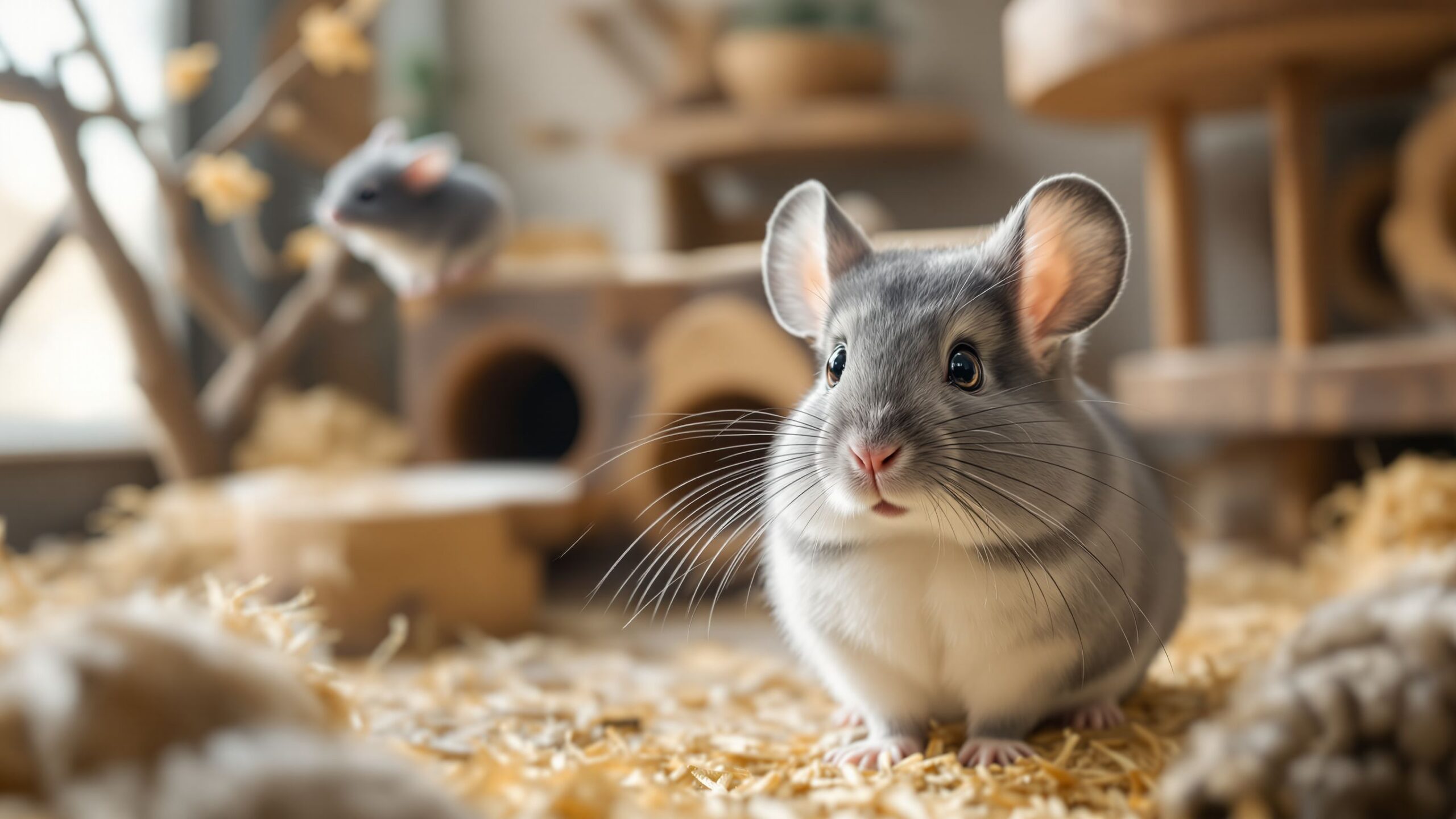
Chinchillas are intelligent, energetic, curious small mammals famous for having some of the densest and softest fur in the animal kingdom. The species most commonly associated with domestic chinchillas is Chinchilla lanigera, sometimes called the long-tailed chinchilla. Their enormous ears, long whiskers, powerful hind legs, fluffy tails, and incredibly plush coats create an unmistakable appearance, but chinchillas are far more than unusually soft pets. They are agile mountain animals with specialized environmental, nutritional, and behavioral needs. A healthy chinchilla may spend its evening leaping between platforms, investigating every new object in its habitat, chewing wooden toys, rolling enthusiastically in dust, rearranging hay, and suddenly launching into energetic bursts around the enclosure. They can become comfortable with familiar people and may develop strong routines, but many prefer exploring and climbing to prolonged cuddling. Chinchillas are also long-lived compared with many other small mammals, meaning adopting one can represent a commitment of well over a decade. Their care differs considerably from that of hamsters, guinea pigs, or rabbits. They require cool temperatures, a high-fiber diet, specialized dust bathing, safe chewing opportunities, vertical enrichment, and veterinary care from someone familiar with exotic mammals. When those needs are respected, chinchillas can be fascinating and highly rewarding companions.
A: They can be wonderful companions, but their long lifespan, temperature requirements, specialized diet, dental needs, and delicate handling make them more demanding than some small pets.
A: Many live around 10 to 15 years, and some well-cared-for chinchillas can live 20 years or longer.
A: They should not routinely bathe in water. Instead, they roll in specially formulated chinchilla dust to remove excess oils and maintain their dense coats.
A: Their extremely dense fur can dry slowly, allowing trapped moisture to contribute to skin and coat problems.
A: Some tolerate or enjoy gentle handling, while many prefer climbing onto people or interacting without prolonged restraint.
A: Some compatible chinchillas form close bonds, but not every pair is suitable and introductions should be gradual and closely supervised.
A: Bark-like vocalizations can be used as warning calls or reactions to unfamiliar sounds, stress, or perceived danger.
A: Chinchillas generally thrive in cool, dry indoor conditions and should be protected from excessive heat and humidity.
A: Chewing is a normal and necessary behavior because their teeth grow continuously, so safe chew materials should always be available.
A: Warning signs include reduced appetite, fewer droppings, weight loss, drooling, breathing changes, lethargy, overheating, unusual posture, or sudden changes in normal behavior.
Where Do Chinchillas Come From?
Chinchillas originated in the rugged Andes Mountains of South America, particularly in regions associated with modern-day Chile and neighboring areas. Their ancestors evolved in rocky, dry, high-altitude environments where temperatures were often cool and water relatively limited. These conditions strongly influenced their biology. Their extraordinarily dense fur helped insulate them against cold mountain temperatures, while their powerful hind legs and flexible bodies allowed them to leap among rocky surfaces and escape predators. Wild chinchillas typically sheltered in rocky crevices and cavities rather than building the same kind of extensive underground burrows associated with some desert rodents. Their mountain ancestry remains extremely important in domestic care because chinchillas are poorly adapted to hot, humid environments. The same thick coat that protected wild chinchillas from cold can make overheating a major danger in captivity.
Chinchillas in the Wild
Wild chinchillas once occupied a much broader range in South America, but intensive hunting for the fur trade caused devastating population declines. Chinchilla fur became highly prized because of its remarkable density and softness, and enormous numbers of animals were killed historically to supply the fashion industry. By the early 20th century, wild populations had become severely reduced. Today, wild chinchillas are protected and remain threatened in their native habitat. Conservation efforts focus on preserving remaining populations and suitable habitat. The history of chinchillas serves as a powerful reminder that their luxurious fur, one of their most admired traits, also contributed to their near disappearance from many wild areas. Domestic chinchillas now descend from captive breeding programs established during the 20th century.
What Do Chinchillas Look Like?
Chinchillas have compact bodies, large rounded ears, dark expressive eyes, long whiskers, strong hind legs, small front paws, and bushy tails. Their bodies are designed for rapid movement and jumping. The hind legs are significantly more powerful than the front limbs, giving chinchillas an almost rabbit-like ability to spring upward and forward. Their front paws are more delicate and can be used to hold food, investigate objects, and manipulate small items. The tail helps with balance during movement. Adult size varies with sex, genetics, and body condition, but chinchillas are generally larger than hamsters and mice while remaining considerably smaller than most rabbits. Their fur is their most remarkable physical characteristic. Unlike humans, who typically grow one hair from each follicle, chinchillas can grow dozens of hairs from a single follicle. This creates an exceptionally dense coat that feels almost velvety to the touch.
Why Chinchilla Fur Is So Soft
Chinchilla fur is famous worldwide because of its extraordinary density. Each hair follicle can produce many individual hairs, creating a coat so thick that parasites such as fleas have difficulty moving through it. This density evolved as insulation in the cold Andes. However, it creates special care requirements. Chinchilla fur should not be routinely soaked with water because dense fur dries slowly and trapped moisture can contribute to skin problems or fungal growth. Their coat is instead maintained through dust bathing, which removes excess oils and moisture. This unusual grooming system is one of the clearest examples of how a chinchilla’s wild environment shaped its domestic care needs.
Chinchilla Colors and Coat Varieties
Wild-type chinchillas are typically gray, with darker backs and lighter undersides that provide camouflage among rocks. Selective breeding has produced a much wider range of domestic colors, including standard gray, ebony, beige, white, mosaic, violet, sapphire, and combinations of these traits. Some animals have dramatic contrast between dark backs and bright bellies, while others are nearly uniform in color. Regardless of coloration, a healthy coat should generally appear dense, clean, and smooth. Unusual fur colors may appeal to enthusiasts, but temperament, genetics, health, and responsible breeding practices should always matter more than appearance.
Chinchilla Personality and Temperament
Chinchillas are often curious but cautious. Their prey-animal instincts make them highly aware of movement, sound, and unfamiliar situations. A new chinchilla may retreat quickly whenever someone approaches the enclosure, while a more confident individual may come forward immediately to investigate. Trust develops gradually. Chinchillas often respond well to predictable routines, calm voices, and patient interaction. Some enjoy gentle scratches around the head and neck, while others prefer minimal touching. Many are not naturally enthusiastic about being held because being restrained can feel threatening. Instead, they often interact on their own terms by climbing onto a person’s lap or shoulder, accepting treats, or exploring nearby. Their personalities can range from bold and mischievous to reserved and observant.
Chinchillas Are Most Active in the Evening
Chinchillas are typically crepuscular and nocturnal, meaning they tend to become most active during the evening, nighttime, and early morning. During daylight hours, many prefer to rest in quiet hiding areas. As evening approaches, activity can increase dramatically. A chinchilla that looked sleepy all afternoon may suddenly begin racing across platforms, chewing toys, bouncing against enclosure walls, and demanding attention. This schedule makes them appealing to people who are home in the evenings, but it can create problems if the enclosure is placed in a bedroom. Wheels, jumping, chewing, and general activity can be surprisingly noisy at night. Owners should avoid repeatedly waking a sleeping chinchilla during the day simply for entertainment.
Are Chinchillas Social Animals?
Wild chinchillas are social and historically lived in colonies, sometimes called herds. Domestic chinchillas can therefore benefit from companionship, but social housing is more complicated than simply placing two animals together. Compatible pairs can sleep near each other, groom, communicate, and explore together. However, chinchillas can also become territorial, especially if introductions are rushed. Two unfamiliar animals may fight seriously. Some chinchillas live successfully alone when they receive substantial human interaction and enrichment, while others clearly enjoy compatible companionship. Same-sex pairs are often used to avoid accidental breeding. Introductions should be slow and carefully supervised, and each animal should have enough space to retreat. Compatibility depends heavily on personality.
Creating the Right Chinchilla Enclosure
Chinchillas need a spacious enclosure that provides both horizontal movement and vertical climbing opportunities. Their powerful hind legs are designed for jumping, so a tall cage with sturdy shelves and ledges can support natural activity. The enclosure should be constructed from durable materials because chinchillas chew extensively. Metal cages are common, while plastic should be minimized because it can be rapidly destroyed and potentially swallowed. Shelves should be solid and stable rather than wire. Large vertical drops should be broken up with intermediate platforms because even agile chinchillas can be injured by falls. The enclosure should include hiding areas, hay access, water, safe chew materials, and opportunities to jump and rest. Space matters because chinchillas are far more active than their fluffy appearance suggests.
Why Temperature Control Is Critical
Heat is one of the greatest environmental dangers for chinchillas. Their extremely dense fur makes it difficult for them to release body heat efficiently, and they are far better adapted to cool temperatures than warm ones. Hot, humid environments can quickly become dangerous. Air-conditioned indoor housing is therefore extremely important in warm climates. An enclosure should never be placed in direct sunlight, beside a heater, or in a poorly ventilated room that becomes hot during the day. Heat stress can progress rapidly and may become life-threatening. Owners should have a plan for power outages or air-conditioning failures during summer. This requirement makes chinchillas less suitable for homes where temperatures cannot be reliably controlled.
Dust Baths: An Essential Chinchilla Ritual
Few chinchilla behaviors are as entertaining as dust bathing. Instead of bathing in water, chinchillas roll vigorously through extremely fine specialized dust. They twist, flip, spin, and dig, coating their fur in particles that help absorb oils and moisture. The entire process may last only a few minutes, but many chinchillas appear intensely enthusiastic about it. Dust baths should use products formulated specifically for chinchillas rather than ordinary sand, dirt, or household powders. The bath is generally offered several times per week, with frequency adjusted for climate and coat condition. Leaving it constantly available can lead to excessive bathing in some animals and may also cause the dust to become soiled. Dust bathing is both grooming and enrichment, making it an essential part of chinchilla care.
Why Water Baths Are Usually a Bad Idea
Because chinchilla fur is extremely dense, soaking it with water can create problems. Water penetrates deep into the coat and may take a long time to evaporate. Moisture trapped near the skin can encourage fungal or bacterial issues. Routine water bathing is therefore generally avoided. Minor dirt can often be removed through dust bathing or careful spot cleaning. If a chinchilla becomes contaminated with something dangerous or sticky, veterinary guidance may be needed rather than automatically placing the animal in a bath. Owners should also be careful with water bottles to prevent leaks that soak bedding and fur.
What Do Chinchillas Eat?
Chinchillas are herbivores with digestive systems adapted to fibrous plant material. High-quality grass hay should make up the foundation of the diet. Timothy hay is widely used, though other suitable grass hays can provide variety. Hay supports digestion and helps wear continuously growing teeth. A measured amount of nutritionally balanced chinchilla pellets can supplement the diet. Pellets should generally be plain rather than colorful mixes filled with seeds, dried fruit, nuts, or sugary pieces. Fresh clean water must always be available. Chinchilla diets are usually much simpler than those of many other pets because their digestive systems can be sensitive to rich or sugary foods.
Why Hay Matters So Much
Hay serves two essential functions for chinchillas. First, it supplies fiber needed for normal gastrointestinal movement. Second, its abrasive texture and long chewing time support dental wear. Chinchilla teeth grow continuously throughout life, and inadequate wear can contribute to severe dental disease. Hay should therefore be available consistently and should smell fresh rather than damp or moldy. A chinchilla that suddenly stops eating hay deserves close attention because reduced chewing may indicate dental pain or another health problem.
Chinchilla Pellets and Portion Control
Commercial chinchilla pellets are formulated to provide additional nutrients in a consistent form. High-quality pellets are generally simple and uniform rather than containing brightly colored treats. Feeding excessive pellets can reduce hay consumption and may contribute to obesity or digestive imbalance. Portion size depends on the specific product, body condition, and veterinary advice. Hay should remain the dietary priority. Food changes should be introduced gradually because abrupt changes can disrupt the digestive system.
Treats and Why Sugar Should Be Limited
Chinchillas often enthusiastically accept treats, but their digestive systems are not designed for frequent sugary foods. Dried fruits, raisins, sweet commercial treats, and similar items have historically been marketed for chinchillas, but they are best avoided or used extremely sparingly. High-sugar foods can disrupt the normal digestive environment and contribute to health problems. Nuts and seeds are also calorie-dense and generally not ideal routine treats. Small amounts of appropriate dried herbs or other species-safe low-sugar options may be used instead. Owners should evaluate treats based on nutrition rather than packaging claims.
Chinchilla Digestion and Why Appetite Matters
Chinchillas depend on steady intake of fibrous food to keep the digestive system functioning normally. A sudden reduction in appetite can become serious. Dental pain, gastrointestinal problems, stress, infection, and other illnesses may all cause a chinchilla to stop eating. Owners should monitor hay consumption, pellet intake, water use, droppings, and body weight. Smaller or fewer droppings can indicate reduced gastrointestinal movement. Because chinchillas are prey animals and may hide illness, even subtle changes deserve attention.
Chinchilla Teeth Never Stop Growing
Like many rodents, chinchillas have continuously growing teeth. Their incisors and cheek teeth require regular wear from chewing fibrous foods. Dental disease is one of the most significant medical problems in pet chinchillas. Overgrown or poorly aligned teeth can develop sharp points, elongated roots, or other painful abnormalities. Symptoms may include drooling, wet fur around the mouth, reduced hay consumption, selective eating, weight loss, pawing at the mouth, or eye discharge. Normal-looking front teeth do not guarantee that the deeper cheek teeth are healthy. Veterinary dental evaluation may be necessary when appetite changes or chronic weight loss occurs.
Why Chinchillas Need to Chew
Chewing is essential both physically and mentally. Chinchillas should have access to safe wooden chew toys, suitable untreated branches, and other species-appropriate materials. Chewing helps wear the incisors and provides natural enrichment. Plastic items should be minimized because chinchillas can destroy them quickly and may swallow pieces. Owners should research wood species carefully because not all woods are safe. Chew toys should be replaced regularly as they are worn down.
Exercise and Chinchilla Playtime
Chinchillas are highly athletic animals that need regular opportunities to move. A large enclosure should provide daily jumping and climbing, while supervised out-of-cage play can offer additional exercise. The play area must be thoroughly chinchilla-proofed. Electrical cords, houseplants, furniture gaps, plastic objects, medications, cleaning supplies, and anything unsafe to chew should be blocked. Chinchillas can leap onto surprisingly high surfaces and squeeze into narrow spaces. Supervision is essential because they can get into trouble quickly. Exercise should take place in a cool room because active play generates additional body heat.
Do Chinchillas Need Exercise Wheels?
Some chinchillas enjoy running wheels, but the wheel must be large enough and designed specifically for their body size. Small rodent wheels can force the spine into an unnatural curve and are unsuitable. Running surfaces should be solid rather than wire mesh. Large chinchilla-safe wheels can provide useful exercise but should complement rather than replace shelves, jumping space, and supervised play. Placement must also prevent the wheel from creating dangerous fall zones or trapping limbs.
Chinchillas Are Incredible Jumpers
A chinchilla’s powerful hind legs allow it to leap impressive distances for such a small animal. Wild chinchillas use this ability to navigate rocky terrain. Domestic chinchillas frequently bounce between cage ledges, leap onto furniture during playtime, and perform sudden jumps when excited. Owners sometimes describe high-energy wall-bouncing behavior as “wall surfing.” A chinchilla may run toward a wall, spring off it, change direction, and continue racing. These bursts can be signs of excitement and normal activity. Their jumping ability is one reason enclosure doors and play areas must be extremely secure.
Enrichment and Mental Stimulation
Chinchillas are intelligent enough to become bored in barren environments. Enrichment should encourage chewing, climbing, hiding, searching, and exploring. Wooden ledges, tunnels, hanging chew toys, hay stuffed into safe containers, pumice-style chews designed for chinchillas, and rotating objects can provide variety. Cardboard can sometimes be offered under supervision if the chinchilla shreds rather than consumes large quantities. Hiding food inside appropriate toys can encourage foraging. Environmental changes should provide interest without making the enclosure constantly unfamiliar.
Chinchilla Communication and Body Language
Chinchillas communicate through vocalizations, scent, posture, movement, and touch. They can bark, squeak, chirp, grunt, and produce other sounds depending on the situation. A short warning bark may indicate alarm, while softer vocalizations can occur during social interaction. Some chinchillas spray urine when frightened or defensive, particularly females. Body posture is equally important. A relaxed chinchilla may sit comfortably, groom, stretch, or approach confidently. Flattened posture, frantic escape attempts, repeated alarm barking, or aggressive lunging can indicate stress. Understanding individual behavior helps owners know when a chinchilla wants interaction and when it prefers space.
What Is Fur Slip?
Chinchillas possess a remarkable defensive adaptation called fur slip. When grabbed by a predator, a patch of fur can release from the skin, potentially allowing the animal to escape while the predator is left holding fur. Domestic chinchillas can display the same response if handled roughly or restrained too tightly. A person may suddenly find a loose clump of fur in their hand while the chinchilla escapes. Fur usually grows back, but the process can take months. Fur slip is one reason chinchillas should never be squeezed or grabbed forcefully.
How to Handle a Chinchilla Safely
Chinchillas should be handled gently and with full support. Many prefer climbing onto a person voluntarily rather than being picked up. When lifting is necessary, one hand can support the chest while the other supports the hindquarters. The tail should never be pulled or used casually as a handle. Some experienced handlers may briefly stabilize a chinchilla near the base of the tail in specific situations, but routine pet handling should focus on supporting the body. Because chinchillas can launch themselves suddenly, handling close to the floor or over a secure surface is safest.
Do Chinchillas Like to Cuddle?
Some chinchillas become affectionate with trusted caregivers, but they are not universally cuddly pets. Many prefer sitting near a person, climbing onto shoulders, accepting chin scratches, or exploring rather than being held for long periods. Their dense fur makes them tempting to squeeze, but restraint may be uncomfortable or frightening. Prospective owners who want a pet that regularly sleeps in their lap may be disappointed. Chinchillas are often most rewarding when allowed to interact on their own terms.
Grooming and Coat Care
Dust bathing handles much of a chinchilla’s normal coat maintenance. Regular brushing is not always necessary for short-coated animals, although some owners carefully comb loose fur during heavy shedding. Mats can occasionally develop, particularly around damp or dirty areas. Owners should never pull aggressively on tangled fur because fur slip may occur. The enclosure should remain dry and clean. Any persistent bald patches, irritated skin, crusting, or unusual hair loss should be evaluated.
Common Chinchilla Health Problems
Chinchillas can develop dental disease, gastrointestinal disorders, respiratory infections, heat stress, skin problems, urinary disease, eye problems, and injuries. Dental disease is especially significant because continuously growing teeth can create chronic pain and difficulty eating. Gastrointestinal slowdown can become dangerous if the animal stops eating. Respiratory disease may cause discharge, sneezing, noisy breathing, or lethargy. Heat stress can develop rapidly in warm environments and should be treated as an emergency. Chinchillas can also injure themselves during falls or by catching limbs in unsafe cage structures. Regular health observation and access to an experienced exotic-animal veterinarian are essential.
Heat Stroke and Overheating
Overheating is one of the most important emergencies chinchilla owners should understand. Because of their dense fur, chinchillas cannot tolerate high temperatures as effectively as many other pets. Warning signs may include rapid breathing, weakness, lethargy, reddened ears, drooling, lying stretched out unusually, or collapse. Severe heat stress requires immediate veterinary care. Prevention is far safer than treatment. Reliable air conditioning, appropriate cage placement, cool surfaces, and avoiding exercise during warm periods are essential.
Why Chinchillas Hide Illness
Chinchillas are prey animals and may conceal signs of illness until a problem becomes significant. Subtle changes can therefore be extremely important. Reduced hay intake, smaller droppings, increased hiding, unusual posture, weight loss, drooling, changes in activity, or altered breathing can all signal trouble. Regular weight monitoring is particularly useful because a declining body weight may be apparent before the animal looks visibly thin beneath dense fur. Owners should establish care with a veterinarian experienced in chinchillas before an emergency occurs.
Chinchilla Reproduction
Chinchillas reproduce more slowly than many smaller rodents. Pregnancy lasts roughly three and a half months, much longer than that of hamsters, mice, or rats. Babies are called kits and are born relatively well developed, with fur, open eyes, and the ability to move shortly after birth. Litters are often small compared with those of many rodents. Despite this slower reproductive rate, breeding should not be undertaken casually. Genetics, maternal health, birth complications, social housing, and placement of offspring all require careful planning.
Baby Chinchillas Are Surprisingly Developed
Newborn chinchillas are precocial, meaning they arrive in a relatively advanced state. They are born fully furred with open eyes and can begin exploring very quickly. This is dramatically different from newborn mice, rats, or hamsters, which are born hairless and blind. Kits still depend on their mother for nursing and care, but their miniature adult appearance can be remarkable. Young chinchillas grow rapidly and require appropriate nutrition and social development.
How Long Do Chinchillas Live?
One of the most important considerations before adopting a chinchilla is lifespan. Domestic chinchillas commonly live around 10 to 15 years, and some can live 20 years or even longer with favorable genetics and excellent care. This makes them one of the longest-lived commonly kept small mammals. A chinchilla adopted by a teenager could still be living when that person is well into adulthood. Long-term planning should include housing changes, veterinary expenses, travel care, climate control, and future lifestyle changes. Their longevity can be a major advantage for people seeking a long-term companion, but it also creates a serious responsibility.
Chinchillas as Pets for Children
Chinchillas can be fascinating family pets, but they are generally better suited to responsible older children and adults than very young children. Their bodies can be injured by squeezing or drops, and many do not enjoy prolonged holding. Their nighttime activity may also conflict with a child’s schedule. Temperature control, specialized diet, dust bathing, and veterinary care require adult responsibility. Children can participate by offering hay, helping prepare enrichment, watching dust baths, and interacting under supervision. Families should choose chinchillas because they appreciate the species rather than simply because the animals are soft.
Can Chinchillas Live With Other Pets?
Chinchillas should not share an enclosure with rabbits, guinea pigs, rats, hamsters, or other small mammals. Different species have different diets, communication systems, territorial behavior, and environmental needs. Dogs and cats may also view chinchillas as prey, even if they appear calm. A secure enclosure and carefully managed household interactions are essential. Chinchillas should always have areas where larger pets cannot reach or frighten them.
Chinchilla Odor and Cleanliness
Chinchillas generally produce relatively little body odor when housed properly. Their dry diet and grooming habits contribute to this reputation. However, urine, soiled bedding, and contaminated surfaces can still produce odor if not cleaned. Regular spot cleaning, litter removal, and washing of appropriate cage accessories help maintain sanitation. The habitat should remain dry because damp conditions are unhealthy for the coat and respiratory system. Over-cleaning with strongly scented chemicals is unnecessary and may irritate sensitive airways.
Fascinating Chinchilla Facts
Chinchillas possess some of the densest fur of any land mammal. Their large ears help with hearing and temperature regulation, while their powerful hind legs allow impressive jumps. They use whiskers to navigate nearby spaces and are highly sensitive to environmental changes. Their teeth grow continuously, making chewing essential throughout life. Their famous dust baths are not just playful entertainment but an adaptation for maintaining dense fur in a dry climate. They can also release fur when grabbed, a defensive mechanism known as fur slip. Chinchillas may live for two decades, making them dramatically longer-lived than hamsters, mice, rats, and gerbils.
Choosing Between Adoption and Buying
Chinchillas can be found through animal shelters, exotic-pet rescues, dedicated chinchilla rescues, and responsible breeders. Adoption is especially worth considering because these long-lived animals are sometimes surrendered when owners move, lose interest, or discover that temperature control and veterinary care are more demanding than expected. Rescues may know valuable information about temperament, health history, and compatibility with other chinchillas. Responsible breeders should prioritize healthy genetics and temperament rather than unusual colors alone. Regardless of source, a chinchilla should appear alert when awake, move normally, breathe quietly, and have a dense clean coat. The eyes and nose should be clear, and the teeth should not interfere with normal eating.
What to Know Before Getting a Chinchilla
Prospective owners should carefully consider whether they can provide reliable temperature control, a spacious multi-level enclosure, high-quality hay, appropriate pellets, dust baths, safe chew materials, enrichment, and exotic veterinary care. They should also understand that chinchillas may live for 15 years or more and may not enjoy frequent cuddling. Their enclosure must be located in a cool indoor environment, and a plan should exist for summer heat and power outages. Owners should identify a knowledgeable veterinarian before bringing the animal home. Travel arrangements, cleaning, daily observation, and long-term costs should also be considered. Chinchillas are not low-maintenance decorations simply because they are quiet and small.
The Remarkable World of Chinchillas
Chinchillas are extraordinary animals shaped by one of South America’s most demanding environments. Beneath their famously soft fur is a powerful, agile mountain rodent designed to leap across rocks, conserve resources, chew tough vegetation, communicate socially, and survive in cool, dry conditions. Understanding Chinchilla lanigera means moving beyond the idea of a fluffy animal that simply needs a cage and a dust bath. Chinchillas require cool temperatures, generous living space, abundant hay, safe chewing opportunities, mental stimulation, gentle handling, attentive health monitoring, and access to experienced veterinary care. In return, owners can watch an animal leap effortlessly between ledges, spin wildly through a dust bath, investigate every new object with twitching whiskers, race around the room during evening play, and gradually build trust with familiar people. Their unusually long lifespan, complex behavior, spectacular athleticism, and unmistakable appearance make chinchillas some of the most fascinating companion animals in the small-mammal world.
Pet Product Reviews
Explore Duffy Street’s Pet Product Reviews! Sniff out the top-rated toys, treats, gear, and gadgets for your pets with our fun, easy-to-read comparisons. We’ve done the digging so you can find the perfect products for your pet friends!