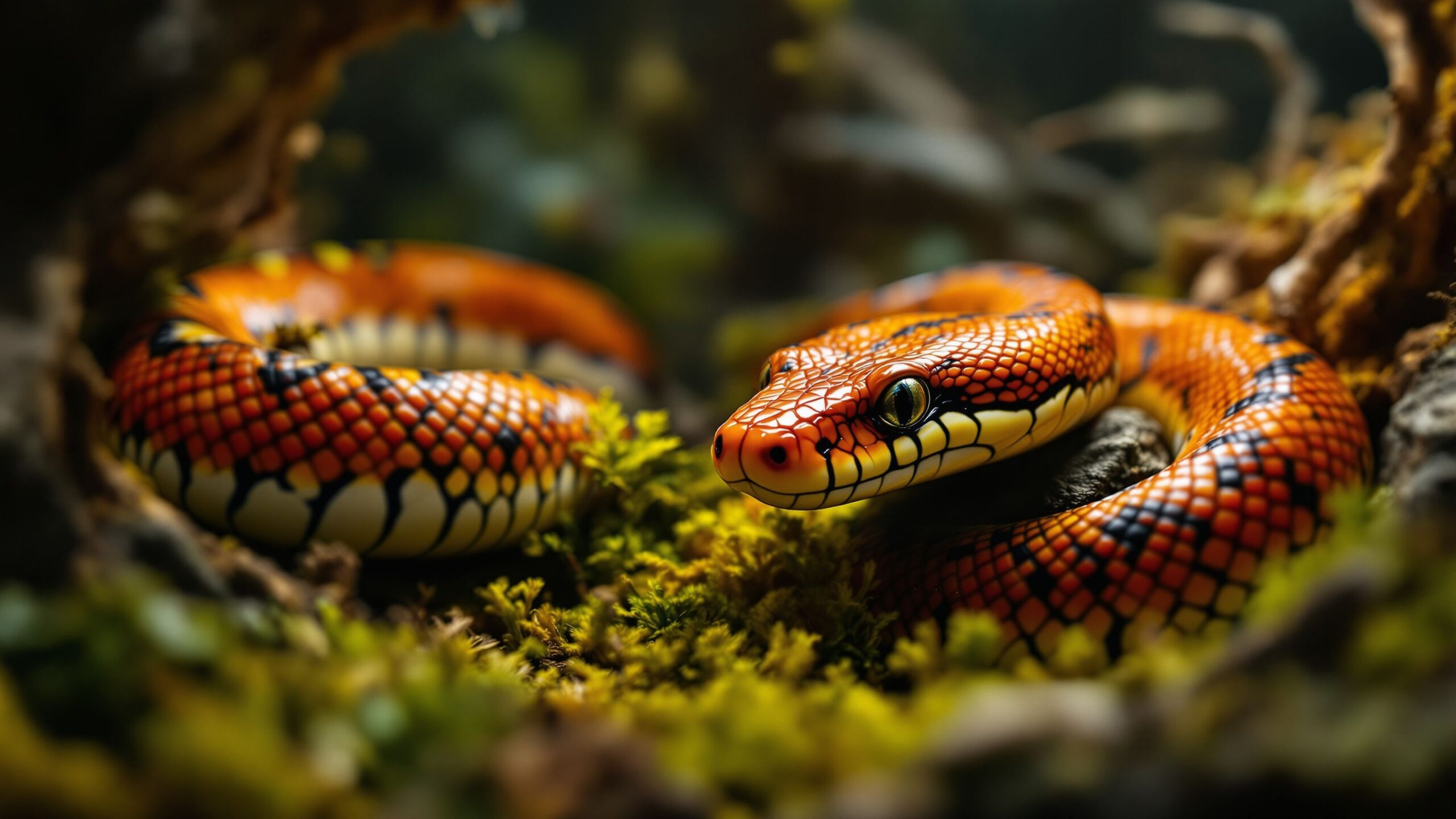
The Corn Snake is one of the most popular and recognizable snakes in the world of reptile keeping. Known for its vibrant colors, calm personality, manageable size, and beginner-friendly care requirements, the corn snake has become a favorite among reptile enthusiasts of all experience levels. Native to the southeastern United States, this beautiful constrictor snake combines fascinating natural behaviors with an approachable temperament that makes it one of the best pet snakes available today. Unlike venomous snakes that rely on toxic bites to subdue prey, corn snakes are nonvenomous constrictors. They capture prey by wrapping their bodies around it and applying pressure until the animal can no longer breathe. Despite this hunting method sounding intimidating, corn snakes are generally very gentle toward humans and rarely display aggression when handled properly. Their name is believed to come from the checkerboard pattern on their bellies, which resembles kernels of corn, as well as their tendency to inhabit areas near grain storage where rodents are plentiful. Over the years, corn snakes have become major icons in reptile culture because they are hardy, adaptable, easy to handle, and available in an enormous variety of colors and patterns. Through decades of selective breeding, reptile breeders have developed hundreds of stunning morphs ranging from bright orange and red snakes to snow-white, lavender, striped, and patternless varieties.
A: Yes, they are widely considered one of the best beginner snake species.
A: No, corn snakes are completely nonvenomous.
A: They primarily eat appropriately sized rodents such as mice.
A: Feeding frequency depends on age, but many adults eat every 7–14 days.
A: They can bite if stressed, but they are generally calm and manageable.
A: Many live 15–20 years or more with proper care.
A: Yes, most tolerate regular gentle handling very well.
A: Hiding is natural behavior and helps snakes feel safe and secure.
A: While not always considered essential, some keepers provide low-level UVB as enrichment.
A: Most adults reach around 3–5 feet long depending on genetics and care.
Origins and Natural Habitat
The natural habitat of the Corn Snake stretches throughout the southeastern United States, including states such as Florida, Georgia, Alabama, Mississippi, and the Carolinas. These snakes inhabit a wide range of environments including forests, overgrown fields, grasslands, pine flatwoods, abandoned buildings, and farmlands. Corn snakes are highly adaptable reptiles capable of thriving in many different ecosystems as long as food, shelter, and suitable temperatures are available. In the wild, corn snakes spend much of their time hiding beneath logs, inside rodent burrows, under leaf litter, or within rocky crevices. They are skilled climbers and may also be found in trees, shrubs, and barns where rodents are common. Their slender bodies and excellent climbing abilities allow them to explore both ground-level and elevated environments while searching for prey. Corn snakes are primarily active during dawn, dusk, and nighttime hours, especially during warmer seasons. This behavior helps them avoid extreme daytime heat while remaining effective hunters. Their coloration acts as natural camouflage among fallen leaves, bark, and forest debris, helping them avoid predators while stalking prey. Understanding the natural habitat of corn snakes is important because it helps reptile keepers create healthier and more enriching captive environments that reflect the species’ natural behaviors and instincts.
Physical Appearance and Features
Corn snakes are medium-sized snakes that typically reach between three and five feet in length as adults, although some individuals may grow slightly larger. Their bodies are slender, smooth, and muscular, allowing them to move gracefully across a variety of surfaces. One of the most recognizable features of the corn snake is its beautiful coloration. Wild-type corn snakes usually display orange, reddish-orange, or brown bodies covered with darker blotches outlined in black. Their bellies feature a black-and-white checkerboard pattern that helps distinguish them from similar species. Selective breeding has dramatically expanded the range of available appearances within the reptile hobby. Today, breeders produce corn snakes in an incredible variety of morphs featuring bright reds, pure whites, lavender tones, striped patterns, reduced markings, and even iridescent-looking scales. Their scales are smooth and glossy, giving them a polished appearance under proper lighting. Corn snakes possess round pupils and heat-sensitive tongues that constantly flick in and out to gather scent particles from the environment. This specialized sensory system allows them to track prey, navigate their surroundings, and detect potential threats. Juvenile corn snakes are often more brightly patterned than adults and may appear especially vivid shortly after shedding. As they mature, their colors can deepen and become even more striking depending on genetics and overall health.
Corn Snake Behavior
The calm and manageable temperament of the Corn Snake is one of the primary reasons it is considered one of the best beginner snakes. Most corn snakes are naturally shy rather than aggressive and usually prefer escaping from danger instead of confronting it. Young corn snakes can sometimes be nervous and quick-moving, but many become calmer with regular gentle handling. Corn snakes are solitary animals by nature and generally do not require companionship from other snakes. In captivity, they are almost always housed alone to prevent stress, competition, or accidental cannibalism. These snakes are curious and active explorers. Owners frequently observe them climbing branches, investigating hides, burrowing beneath substrate, and moving throughout their enclosures during evening hours. Corn snakes rely heavily on scent and vibration to understand their environment. Their constant tongue flicking allows them to collect scent particles and transfer them to the Jacobson’s organ inside the roof of the mouth, giving them an extraordinary sense of chemical detection. Although corn snakes are nonvenomous and generally docile, they may still become defensive if frightened or stressed. Defensive behaviors can include tail rattling, musking, or striking. However, bites from corn snakes are usually harmless and rare when the snake is treated respectfully and handled properly.
Why Corn Snakes Are Popular Pets
Corn snakes are often recommended as one of the best pet snakes for beginners because they combine easy care requirements with beautiful appearances and gentle personalities. Unlike larger snake species that require massive enclosures or advanced handling experience, corn snakes remain manageable in size and are relatively forgiving when cared for properly. Their feeding habits are another reason for their popularity. Corn snakes typically accept frozen-thawed rodents reliably, making feeding simple and convenient for owners. They are also known for being hardy snakes that adapt well to captivity when provided with correct temperatures, humidity, and enclosure conditions. Another major factor behind their popularity is the enormous variety of morphs available through selective breeding. Reptile enthusiasts can choose from hundreds of different color and pattern combinations, allowing owners to find snakes that match their personal preferences and interests. Corn snakes also have long lifespans. With proper care, many live fifteen to twenty years or more in captivity. This long-term companionship allows owners to form lasting connections with their snakes while learning more about reptile behavior and husbandry over time.
Creating the Perfect Habitat
Providing a suitable habitat is one of the most important aspects of caring for the Corn Snake. A properly designed enclosure supports healthy behavior, digestion, hydration, and stress reduction. Adult corn snakes are commonly housed in enclosures around forty gallons or larger, although bigger habitats provide additional opportunities for climbing and enrichment. The enclosure should include both a warm side and a cool side so the snake can regulate its body temperature naturally. Warm-side temperatures are typically maintained in the mid-to-upper 80s Fahrenheit, while the cool side remains slightly lower. Heating equipment such as under-tank heaters, ceramic heat emitters, or radiant heat panels may be used alongside thermostats to maintain safe temperatures. Corn snakes require secure hiding places where they can feel protected. Most enclosures include at least two hides, one on the warm side and one on the cool side. Additional clutter such as branches, cork bark, rocks, and artificial plants can help the snake feel secure while encouraging exploration and climbing behavior. Humidity levels should remain moderate to support healthy shedding and hydration. A humidity hide filled with damp moss can help during shedding cycles. Suitable substrates often include aspen bedding, cypress mulch, coconut fiber, or paper-based materials. Because corn snakes are excellent escape artists, secure enclosure lids are extremely important. Their slender bodies and surprising strength allow them to squeeze through small gaps if the enclosure is not properly secured.
Feeding and Nutrition
The Corn Snake is a carnivorous constrictor that primarily feeds on rodents in captivity. Mice are the most common food source, although appropriately sized rats may occasionally be offered to larger adults. Hatchlings usually begin with pinky mice before gradually moving to larger prey as they grow. Frozen-thawed prey is strongly recommended over live feeding because it greatly reduces the risk of injury to the snake. Rodents can bite or scratch snakes in self-defense, potentially causing serious wounds. Most corn snakes adapt easily to frozen-thawed prey and feed enthusiastically when proper temperatures and husbandry are maintained. Feeding frequency depends on the age and size of the snake. Young corn snakes often eat every five to seven days because they are growing rapidly, while adults may eat every one to two weeks. Overfeeding should be avoided because obesity can negatively impact the snake’s health and lifespan. Fresh water should always be available in a clean bowl large enough for the snake to drink from comfortably. Some corn snakes also enjoy soaking in their water dishes, especially before shedding. Watching a corn snake hunt and feed can be fascinating. Their ability to strike accurately, constrict prey, and swallow animals much larger than their heads demonstrates the incredible adaptations snakes evolved over millions of years.
Shedding and Growth
Like all snakes, corn snakes shed their skin regularly as they grow. Young snakes shed more frequently because of their rapid development, while adults shed less often. Before shedding, a corn snake’s colors may appear dull and its eyes may develop a cloudy blue appearance caused by fluid building beneath the old skin layer. During this period, many snakes become more secretive and may refuse food temporarily. Proper humidity is essential for healthy shedding. Most healthy corn snakes shed their skin in one complete piece, including the eye caps. Incomplete sheds can occur if humidity levels are too low or if the snake is dehydrated. Retained shed around the tail tip or eyes may cause health complications if not addressed carefully. Growth rates depend on genetics, feeding schedules, and overall husbandry quality. Corn snakes generally reach adult size within two to three years, although they continue thickening and maturing beyond that point. Healthy snakes display steady growth, strong muscle tone, clear eyes, and smooth scales.
Common Health Problems
Although corn snakes are considered hardy reptiles, they can still develop health issues if their care is inadequate. Respiratory infections are among the most common problems and may occur if temperatures are too low or humidity levels are incorrect. Symptoms can include wheezing, mucus, open-mouth breathing, or lethargy. Parasites may also affect corn snakes, especially wild-caught individuals or snakes housed in unsanitary conditions. External mites and internal parasites can weaken the snake and negatively impact appetite and overall health. Shedding problems may develop when humidity is too low or hydration is insufficient. Retained eye caps and incomplete sheds require careful attention to prevent complications. Mouth rot, also known as infectious stomatitis, is another potential concern. This bacterial infection may cause swelling, redness, pus, or difficulty eating. Regular enclosure cleaning, proper temperatures, and stress reduction help lower the risk of many health problems. Owners should monitor appetite, activity levels, body condition, and shedding quality closely. Finding a reptile veterinarian experienced with snakes is highly recommended for routine care and emergency situations.
Corn Snake Morphs
The world of corn snake morphs is incredibly diverse and continues growing every year. Morphs are genetic traits that alter the snake’s coloration, pattern, or appearance. Through selective breeding, reptile breeders have created hundreds of stunning combinations ranging from subtle variations to dramatic transformations. Popular morphs include albinos, amelanistics, snows, bloodreds, lavenders, ghosts, motleys, striped morphs, and scaleless varieties. Some display bright oranges and reds, while others feature soft pastel tones or nearly patternless appearances. Morph breeding has become one of the most exciting aspects of corn snake culture. Enthusiasts often study genetics carefully to predict offspring appearances and create new combinations. Responsible breeding practices are extremely important to avoid health problems associated with certain genetic traits. For many reptile keepers, choosing a corn snake morph is part of the excitement of entering the reptile hobby. Some owners prefer traditional wild-type coloration, while others enjoy collecting rare and visually unique morphs.
Breeding and Reproduction
Corn snakes reproduce sexually, with breeding season usually occurring after a cooling period that mimics winter conditions in the wild. Female corn snakes lay clutches of eggs after mating, often depositing them in warm, humid nesting areas. A single clutch may contain anywhere from ten to thirty eggs depending on the size and health of the female. The eggs are incubated under carefully controlled temperatures and humidity levels until hatchlings emerge approximately two months later. Baby corn snakes are fully independent from birth and begin hunting small prey shortly after their first shed. Hatchlings are often brightly colored and highly energetic. Responsible breeding requires careful planning, genetic understanding, and attention to animal welfare. Breeding snakes without proper preparation can lead to health complications for both adults and offspring.
Corn Snakes in Reptile Culture
The Corn Snake has become one of the most influential snakes in modern reptile culture. Their approachable nature and beginner-friendly care requirements have introduced countless people to reptile ownership. Social media platforms, reptile expos, online communities, and educational programs have all helped increase the popularity of corn snakes worldwide. Owners frequently share enclosure designs, feeding videos, morph collections, and breeding projects with fellow reptile enthusiasts. Corn snakes are also widely used in educational programs because they help teach children and adults about reptile biology, ecosystems, and responsible animal care. Their calm temperament and manageable size make them excellent ambassador animals during reptile demonstrations and wildlife education events.
Responsible Ownership and Long-Term Care
Owning a corn snake is a long-term commitment that requires preparation, research, and consistent care. Although they are considered beginner-friendly reptiles, they still depend entirely on their owners for proper heating, feeding, hydration, enclosure maintenance, and veterinary care. Potential owners should research habitat setup, feeding schedules, temperature regulation, humidity management, and snake behavior before bringing home a corn snake. Captive-bred snakes from reputable breeders are generally healthier and adapt better to captivity than wild-caught individuals. Respecting the natural behavior of snakes is also important. Corn snakes may become tolerant of handling, but they are still wild animals with instincts shaped by millions of years of evolution. Many owners find the greatest joy comes from observing their natural behaviors and creating enriching environments that allow them to thrive.
The Enduring Popularity of the Corn Snake
The lasting popularity of the Corn Snake comes from its remarkable combination of beauty, adaptability, manageable size, and calm personality. Few snakes balance beginner-friendly care requirements with such incredible visual diversity and fascinating behavior. Whether admired for their colorful scales, graceful movements, curious behavior, or endless morph combinations, corn snakes continue to captivate reptile enthusiasts around the world. They have become ambassadors for reptile appreciation and help challenge misconceptions surrounding snakes and exotic pets. For general readers, the corn snake represents far more than just a common pet reptile. It is an extraordinary example of adaptation, survival, and biodiversity. From forests and farmlands in the southeastern United States to carefully designed terrariums around the world, the corn snake continues to inspire fascination and appreciation among animal lovers everywhere.
Pet Product Reviews
Explore Duffy Street’s Pet Product Reviews! Sniff out the top-rated toys, treats, gear, and gadgets for your pets with our fun, easy-to-read comparisons. We’ve done the digging so you can find the perfect products for your pet friends!