The Blue-Tongued Skink is one of the most recognizable and beloved lizards in the exotic pet world. Famous for its bright blue tongue, smooth scales, sturdy body, and calm temperament, this fascinating reptile has become a favorite among beginner and experienced reptile keepers alike. Native primarily to Australia and parts of Indonesia and New Guinea depending on the species, blue-tongued skinks combine unusual appearance with manageable care requirements that make them one of the most approachable large lizards available in captivity. Unlike many reptiles that appear delicate or constantly nervous, blue-tongued skinks are often described as confident, curious, and surprisingly tolerant of human interaction. Their slow deliberate movements and expressive faces give them a personality that many owners find highly engaging. One of their most famous defense mechanisms is displaying their vivid blue tongue when threatened. By opening the mouth wide and exposing the bright tongue, the skink attempts to startle predators and appear more intimidating. Over the years, blue-tongued skinks have become icons within reptile culture because they are relatively hardy, easy to handle, visually unique, and available in a growing variety of regional types and color variations.
A: Yes, they are considered one of the best beginner-friendly larger lizards.
A: They eat a mix of proteins, vegetables, greens, and other omnivorous foods.
A: Yes, proper UVB lighting is important for healthy bone development.
A: Many live 15–25 years or longer with proper care.
A: It may be exploring its environment or displaying a defensive warning.
A: Yes, many tolerate gentle handling very well.
A: They can bite if frightened, but most are calm and manageable when handled properly.
A: No, they are mainly active during the daytime.
A: Separate housing is usually safest to avoid stress or territorial behavior.
A: Stress, shedding, temperature issues, or illness may affect appetite.
Origins and Natural Habitat
The natural habitat of the Blue-Tongued Skink varies depending on the species and locality. Different blue-tongued skinks inhabit regions across Australia, Indonesia, New Guinea, and surrounding islands. These lizards are highly adaptable and can be found in grasslands, forests, scrublands, woodlands, coastal areas, and even semi-arid environments. Most blue-tongued skinks are terrestrial reptiles, meaning they spend the majority of their lives on the ground rather than climbing high into trees. In the wild, they often hide beneath logs, leaf litter, rocks, or thick vegetation where they remain protected from predators and harsh weather conditions. Their natural coloration helps them blend into earthy environments filled with dry grasses, soil, bark, and fallen leaves. Blue-tongued skinks are generally diurnal reptiles, meaning they are active during the daytime. They spend much of their day basking beneath sunlight, exploring their surroundings, searching for food, and hiding when necessary. Because their habitats can vary dramatically between species, understanding the specific origin of a particular blue-tongued skink is extremely important for proper captive care. Northern Australian species often require drier environments while Indonesian species generally prefer higher humidity levels. Recreating appropriate temperatures, humidity, lighting, and substrate helps support healthy behavior and long-term wellbeing in captivity.
Physical Appearance and Features
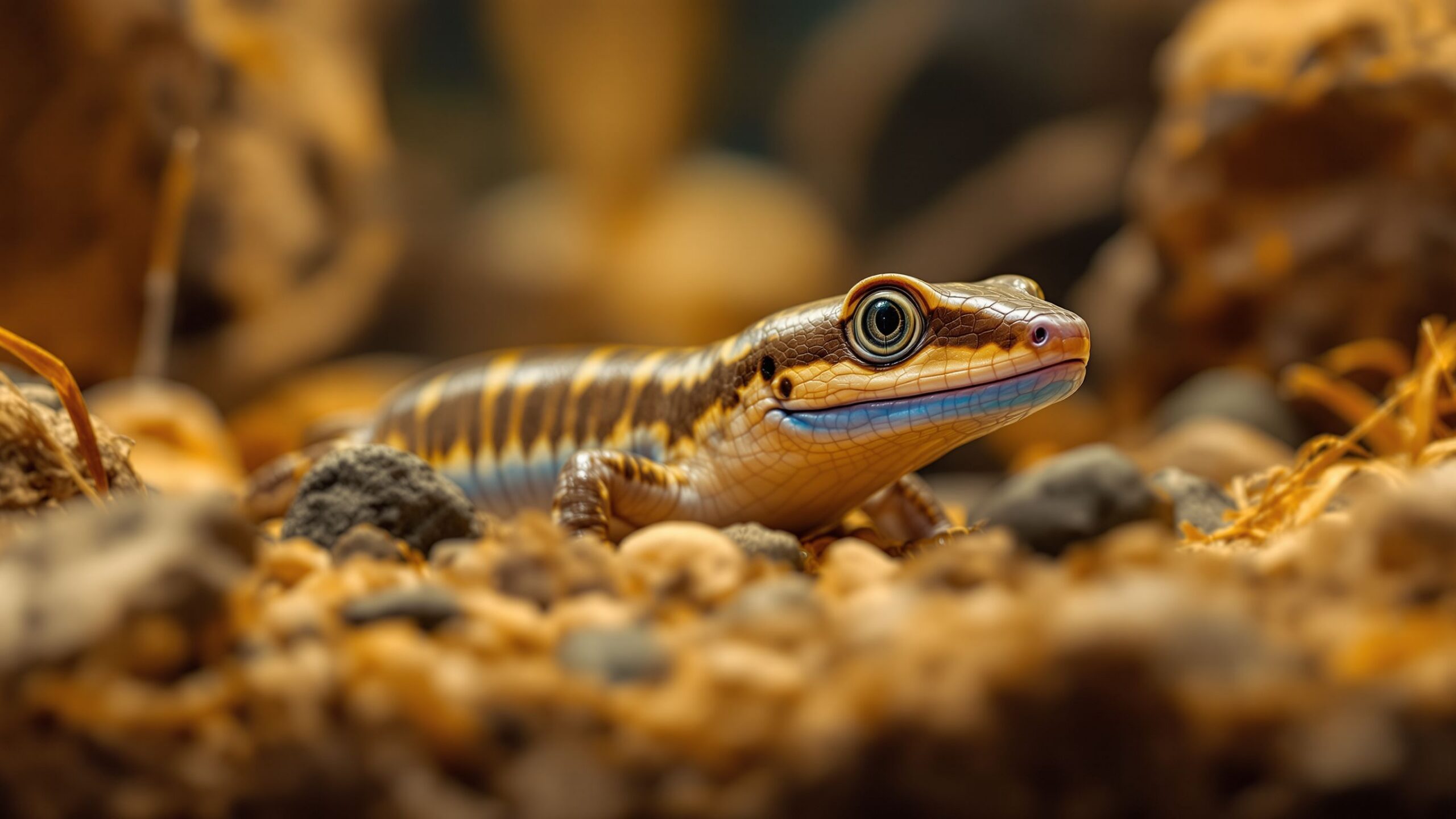
Blue-tongued skinks are medium-to-large lizards that typically reach between eighteen and twenty-four inches in total length depending on species and genetics. Their bodies are thick, muscular, and low to the ground, giving them a powerful and sturdy appearance. One of the most recognizable features of the Blue-Tongued Skink is its vivid electric-blue tongue. This striking adaptation serves as a defensive display designed to surprise predators when the skink feels threatened. Combined with hissing and body inflation, the bright tongue creates an intimidating visual warning despite the lizard’s generally calm personality. Their scales are smooth, shiny, and tightly overlapping, giving the body a sleek armored appearance. Most species display earthy coloration such as browns, tans, grays, creams, and black banding that helps camouflage them within natural environments. Their heads are broad and triangular with powerful jaws adapted for crushing insects, snails, and plant matter. Their short sturdy legs allow them to move steadily across rough terrain while digging lightly into loose substrate when necessary. Different species and localities display unique coloration and patterns. Northern blue-tongued skinks often appear brighter and more vividly patterned, while Indonesian varieties may display darker coloration and different scale textures. Selective breeding has also produced unique morphs and color variations within captivity.
Blue-Tongued Skink Behavior
The calm and curious temperament of the Blue-Tongued Skink is one of the biggest reasons for its popularity as a pet reptile. While every skink has its own personality, many become surprisingly tolerant of handling and appear comfortable interacting with their owners over time. Compared to many smaller lizards, blue-tongued skinks are generally less fast-moving and less likely to panic during handling. Owners frequently describe them as confident reptiles that explore their environment with steady deliberate movements rather than frantic energy. Blue-tongued skinks are naturally solitary animals and are usually housed alone in captivity. Although generally peaceful toward humans, they may become territorial or stressed when housed with other skinks. These reptiles communicate through body language and defensive displays. Hissing, flattening the body, puffing up, and exposing the bright blue tongue are all warning behaviors intended to scare away predators. Despite these displays, most blue-tongued skinks are not aggressive and rarely bite unless severely stressed or frightened. During daytime hours, owners often observe them basking beneath heat lamps, digging through substrate, exploring hides, or searching for food. Their curious behavior and visible activity make them especially engaging reptiles to observe.
Why Blue-Tongued Skinks Are Popular Pets
Blue-tongued skinks are widely considered one of the best beginner reptiles because they combine manageable care requirements with fascinating behavior and approachable personalities. Their larger size compared to many geckos and small lizards often makes handling feel easier and more stable for beginners. Another major reason for their popularity is their omnivorous diet. Blue-tongued skinks eat a wide variety of foods including vegetables, greens, fruits, insects, and protein sources, allowing owners to provide diverse and enriching meals. Their long lifespan also contributes heavily to their appeal. With proper care, many blue-tongued skinks live fifteen to twenty-five years or longer, making them long-term companions for reptile enthusiasts. Their unique appearance further increases their popularity. The combination of a heavy-bodied lizard with a vivid blue tongue creates one of the most memorable appearances in the reptile world. Many reptile enthusiasts are also drawn to their relatively calm personalities and visible intelligence compared to some other reptiles.
Creating the Perfect Habitat
Providing a suitable habitat is one of the most important aspects of caring for the Blue-Tongued Skink. Because these lizards are terrestrial and relatively large, they require spacious enclosures with plenty of floor space for movement and exploration. Adult blue-tongued skinks are commonly housed in enclosures at least four feet long, although larger habitats provide additional enrichment opportunities. The enclosure should include a warm basking area and a cooler side so the skink can regulate body temperature naturally. Basking temperatures often reach the upper 90s or low 100s Fahrenheit while cooler areas remain significantly lower. UVB lighting is extremely important because it supports vitamin D3 synthesis and proper calcium metabolism. Without adequate UVB exposure, serious health conditions such as metabolic bone disease may develop. Suitable substrates vary depending on species and humidity requirements. Common options include coconut fiber, cypress mulch, soil blends, aspen bedding, or bioactive substrates that allow light digging behavior. Hides are essential because blue-tongued skinks need secure resting areas where they feel protected. Decorations such as logs, cork bark, rocks, and textured surfaces encourage exploration and environmental enrichment. Humidity requirements depend heavily on the species or locality being kept. Northern Australian skinks usually prefer drier conditions while Indonesian species require significantly higher humidity.
Feeding and Nutrition
The Blue-Tongued Skink is an omnivore with a highly varied diet. In captivity, owners commonly provide combinations of leafy greens, vegetables, fruits, insects, and protein-rich foods. Healthy vegetables often include collard greens, mustard greens, squash, green beans, and other reptile-safe produce. Protein sources may include insects such as dubia roaches, crickets, mealworms, snails, and occasionally high-quality prepared omnivore diets. Some owners also provide lean cooked meats or specialized reptile foods formulated for omnivorous lizards. Fruits are usually offered in moderation because excessive sugar can negatively impact health over time. Calcium and vitamin supplementation are important for maintaining healthy bones and preventing nutritional deficiencies. Feeding schedules vary depending on age and activity levels. Juveniles generally eat more frequently because of rapid growth while adults may eat several times per week. Fresh water should always be available in a clean shallow bowl. Watching a blue-tongued skink eat can be especially entertaining because of their strong feeding response and enthusiastic use of the blue tongue while investigating food items.
Shedding and Growth
Like all reptiles, blue-tongued skinks shed their skin regularly as they grow. Juveniles shed more frequently because of rapid development while adults shed less often. Before shedding, the skin often appears dull or slightly faded as the old layer loosens from the body. Unlike snakes that typically shed in one complete piece, blue-tongued skinks often shed in sections or patches over several days. Proper humidity and hydration support healthy shedding and help prevent retained skin. Problems may occur if humidity levels are too low or if the skink becomes dehydrated. Retained shed around the toes or tail may restrict circulation and require careful attention. Healthy growth depends on balanced nutrition, UVB lighting, proper temperatures, hydration, and overall husbandry quality. Blue-tongued skinks generally reach adult size within two to three years depending on species, genetics, and feeding schedules.
Common Health Problems
Although blue-tongued skinks are considered hardy reptiles, they can still develop health issues if their care is inadequate. One of the most common concerns is metabolic bone disease, usually caused by improper UVB lighting or calcium deficiency. Symptoms may include weakness, tremors, deformities, or difficulty moving. Respiratory infections may occur if humidity levels or temperatures are incorrect. Signs may include wheezing, mucus, open-mouth breathing, or lethargy. Obesity can also become a concern if skinks are overfed or provided with excessive fatty foods. Other common issues include parasites, mouth infections, shedding problems, dehydration, and injuries caused by enclosure hazards or improper handling. Monitoring appetite, activity levels, body condition, shedding quality, and overall behavior helps owners identify potential problems early. Finding a reptile veterinarian experienced with lizards is strongly recommended whenever health concerns arise.
Blue-Tongued Skink Morphs and Varieties
The world of blue-tongued skinks includes multiple species, subspecies, and regional localities that vary in coloration, pattern, and care requirements. Popular varieties include Northern, Eastern, Indonesian, Merauke, Halmahera, and Irian Jaya blue-tongued skinks. Northern blue-tongued skinks are especially popular because of their hardy nature, bright coloration, and generally calmer personalities. Indonesian varieties often display darker coloration and require higher humidity levels. Selective breeding has also produced unique color morphs and pattern variations within captivity. Some skinks display brighter oranges, silvers, reduced banding, or unusually vivid coloration compared to traditional wild-type appearances. Responsible breeding practices are important to maintain healthy bloodlines and avoid genetic complications associated with irresponsible breeding methods.
Breeding and Reproduction
Blue-tongued skinks reproduce sexually, with females giving birth to live young rather than laying eggs. This reproductive strategy is known as viviparity. After mating, females carry developing embryos internally until fully formed babies are born. A single litter may contain several babies depending on the species, age, and health of the female. Baby blue-tongued skinks are fully independent from birth and immediately capable of walking, exploring, and eating. Hatchlings often display bright coloration and strong feeding responses from an early age. Responsible breeding requires careful attention to genetics, nutrition, environmental conditions, and overall animal welfare. Breeding reptiles without proper preparation can lead to health complications for both adults and offspring.
Blue-Tongued Skinks in Modern Reptile Culture
The Blue-Tongued Skink has become one of the most influential lizards in the exotic pet world because of its approachable nature, unique appearance, and manageable care requirements. Social media platforms, reptile expos, online communities, and educational programs have all contributed to the growing popularity of blue-tongued skinks worldwide. Owners frequently share feeding videos, enclosure builds, breeding projects, and photos highlighting the skink’s famous blue tongue. Educational programs often use blue-tongued skinks to teach children and adults about reptiles, adaptation, omnivorous diets, and responsible exotic pet ownership. Their calm demeanor and distinctive appearance make them excellent ambassador animals for reptile outreach and education.
Responsible Ownership and Long-Term Care
Owning a blue-tongued skink is a long-term commitment that requires preparation, research, and consistent care. Although they are considered beginner-friendly reptiles, they still rely entirely on their owners for proper heating, UVB lighting, hydration, nutrition, enclosure maintenance, and healthcare. Potential owners should thoroughly research species-specific humidity requirements, feeding routines, supplementation, and enclosure design before bringing home a blue-tongued skink. Captive-bred skinks from reputable breeders are generally healthier and better adapted to captivity than wild-caught individuals. Respecting the natural instincts and behaviors of reptiles is also important. Blue-tongued skinks thrive best in environments that allow them to bask, hide, explore, and forage naturally. Many owners find the greatest enjoyment comes from observing their skink’s personality, feeding behavior, and steady interaction with its environment.
The Enduring Popularity of the Blue-Tongued Skink
The lasting popularity of the Blue-Tongued Skink comes from its remarkable combination of personality, unusual appearance, adaptability, and beginner-friendly care requirements. Few reptiles balance approachable behavior with such fascinating physical features and manageable husbandry needs. Whether admired for their vivid blue tongue, sturdy bodies, calm temperament, or diverse regional varieties, blue-tongued skinks continue to captivate reptile enthusiasts around the world. They have become ambassadors for reptile appreciation and helped introduce countless people to the fascinating world of exotic pets. For general readers, the blue-tongued skink represents far more than just a popular pet lizard. It is an extraordinary example of adaptation, survival, and biodiversity. From the forests and grasslands of Australia and Indonesia to carefully designed terrariums around the world, the blue-tongued skink continues to inspire fascination, curiosity, and admiration among animal lovers everywhere.
Pet Product Reviews
Explore Duffy Street’s Pet Product Reviews! Sniff out the top-rated toys, treats, gear, and gadgets for your pets with our fun, easy-to-read comparisons. We’ve done the digging so you can find the perfect products for your pet friends!