
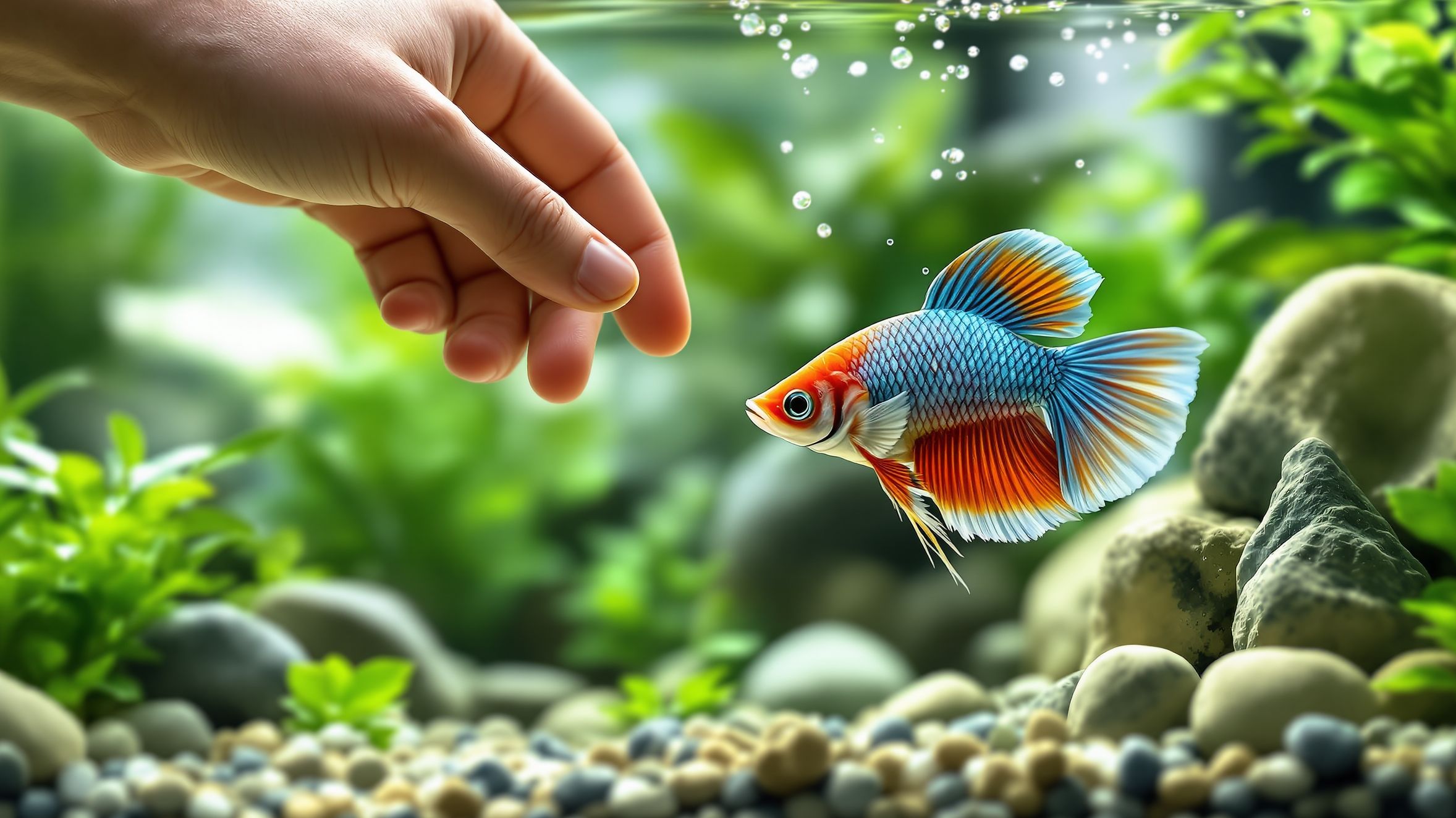
The Power of a Personal Connection
There’s something magical about feeding fish directly from your hand—the moment when shimmering scales glide up, mouths gently nibble, and trust replaces instinctive fear. Hand-feeding transforms fishkeeping from a distant observation into a personal connection built on familiarity and comfort. Yet, beneath that heartwarming experience lies the need for caution and understanding. Done incorrectly, hand-feeding can cause stress, water contamination, or even injury. Done right, it becomes a safe, enriching ritual that deepens your bond with every feeding session.
A: Most species only “test” with soft nips. Tuck thumbs, keep nails down, and reward gentle takes to shape soft contact.
A: Bold fish learn in a few sessions; shy fish may need a week or two of tool-to-hand fading.
A: Yes if done calmly with clean, residue-free hands and appropriate portions.
A: Use stationing, a divider, or train one at a time in a floating box.
A: High-quality pellets, gel foods, mysis, brine, bloodworms—match size to mouth.
A: Yes, with micro-portions and very short sessions to prevent fatigue.
A: Many marine species hand-feed well; rinse hands in RO/DI before contact to avoid contaminants.
A: Sit still, feed with tongs at first, and pair your silhouette with food until approach increases.
A: Pre-measure a small ration and end when it’s gone, even if enthusiasm remains.
A: Structured turns and targeted rewards often lower competition and chasing behaviors.
Why Hand-Feeding Is Worth the Effort
Hand-feeding goes beyond novelty. It teaches your fish to associate your presence with positive experiences, reducing skittishness and aggression. It encourages shy species to come out of hiding and helps you monitor health by observing eating habits up close. For larger or intelligent fish—such as cichlids, koi, or bettas—hand-feeding creates engagement and routine, making tank maintenance easier. When trust forms, even typically timid fish will greet you eagerly at the glass, turning feeding time into a shared ritual rather than a scramble for food.
Understanding Fish Behavior Before You Begin
Before attempting to hand-feed, it’s vital to understand your fish’s temperament. Some species, like goldfish, koi, and angelfish, are naturally inquisitive and quickly learn to associate hands with food. Others, such as barbs or tetras, may be more cautious and require patience. Aggressive feeders like cichlids or pufferfish may bite unintentionally due to enthusiasm. Observing your fish for a few days helps you gauge readiness—calm, confident swimmers that approach the glass during feeding time are ideal candidates. Nervous or easily startled fish need slower introduction to prevent stress.
Setting Up the Right Environment
A peaceful environment is essential for successful hand-feeding. Turn off strong filters or water pumps that create currents—steady water allows better control and visibility. Avoid startling your fish with sudden hand movements or shadows. Make sure the tank or pond is clean, with stable water parameters and proper temperature. If you’re feeding outdoors, ensure your fish can easily reach the surface without obstacles. Calm, predictable surroundings make fish feel safe enough to overcome instinctive wariness of human hands.
Choosing the Right Food for Hand-Feeding
Soft, easy-to-hold foods are best for hand-feeding. For smaller species, use flakes or pellets soaked briefly in tank water to make them pliable. For larger fish, bloodworms, shrimp, or sinking pellets work well. Avoid greasy or crumbly foods that disintegrate quickly, clouding the water. Koi and goldfish often enjoy peas or small fruit pieces, while bettas respond well to thawed frozen foods. Always ensure the food is appropriate for the species and feed only what can be consumed in under two minutes to prevent waste buildup.
Step 1: Getting Your Fish Used to Your Presence
Trust begins with consistency. Spend time near the tank daily without feeding—just observe quietly. Move your hand near the glass to let fish grow accustomed to your presence. Gradually begin feeding from the surface while keeping your hand steady above the water. Over a few days, your fish will start to associate your approach with mealtime. Once they gather confidently at the surface, you’re ready to take the next step. Patience during this phase is essential; forcing interaction too soon can undo progress.
Step 2: Introducing the Hand as a Feeding Source
Lower your hand slowly into the water, holding food between your fingertips. Let it rest near the surface without sudden movement. At first, most fish will circle curiously but hesitate to bite. Remain still and relaxed, avoiding quick gestures that might startle them. Over several sessions, your fish will begin to nip gently at the food. This tentative contact is the foundation of trust. Reward their bravery by feeding small portions consistently at the same time each day.
Step 3: Establishing Routine and Comfort
Fish thrive on routine. Feeding at the same time daily trains them to anticipate your presence, reinforcing familiarity. As trust builds, you can introduce your hand deeper into the water or vary the food type slightly. Some species, like goldfish and koi, may even begin to nuzzle your fingers out of curiosity. Maintain a calm demeanor—sudden jerks or loud noises can reset progress. Over time, your fish will approach eagerly, often waiting at the feeding spot long before you arrive.
Step 4: Managing Overeagerness and Avoiding Bites
Certain species, particularly cichlids, oscars, or large koi, may get too enthusiastic and accidentally nip fingers. While most bites aren’t harmful, they can startle both you and the fish. To prevent this, feed smaller amounts more frequently and avoid dangling your hand too long once the food is gone. You can also wear soft aquarium-safe gloves if you’re concerned. Remember that gentle contact is fine—painful bites indicate overexcitement or territorial aggression, in which case you should pause training and reassess feeding methods.
Reading Body Language During Feeding
Fish communicate through movement and posture. A relaxed fish will glide smoothly, fins extended, with steady breathing. Rapid darting, fin clamping, or color fading signal discomfort or fear. If you notice these signs, remove your hand and allow the fish time to calm down. Over time, you’ll recognize the difference between excitement and stress. A fish that hovers near your hand, investigates curiously, and takes food confidently is comfortable and trusting.
Hygiene and Safety Considerations
Cleanliness protects both you and your fish. Always wash and rinse your hands thoroughly with plain water—avoid soaps, lotions, or sanitizers, as residues can harm aquatic life. Likewise, dry hands before returning to other tasks to prevent bacterial transfer. If you have cuts or open wounds, wear gloves to avoid infection. After feeding, remove any uneaten food immediately to maintain water quality. A clean, stable tank ensures each session remains positive and risk-free for everyone involved.
Building Trust with Different Species
Each species has its own pace of trust. Goldfish are natural learners and often begin hand-feeding within a few days. Bettas, known for their intelligence, may follow your fingers after consistent interaction. Cichlids and oscars, though bold, require respect for their territorial instincts—approach calmly and avoid pushing too far. Koi are exceptionally interactive and can even recognize individual humans over time. The key with all species is consistency: feed regularly, maintain gentle movement, and respect their comfort zone.
Turning Feeding into Enrichment
Hand-feeding is not just a bonding tool—it’s a form of enrichment that stimulates natural behaviors. It encourages foraging, attention, and problem-solving. Fish become more alert and interactive, showing stronger coloration and confidence. You can add variety by slightly changing hand positions or gently guiding food to different parts of the tank, prompting your fish to explore. These subtle changes keep their minds active, reducing boredom and repetitive swimming patterns.
Knowing When to Stop
Just like any training session, hand-feeding should end before interest fades. Most fish will stop eating once full, but some continue out of habit. Overfeeding leads to bloating, digestive issues, and poor water quality. A good rule is to limit sessions to two minutes and feed only what can be consumed within that time. If your fish lose interest or swim away, end the session gracefully—forcing interaction can create negative associations.
Dealing with Shy or Timid Fish
Shy fish require extra patience. Species like gouramis, plecos, or small tetras may never take food directly from your hand, but that’s okay. You can still build trust by feeding near your fingers and gradually decreasing distance over time. If they approach closely without eating, that’s already progress. Creating shaded areas or using floating plants can help timid fish feel more secure during feeding. Eventually, familiarity may overcome fear, even if they never physically touch your hand.
Troubleshooting Common Problems
If your fish refuse to eat from your hand, check a few basics. Water conditions might be off, making them too stressed to engage. Try different food types or smaller portions to rekindle interest. Avoid sudden movements—jerky gestures are the quickest way to scare fish back into hiding. For aggressive feeders, use tongs or a feeding stick to protect your fingers while maintaining interaction. Over time, with consistency and calm energy, even hesitant fish will learn to trust.
When Hand-Feeding Becomes Second Nature
Once your fish consistently approach your hand without fear, you’ve achieved something special—a mutual understanding built on patience and respect. You’ll notice behavioral changes: fish greeting you at the glass, staying calm during maintenance, and interacting confidently in the open. Feeding time becomes a shared experience, blending care with companionship. The sense of connection you feel in those moments is proof that fish recognize familiarity and respond to gentle consistency.
Beyond Feeding: Strengthening the Human-Fish Bond
Hand-feeding lays the foundation for deeper interaction. Once your fish trust you, they’re more open to enrichment activities like target training or gentle touch conditioning. They’ll follow your hand movements, explore new areas confidently, and display natural behaviors more freely. For pond keepers, koi and goldfish often develop personalities, responding differently to different people. These small yet profound interactions remind us that even aquatic life seeks familiarity, comfort, and connection.
The Emotional Reward of Patience
The journey from curiosity to trust takes time. It may start with hesitant glances and evolve into gentle feeding right from your fingers. The patience you invest pays off in the serenity of mutual respect—proof that communication doesn’t require words. In those quiet moments of connection, when your fish calmly eat from your hand, you witness the beauty of coexistence—where instinct meets trust, and human care meets aquatic intelligence.
Trust Built One Bite at a Time
Hand-feeding fish safely is both an art and a practice of patience. It’s about understanding body language, creating security, and reinforcing comfort through gentle repetition. When done thoughtfully, it strengthens the bond between aquarist and fish, transforming feeding from a task into a ritual of connection. Every nibble becomes a gesture of trust, every glance a sign of recognition. In the soft ripple of water, you find the reward—a silent friendship built one bite at a time.
Pet Product Reviews
Explore Duffy Street’s Pet Product Reviews! Sniff out the top-rated toys, treats, gear, and gadgets for your pets with our fun, easy-to-read comparisons. We’ve done the digging so you can find the perfect products for your pet friends!


