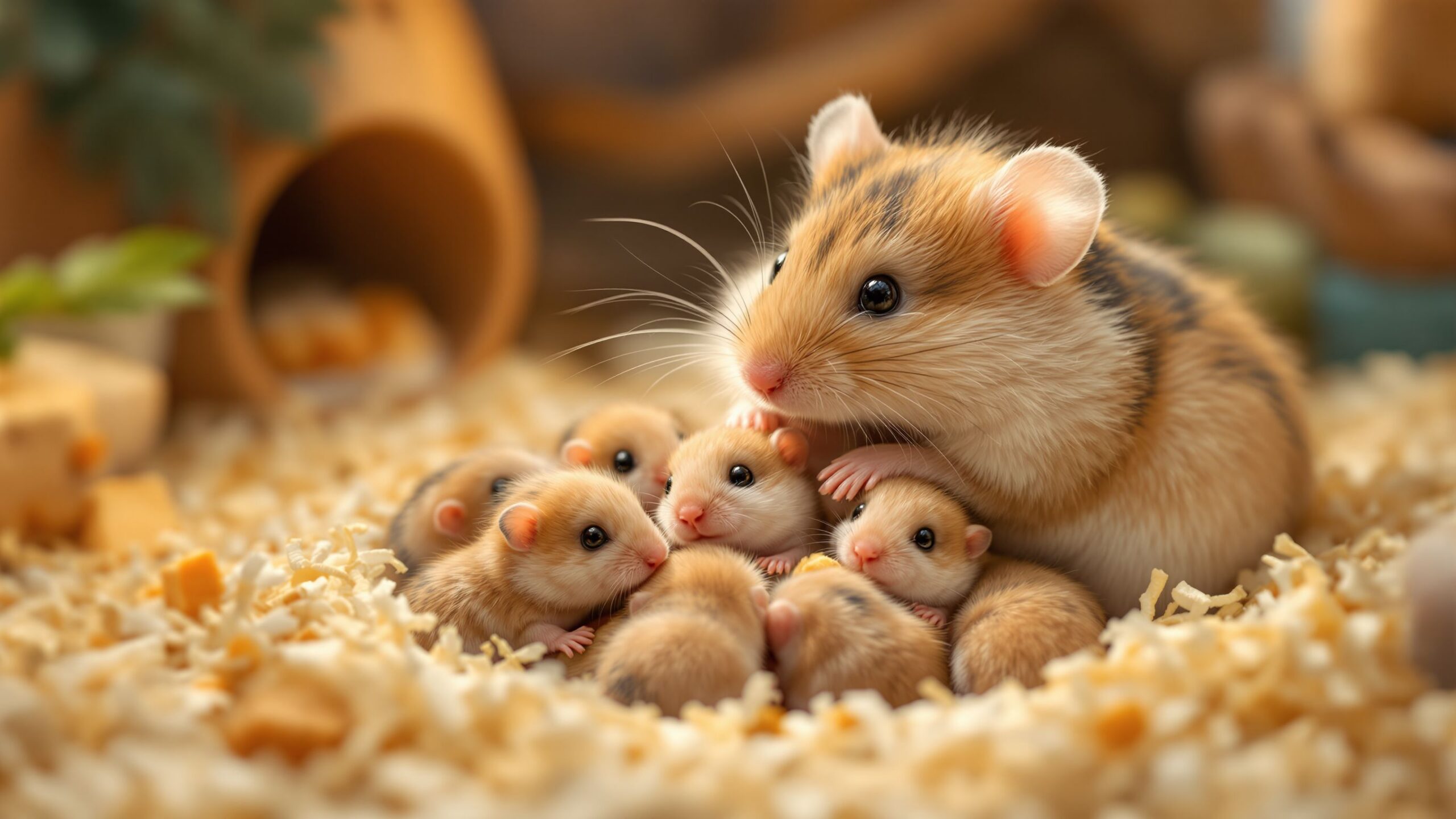
Few things look more delicate than a newborn hamster. When hamster pups first enter the world, they are dramatically different from the fluffy little animals most people picture when they hear the word “hamster.” Newborn pups are tiny, hairless, blind, deaf, and completely dependent on their mother for warmth, nutrition, protection, and stimulation. Unlike baby guinea pigs, which are born relatively developed, hamster pups require an intensive period of growth inside the security of their nest before they are ready to explore the world. During these first weeks, one of the most important things an owner can do is surprisingly simple: interfere as little as possible. The mother hamster is naturally equipped to care for her babies, and unnecessary disturbance can cause significant stress. Understanding what happens from birth through weaning allows owners to support the mother without disrupting the delicate relationship between her and her litter.
A: Avoid unnecessary handling during the earliest days. Once the pups are older, mobile, and the mother is comfortable, gentle handling can gradually begin.
A: Newborn pups depend primarily on their mother's milk before gradually experimenting with solid hamster food as they develop.
A: Their eyes generally begin opening around the second week of life, although individual development can vary.
A: Pups often begin nibbling solid foods while they are still nursing and become increasingly independent as weaning approaches.
A: Many hamster pups are weaned at around three to four weeks of age, although timing varies somewhat by species and development.
A: Young hamsters should be accurately sexed and separated before they become capable of breeding, which can happen surprisingly early.
A: Avoid major disturbances immediately after birth unless absolutely necessary. Keeping the mother calm is especially important during this period.
A: Mothers commonly relocate pups when they feel the nest needs to be safer, warmer, or more protected.
A: Not always. Syrian hamsters must generally live alone as adults, and even some dwarf hamsters may become aggressive toward littermates as they mature.
A: A pup that is cold, injured, unusually weak, not developing normally, struggling to breathe, or separated from the litter should be assessed promptly by a veterinarian experienced with small mammals.
What Is a Baby Hamster Called?
A baby hamster is most commonly called a pup. A group of baby hamsters born at the same time is called a litter. Depending on the hamster species and individual mother, litter size can vary considerably. When pups are first born, they may hardly resemble adult hamsters at all. They are extremely small and vulnerable, with closed eyes and ears and little or no visible fur. Over the following days, however, their transformation happens remarkably quickly. Pigmentation begins appearing, fur develops, ears open, bodies become stronger, and eventually their eyes open. Before long, the quiet nest filled with helpless newborns becomes a miniature neighborhood of energetic young hamsters determined to explore everything around them.
What to Expect When a Hamster Gives Birth
Hamsters often give birth inside a carefully constructed nest, sometimes without their owners witnessing the delivery at all. If you discover an unexpected litter, resist the temptation to immediately uncover the nest, count every baby, clean the enclosure, or pick up the pups. The first days after birth are a sensitive period for both mother and babies. Provide the mother with a quiet, secure environment and minimize unnecessary activity around the habitat. Make sure she has continuous access to fresh water and an appropriate, nutritionally complete hamster diet. Avoid repeatedly moving the enclosure, shining bright lights into the nest, or inviting everyone in the household to inspect the babies. Your role during this stage is primarily to keep the environment safe, calm, adequately supplied, and predictable.
Why You Should Not Touch Newborn Hamsters
Newborn hamster pups should generally be left undisturbed during the earliest stage of life unless intervention is truly necessary. Handling the pups or repeatedly disturbing the nest can stress the mother, and severe maternal stress can lead to neglect or other dangerous outcomes. Rather than attempting to interact with the babies immediately, observe from a respectful distance. The exact point at which handling can safely begin depends on the mother’s temperament, the pups’ development, and the circumstances surrounding the litter. Once pups are older, mobile, and beginning to explore independently, gentle socialization can gradually begin. When in doubt, an exotic-animal veterinarian or experienced hamster professional can provide guidance based on the particular litter.
Create a Quiet and Stress-Free Environment
A mother hamster with newborn pups needs peace. Place the enclosure in a quiet area away from loud televisions, speakers, barking dogs, curious cats, constant foot traffic, and excessive handling. Sudden environmental changes should be minimized. This is not the ideal time to rearrange the habitat simply because a new accessory looks cute. Stability helps the mother feel secure enough to concentrate on raising her litter. Children should understand that the babies need time before they can be handled. Watching quietly from outside the enclosure can still be fascinating because the pups change rapidly from one day to the next.
The Importance of a Safe Hamster Nest
The nest functions as the newborn pups’ nursery, bedroom, shelter, and source of warmth. Provide the mother with plenty of safe nesting material so she can maintain it as needed. Unscented paper-based nesting materials are commonly appropriate, while fluffy cotton-like nesting products should be avoided because strands can become wrapped around tiny limbs or create other hazards. The habitat should also have deep, suitable bedding that allows natural burrowing behavior. Do not pull apart a mother’s nest to see the babies. Even when curiosity is overwhelming, allowing her to maintain the nest on her own is generally the safest approach.
Keeping Newborn Hamsters Warm
Newborn hamsters cannot regulate their body temperature as effectively as adults and depend heavily on their mother, littermates, and nest for warmth. The enclosure should be maintained in a comfortable, stable indoor environment away from drafts and major temperature fluctuations. Avoid placing the cage directly beside heating vents, radiators, air-conditioning vents, or sunny windows. Trying to warm the pups directly with heating pads or lamps can create burns or dangerous overheating if done incorrectly. A healthy mother and properly constructed nest normally provide the warmth the litter needs. If pups appear abandoned or cold, contact an exotic-animal veterinarian for guidance rather than improvising potentially dangerous heating methods.
How Newborn Hamsters Eat
During the earliest stage of life, hamster pups depend on their mother’s milk. Nursing provides the energy and nutrients necessary for their rapid development. Owners generally do not need to bottle-feed healthy pups when the mother is present and caring for them. In fact, attempting to supplement without a genuine reason can cause more harm than good. The best way to support nursing pups is to support their mother. She needs constant access to fresh water and a balanced, nutritionally complete hamster diet while producing milk and caring for the litter. If the mother dies, refuses to nurse, or pups appear weak or abandoned, seek veterinary advice immediately because hand-rearing newborn hamsters is extremely challenging.
Feeding a Nursing Mother Hamster
Producing milk for an entire litter requires considerable energy, so the mother’s nutrition becomes particularly important after birth. Continue providing a high-quality, species-appropriate hamster diet and ensure food remains readily available. Depending on veterinary recommendations, the mother may benefit from carefully selected sources of additional protein and nutrition while nursing. Avoid suddenly introducing large quantities of unfamiliar foods because digestive upset is the last thing a nursing hamster needs. Fresh water should always be available, and the bottle should be checked frequently to ensure it is functioning properly. Providing the mother with reliable nutrition allows her to devote her energy to caring for the pups.
The First Week of a Baby Hamster’s Life
During approximately the first week, baby hamsters remain extremely vulnerable. They spend most of their time inside the nest nursing and sleeping. Their skin may begin developing visible pigmentation that hints at the coat colors they will eventually have. Fine fur gradually begins appearing, and their bodies start looking more hamster-like with each passing day. Although you may notice significant physical changes, the pups are still dependent on their mother and should not be treated like miniature adult hamsters. Keep disturbances minimal and continue monitoring food and water from outside the nest.
What Happens During the Second Week?
The second week is when the transformation becomes especially exciting. Fur becomes much more noticeable, ears develop further, and the pups become increasingly active. Some may begin moving around the nest and investigating nearby areas even before their eyes fully open. They may also begin showing interest in solid food. Their mother continues nursing them, but the transition toward independence has started. Owners can make food easily accessible without dramatically changing the habitat. Small pups may have difficulty reaching dishes positioned high above the bedding, so food placement should be safe and convenient while still avoiding unnecessary nest disturbance.
When Do Baby Hamsters Open Their Eyes?
Baby hamster development happens rapidly, and the eyes generally begin opening during the second week, although exact timing can vary somewhat between individuals and species. This is an exciting milestone because the pups quickly become much more adventurous once they can see their surroundings. You may suddenly notice tiny hamsters wandering farther from the nest, investigating food, climbing over siblings, and exploring the habitat. Do not attempt to force a pup’s eyes open. Development should occur naturally. If a pup appears to have an eye problem, swelling, discharge, or another abnormality, consult an exotic-animal veterinarian.
When Do Baby Hamsters Start Eating Solid Food?
Hamster pups begin investigating solid foods before they are completely weaned. Their mother may even carry food back toward the nest, giving the babies an opportunity to nibble. As they develop, pups gradually consume more of the same nutritionally appropriate hamster food provided to their mother. Foods should be accessible and appropriately sized for tiny mouths. Nursing continues during this transitional period, so eating solids does not mean the pups are immediately ready to leave their mother. Weaning is a gradual process rather than a single moment.
Introducing Water to Baby Hamsters
As pups become mobile and begin consuming solid foods, they also need access to fresh water. Make sure the water source is positioned so young hamsters can comfortably reach it. A bottle placed at adult height may be inaccessible to tiny pups. Check the bottle regularly to make sure water is actually dispensing. Because baby hamsters are so small, avoid deep open water containers that could create unnecessary hazards. Fresh water availability becomes increasingly important as the pups consume more solid food and move toward independence.
When Is It Safe to Handle Baby Hamsters?
This is one of the biggest questions new hamster owners have, especially when a litter is irresistibly cute. Handling should wait until the pups are sufficiently developed and the mother is comfortable with the situation. Once their eyes are open, they are moving independently, and the sensitive newborn period has passed, gentle interaction can gradually begin. Start with clean hands and brief sessions close to the ground or over a secure surface. Never suddenly grab a pup from above. Allow it to sniff your hand and become familiar with your scent. Every mother and litter is different, so if the mother becomes visibly stressed, back away and give the family more time.
How to Socialize Young Hamsters
Once handling is appropriate, gentle socialization can help young hamsters become more comfortable around people. Keep early sessions short and calm. Allow a pup to walk across your hands rather than squeezing or restraining it unnecessarily. Speak softly and move slowly. Young hamsters can be incredibly fast and may suddenly leap from a hand, so always handle them close to a safe surface. Never allow small children to carry baby hamsters around the room. Positive, predictable interactions help teach young hamsters that human hands do not automatically represent danger.
Cleaning the Cage While Babies Are in the Nest
Normally, hamster habitats require regular cleaning, but a newborn litter changes the routine. Major cage cleaning during the earliest days can disturb the nest and create significant stress for the mother. Unless there is an urgent sanitation or safety problem, avoid completely dismantling the habitat during this sensitive stage. Instead, carefully maintain food and water while disturbing the nesting area as little as possible. As the pups grow and become more independent, cleaning can gradually return to a normal routine. When cleaning eventually occurs, retaining some clean familiar nesting material can help prevent the habitat from suddenly smelling completely unfamiliar.
Baby Hamster Development Happens Fast
Watching a litter develop can feel like watching a time-lapse video in real life. One day the pups are tiny, pink, and helpless; shortly afterward they have visible coats; then their eyes open; and suddenly they are racing around the enclosure like miniature versions of their mother. Development varies by species and individual, so owners should use age ranges as general guidance rather than assuming every pup will reach each milestone on exactly the same day. Healthy growth should appear gradual and consistent. A pup that seems dramatically smaller, weaker, less active, or less developed than its siblings deserves careful observation and potentially veterinary assessment.
When Are Baby Hamsters Weaned?
Hamster pups are generally weaned at around three to four weeks of age, although the exact timing can vary by species and individual development. By this stage, they should be eating solid food and drinking independently. Weaning represents a major transition because the pups no longer depend on their mother’s milk for nutrition. However, reaching weaning age does not mean owners can stop monitoring development. Young hamsters are still growing and need an appropriate diet, safe habitat, clean water, enrichment, and careful social management.
Separating Male and Female Baby Hamsters
Correctly identifying the sex of young hamsters becomes extremely important around weaning because hamsters can reach reproductive maturity surprisingly quickly. Male and female pups should be separated at the appropriate age to prevent accidental pregnancies. Do not rely on guesswork. If you are unsure how to sex the babies, ask an exotic-animal veterinarian or experienced hamster professional to help. One incorrectly identified hamster can result in another unexpected litter, creating a cycle that quickly becomes difficult to manage.
Can Baby Hamsters Continue Living Together?
Whether young hamsters can continue sharing a habitat depends heavily on species. Syrian hamsters are solitary animals and should live alone once they reach the appropriate age for separation. Keeping mature Syrian hamsters together can lead to severe fighting and injuries. Some dwarf hamster species may display different social behaviors, but cohabitation still carries risks and requires careful knowledge, appropriate space, compatible individuals, and close monitoring. Owners should never assume that siblings will remain friendly simply because they grew up together. Hamsters can become territorial as they mature, and relationships may change quickly.
Understanding Syrian Hamster Babies
Syrian hamsters are among the most popular pet hamsters and are known for their larger size and solitary adult lifestyle. Baby Syrians may happily pile together in the nest and play alongside their siblings while young, but this does not mean they should remain together permanently. As they mature, territorial instincts develop and serious fighting can occur. Owners raising a Syrian litter should therefore prepare individual habitats before separation becomes necessary rather than waiting until aggressive behavior appears. Planning ahead is especially important when a large litter suddenly requires several separate homes.
Understanding Dwarf Hamster Babies
Dwarf hamsters are smaller than Syrians and can have different social tendencies depending on species. Their tiny size does not make their care simpler. They still require secure enclosures, deep bedding, appropriate wheels once old enough, hiding areas, balanced nutrition, and careful monitoring. Even species sometimes described as more social can fight, and owners need to be prepared to separate individuals immediately if aggression develops. Species identification matters because recommendations that are appropriate for one type of hamster may not be appropriate for another.
Choosing the Right Habitat for a Growing Hamster
As baby hamsters approach independence, their housing needs become increasingly similar to those of adults. Hamsters need substantially more floor space and bedding depth than many traditional pet-store cages provide. A spacious enclosure allows room for burrowing, running, hiding, nesting, foraging, and exploring. Secure construction is particularly important because young hamsters can squeeze through surprisingly small openings. The enclosure should eventually include deep bedding, an appropriately sized solid-surface exercise wheel, hideouts, tunnels, chew materials, sand bathing opportunities when appropriate, and enrichment designed to encourage natural behavior.
Choosing a Safe Exercise Wheel
Once young hamsters are sufficiently developed to use one safely, an appropriately sized wheel provides an important outlet for activity. Choose a solid running surface rather than wire or mesh that could injure tiny feet. The wheel should also be large enough that the hamster can run without dramatically arching its back. Appropriate wheel size varies by species and individual size, so a wheel suitable for a tiny dwarf hamster may not be large enough for a Syrian. Running is a natural and highly valued activity for hamsters, and many will use their wheel extensively during their active nighttime hours.
Baby Hamsters Are Naturally Nocturnal
Do not be surprised if your growing hamster appears to sleep through much of the day and suddenly becomes an athlete after sunset. Hamsters are naturally most active during evening and nighttime hours. Constantly waking a sleeping hamster during the day can create stress and may make handling less enjoyable for both hamster and owner. As pups become independent, begin respecting their natural schedule. Evening interaction often works better because the hamster is already awake, alert, and interested in exploring.
Healthy Signs in Growing Baby Hamsters
Healthy young hamsters should generally become increasingly active and independent as they develop. Their coats should fill in, eyes should open normally, and they should begin eating and drinking on their own as they approach weaning. Once old enough to explore, curiosity is common. Owners should learn the normal appearance and behavior of each pup because changes can occur quickly. A baby that consistently appears weaker than its littermates, fails to grow, has difficulty breathing, develops diarrhea, shows abnormal swelling, or refuses food once it should be eating independently needs veterinary attention.
Warning Signs a Baby Hamster Needs Veterinary Care
Young hamsters are tiny animals, which means illness can become serious quickly. Warning signs include unusual lethargy, difficulty breathing, persistent diarrhea, discharge from the eyes or nose, significant wounds, inability to move normally, failure to eat, dehydration, severe bloating, or noticeably poor growth. A pup that feels cold, appears abandoned, or is repeatedly pushed away from the nest may also require professional guidance. Do not give human medications or medications intended for another pet unless specifically directed by a veterinarian. Dosages that seem tiny to a person can be dangerous for an animal weighing only a few grams.
Why Wet Tail Is a Serious Concern
Diarrhea in a young hamster should never be casually ignored. “Wet tail” is a term commonly associated with serious diarrheal illness in hamsters, particularly stressed young Syrians around the time of weaning and relocation. Signs may include wet or soiled fur around the rear, diarrhea, lethargy, reduced appetite, hunched posture, and rapid decline. Veterinary treatment should be sought promptly because dehydration can become dangerous quickly in such a small animal. Maintaining a clean environment, reducing unnecessary stress, providing appropriate nutrition, and avoiding abrupt changes can support overall digestive health, but they do not replace veterinary treatment when a hamster becomes ill.
Finding an Exotic-Animal Veterinarian
Before the pups are old enough to leave for new homes, identify a veterinarian who routinely treats hamsters and other small exotic mammals. Not every veterinary clinic has extensive hamster experience. Having a trusted clinic already selected makes emergencies much easier to manage. A veterinarian can also help with sex identification, developmental concerns, injuries, abnormal growth, diarrhea, respiratory symptoms, and questions about nutrition or housing. Because hamsters can decline rapidly when seriously ill, knowing where to seek care before something happens can save valuable time.
Preparing Baby Hamsters for Their New Homes
Once pups are fully weaned, correctly sexed, healthy, and developmentally ready for independence, preparations can begin for their permanent homes. Each new owner should understand what proper hamster care actually involves. A hamster needs far more than a tiny cage, food dish, and miniature wheel. Appropriate housing includes generous floor space, deep bedding for burrowing, a correctly sized wheel, hiding areas, enrichment, suitable nesting materials, fresh water, balanced food, and opportunities to forage. Sending young hamsters to homes that are already properly prepared makes the transition significantly easier.
Common Baby Hamster Care Mistakes to Avoid
The biggest mistakes often happen because owners are excited and want to interact too soon. Handling newborn pups, repeatedly uncovering the nest, performing unnecessary full cage cleanings immediately after birth, disturbing the mother, using unsafe nesting materials, or making major environmental changes can create avoidable stress. Other mistakes include failing to separate males and females at the proper age, keeping solitary species together after maturity, providing inadequate housing, using undersized wheels, or assuming a young hamster does not require veterinary care because it is inexpensive to purchase. The cost or size of an animal does not determine the level of care it deserves.
The Incredible Journey From Birth to Weaning
The transformation of a hamster pup is extraordinary. In only a few short weeks, a helpless newborn hidden deep inside a nest becomes a furry, bright-eyed young hamster capable of eating, drinking, exploring, burrowing, grooming, and interacting independently. Each developmental milestone brings new responsibilities for the owner. Early on, successful care largely means protecting the mother’s peace and ensuring she has everything necessary to raise her babies. As the pups mature, attention gradually shifts toward nutrition, safe socialization, sex identification, housing, separation, and preparing for adulthood.
Final Thoughts on Baby Hamster Care
Caring for baby hamsters from birth to weaning requires patience, preparation, and an understanding that sometimes the best care means giving the mother space to do her job. Newborn pups begin life extremely fragile, but their development moves at an astonishing pace. A quiet environment, secure nest, properly nourished mother, minimal early disturbance, safe introduction to solid foods and water, careful socialization, correct sex identification, timely separation, and access to an exotic-animal veterinarian provide the foundation for healthy development. Within just a few weeks, those tiny newborn pups hidden inside the nest will become energetic young hamsters ready to dig tunnels, race on wheels, stash food, rearrange their bedding, and begin independent lives of their own.
Pet Product Reviews
Explore Duffy Street’s Pet Product Reviews! Sniff out the top-rated toys, treats, gear, and gadgets for your pets with our fun, easy-to-read comparisons. We’ve done the digging so you can find the perfect products for your pet friends!