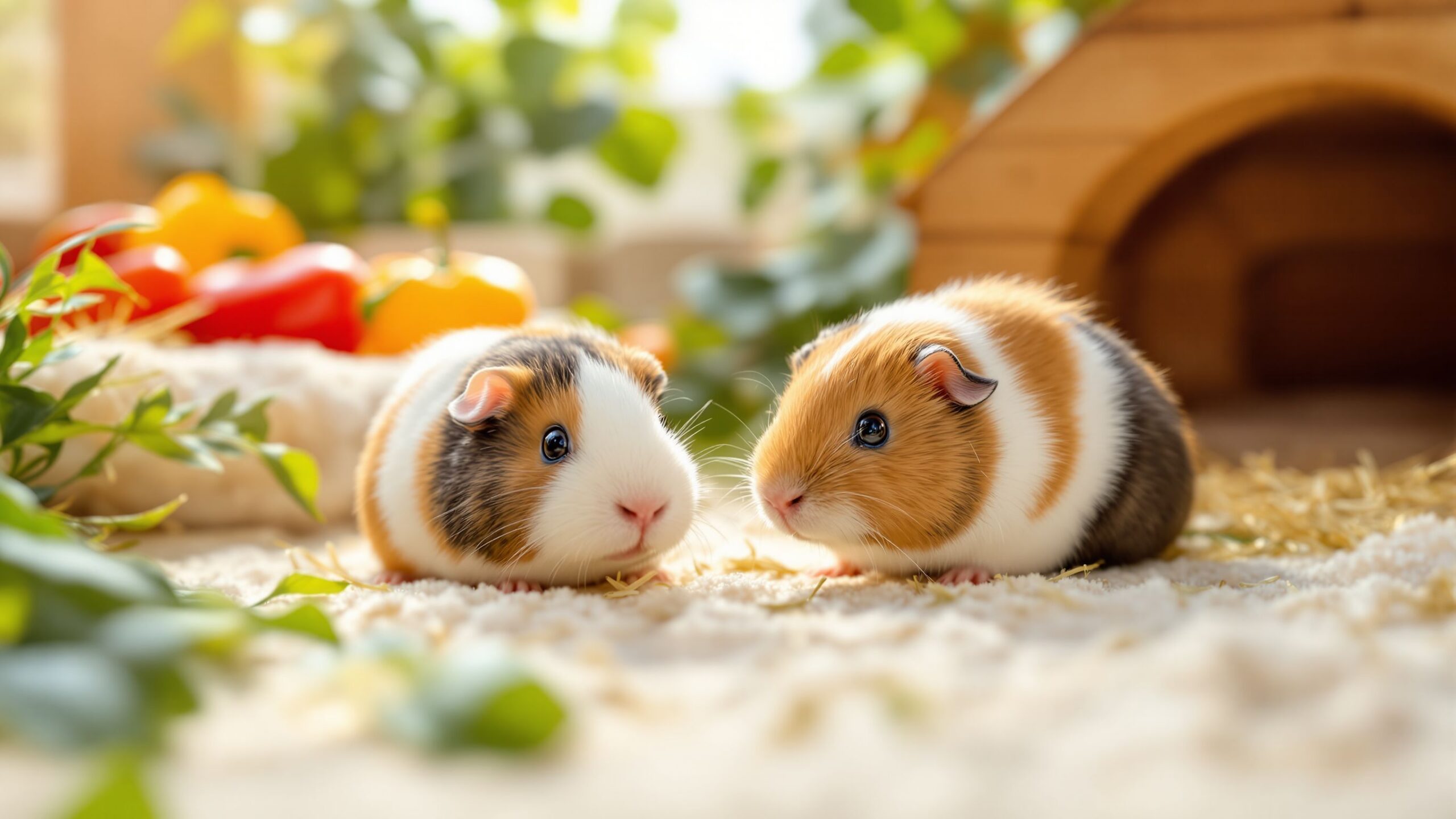
Bringing home a baby guinea pig is one of those experiences that can make an ordinary day instantly more exciting. With tiny feet, bright eyes, soft fur, enthusiastic squeaks, and personalities that seem far too large for their little bodies, baby guinea pigs can quickly become beloved members of the family. A baby guinea pig is called a pup, and these tiny animals are surprisingly advanced from the moment they are born. Unlike puppies, kittens, and many other mammals that arrive helpless, guinea pig pups are generally born covered in fur with their eyes open and are capable of walking shortly after birth. They can even begin investigating solid foods remarkably early. That independence can be misleading, however. Baby guinea pigs still have specialized nutritional, environmental, social, and medical needs, and understanding those needs from the beginning gives them the best opportunity to develop into healthy, confident adults.
A: Young guinea pigs should have constant access to fresh grass hay, clean water, appropriate guinea pig pellets, and gradually introduced vegetables.
A: Newborn pups normally nurse from their mother while also beginning to explore solid foods remarkably early in life.
A: Guinea pigs are highly social, and compatible pairs or groups usually provide companionship that humans alone cannot fully replace.
A: Spot-clean soiled areas daily and perform deeper cleanings regularly depending on the enclosure size, bedding type, and number of guinea pigs.
A: Gentle handling can begin while the guinea pig is young, provided it is calm, fully supported, and never allowed to fall.
A: Sudden playful jumps and twists are commonly called popcorning and usually indicate excitement or happiness.
A: Hiding is natural prey-animal behavior, especially in a new environment. Confidence generally increases with patience and consistent routines.
A: Yes. Guinea pigs cannot manufacture vitamin C themselves and need dependable dietary sources of it.
A: Reduced appetite, weight loss, unusual breathing, diarrhea, lethargy, abnormal posture, or sudden behavior changes should be taken seriously and discussed with an exotic-animal veterinarian.
A: Spend quiet time near the enclosure, offer healthy foods by hand, move slowly, speak gently, and allow the guinea pig to approach at its own pace.
How Fast Do Baby Guinea Pigs Grow?
Guinea pigs grow surprisingly quickly during their first months of life. A tiny pup can change dramatically in only a matter of weeks, gaining weight, becoming increasingly adventurous, developing social behaviors, and learning the daily routines of its new home. Young guinea pigs may appear miniature, but they should never be treated like hamsters or other tiny rodents simply because of their size. Guinea pigs have their own nutritional requirements, digestive systems, dental needs, and social behaviors. Their rapid development also makes correct sex identification extremely important. Young males can become reproductively mature much sooner than many first-time owners expect, so pups should be properly sexed and separated when necessary to prevent accidental pregnancies. If there is any uncertainty, an experienced exotic-animal veterinarian can help correctly identify the sex of young guinea pigs and recommend an appropriate housing plan.
Creating the Perfect Baby Guinea Pig Habitat
One of the biggest misconceptions about guinea pigs is that they can happily live in a tiny pet-store cage. Guinea pigs need generous horizontal floor space where they can walk, run, explore, hide, eat, and interact with their companions. Bigger is generally better when designing a guinea pig habitat, particularly when more than one guinea pig will share the enclosure. Floor space is far more valuable than height because guinea pigs are ground-dwelling animals and are not natural climbers. The enclosure should have solid flooring rather than a wire bottom, which can be uncomfortable and potentially harmful to their feet. Paper-based bedding and properly maintained fleece systems are popular options because they can provide a comfortable surface while allowing owners to keep the enclosure clean. The habitat should be positioned indoors in an area protected from direct sunlight, drafts, extreme heat, excessive humidity, and sudden temperature changes. Guinea pigs are especially vulnerable to overheating, making a stable indoor environment an important part of responsible care.
Baby Guinea Pigs Need Places to Hide
Imagine being tiny enough that nearly everything around you appears enormous. That is essentially how a young guinea pig experiences the world. Guinea pigs are prey animals, which means their instincts tell them to run and hide when something unfamiliar approaches. Providing several secure hiding areas helps a baby guinea pig feel protected while adjusting to its new surroundings. Wooden shelters, guinea-pig-safe tunnels, fleece hideaways, cardboard structures, and other appropriately sized hiding places can make the enclosure feel much safer. When multiple guinea pigs live together, provide several hiding areas so one animal cannot easily control every shelter. Hideouts with two entrances can be particularly useful because they reduce the possibility of one guinea pig becoming trapped inside by another. As your baby guinea pig becomes more confident, you may notice it spending increasing amounts of time outside its hideaway, especially when food appears.
Should Baby Guinea Pigs Live Alone?
Guinea pigs are highly social animals, and compatible guinea pig companionship can be an important part of their quality of life. Guinea pigs communicate constantly through sounds, body language, scent, movement, and social behaviors that humans cannot fully reproduce. Compatible companions may eat hay together, explore their habitat, nap nearby, follow one another around, and communicate through an impressive collection of squeaks, purrs, rumbles, and other noises. Human interaction remains valuable, but spending time with your guinea pig does not necessarily replace appropriate guinea pig companionship. Successful pairing requires consideration of sex, personality, available space, and compatibility. Owners should also avoid casually placing unfamiliar guinea pigs together without understanding introduction and bonding practices. If you are uncertain about pairing animals, seek advice from an experienced guinea pig rescue or exotic-animal veterinarian.
What Should a Baby Guinea Pig Eat?
A healthy guinea pig begins with a healthy digestive system, and food plays an enormous role in maintaining it. Hay should form the foundation of a guinea pig’s diet. Guinea pigs are natural grazers and need regular access to suitable hay throughout the day and night. Hay supports digestive function while providing the chewing activity necessary to help naturally wear down continuously growing teeth. Growing guinea pigs have somewhat different nutritional needs from mature adults, particularly when it comes to nutrients such as calcium. Depending on age and individual circumstances, young guinea pigs may receive foods formulated specifically for growing guinea pigs, including appropriate alfalfa-based products. As guinea pigs mature, grass hays such as Timothy hay commonly become the primary hay source. Because nutritional needs change with age, an exotic-animal veterinarian can help owners establish the best feeding plan for a particular pup.
Why Hay Is the Heart of Guinea Pig Nutrition
If your guinea pig’s hay pile seems to disappear at an unbelievable speed, that is usually a good sign. Guinea pigs are designed to spend a significant portion of their day eating fibrous plant material. Suitable hay should therefore be readily available rather than treated as an occasional snack. Fresh hay supports the digestive tract and gives guinea pigs something productive to chew for hours. Place it somewhere that is easy to access and regularly remove hay that becomes heavily soiled or wet. Some guinea pigs delicately pull individual strands from a hay area, while others enthusiastically jump directly into the pile and turn dinner into a combination of food, entertainment, and bedding. Either way, a healthy appreciation for hay is something new owners should encourage.
Choosing the Right Guinea Pig Pellets
Pellets can complement a guinea pig’s hay-based diet, but choosing the right product matters. Look for high-quality pellets specifically formulated for guinea pigs and appropriate for the animal’s life stage. Avoid assuming that brightly colored mixtures containing seeds, nuts, dried fruit, and assorted crunchy pieces are healthier simply because they appear more exciting. Guinea pigs do not require a bowl filled with sugary or fatty treats disguised as everyday food. A straightforward guinea-pig-specific pellet is generally preferable. Pellets should also be stored correctly and used while fresh because some nutrients, including vitamin C, can degrade over time. Pellets are only one part of the diet and should never replace abundant hay.
Vitamin C Is a Guinea Pig Essential
One of the most important facts every new guinea pig owner should learn is that guinea pigs cannot manufacture their own vitamin C. They must obtain adequate vitamin C from their diet, making this nutrient an essential part of lifelong guinea pig care. Proper guinea pig pellets can provide some vitamin C, while fresh vegetables can supply additional dietary sources. Bell peppers are especially popular because they can contribute vitamin C without relying on large amounts of sugary fruit. Because vitamin C content can decline as food ages, owners should not assume an old bag of pellets will provide everything their pet requires. Supplements may be appropriate in certain situations, but dosing should be discussed with an exotic-animal veterinarian rather than guessed.
Introducing Baby Guinea Pigs to Fresh Vegetables
Fresh vegetables add flavor, texture, enrichment, and valuable nutrients to a guinea pig’s diet. When introducing new vegetables, gradual changes are generally preferable to suddenly offering a huge buffet of unfamiliar foods. If your baby guinea pig was already eating vegetables before coming home, learning what it previously received can make the transition easier. Guinea-pig-appropriate leafy greens, bell peppers, and herbs such as cilantro are common choices. Fruit can be offered more sparingly because it tends to contain considerably more sugar. Owners should research individual foods before feeding them because not every vegetable, plant, or kitchen scrap is safe for guinea pigs. Fresh food should be washed, offered in appropriate portions, and removed if it becomes spoiled or heavily soiled.
Fresh Water Should Always Be Available
Baby guinea pigs need continuous access to clean, fresh drinking water. A properly functioning water bottle is commonly used because it helps keep the water cleaner than an open dish, although the bottle should be checked regularly to ensure it has not clogged or stopped dispensing. Water bottles need routine cleaning because residue can accumulate inside them. Refill the bottle with fresh water frequently and pay attention to how much your guinea pig normally drinks. Drinking habits vary between individuals and can also be influenced by diet, but dramatic unexplained changes in water consumption deserve attention.
Bonding With Your New Baby Guinea Pig
Some baby guinea pigs seem determined to become friends with everyone immediately. Others behave as though the human who just delivered dinner is clearly a terrifying giant. Both reactions can be normal. Guinea pigs are prey animals, so trust often develops gradually. Begin by spending quiet time near the enclosure and speaking in a gentle voice. Move calmly rather than repeatedly reaching into the habitat and chasing the animal. Offering a familiar guinea-pig-safe vegetable by hand can create a positive association between your presence and something enjoyable. Over time, your guinea pig may begin approaching the enclosure whenever it hears you enter the room. Eventually, the same little animal that once disappeared at the sight of your hand may loudly demand vegetables whenever you walk past.
How to Hold a Baby Guinea Pig Safely
Baby guinea pigs can be surprisingly fast and wiggly, so safe handling is essential. Approach calmly and avoid unnecessarily chasing the guinea pig around the enclosure. When lifting it, support the chest and front of the body with one hand while supporting the hindquarters with the other. Keep the animal securely supported and close to your body. Never lift a guinea pig by its legs, scruff, or another unsupported part of the body. Young children should always be closely supervised while handling guinea pigs. Sitting on the floor during cuddle time can be a safer option because it reduces the distance the animal could fall if it suddenly wiggles free.
Learning the Language of Guinea Pig Sounds
Living with guinea pigs can feel surprisingly conversational. These little animals have an impressive collection of sounds, and owners often learn to recognize individual noises over time. The famous high-pitched “wheek” is frequently heard when guinea pigs are excited, anticipating food, or attempting to attract attention. Many guinea pigs become astonishingly good at recognizing the sounds associated with meals. Open a refrigerator, rustle a produce bag, or chop a bell pepper and suddenly the entire enclosure may erupt in enthusiastic squeaking. Guinea pigs can also make purring, rumbling, chattering, chirping, and other sounds. The meaning depends partly on accompanying body language, so owners should pay attention to posture and behavior rather than interpreting a sound in isolation.
What Is Popcorning?
Few baby guinea pig behaviors are as entertaining as popcorning. A guinea pig may suddenly leap into the air, twist its body, land, sprint across the enclosure, and then do it all over again. The movement can look so dramatic that inexperienced owners occasionally wonder whether something is wrong. These energetic little jumps are commonly called popcorning and are often associated with excitement and youthful energy. Baby guinea pigs can be especially enthusiastic popcorners. Watching a tiny guinea pig race through a tunnel before launching itself into another joyful hop is one of the many reasons these animals are so entertaining to observe.
Keeping a Baby Guinea Pig Habitat Clean
Guinea pigs eat throughout the day, and what goes in eventually has to come out. New owners are sometimes amazed by how much cleaning such a small animal can generate. Spot cleaning should be performed regularly to remove droppings, damp bedding, heavily soiled hay, and leftover fresh vegetables. A more thorough enclosure cleaning should be performed as needed based on habitat size, bedding material, and the number of guinea pigs living together. Water bottles and food dishes also need routine cleaning. Maintaining a sanitary enclosure helps reduce odors while giving guinea pigs a comfortable environment in which to eat, sleep, play, and explore.
Guinea Pig Teeth Never Stop Growing
A guinea pig’s teeth grow continuously throughout its life, which makes dental care inseparable from nutrition. Appropriate hay encourages prolonged chewing and helps wear the teeth naturally. Dental problems can interfere with a guinea pig’s ability to eat and may become serious if ignored. Warning signs can include dropping food, chewing strangely, excessive drooling, reduced appetite, weight loss, or suddenly refusing foods that were previously favorites. Dental problems should be evaluated by an experienced veterinarian. Owners should never attempt to trim or alter guinea pig teeth at home.
Why You Should Weigh Your Baby Guinea Pig
A small digital kitchen scale capable of measuring grams may become one of the most valuable items in your guinea pig care kit. Guinea pigs naturally conceal weakness because, in the wild, appearing sick could make them vulnerable to predators. Weight changes may therefore provide an important clue before an illness becomes obvious. Weighing a baby guinea pig regularly also allows owners to follow its growth and establish an individual baseline. Record the results so you can recognize trends rather than trying to remember previous numbers. A significant or unexplained decline in weight, particularly when combined with changes in appetite or behavior, warrants veterinary attention.
Warning Signs Your Baby Guinea Pig May Be Sick
Knowing your guinea pig’s normal routine makes it much easier to notice when something changes. Pay attention to appetite, droppings, water intake, urination, breathing, movement, posture, energy, and social behavior. Refusing food, producing dramatically fewer droppings, diarrhea, difficulty breathing, persistent discharge from the nose or eyes, unusual lethargy, obvious pain, bloating, abnormal posture, or unexplained weight loss can indicate illness. A guinea pig that stops eating should not simply be watched for several days in hopes that it improves. Because their digestive systems depend on regular food intake, loss of appetite can become urgent and should prompt veterinary advice.
Find a Guinea Pig Veterinarian Before an Emergency
Do not wait until your guinea pig becomes sick to discover that the nearest veterinary clinic does not treat guinea pigs. Guinea pigs are often considered exotic pets in veterinary medicine, and not every general practice has extensive experience treating them. Search for an exotic-animal veterinarian who routinely works with guinea pigs and keep the clinic’s contact information available. A wellness examination after bringing home a new guinea pig can provide an opportunity to evaluate general health, discuss nutrition, confirm sex, assess body condition and teeth, and establish a relationship with a veterinarian before an emergency occurs.
Grooming Your Growing Guinea Pig
Grooming requirements depend largely on coat type. Short-haired guinea pigs may need relatively little brushing, while long-haired varieties can require considerably more maintenance to prevent tangles and keep their coats clean. Nails will also need routine trimming as the guinea pig grows. Owners who are nervous about nail trimming can ask a veterinarian or experienced professional for a demonstration. Guinea pigs generally do not need frequent baths, and routine bathing simply to make them smell nicer is unnecessary. A clean habitat and appropriate grooming practices are usually far more important than frequent bathing.
Toys, Tunnels and Enrichment for Baby Guinea Pigs
Baby guinea pigs are curious little explorers, and enrichment makes their environment far more interesting. Tunnels, hideaways, hay piles, guinea-pig-safe cardboard structures, and changing arrangements within the enclosure can encourage exploration. Safe floor time can provide additional exercise when conducted in a secure, guinea-pig-proofed area. Remove electrical cords, toxic plants, small objects, dangerous gaps, and anything the guinea pig might become trapped beneath. Other household pets should be kept safely separated. Expensive toys are not required to create enrichment. Sometimes a simple cardboard box with safely cut entrances becomes the most popular attraction in the entire room.
Common Baby Guinea Pig Care Mistakes to Avoid
Many guinea pig care mistakes happen because owners receive outdated advice or assume all small pets have similar needs. Common problems include keeping guinea pigs in cages that are too small, providing too little hay, feeding inappropriate seed-heavy mixes, forgetting about vitamin C requirements, housing animals together without confirming their sex, making abrupt dietary changes, and delaying veterinary care when appetite disappears. Another important mistake is giving guinea pigs hamster-style exercise wheels or exercise balls. Guinea pig bodies are not designed for these products, and they are unnecessary for providing healthy exercise. Spacious floor space, tunnels, enrichment, and supervised exploration are much safer ways to encourage movement.
Watching Your Baby Guinea Pig’s Personality Blossom
One of the greatest rewards of raising a baby guinea pig is watching its personality emerge. One pup may be fearless and immediately investigate everything in sight, while another carefully studies every new object before approaching. Some become extremely vocal around mealtime, while others communicate more subtly. With consistent care and gentle interaction, a frightened baby can gradually become a confident companion that recognizes familiar voices, routines, sounds, and people. That transformation is part of what makes guinea pig ownership so rewarding. These animals may be small, but they are capable of forming recognizable routines and relationships with the people caring for them.
Helping Your Baby Guinea Pig Grow Into a Happy Adult
The habits established during the first months of a guinea pig’s life can shape its health and comfort for years to come. Provide abundant appropriate hay, balanced guinea-pig-specific nutrition, reliable vitamin C, fresh water, generous floor space, compatible companionship, clean bedding, safe hideaways, enrichment, gentle handling, and regular health monitoring. Learn your guinea pig’s normal eating habits, weight, activity level, favorite foods, preferred hiding spots, and everyday personality. Knowing what “normal” looks like for your individual pet can make unusual changes much easier to detect.
Final Thoughts on Caring for a Baby Guinea Pig
Baby guinea pigs may arrive in tiny packages, but they come with enormous personalities and important care requirements. Raising one successfully means looking beyond the adorable face and understanding the animal’s nutritional, social, environmental, behavioral, and medical needs. A spacious home, plentiful hay, appropriate food, fresh water, vitamin C, compatible companionship, enrichment, patient bonding, and access to an experienced veterinarian create the foundation for a healthy life. Before long, the timid little pup hiding in the corner may transform into a confident guinea pig racing through tunnels, popcorning across the enclosure, and loudly announcing that dinner is approximately thirty seconds late. Give that tiny guinea pig the right beginning, and you may discover that one of the smallest pets in your home develops one of the biggest personalities.
Pet Product Reviews
Explore Duffy Street’s Pet Product Reviews! Sniff out the top-rated toys, treats, gear, and gadgets for your pets with our fun, easy-to-read comparisons. We’ve done the digging so you can find the perfect products for your pet friends!