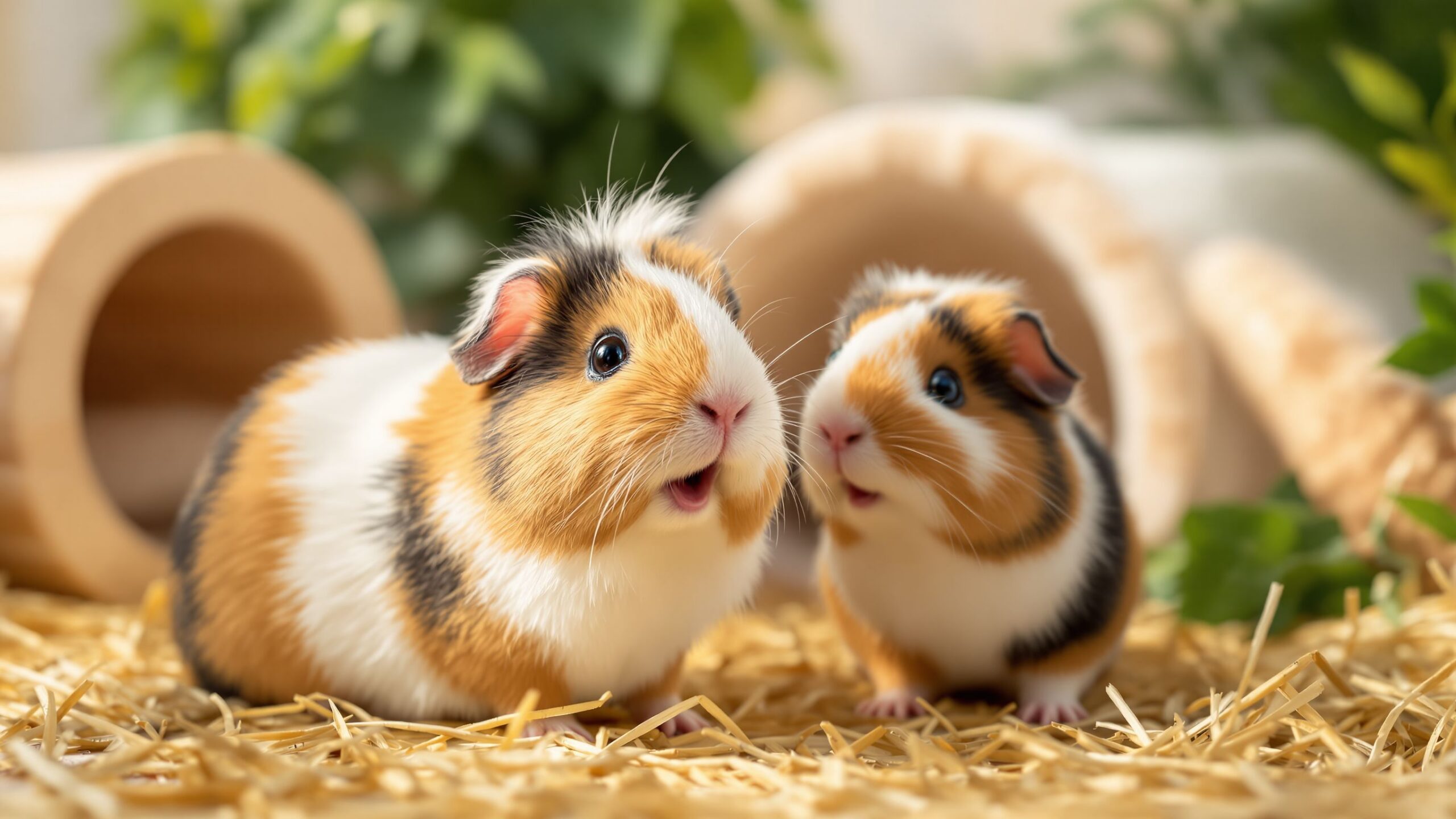
You walk toward the refrigerator and suddenly hear it: “WHEEK! WHEEK! WHEEK!” Within seconds, your normally peaceful guinea pig sounds like it has an extremely urgent announcement for the entire household. Is something wrong? Is your guinea pig hungry? Excited? Scared? Or has it simply decided that dinner should have arrived five minutes ago? Guinea pigs are remarkably vocal little animals, and squeaking is one of the many ways they communicate. Unlike pets that rely primarily on subtle body language, guinea pigs can produce an impressive collection of squeaks, whistles, purrs, rumbles, chirps, chatter, and other noises. Some sounds communicate excitement and anticipation, while others can signal irritation, fear, discomfort, or pain. Understanding guinea pig sounds is one of the best ways to understand your pet because the noises become much easier to interpret when combined with body language and the situation in which they occur.
A: Your guinea pig may recognize you and associate your arrival with food, attention, or another positive part of its routine.
A: Guinea pigs are excellent at learning food-related sounds and may wheek because they expect vegetables or another meal.
A: Sometimes. Excited wheeking is common, but squeaks can also indicate fear, discomfort, or pain depending on their pitch and context.
A: A relaxed low purr may indicate contentment, but watch body language because tense purring can also signal discomfort or annoyance.
A: Teeth chattering is usually a warning that your guinea pig is irritated, defensive, or wants additional space.
A: Rumbling can occur during courtship, dominance behavior, or other social interactions, especially when accompanied by swaying movements.
A: Chirping is a rare guinea pig vocalization, and its precise meaning remains uncertain.
A: Your guinea pig may be frightened or uncomfortable. If squealing occurs when a particular area is touched or is accompanied by other symptoms, pain should be considered.
A: Some variation is normal, but a sudden change combined with reduced appetite, hiding, weight loss, lethargy, or abnormal breathing warrants veterinary attention.
A: Seek veterinary advice if unusual vocalizations appear connected to pain, urination, breathing, eating, movement, or other sudden changes in your guinea pig's health or behavior.
Guinea Pigs Have a Surprisingly Big Vocabulary
Spend enough time around guinea pigs and you may begin feeling as though you are learning an entirely new language. Guinea pigs communicate using vocalizations, posture, movement, scent, and social behavior. A sound that seems identical to an inexperienced owner can sometimes carry a different meaning depending on what the guinea pig is doing at the same time. A low rumbling noise during a social interaction, for example, needs to be interpreted alongside posture and movement. Likewise, a high-pitched squeal during handling may mean something very different from enthusiastic wheeking when a produce bag opens. Rather than trying to translate every sound in isolation, look at the complete picture. Ask what happened immediately before the noise, what your guinea pig’s body looks like, what other guinea pigs are doing, and whether anything in the environment has recently changed.
What Does Guinea Pig Wheeking Mean?
“Wheeking” is probably the most famous guinea pig sound of all. It is the loud, high-pitched squeal or whistle that can make such a tiny animal sound surprisingly powerful. Wheeking is frequently associated with excitement, anticipation, and food. Your guinea pig may wheek when it hears the refrigerator open, recognizes the sound of a vegetable bag, hears you chopping produce, or notices you approaching around its usual feeding time. Guinea pigs are excellent at learning routines, and some quickly figure out which household sounds predict something delicious. The result can be a tiny furry alarm system that activates whenever there is even the slightest possibility of a snack.
Why Does My Guinea Pig Squeak When It Sees Me?
If your guinea pig begins squeaking the moment you walk into the room, there is a good chance you have become associated with something positive. Maybe you are the person who delivers vegetables. Perhaps you usually refill the hay or provide floor time. Your guinea pig may simply recognize your voice, footsteps, or routine and become excited when you appear. Guinea pigs can learn remarkably specific associations. Some respond to particular people more enthusiastically than others because those people regularly provide food or attention. While a greeting squeak does not necessarily mean exactly the same thing as a human saying “Hello,” it can indicate that your arrival predicts something interesting.
Why Does My Guinea Pig Squeak When I Open the Fridge?
Congratulations—you have probably been trained by your guinea pig. Many guinea pigs become extremely skilled at identifying food-related sounds. The refrigerator door, crinkling produce packaging, opening a container, or even footsteps toward the kitchen can trigger enthusiastic wheeking. Once a guinea pig discovers that a certain noise is followed by bell pepper, leafy greens, or another favorite food, it may begin announcing its expectations every single time that sound occurs. This learned response can become so specific that guinea pigs ignore other noises while reacting instantly to the one bag containing their vegetables.
Why Does My Guinea Pig Squeak When I Pick It Up?
Squeaking during handling requires more context. Some guinea pigs are naturally vocal and may make noises while being held without being distressed. Others squeak because they are nervous, uncomfortable, or asking to be put down. Watch the rest of your guinea pig’s behavior. Is its body relaxed, or is it stiff and desperately attempting to escape? Does the squeaking begin when you touch a particular area? Does your guinea pig settle once securely supported? Guinea pigs are prey animals, so being lifted from above can feel frightening even when they trust their owners. Approach calmly, support the chest and hindquarters securely, and avoid unnecessary chasing before handling.
Why Does My Guinea Pig Squeak When I Pet It?
A guinea pig making noises during petting may be communicating enjoyment, uncertainty, irritation, or discomfort depending on the sound and accompanying body language. Some guinea pigs enjoy gentle strokes around the head and cheeks but dislike being touched toward the rear of the body. Others have entirely different preferences. If your guinea pig repeatedly moves away, stiffens, turns toward your hand, chatters its teeth, or becomes increasingly vocal when you touch a particular location, respect that response. Sudden sensitivity in an area that was previously comfortable can also indicate pain and should not automatically be treated as a behavioral problem.
What Does Guinea Pig Purring Mean?
Guinea pig purring can be confusing because not every purr communicates happiness. A relaxed, gentle purring sound accompanied by comfortable body language may occur when a guinea pig is content. However, deeper or more tense-sounding vibrations can occur in other situations, including social displays or discomfort. This is why body language matters so much. A guinea pig resting comfortably while being gently stroked presents a very different picture from one standing stiffly with tense posture during an interaction with another guinea pig. Listen to the sound, but also watch what the animal is doing.
What Is Rumble Strutting?
Rumble strutting is one of the most distinctive guinea pig behaviors. A guinea pig may produce a low rumbling sound while slowly shifting its weight from side to side and moving around another guinea pig. The behavior can appear during courtship, hormonal behavior, dominance interactions, and social communication. Male guinea pigs commonly display rumble strutting, although females can do it as well. Seeing this behavior does not automatically mean a fight is about to happen. Guinea pigs living together establish social relationships, and some dominance behavior can be normal. Owners should learn the difference between routine social negotiation and escalating aggression that could cause injury.
Why Is My Guinea Pig Chattering Its Teeth?
Teeth chattering usually deserves attention. A guinea pig rapidly chattering its teeth may be communicating irritation, warning, or a desire for more space. You may hear it during a tense interaction between guinea pigs or when an animal feels bothered by handling. If two guinea pigs are facing each other with stiff bodies while loudly chattering their teeth, monitor the situation carefully because tension may be escalating. Teeth chattering should not be confused with the quieter tooth movements that can occur in other circumstances. Context and posture are essential for interpreting the message.
What Does a Guinea Pig Hiss Mean?
Hissing is not generally a sound associated with a relaxed, happy guinea pig. It can indicate anger, fear, irritation, or a strong warning. If your guinea pig hisses during interaction with another guinea pig, watch carefully for escalating aggression. If it hisses at you, consider whether it feels trapped, frightened, or uncomfortable. Do not punish the behavior. A warning sound provides useful information that your guinea pig has reached a point where it wants the situation to change. Giving it space can prevent the interaction from escalating further.
Why Does My Guinea Pig Make a Whining Sound?
A whining or complaining noise can sometimes occur when a guinea pig is irritated or does not appreciate what is happening. Perhaps another guinea pig is crowding it, you are touching somewhere it dislikes, or it wants to escape an interaction. Because people describe animal sounds differently, what one owner calls whining another may describe as squeaking or complaining. Focus less on finding the perfect human word and more on observing what is happening when the noise occurs. If your guinea pig repeatedly makes an unusual sound in the same situation, that pattern can help reveal what it is communicating.
What Does Guinea Pig Chirping Mean?
Chirping is one of the strangest and most mysterious guinea pig vocalizations. It can sound remarkably bird-like, which surprises many owners the first time they hear it. Unlike wheeking, the precise meaning of chirping is not fully understood. Some guinea pigs appear almost trance-like while producing the sound, and owners may hear it only rarely. Various explanations have been proposed, but there is no single universally established translation for guinea pig chirping. If your guinea pig otherwise appears healthy, an isolated chirping episode does not necessarily indicate a problem. However, unusual vocalizations accompanied by illness symptoms deserve veterinary attention.
Why Is My Guinea Pig Making a Low Rumbling Noise?
Low rumbling often occurs during social communication. Depending on the situation, it may accompany rumble strutting, courtship, dominance displays, or reactions to environmental stimuli. Watch the guinea pig’s movement. Is it slowly swaying its hips while approaching another guinea pig? Is its body tense? Did a sudden unfamiliar sound just occur? A rumble alone cannot always tell you exactly what the animal is feeling. Body language provides the rest of the sentence.
Why Does My Guinea Pig Squeal Loudly?
A sudden sharp squeal is different from ordinary food-related wheeking. High-pitched squealing can occur when a guinea pig is frightened, hurt, or extremely uncomfortable. If your guinea pig suddenly screams while being touched, immediately stop and assess what happened. Check for obvious injury and observe movement and behavior. A loud squeal during an interaction with another guinea pig may indicate that one animal has been hurt or overwhelmed. Repeated unexplained squealing, particularly alongside reduced appetite, limping, unusual posture, or other health changes, warrants veterinary attention.
Can Guinea Pigs Scream?
Guinea pigs can produce extremely loud, sharp vocalizations when frightened or experiencing significant discomfort. A sound that seems dramatically different from your guinea pig’s normal squeaks should not be ignored. Look for the cause rather than assuming your pet is simply being dramatic. Check the environment for hazards, observe interactions with cage mates, and look for signs of injury or illness. If there is no obvious explanation and the sound continues, contact an exotic-animal veterinarian.
Do Guinea Pigs Make Happy Sounds?
Absolutely, although happiness cannot always be determined by sound alone. Wheeking associated with anticipated food, relaxed vocalizations during comfortable interactions, and other gentle noises can accompany positive experiences. Happy guinea pigs also communicate through behavior. They may eat normally, explore confidently, rest in relaxed positions, interact comfortably with compatible companions, and display energetic behaviors such as popcorning. A healthy, comfortable guinea pig should be evaluated through the combination of appetite, activity, posture, social behavior, vocalization, and overall routine.
What Is Popcorning?
Popcorning is not technically a sound, but it often appears alongside excited guinea pig behavior and is too delightful to leave out of the conversation. A guinea pig may suddenly jump into the air, twist its body, land, sprint across the enclosure, and immediately repeat the performance. Young guinea pigs can be particularly enthusiastic popcorners, although adults may do it too. Popcorning is commonly associated with excitement and playful energy. If your guinea pig starts racing around after receiving fresh hay or enjoying a newly cleaned and enriched habitat, you may be witnessing one of the most entertaining behaviors in the guinea pig world.
Why Does My Guinea Pig Make Noises at Another Guinea Pig?
Guinea pigs communicate constantly with their companions. You may hear squeaks, rumbles, purr-like noises, chattering, whining, and other vocalizations during everyday interactions. Not every disagreement means two guinea pigs need to be immediately separated. Compatible guinea pigs may still negotiate space, food, favorite hiding areas, and social rank. Normal dominance behaviors can include rumble strutting, mounting, following, and other displays. However, escalating aggression, serious fighting, biting, injuries, or persistent bullying requires attention. Owners should provide adequate space, multiple resources, and appropriately designed hideouts to reduce unnecessary competition.
Why Do Guinea Pigs Squeak During Feeding Time?
Feeding time can turn an otherwise quiet guinea pig household into a concert. Guinea pigs learn routines remarkably well and may begin wheeking before food even appears. They may recognize the time of day, footsteps, refrigerator sounds, food containers, or your voice. Multiple guinea pigs can also encourage one another, with one animal beginning to wheek and the others quickly joining in. While enthusiastic food noises are adorable, remember that begging does not mean your guinea pig should receive unlimited treats. Continue following a nutritionally appropriate diet based around suitable hay, guinea-pig-specific foods, fresh water, and appropriate vegetables.
Why Is My Guinea Pig Squeaking at Night?
Nighttime squeaking can have several explanations. Your guinea pig may be communicating with a companion, exploring, eating hay, asking for food, reacting to a household sound, or simply being more active while the home is quiet. Guinea pigs do not follow exactly the same sleep pattern as humans and take numerous periods of rest throughout the day and night. Occasional nighttime vocalization can therefore be perfectly normal. However, persistent unusual crying, screaming, or distressed vocalization should be investigated, especially if accompanied by abnormal behavior.
Why Does My Guinea Pig Squeak When Peeing?
A guinea pig that repeatedly squeaks or cries while urinating may be experiencing pain and should be evaluated by an exotic-animal veterinarian. Urinary tract problems, bladder stones, inflammation, or other medical conditions can cause discomfort. Watch for blood in the urine, frequent attempts to urinate, straining, hunched posture, reduced appetite, or changes in normal behavior. Do not assume painful urination is simply your guinea pig being unusually talkative. Vocalizing consistently during urination is different from ordinary conversational squeaking and deserves prompt attention.
Why Does My Guinea Pig Squeak While Pooping?
Repeated crying or obvious discomfort while passing droppings can also indicate a health problem. Guinea pigs normally produce droppings frequently without appearing distressed. If your guinea pig strains, repeatedly vocalizes, develops dramatically altered droppings, stops producing normal amounts, becomes bloated, or loses its appetite, contact a veterinarian. Digestive problems can become serious in guinea pigs, particularly when food intake declines. Knowing your pet’s normal bathroom habits makes abnormal changes much easier to recognize.
Why Does My Guinea Pig Squeak When Breathing?
A noise occurring with every breath should not automatically be classified as normal guinea pig communication. Wheezing, clicking, crackling, persistent nasal noises, or labored breathing can potentially indicate a respiratory problem or another medical issue. Watch for nasal or eye discharge, repeated sneezing, reduced appetite, lethargy, rapid breathing, or visible difficulty breathing. Respiratory illness can become serious, so abnormal breathing noises deserve veterinary evaluation. Significant breathing difficulty should be treated as urgent.
Sneezing Is Different From Squeaking
An occasional sneeze can happen, particularly when dust or environmental irritants are present, but frequent sneezing accompanied by discharge or breathing changes may indicate a problem. Dusty hay, unsuitable bedding, fragrances, smoke, aerosols, and other environmental irritants can affect sensitive respiratory systems. Keep the guinea pig’s environment clean and well ventilated without exposing it to drafts. Persistent respiratory symptoms require veterinary guidance rather than home treatment with human medications.
Guinea Pig Sounds Can Change With Age
A young guinea pig may be particularly vocal, energetic, and enthusiastic, while another individual may naturally be much quieter. Vocal habits can also change over time as guinea pigs become familiar with household routines. A newly adopted guinea pig that barely makes a sound may eventually discover that wheeking produces remarkably fast vegetable delivery. Older guinea pigs may develop different activity patterns as well. The important thing is learning what is normal for your individual animal. A sudden major change from a guinea pig’s usual behavior can be more meaningful than whether it happens to be naturally loud or quiet.
Why Is My Guinea Pig Suddenly Quiet?
A quiet guinea pig is not necessarily unhealthy. Some individuals simply vocalize less than others. However, if an extremely vocal guinea pig suddenly becomes unusually silent while also hiding, eating less, losing weight, producing fewer droppings, or behaving lethargically, pay attention. Guinea pigs are prey animals and can conceal illness until they are significantly unwell. Changes in behavior, appetite, and weight often provide important information. Do not wait for dramatic vocalizations before taking possible illness seriously.
Your Guinea Pig’s Body Language Completes the Message
Think of vocalizations as only one part of guinea pig communication. Ears, posture, movement, eyes, fur, social behavior, and activity level provide the rest of the information. A relaxed guinea pig quietly eating hay while making a gentle sound is communicating something very different from an animal frozen in place with tense posture. Observe whether your guinea pig approaches or retreats, whether it continues eating, whether it appears comfortable around companions, and what caused the vocalization. The more context you notice, the better you will become at interpreting your individual pet.
Learn Your Guinea Pig’s Personal Vocabulary
Not every guinea pig sounds exactly the same. One may wheek so loudly that you can hear it from another room, while its companion produces a much softer whistle. Some guinea pigs seem to comment on nearly everything happening around them, while others reserve their voices for particularly important occasions—usually involving vegetables. Spend time observing when your guinea pig makes certain noises. Eventually, you may recognize a specific “food is coming” wheek, an irritated complaint, a social rumble, and the quieter noises your guinea pig makes while relaxing.
Can Guinea Pigs Recognize Their Owners?
Guinea pigs can learn to recognize familiar routines, voices, smells, and environmental cues associated with their caregivers. This is why your guinea pig may begin vocalizing when you enter the room but remain quiet when someone else walks past. Consistent positive interaction can strengthen these associations. Speak gently, offer appropriate food by hand, maintain predictable routines, and allow your guinea pig to approach voluntarily. Over time, your arrival can become something your pet anticipates rather than fears.
How to Respond When Your Guinea Pig Wheeks
When your guinea pig wheeks, first look at the context. If you have just opened the refrigerator at the usual vegetable time and your guinea pig is standing excitedly near the enclosure, you probably do not need to panic. If the same high-pitched vocalization suddenly occurs while your guinea pig is urinating, being touched, fighting with a companion, or struggling to move, investigate further. Learning to distinguish ordinary communication from distress is more useful than trying to eliminate squeaking altogether. A vocal guinea pig is often simply doing what guinea pigs do best—communicating enthusiastically.
Do Not Punish a Noisy Guinea Pig
Never punish your guinea pig for squeaking, wheeking, rumbling, or making other normal vocalizations. Yelling, spraying water, hitting the enclosure, or frightening the animal will not teach it to communicate differently. Instead, punishment can damage trust and create unnecessary stress. If excessive noise seems connected to constant food begging, avoid automatically rewarding every single wheek with a sugary treat. Maintain a consistent feeding schedule and provide unlimited appropriate hay so your guinea pig has plenty of healthy opportunities to graze.
When Guinea Pig Sounds Could Mean Pain
Pain-related vocalizations deserve special attention. A guinea pig may cry, squeal, or make unusual noises when moving, urinating, defecating, chewing, being touched, or interacting with another animal. Look for additional signs such as weight loss, reduced appetite, abnormal posture, limping, drooling, swelling, changes in droppings, blood in urine, hiding, or reduced activity. Guinea pigs often conceal illness, so a noticeable behavioral change can be important. If a sound consistently occurs during an activity that should not be painful, contact an exotic-animal veterinarian.
Why Appetite Matters When Your Guinea Pig Sounds Different
Whenever you notice an unusual vocalization, check whether your guinea pig is eating normally. Guinea pigs rely on regular food intake to maintain digestive function, and refusing food can become serious. Look at hay consumption, favorite foods, droppings, water intake, and overall activity. A guinea pig making strange noises while continuing to eat enthusiastically and behave normally presents a different situation from one sitting hunched in a corner and refusing hay. Loss of appetite deserves prompt veterinary attention.
Weigh Your Guinea Pig Regularly
A digital kitchen scale that measures in grams can become an incredibly useful guinea pig health tool. Regular weighing helps establish what is normal for your individual animal and may reveal weight loss before obvious physical changes become visible. Record weights so you can identify trends. If unusual vocalizations appear alongside unexplained weight loss, appetite changes, or behavioral differences, provide that information to your veterinarian. Those details can help create a clearer picture of what is happening.
Find an Exotic-Animal Veterinarian Before You Need One
Not every veterinary clinic regularly treats guinea pigs, so locate an experienced exotic-animal veterinarian before an emergency occurs. A veterinarian familiar with guinea pigs can evaluate dental problems, urinary issues, respiratory symptoms, digestive concerns, injuries, and other conditions that may cause unusual vocalizations. Having a clinic selected ahead of time prevents you from scrambling to find appropriate care when something suddenly changes. Keep emergency information readily available as well.
Common Mistakes When Interpreting Guinea Pig Sounds
One common mistake is assuming every squeak means hunger. Another is assuming every purr means happiness. Guinea pig communication is more complicated than a simple sound-to-word dictionary. Owners can also miss health problems by dismissing painful vocalizations as personality. On the other hand, constantly panicking over every enthusiastic wheek can make normal guinea pig ownership unnecessarily stressful. The solution is context. Consider the sound, body language, environment, appetite, health, and activity together before deciding what your guinea pig may be communicating.
Build a Stronger Bond by Listening
Learning guinea pig sounds is not just entertaining—it can strengthen your relationship. When you respond appropriately to your guinea pig’s communication, you become more predictable. You learn when your pet wants food, when it needs space, when it feels nervous, and when something may genuinely be wrong. That understanding can make handling easier, improve social interactions, and help you recognize health concerns sooner. Over time, you may find yourself automatically recognizing sounds that once seemed completely mysterious.
Final Thoughts on Guinea Pig Squeaking and Sounds
So, why is your guinea pig squeaking? The answer could be as simple as, “I heard the vegetable bag!” or as important as, “Something hurts.” Guinea pigs use wheeks, squeaks, purrs, rumbles, chatter, chirps, and other vocalizations to interact with their companions and the world around them. The secret to understanding those noises is never listening to sound alone. Watch body language, notice what happened immediately beforehand, learn your guinea pig’s normal routine, and pay attention to changes in appetite, weight, movement, and bathroom habits. Soon, the mysterious squeaks coming from the enclosure may stop sounding random altogether. You may discover that your tiny companion has been holding an entire conversation with you—and occasionally delivering a very loud reminder that the refrigerator contains bell peppers.
Pet Product Reviews
Explore Duffy Street’s Pet Product Reviews! Sniff out the top-rated toys, treats, gear, and gadgets for your pets with our fun, easy-to-read comparisons. We’ve done the digging so you can find the perfect products for your pet friends!