Discovering a snake where one clearly does not belong can be both surprising and concerning. While some snakes found outdoors are native wildlife, others are escaped or intentionally abandoned pets that have little chance of surviving on their own. Unfortunately, every year countless pet snakes are released because owners underestimate their long lifespans, changing care requirements, or the financial commitment involved in responsible reptile ownership. Others escape from poorly secured enclosures and eventually end up far from home. Unlike wild snakes that have evolved to survive in their natural environments, captive-bred pet snakes often lack the instincts necessary to hunt efficiently, avoid predators, or cope with unfamiliar climates. Many die from starvation, dehydration, disease, or exposure long before they have any opportunity to adapt. In some cases, abandoned snakes may even become invasive species that negatively affect local wildlife and ecosystems. If you discover what appears to be an abandoned pet snake, your actions can make the difference between life and death. Remaining calm, protecting your own safety, and following the proper steps will give the snake its best chance of survival while helping it find a responsible permanent home.
A: Keep people and pets away, watch from a safe distance, and contact animal control or a reptile rescue.
A: No, not unless you are experienced and completely sure it is nonvenomous and safe to handle.
A: Do not approach it. Call animal control, emergency services, or a licensed snake removal expert.
A: Only after checking local laws, attempting to find the owner, and making sure you can provide proper care.
A: Yes, but leave out a few details so the real owner can prove it belongs to them.
A: No. A pet snake may die outdoors or harm local wildlife if released.
A: Do not feed it until the species, health, and care needs are confirmed by someone knowledgeable.
A: Weight loss, wounds, mites, stuck shed, wheezing, mouth issues, or extreme weakness all need reptile vet care.
A: Animal control, reptile rescues, exotic vets, herpetology groups, and licensed wildlife professionals may help.
A: The safest outcome is proper identification, secure temporary care, and placement with the owner, rescue, or experienced keeper.
Stay Calm and Observe From a Distance
The first thing you should do is remain calm. Although many people instinctively fear snakes, the majority of pet snakes are nonvenomous and naturally shy. They generally prefer avoiding confrontation rather than attacking people.
Before approaching, spend a few minutes observing the snake from a safe distance. Notice its size, color, body shape, and behavior. Determine whether it appears injured, dehydrated, unusually thin, or tangled in fencing, netting, or other debris.
Avoid making sudden movements that could frighten the snake. A calm, slow approach reduces stress and decreases the likelihood that it will attempt to flee.
Determine Whether It Is a Wild or Pet Snake
Not every snake found outdoors is abandoned. Many regions have native snake species that play important roles in controlling rodent populations and maintaining healthy ecosystems.
Pet snakes often display characteristics that distinguish them from native wildlife. Ball pythons, corn snakes with unusual color morphs, king snakes displaying selective breeding patterns, milk snakes with bright designer colors, boa constrictors, and many other commonly kept species frequently stand out because of their unique appearance.
An unusually calm temperament may also suggest that the snake has spent much of its life around humans, although frightened pet snakes can still behave defensively.
If you are uncertain about identification, take clear photographs from a safe distance without disturbing the snake. Local wildlife agencies, reptile rescues, veterinarians, and online identification groups can often help determine the species.
Never Assume a Snake Is Harmless
Even if you suspect the snake is someone’s pet, never assume it is completely safe to handle. Some exotic pet species are venomous, and even nonvenomous snakes may bite if frightened or cornered.
If you cannot confidently identify the snake, avoid direct handling. Instead, contact local animal control, wildlife officials, or a reptile rescue organization for assistance.
Protecting your own safety should always come first.
Approach Slowly If Handling Is Necessary
If you are certain the snake is a commonly kept nonvenomous pet species and immediate rescue is necessary, approach slowly and avoid making sudden movements.
Never grab a snake by its tail or neck. Doing so can cause injury and greatly increase its stress level.
Instead, gently support the snake’s body with both hands, allowing it to move naturally while feeling secure. Most pet snakes calm down significantly once they realize they are not being harmed.
If the snake appears aggressive or defensive, use a snake hook, broom handle, or similar object to gently guide it into a secure container rather than attempting direct handling.
Use a Secure Transport Container
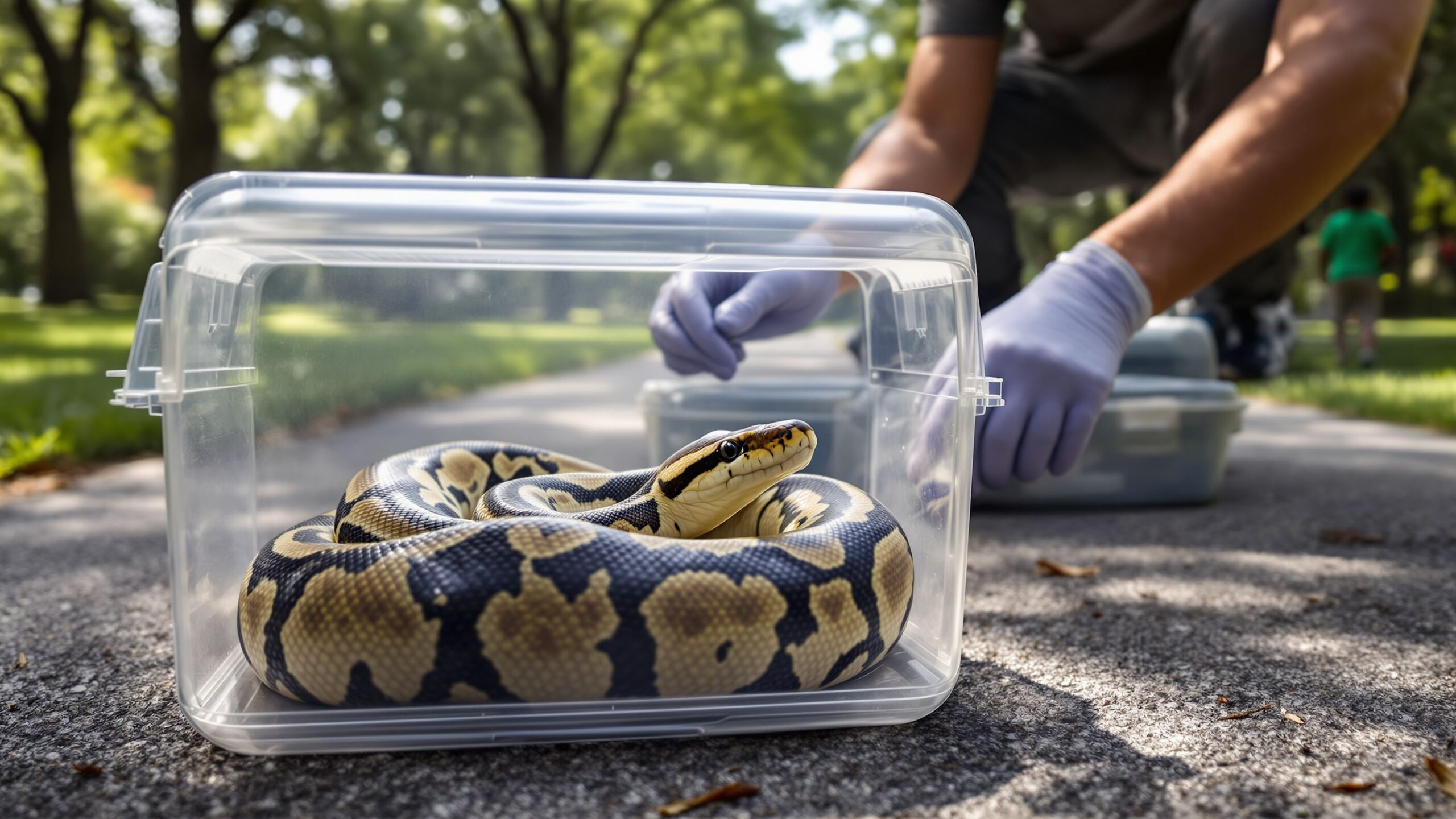
After safely containing the snake, place it inside a sturdy container with adequate ventilation. Plastic storage bins with locking lids, secure pet carriers, or reptile transport containers work well for temporary housing.
Line the bottom with paper towels or a clean towel to provide traction and reduce stress during transport.
Ensure the lid closes securely while allowing fresh air to circulate. Snakes are excellent escape artists, so even small openings may allow them to escape.
Keep the container away from direct sunlight, excessive heat, and cold temperatures while transporting it.
Check for Visible Injuries
Once the snake is safely contained, perform a visual inspection without excessive handling. Look for cuts, abrasions, retained shed, burns, swelling, respiratory discharge, parasites, dehydration, or signs of malnutrition.
A healthy snake typically has clear eyes outside of shedding periods, smooth scales, normal body weight, and steady movement.
If the snake appears seriously injured or extremely weak, contact an exotic animal veterinarian as soon as possible.
Do Not Feed the Snake Immediately
Many people assume a found snake should be fed immediately, but this is often unnecessary and sometimes harmful.
Most healthy snakes can safely go several days or even weeks without food, depending on the species and age. Offering food before identifying the species or understanding its feeding history may increase stress or create additional problems.
Instead, focus first on providing a quiet, secure environment and access to clean water if appropriate.
Once the snake has been properly identified, experienced caretakers can determine the correct feeding schedule.
Contact Local Animal Organizations
After securing the snake, begin contacting organizations that may be able to help locate its owner or provide permanent placement.
Start with local reptile rescues, animal shelters that accept reptiles, exotic veterinarians, herpetological societies, and animal control agencies. Many communities also have reptile hobby groups that assist with lost and found exotic pets.
Provide photographs, the location where the snake was found, the date, and any identifying characteristics.
These details may help reunite the snake with its original owner if it escaped accidentally.
Report the Found Snake
Posting information responsibly increases the chances of locating the owner.
Share photographs and details through local lost pet groups, neighborhood community pages, reptile organizations, and animal shelters. Avoid revealing every identifying detail immediately so anyone claiming ownership can accurately describe the snake.
If possible, request photographs or veterinary records from anyone attempting to claim the animal.
Responsible verification helps prevent the snake from ending up with someone who simply wants a free reptile.
If the Owner Cannot Be Found
If no owner comes forward after a reasonable period, the snake will likely need permanent placement.
Reptile rescues often have experienced foster homes that can care for the animal while searching for qualified adopters. Some veterinary clinics and specialty reptile stores may also help connect the snake with responsible keepers.
If you decide to keep the snake yourself, be prepared to research its species thoroughly and invest in proper housing, heating, humidity control, nutrition, and veterinary care before making a long-term commitment.
Avoid Common Mistakes
Several well-intentioned mistakes can unintentionally harm a rescued snake.
One of the most common errors is releasing the snake back into the wild after capturing it. Captive snakes rarely survive long outdoors and may negatively affect native ecosystems if they do.
Another mistake is placing the snake into an enclosure without researching its environmental needs. Incorrect temperatures, humidity, or substrate can quickly lead to illness.
Handling the snake excessively during its first few days of rescue can also increase stress. Allow it time to settle while limiting unnecessary interaction.
Finally, never attempt to force-feed or medicate the snake without guidance from an experienced reptile veterinarian.
Prevent Future Escapes
If the snake belongs to you or someone you know, identifying how it escaped is just as important as recovering it.
Most escapes occur because enclosure lids are not properly secured or because damaged screens, loose locks, or improperly fitted doors create small openings. Snakes can squeeze through surprisingly tiny gaps using their muscular bodies and remarkable flexibility.
Regularly inspect enclosures for damage and always use locking mechanisms designed specifically for reptile habitats.
Preventing escapes protects both the snake and the surrounding environment.
Understanding Why People Abandon Pet Snakes
Sadly, abandonment usually stems from misinformation rather than cruelty alone. Some owners purchase snakes without realizing they may live twenty years or longer. Others underestimate enclosure costs, veterinary expenses, electricity requirements for heating, or the emotional commitment involved in caring for an exotic pet.
Large species may outgrow their original enclosures, while changing life circumstances such as moving, financial hardship, or family concerns sometimes leave owners feeling overwhelmed.
Education remains one of the most effective ways to reduce reptile abandonment. Responsible research before acquiring any reptile helps ensure owners understand the commitment they are making.
How You Can Help Beyond One Rescue
Helping one abandoned snake is meaningful, but you can also make a broader difference by supporting responsible reptile ownership within your community.
Encourage prospective reptile owners to research species thoroughly before purchasing. Support reputable breeders and rescues that prioritize animal welfare over sales. Share educational resources about proper husbandry, enclosure design, nutrition, and the importance of never releasing captive reptiles into the wild.
Even small efforts can help reduce the number of abandoned reptiles in the future.
Giving an Abandoned Snake a Second Chance
Finding an abandoned pet snake can be an unexpected experience, but responding thoughtfully can save an animal’s life. By remaining calm, identifying the snake carefully, handling it safely when appropriate, providing secure temporary housing, and contacting experienced reptile organizations, you give the snake its best opportunity to recover and find a permanent, loving home. Whether the snake is reunited with its original owner or adopted by someone new, your willingness to act responsibly can completely change its future. Every rescued reptile deserves compassionate care, and your actions may be the first step toward giving an abandoned pet the second chance it truly deserves.
Pet Product Reviews
Explore Duffy Street’s Pet Product Reviews! Sniff out the top-rated toys, treats, gear, and gadgets for your pets with our fun, easy-to-read comparisons. We’ve done the digging so you can find the perfect products for your pet friends!