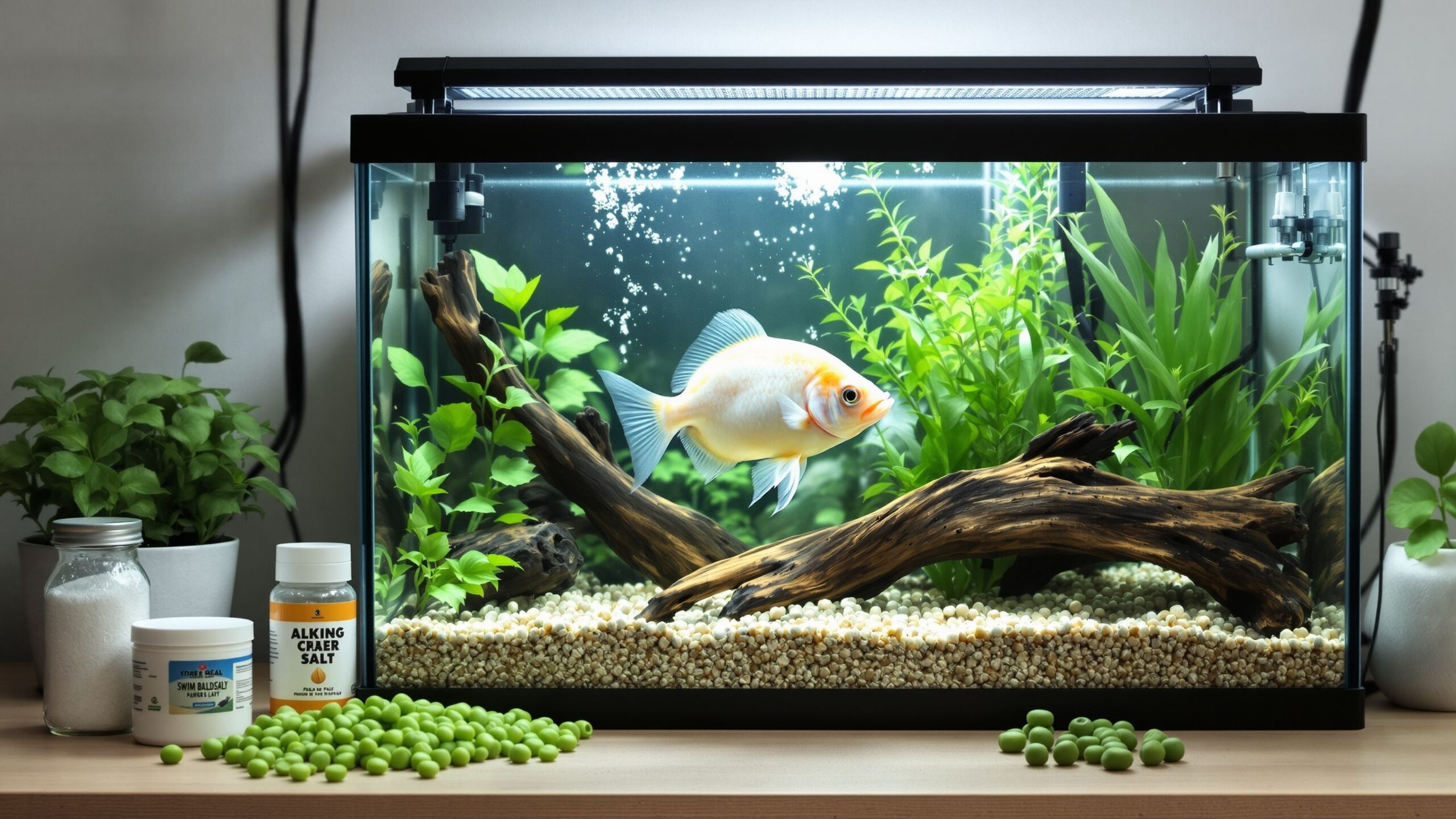
In every aquarium, water is far more than a backdrop—it’s the entire world your fish live in. Their health, color, and behavior depend entirely on its balance. Perfect water quality is the invisible force behind every thriving aquarium, while poor water conditions quietly erode vitality until sickness sets in. Whether you’re caring for a single betta or a community of vibrant tropical species, understanding and maintaining your tank’s chemistry is the key to long-term success.
A: Add aeration, dose conditioner that binds ammonia, and perform measured water changes; check feeding and biofilter health.
A: Weekly for established tanks; daily when cycling, after adding livestock, or if fish act off.
A: Small, consistent changes keep chemistry stable and stress low.
A: No—use tank water to avoid killing beneficial bacteria.
A: Not always; it’s useful for very soft-water species or hard tap. Remineralize as needed.
A: Low KH, heavy plant photosynthesis, or CO₂ systems; raise buffering and smooth photoperiod/CO₂.
A: Improve export (skimmer/refugium/media), reduce feeding, and increase steady changes; aim 2–10 ppm.
A: Some help seed filters; still monitor closely and avoid overstocking early.
A: Lightly in planted tanks; deeper in bare/low-plant tanks to remove detritus without uprooting roots.
A: Every 2–4 weeks or after medication; spent carbon can leach organics.
The Foundation: Understanding Water Chemistry
Every drop in your tank carries a complex mix of minerals, gases, and organic compounds. Water chemistry revolves around a few key parameters: pH, ammonia, nitrite, nitrate, and hardness. Each affects your fish’s physiology in subtle but powerful ways. When these values drift out of balance, stress builds, immunity weakens, and diseases gain ground. pH measures acidity or alkalinity on a scale of 0 to 14, and even small shifts can cause discomfort or metabolic issues. Ammonia and nitrite are toxic waste products that must remain at zero, while nitrate, though less deadly, should stay under safe limits through regular water changes. Understanding these basics transforms guesswork into precision.
The Nitrogen Cycle: Nature’s Cleansing Mechanism
The nitrogen cycle is the biological engine that keeps aquarium water safe. It begins when fish release waste or uneaten food decays, producing ammonia. Beneficial bacteria convert ammonia into nitrite, and another bacterial colony transforms nitrite into nitrate. This natural process detoxifies waste, turning a deadly environment into a stable ecosystem. Establishing this cycle—known as “cycling the tank”—is the first step in any aquarium setup. Cycling takes time, usually four to six weeks, but once complete, it forms a self-sustaining filter that constantly purifies the water. Without it, toxins accumulate quickly, endangering your fish even in a sparkling-clear tank.
Ideal Parameters for a Healthy Aquarium
While every species has its preferred range, general freshwater aquariums thrive with a pH between 6.8 and 7.5, ammonia and nitrite at 0 ppm, and nitrates below 30 ppm. Temperature should remain stable within the comfort zone of your fish—typically 74°F to 80°F for tropical species. Hardness (GH) and alkalinity (KH) provide the minerals and buffering capacity that prevent sudden pH crashes. Saltwater and specialty tanks may require slightly different ranges, but stability always outweighs precision. Sudden shifts in any parameter are far more harmful than steady values slightly outside textbook perfection. Consistency keeps your fish calm and your ecosystem balanced.
Testing: Your Most Important Habit
You can’t manage what you don’t measure. Regular testing is the backbone of successful aquarium care. Invest in a reliable liquid test kit rather than paper strips—they provide more accurate readings. Test for ammonia, nitrite, nitrate, pH, and hardness weekly, or more often in new tanks. Keep a logbook to track changes over time; patterns often reveal underlying issues before they become emergencies. Always test after adding new fish, changing filters, or performing major water changes. This simple routine builds awareness and gives you the confidence to act quickly when something drifts off balance.
The Role of Filtration in Water Perfection
Your filter is the heart of your aquarium, performing three essential jobs—mechanical, biological, and chemical filtration. Mechanical filtration traps debris, biological filtration houses beneficial bacteria, and chemical filtration removes dissolved impurities. Rinse filter media gently in tank water during cleaning to preserve bacterial colonies. Never replace all filter media at once; doing so wipes out your biological foundation and destabilizes the system. A well-maintained filter keeps water clear, oxygen-rich, and free from dangerous waste, creating the steady rhythm your aquarium depends on.
Water Changes: The Unsung Hero of Fish Health
No matter how advanced your filtration, partial water changes are non-negotiable. Replacing 20 to 25 percent of the water weekly removes excess nitrates, replenishes essential minerals, and restores balance. Always treat tap water with a quality conditioner to neutralize chlorine and chloramine before adding it. Match temperature closely to avoid shocking your fish. Regular water changes do more than clean—they simulate the natural renewal of streams and lakes, giving your fish the freshness they instinctively expect.
Managing pH and Hardness
pH fluctuations are among the most common causes of stress in aquariums. Stability is key. Use natural buffering agents such as crushed coral or limestone to raise pH gradually, or driftwood and peat moss to lower it gently. Hardness provides the minerals fish need for proper osmoregulation and bone development. Too-soft water may lead to fragile fins or poor growth, while overly hard water stresses soft-water species. Test KH and GH monthly and adjust slowly—dramatic shifts can shock fish more than imperfect parameters ever would.
Controlling Ammonia, Nitrite, and Nitrate
Ammonia and nitrite are silent killers. Even trace amounts can burn gills and skin, causing lethargy, gasping, or sudden death. When these toxins appear, act immediately: stop feeding, change water, and ensure your filter is functioning. Use bacterial boosters to reinforce biological filtration. Once ammonia and nitrite are eliminated, focus on managing nitrate buildup through water changes and live plants. Fast-growing species like hornwort, water sprite, and duckweed naturally absorb nitrates, adding both beauty and function to your tank.
Temperature and Oxygen Balance
Fish are cold-blooded, meaning their metabolism depends on water temperature. Too cold slows digestion and immunity; too hot reduces oxygen and triggers stress. Use a reliable heater with a built-in thermostat for tropical tanks, and always check readings with a separate thermometer. Aeration is equally vital. A gentle air stone or surface agitation ensures oxygen exchange and prevents stagnant zones. Signs of low oxygen—fish gasping at the surface or clustering near filters—signal immediate need for increased circulation. Balanced temperature and oxygen levels turn your aquarium from a holding tank into a thriving habitat.
The Dangers of Overfeeding
Overfeeding is one of the leading causes of poor water quality. Uneaten food decomposes, releasing ammonia and clouding the water. Feed small portions your fish can consume within two to three minutes, once or twice daily. Observe how much they eat and adjust accordingly. Periodic fasting days give digestive systems a break and mimic natural feeding cycles. Clear water and healthy fish often trace back to nothing more complicated than mindful feeding habits.
The Importance of Live Plants and Natural Balance
Live plants are more than decoration—they’re active participants in your aquarium’s ecosystem. Through photosynthesis, they produce oxygen, absorb carbon dioxide, and consume nitrates. Rooted plants stabilize substrates and provide shelter for shy species. A planted aquarium naturally balances itself, requiring fewer chemical interventions. Choose plants suited to your lighting and water parameters. Combined with good filtration and regular maintenance, plants create a near-self-sustaining environment where fish thrive effortlessly.
Spotting Early Warning Signs of Trouble
Water quality issues rarely appear overnight. Subtle cues often signal danger before tests confirm it. Cloudy water, sluggish behavior, clamped fins, or unusual surface breathing all suggest imbalance. Sudden algae blooms usually point to excess nutrients or prolonged light exposure. Regular observation keeps you ahead of crises—trust your instincts as much as your test results. The more you watch your fish, the better you’ll understand their normal rhythm, making deviations immediately apparent.
How to Recover from a Water Crisis
When water parameters crash—spiking ammonia, plunging pH, or a sudden temperature shift—swift, measured response is critical. Begin with partial water changes to dilute toxins. Add conditioners that neutralize ammonia or stabilize pH. Check all equipment for malfunctions, especially heaters and filters. Avoid drastic overcorrections; stability must be restored gradually. Once parameters stabilize, introduce beneficial bacteria to rebuild your biological filter. Keep stress low with dim lighting and reduced feeding until your fish recover. Acting calmly and methodically often turns a potential disaster into a temporary setback.
Long-Term Stability: The Art of Balance
Perfect water quality isn’t achieved once—it’s maintained through rhythm and routine. Establish consistent testing, cleaning, and feeding habits. Replace evaporation loss with conditioned water, trim plants, and check equipment weekly. Avoid overstocking; more fish means more waste and faster imbalance. A stable aquarium rewards patience: as weeks become months, your ecosystem will find equilibrium, needing fewer interventions. The true beauty of fishkeeping lies not in control but in harmony—guiding nature rather than forcing it.
Clear Water, Happy Fish
A crystal-clear aquarium isn’t luck—it’s the result of care, consistency, and understanding. When water chemistry remains balanced, fish reveal their true colors, display natural behaviors, and live long, stress-free lives. Every test, every water change, and every small adjustment you make adds to that harmony. Perfect parameters aren’t about chasing numbers—they’re about creating stability. And when your fish glide effortlessly through their glass world, you’ll know that balance has been achieved, one drop at a time.
Pet Product Reviews
Explore Duffy Street’s Pet Product Reviews! Sniff out the top-rated toys, treats, gear, and gadgets for your pets with our fun, easy-to-read comparisons. We’ve done the digging so you can find the perfect products for your pet friends!