
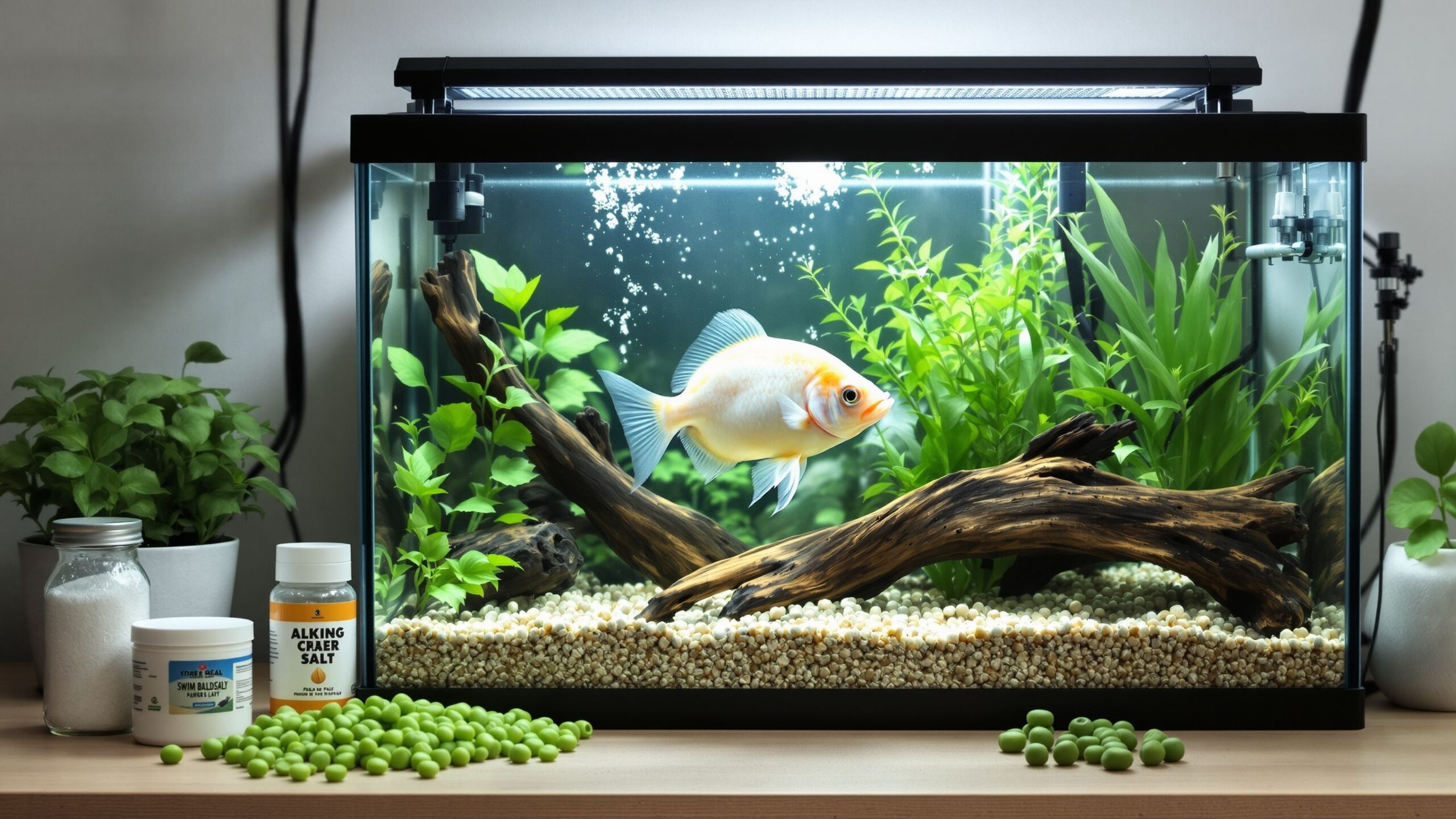
Few things alarm aquarium owners more than seeing a fish floating awkwardly at the surface or sinking to the bottom unable to rise. Often mistaken for fatal illness, these symptoms usually point to a swim bladder disorder—a condition that disrupts a fish’s buoyancy. The swim bladder is a gas-filled organ that controls floating and sinking, much like a submarine’s ballast system. When it malfunctions, a fish’s balance is thrown off, making it difficult to swim properly. The good news? Most swim bladder problems are treatable with care, patience, and an understanding of what’s really happening inside your fish.
A: Test water, lower water depth for easy swimming, boost aeration, fast 24–48 h, and move to QT if no quick improvement.
A: For omnivores only and in moderation; shell, blanch, mash. Not a cure for infections or structural problems.
A: If there are infection signs (redness, ulcers, stringy white feces, rapid decline) after water/diet fixes—treat in QT.
A: For some FW species, short Epsom salt baths in QT may aid constipation/edema; verify species tolerance and exact dosing.
A: Mild, stable increases can aid digestion for tropical species—never exceed species limits or reduce oxygen.
A: Use sinking or pre-soaked foods and break surface tension with gentle flow.
A: Functional cases often do; anatomical issues may need long-term management (diet/flow/shallower water).
A: Prefer QT to protect biofilters/inverts; display dosing only if product and livestock allow.
A: Stable parameters, varied moist diet, gentle flow, careful handling, and consistent routine.
A: Rapid deterioration, severe deformity, persistent symptoms despite husbandry fixes, or suspected internal infection.
Understanding the Swim Bladder
The swim bladder is an internal sac filled with oxygen, nitrogen, and carbon dioxide, allowing fish to maintain buoyancy without constant effort. It expands or contracts as gas levels change, letting fish hover at different depths. For healthy function, this organ depends on proper digestion, physical structure, and overall health. When the swim bladder becomes compressed, inflamed, or damaged, buoyancy control fails. The fish may float belly-up, sink uncontrollably, or struggle to maintain its usual horizontal posture. Understanding how delicate this system is reveals why prevention and balance are so important.
Common Causes of Swim Bladder Disorder
Swim bladder issues stem from a variety of factors—some temporary, others more serious. Overfeeding and constipation are the most frequent culprits. Excess food or air swallowed during surface feeding can press against the bladder, reducing its capacity to inflate. Poor water quality contributes to infection and organ inflammation. Physical injury, often from aggressive tank mates or rough handling, can damage internal organs. Rapid temperature changes shock the digestive system, while bacterial infections may directly affect the bladder. Occasionally, the disorder is congenital—certain breeds like fancy goldfish and bettas are genetically prone to buoyancy problems due to their compact body shapes.
Recognizing the Symptoms
Swim bladder disorder is unmistakable once it appears. Fish may float at the surface, sometimes upside down, or sink to the bottom, paddling hard to rise. Others hover awkwardly at an angle or drift sideways when resting. In mild cases, they may simply struggle to stay balanced after eating. Appetite loss, bloating, or curved spines often accompany the condition. Observant aquarists should also note behavioral changes—restlessness, exhaustion, or spending long periods near the filter outflow for support are telltale signs. Early recognition ensures faster recovery and prevents secondary complications like stress or infections.
Diagnosing the Cause Before Treating
Not all buoyancy problems are caused by swim bladder malfunction alone. Sometimes, external infections or organ swelling mimic its symptoms. Start diagnosis by observing the fish closely. If the issue occurs after feeding and resolves within a few hours, the cause is likely digestive. Persistent cases accompanied by discoloration, swelling, or sluggishness suggest bacterial or physical injury. Test water parameters for ammonia, nitrite, nitrate, and temperature irregularities—imbalances stress fish and worsen any underlying disorder. A methodical approach prevents unnecessary treatment and reveals the true source of the problem.
Treating Constipation-Related Swim Bladder Issues
For cases caused by constipation or overfeeding, treatment begins with fasting. Stop feeding your fish for 24 to 48 hours to allow their digestive tract to clear. Then, offer small portions of blanched, deshelled peas—a natural laxative that relieves blockages. Feed peas for two to three days, then switch back to easily digestible foods like daphnia or high-fiber flakes. Avoid floating pellets during recovery, as gulping air at the surface often worsens buoyancy imbalance. Many fish recover within a few days once pressure on the swim bladder is relieved.
Managing Infection or Inflammation
If the disorder stems from infection, medications become necessary. Move the affected fish to a quarantine tank to reduce stress and prevent spread. Maintain stable temperatures and excellent water quality. Administer antibacterial or broad-spectrum treatments such as Maracyn or Kanaplex as directed. Some cases respond well to mild aquarium salt baths, which reduce swelling and promote healing. Continue aeration during treatment—oxygen-rich water speeds recovery. Improvement should appear gradually, with better swimming posture and renewed appetite signaling progress.
Correcting Water and Temperature Problems
Environmental control plays a major role in both treatment and prevention. Sudden temperature shifts slow digestion and alter gas exchange within the swim bladder. Keep temperatures consistent within the species’ preferred range—typically 74–80°F for tropical fish. Poor water quality compounds stress and suppresses immunity. Test ammonia and nitrite weekly, perform partial water changes, and clean filter media gently using tank water. A clean, stable environment gives the fish’s body the best chance to heal naturally.
Special Care for Floating or Sinking Fish
When buoyancy loss becomes severe, the fish may float constantly or lie on the substrate. To prevent injury, lower the water level in the quarantine tank to make swimming easier. Add soft plants or sponge decorations to cushion resting areas and prevent sores. Avoid strong currents—gentle flow helps the fish conserve energy. In persistent floaters, feeding should occur below the surface using sinking foods to reduce air intake. Handle the fish minimally during this time—stress only worsens the problem.
Helping Fancy Goldfish and Betta Species
Fancy goldfish, orandas, and bettas are particularly prone to swim bladder issues due to their compressed anatomy. Their internal organs, including the swim bladder, are crowded together, making them vulnerable to digestive pressure and infection. For these species, prevention is essential. Feed small, frequent meals rather than large ones. Soak pellets before feeding to prevent expansion in the stomach. Maintain optimal water quality and avoid overstocking tanks. Gentle currents and moderate temperatures help them stay buoyant and balanced. Consistency, not complexity, is what keeps delicate breeds healthy.
Preventing Future Swim Bladder Problems
Once your fish recovers, prevention should become routine. Feed controlled portions twice daily, removing uneaten food immediately. Alternate diets between flakes, frozen, and fresh options to improve digestion. Keep water parameters steady and avoid drastic environmental changes. Perform weekly water changes and test regularly for ammonia and pH fluctuations. Quarantine new fish for observation before adding them to your main tank. Stress is the invisible trigger behind most swim bladder issues—reduce it through stability, gentle lighting, and proper tank spacing.
Common Myths About Swim Bladder Disease
Several misconceptions cloud understanding of this disorder. One myth claims swim bladder disease is always fatal—it’s not; most cases resolve with proper care. Another myth says feeding peas cures every case. While peas help digestive-related issues, they can’t heal infections or genetic deformities. Some believe only goldfish get it, but bettas, cichlids, and even tetras can suffer from buoyancy problems. The truth is simple: swim bladder disorder isn’t one disease but a symptom of multiple causes, each requiring specific attention. Knowing which is which ensures success.
The Recovery Process: What to Expect
Healing takes time and patience. Mild cases often resolve within a few days of fasting and clean water. Severe or chronic cases may take one to two weeks. During recovery, observe progress daily—gradual improvement in balance, appetite, and swimming is a positive sign. Even after symptoms disappear, continue maintaining ideal conditions to prevent relapse. Fins may remain slightly tilted for days, but steady improvement confirms that the bladder is regaining control.
Long-Term Outlook and Care
With proper care, most fish fully recover and live normal lives after swim bladder episodes. However, those with genetic predispositions may experience recurring problems. Gentle feeding routines, clean environments, and minimal stress can reduce recurrence dramatically. Even when chronic, these fish can still lead comfortable lives with small adjustments like lowered water levels and gentle filtration.
Restoring Balance Beneath the Surface
Swim bladder disorders remind us how closely a fish’s health is tied to balance—both internal and external. Whether caused by diet, water quality, or injury, the remedy always begins with restoring calm, clean, and steady conditions. Observation, patience, and prevention are the aquarist’s best tools. With thoughtful care, a fish that once struggled to swim can regain graceful control, gliding effortlessly once again through the tranquil waters of a healthy aquarium.
Pet Product Reviews
Explore Duffy Street’s Pet Product Reviews! Sniff out the top-rated toys, treats, gear, and gadgets for your pets with our fun, easy-to-read comparisons. We’ve done the digging so you can find the perfect products for your pet friends!


