Many beginner fish owners focus on the basics—food, filtration, and water changes—and while those things are essential, fish also need enrichment to truly thrive. A healthy aquarium is not just about survival. It is about creating an environment where fish can explore, rest, forage, and behave naturally.
In the wild, freshwater fish spend their time moving through changing environments, searching for food, finding shelter, and interacting with other fish. A plain tank with bare glass walls and little stimulation can feel stressful and unnatural.
Fish tank enrichment means adding safe activities and environmental features that keep fish mentally and physically engaged. It does not require expensive gadgets or complicated equipment. Often, the best enrichment ideas are simple and natural.
When fish have the right kind of stimulation, they often show brighter colors, stronger appetite, more confidence, and less stress-related behavior like hiding or aggression.
The goal is not to constantly entertain your fish. The goal is to create a space where they feel secure enough to stay curious and active every day.
For beginners, small thoughtful changes can make a huge difference in how fish experience their aquarium.
A: Adding live plants and simple hiding spots is one of the safest and easiest ways to improve fish happiness and activity.
A: Yes. Enrichment helps reduce stress, supports natural behavior, and keeps fish healthier over time.
A: Yes, but small occasional changes are better than frequent full rearrangements that can stress fish.
A: Only very briefly for certain fish like bettas; constant mirror exposure can cause stress and aggression.
A: Nearly all freshwater fish benefit, especially bettas, corydoras, tetras, loaches, plecos, and schooling species.
A: Yes. Target feeding, varied feeding spots, and species-specific food routines make mealtime more natural and stimulating.
A: Fish usually show more confident swimming, better appetite, stronger color, and normal social behavior.
A: Avoid tapping glass, chasing fish, sharp décor, overcrowding, and anything that creates fear instead of comfort.
A: Live plants often provide better enrichment because they improve water quality and create more natural hiding and grazing spaces.
A: Stable water quality, safe décor, proper stocking, and understanding your fish’s natural behavior always come first.
Start With Live Plants
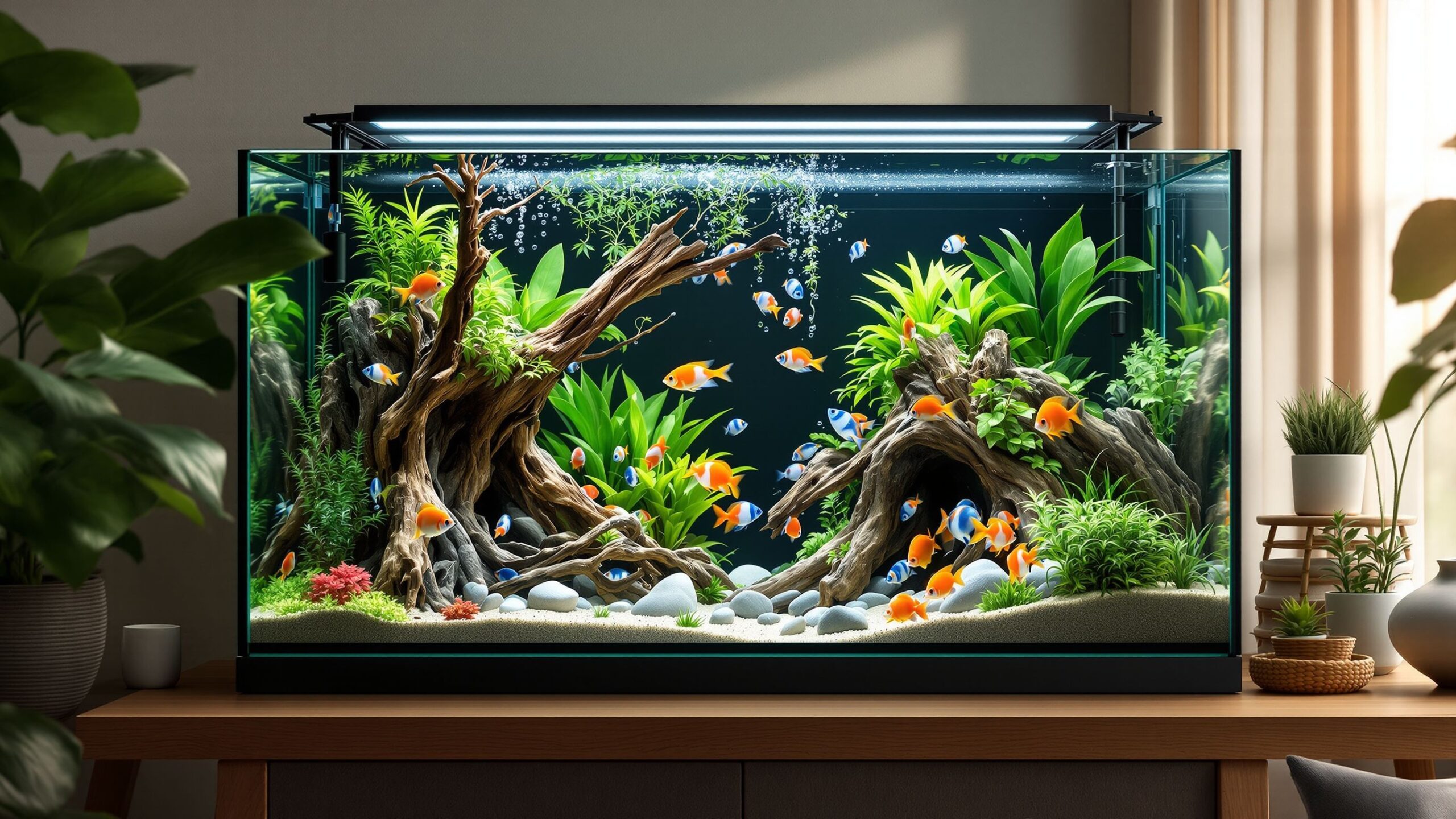
Live plants are one of the best beginner-friendly enrichment tools because they improve both fish health and the overall beauty of the tank.
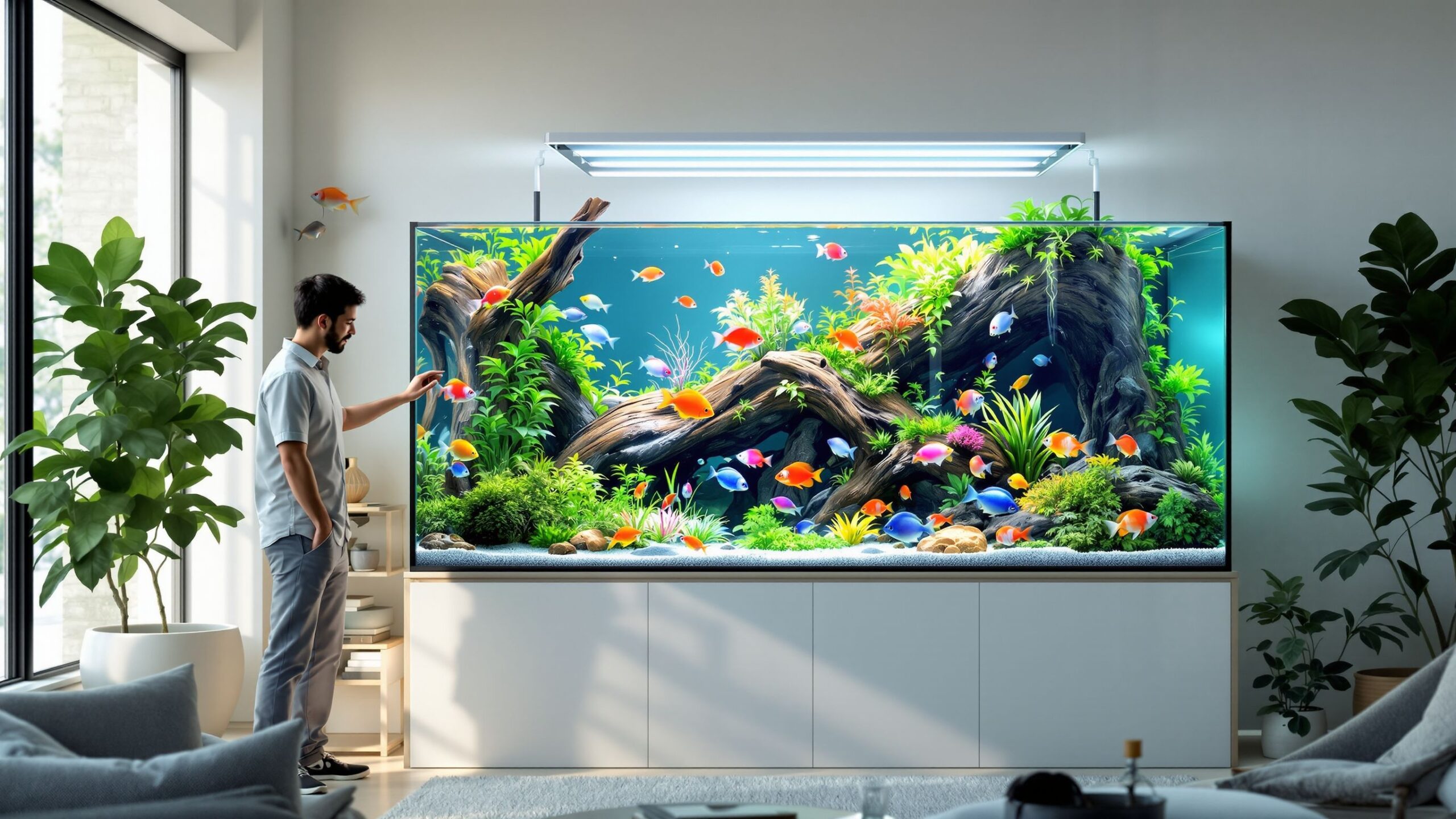
Fish use plants for hiding, resting, exploring, and even breeding. Tetras, bettas, rasboras, angelfish, gouramis, and shrimp all benefit from planted environments that feel closer to nature.
Floating plants are especially helpful because they reduce bright overhead light and create safer upper swimming zones for shy fish.
Live plants also help with water quality by absorbing excess nutrients and supporting a healthier aquarium balance.
Even beginner plants like Java fern, Anubias, and Amazon sword can transform how fish behave in a tank.
Add Caves and Hiding Spaces
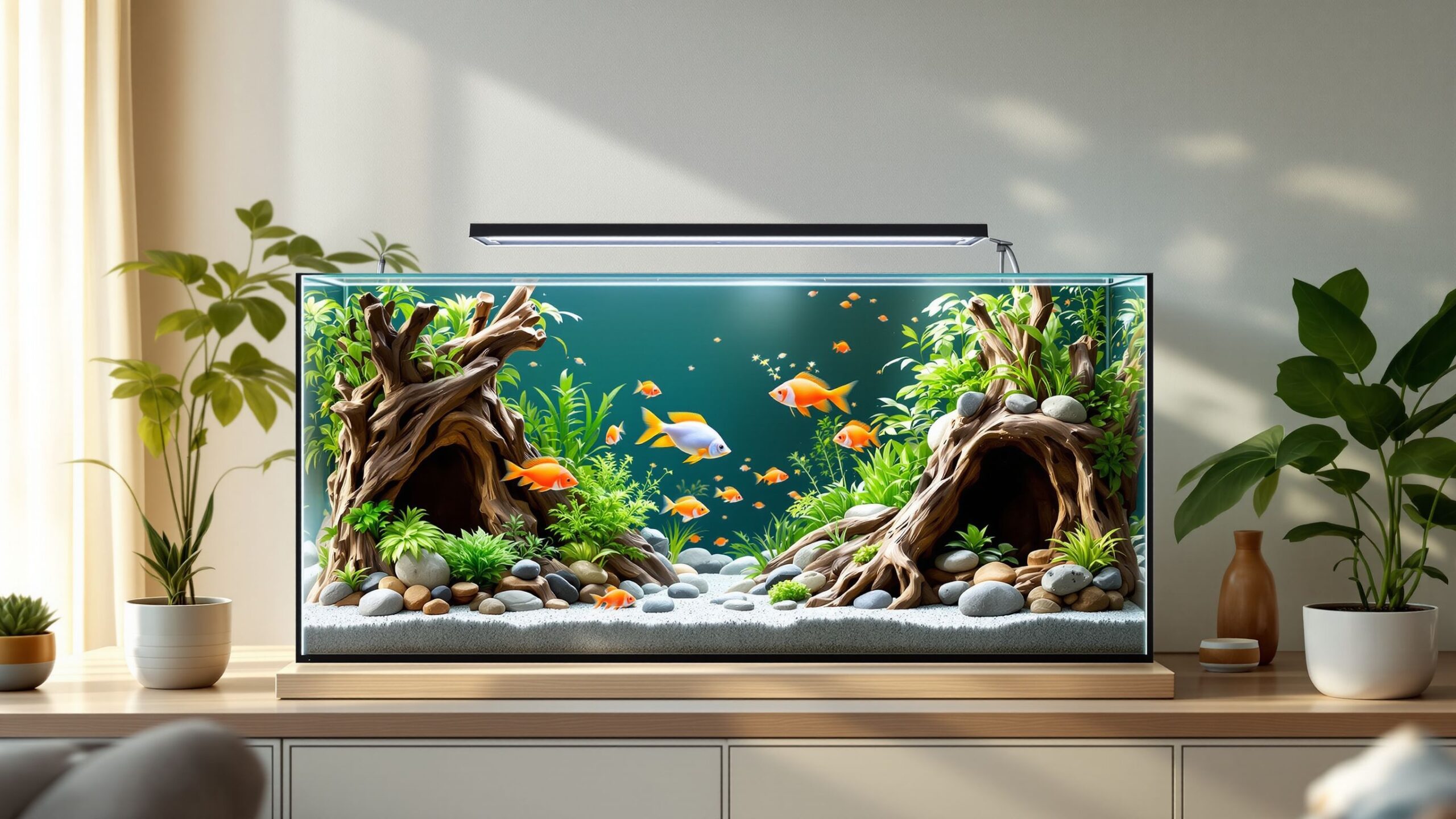
Fish need places where they can feel safe. Caves, driftwood tunnels, smooth rocks, and dense plant cover help reduce stress and encourage natural behavior.
Without hiding spots, many fish stay nervous and inactive because they feel exposed. Bettas, corydoras, loaches, catfish, and cichlids especially rely on shelter as part of daily life.
A fish that knows it has a safe place to retreat often becomes more confident and active in the open.
The goal is not clutter, but balance. A few well-placed hiding spaces make the tank feel secure without making it overcrowded.
Change Feeding Habits for Foraging
One of the easiest enrichment ideas is changing how you feed your fish. Instead of dropping food in the exact same place every day, encourage natural foraging behavior.
Scatter feeding, sinking pellets, algae clips, and occasional vegetable treats placed in different parts of the tank make fish search and interact more actively.
Bottom feeders like corydoras and plecos enjoy exploring for sinking foods, while goldfish and livebearers often love vegetables like zucchini, spinach, or peas.
This turns feeding into an activity rather than a simple routine.
Rearrange Small Parts of the Tank
Fish notice their surroundings more than many owners realize. Changing part of the aquarium layout gives them something new to explore without causing major stress.
Move a small piece of driftwood, shift a rock, or create a new plant cluster rather than redesigning the entire tank.
This works especially well for curious species like bettas, cichlids, and gouramis that pay attention to territory and hiding areas.
Too much change at once can feel threatening, so gentle adjustments work better than complete tank resets.
Use Gentle Water Flow Variety
Different fish enjoy different types of water movement. Creating varied flow zones gives fish more natural choices in how they swim and rest.
Danios and hillstream fish often enjoy stronger current, while bettas and fancy goldfish prefer softer calmer areas.
Filters, sponge filters, spray bars, and air stones can help create these zones without making the whole tank too strong.
Watching fish move through different flow areas often reveals more natural swimming patterns and healthier activity.
Keep Fish in Proper Social Groups
For many freshwater fish, the best enrichment comes from the right company. Schooling species like neon tetras, rasboras, danios, and corydoras behave more naturally when kept in groups.
A single schooling fish often becomes shy, stressed, or inactive, while a proper group encourages confidence and normal social behavior.
Peaceful community fish also benefit from compatible tank mates that reduce fear and create a stable social environment.
The wrong companions cause stress, but the right ones create daily enrichment through natural interaction.
Offer Safe Vegetable Treats
Many beginner fish owners forget that vegetables can be excellent enrichment for omnivorous and herbivorous species.
Goldfish, plecos, mollies, and many livebearers enjoy cucumber, zucchini, spinach, lettuce, and shelled peas when offered safely and in moderation.
Trying new food textures creates curiosity and encourages natural feeding behavior.
Vegetable treats should be fresh, clean, and removed if left uneaten for too long to protect water quality.
Keep Outside Interaction Calm
Fish are very aware of what happens outside the tank. Gentle daily interaction helps them feel secure, while loud movement and tapping on the glass create stress.
Sitting near the tank, feeding consistently, and moving calmly around the aquarium helps fish recognize routine and become more comfortable.
Many fish become noticeably more confident when they learn the outside environment is predictable and safe.
A calm room is often one of the best forms of enrichment.
Use Mirrors Only Occasionally
Some fish like bettas and certain cichlids react strongly to mirrors because they see their reflection as another fish.
Short supervised mirror sessions can create brief display behavior and healthy activity. Bettas may flare their fins and become more active for a few minutes.
This should only be used rarely and never for long periods because too much mirror time creates stress instead of enrichment.
It is a short activity, not a daily habit.
Avoid Overcrowding
A common beginner mistake is thinking more fish means a more exciting tank. In reality, overcrowding creates stress, poor water quality, and unhealthy competition.
A peaceful aquarium with open swimming space often creates happier fish than a crowded tank full of constant movement.
Fish need room to establish territory, rest, and behave naturally. Too many fish removes that comfort and creates tension instead of enrichment.
Good enrichment supports balance, not chaos.
Common Beginner Mistakes
One mistake is adding too much too quickly. Constant changes, new decorations, and major rearrangements can overwhelm fish instead of helping them.
Another mistake is using unsafe décor like sharp plastic plants or painted decorations that may injure fish or release harmful chemicals.
Ignoring species-specific needs also creates problems. What works for goldfish may stress bettas, and what helps cichlids may not suit peaceful tetras.
The best enrichment always starts with understanding the fish first.
Creating a Happier Beginner Aquarium
Fish tank enrichment does not need to be complicated. A planted corner, a small cave, a better feeding routine, or calmer outside interaction can completely change how fish experience their home.
Healthy fish show brighter colors, stronger appetite, more confident swimming, and better long-term wellbeing because their environment supports natural behavior.
For beginners, enrichment is one of the easiest ways to improve fish care without buying expensive equipment or making stressful changes.
A good aquarium should feel alive, balanced, and peaceful—not empty or chaotic.
Sometimes the best upgrade for your fish tank is not a bigger filter or brighter light. Sometimes it is simply giving your fish something new to explore and a safer place to feel at home.
Pet Product Reviews
Explore Duffy Street’s Pet Product Reviews! Sniff out the top-rated toys, treats, gear, and gadgets for your pets with our fun, easy-to-read comparisons. We’ve done the digging so you can find the perfect products for your pet friends!