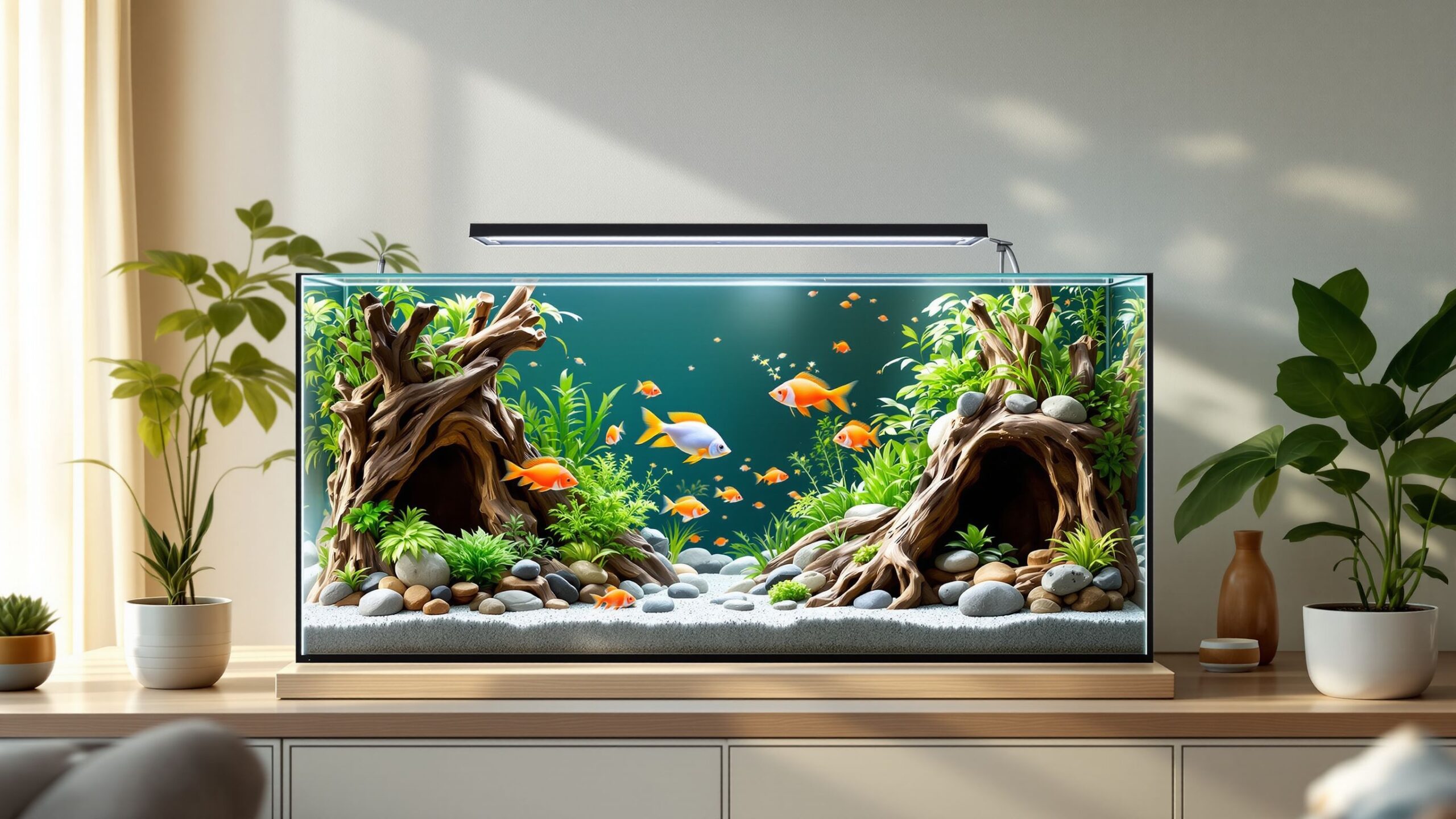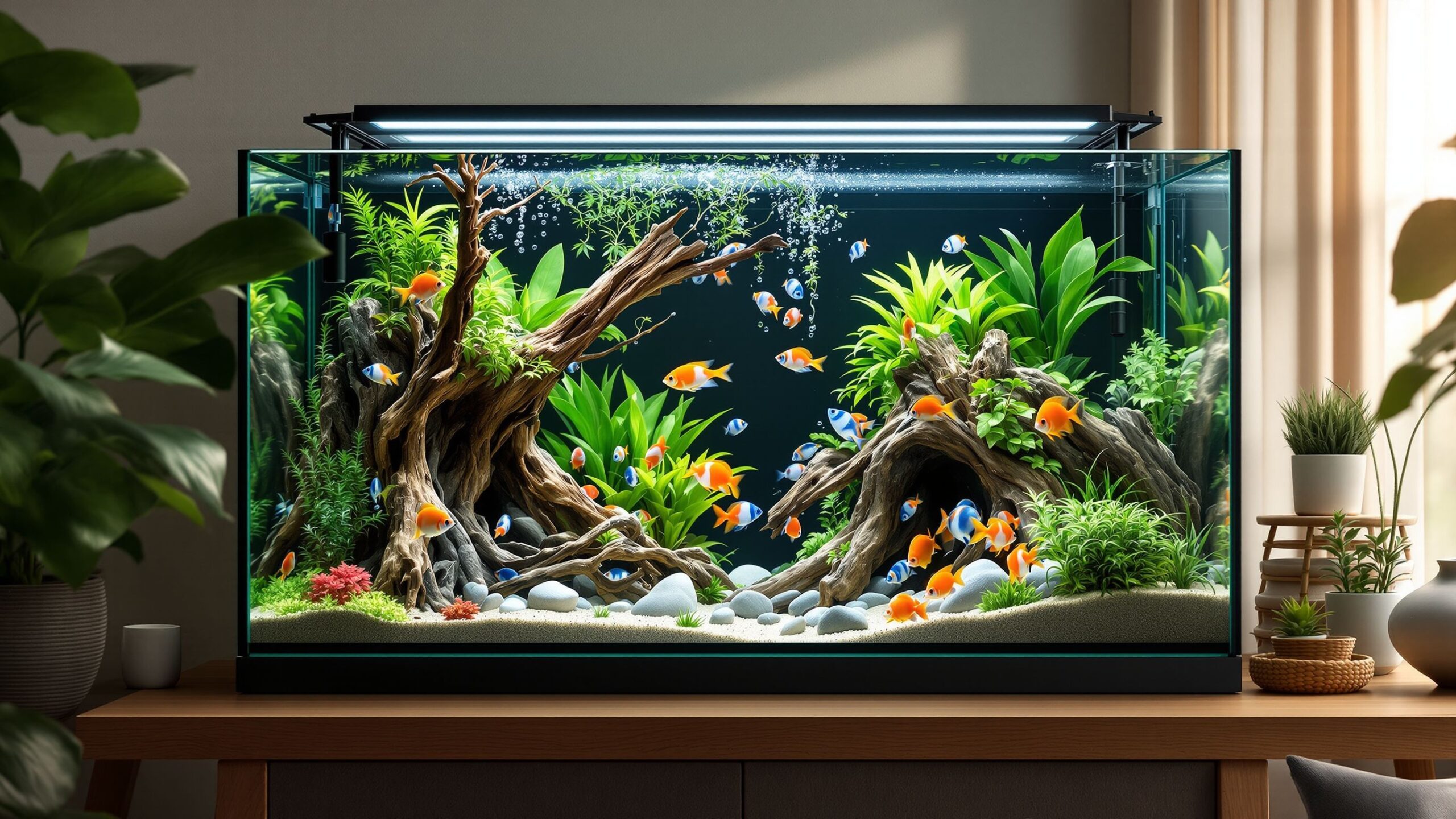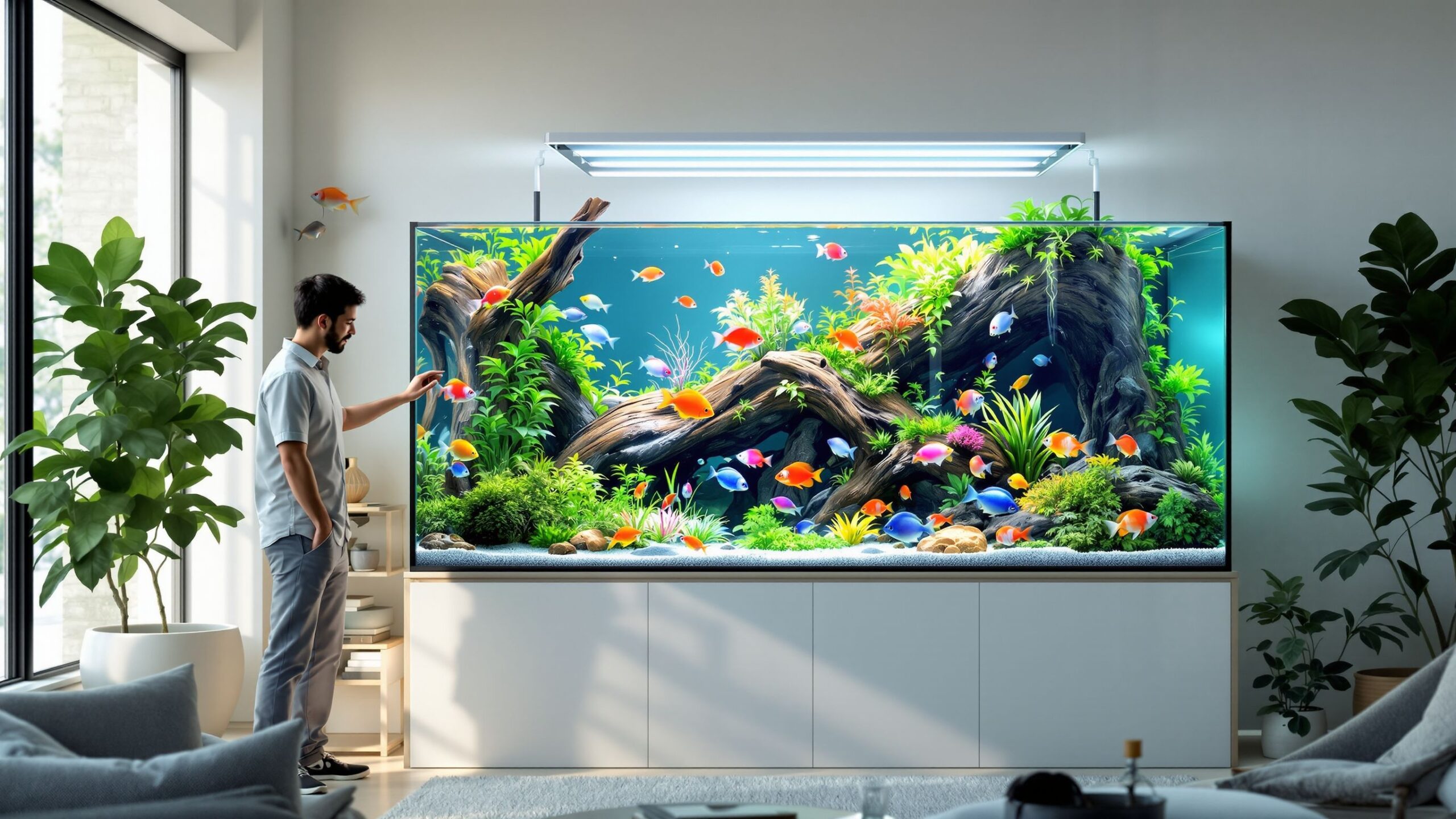
Many people think fish only need food, clean water, and a filter to live a healthy life. While those basics are essential, freshwater fish also benefit from enrichment—activities and environments that keep them mentally stimulated, physically active, and naturally engaged.
In the wild, fish spend their time exploring, hunting for food, hiding from predators, defending territory, and interacting with changing environments. A plain glass tank with no stimulation can feel empty and stressful compared to those natural conditions.
Fish tank enrichment does not mean teaching fish tricks like a dog or buying complicated equipment. It means creating opportunities for natural behavior—searching, exploring, swimming, hiding, and interacting with their surroundings in healthy ways.
Active, enriched fish often show brighter colors, stronger appetite, better confidence, and less stress-related behavior. Bored or stressed fish may become aggressive, hide constantly, or appear dull and inactive.
The goal is simple: create an aquarium where fish do more than survive. A good tank should help them feel secure, curious, and naturally active every day.
Here are ten of the best fish tank activities to keep freshwater fish happy and engaged.
A: Use live plants, safe hiding spots, varied feeding methods, proper schooling groups, and occasional gentle décor changes to encourage natural behavior.
A: Fish can show stress from poor environments, and enrichment helps reduce repetitive behaviors and encourages healthier activity.
A: Only very briefly for certain species like bettas; constant mirror exposure can create stress and aggression instead of enrichment.
A: Hardy plants like anubias, java fern, floating plants, and mosses create excellent shelter and exploration areas.
A: Yes, but small careful changes are better than constant major rearrangements that may stress fish.
A: Yes. Proper group sizes help schooling species feel safe, active, and able to show natural social behavior.
A: Corydoras, loaches, and some cichlids often enjoy soft substrate areas for natural searching and digging.
A: Yes. Target feeding, varied locations, and safe food puzzles can make feeding more stimulating and natural.
A: Avoid tapping the glass, chasing fish, constant bright lights, overcrowding, or anything that creates fear and stress.
A: Healthy fish usually show active exploration, normal feeding, calm social behavior, strong color, and confidence in their environment.
1. Rearranging Decorations Occasionally
One of the easiest enrichment activities is occasionally changing part of the tank layout. Moving driftwood, rocks, caves, or plants creates a new environment for fish to explore.
This works especially well for curious species like cichlids, bettas, gouramis, and many community fish that pay close attention to territory and hiding spaces.
The change should be small and thoughtful, not a full stressful reset every week. The goal is new exploration, not constant disruption.
A fresh layout gives fish new paths to investigate and helps prevent the tank from becoming too predictable.
2. Adding Live Plants
Live plants create one of the best forms of natural enrichment because they make the tank feel alive and constantly changing.
Fish swim through leaves, rest among stems, and use plants for shelter and security. Species like tetras, rasboras, bettas, and shrimp especially benefit from planted environments.
Plants also improve water quality and create softer, more natural movement in the tank.
Floating plants add extra comfort for shy fish by reducing bright overhead light and creating safer spaces near the surface.
3. Feeding Through Foraging
Instead of always dropping food in the same place, try encouraging natural foraging behavior. Scatter feeding, algae clips, or placing food in different parts of the tank makes fish search and interact more actively.
Bottom feeders like corydoras enjoy searching for sinking foods, while herbivores like plecos and goldfish benefit from vegetables or algae wafers placed around the tank.
This mimics wild feeding patterns and turns mealtime into activity rather than routine waiting.
4. Creating Caves and Hiding Spaces
Hiding spaces are not just for shy fish—they are part of healthy behavior for many freshwater species.
Caves, driftwood tunnels, rock formations, and plant cover help fish feel secure and encourage natural exploration. Fish that feel safe often become more active in open areas because they know shelter is nearby.
Bettas, cichlids, loaches, catfish, and many community fish use hiding spots regularly.
A tank without shelter often creates stress, even if the fish appear calm on the surface.
5. Using Gentle Water Flow Variety
Different fish enjoy different water movement, and changing flow patterns can create healthy stimulation.
Some species like danios and hillstream fish enjoy stronger currents, while bettas and fancy goldfish prefer gentler movement.
Using filters, spray bars, or air stones to create varied flow zones gives fish choices in how they move and rest.
Watching fish interact with current often reveals natural swimming behaviors that make the tank more active and interesting.
6. Mirror Time for Short Periods
Some species like bettas and certain cichlids respond strongly to mirrors because they see their reflection as another fish.
Short supervised mirror sessions can create brief enrichment by encouraging display behavior and activity. Bettas may flare their fins and become more active for a few minutes.
This should always be limited and carefully controlled. Too much mirror exposure creates stress instead of healthy stimulation.
Used occasionally and briefly, it can be a simple enrichment tool for the right species.
7. Introducing Floating Toys or Safe Objects
Some fish enjoy investigating safe floating objects like ping pong balls for larger goldfish or floating plant rings for curious species.
Goldfish are especially known for interacting with floating enrichment objects and may push them around the tank with noticeable curiosity.
Only aquarium-safe objects should ever be used, and anything sharp, painted, or chemically treated should be avoided completely.
The goal is safe curiosity, not clutter.
8. Tank Mates That Encourage Natural Behavior
Compatible tank mates can create enrichment by encouraging schooling, social interaction, and confidence.
Schooling fish like neon tetras or rasboras behave more naturally when kept in proper groups rather than alone. Corydoras also show stronger activity when kept with their own kind.
Some shy fish become bolder when they see peaceful active fish nearby, creating a healthier overall tank environment.
The key is compatibility. The wrong tank mates create stress, while the right ones improve natural behavior.
9. Background Changes and Outside Interaction
Fish notice movement outside the tank more than many people realize. A calm environment helps, but occasional safe interaction can also create stimulation.
Sitting near the tank, gentle movement, and consistent feeding presence help fish recognize routine and become more confident.
Changing the tank background or improving outside visual balance can also reduce stress and create new visual interest.
The goal is calm interaction, not tapping on the glass or loud constant disturbance.
10. Seasonal or Natural Feeding Variety
Offering occasional safe vegetables like cucumber, zucchini, spinach, or shelled peas creates both enrichment and nutritional variety for many species.
Goldfish, plecos, mollies, and other omnivores often enjoy exploring new food textures and feeding styles.
Frozen foods like bloodworms, brine shrimp, or daphnia can also trigger stronger hunting behavior than dry pellets alone.
Variety makes feeding feel more natural and helps prevent boredom around routine meals.
Why Fish Enrichment Matters
Fish are often underestimated as simple pets, but they respond strongly to their environment. A tank that encourages movement, exploration, and comfort creates healthier long-term behavior.
Enrichment helps reduce boredom-related aggression, stress hiding, and dull inactive behavior. It also improves observation because active fish are easier to monitor for health changes.
A happy fish often shows brighter color, stronger appetite, and more confident swimming patterns.
The aquarium becomes more enjoyable for the owner too because the fish behave more naturally and visibly.
Common Mistakes With Fish Enrichment
One mistake is adding too much change too quickly. Constant rearranging or excessive stimulation can create stress instead of improvement.
Another mistake is using unsafe decorations or objects that can injure fish or release harmful chemicals.
Some owners mistake overcrowding for enrichment. More fish does not mean more stimulation—it often means more stress.
Ignoring species-specific behavior is also a problem. What works for goldfish may be terrible for bettas, and what helps cichlids may stress peaceful tetras.
Good enrichment always matches the fish, not just the tank.
Creating a Happier Aquarium
The best fish tank activities are often simple. A planted corner, a new cave, a floating leaf, or a different feeding pattern can completely change how fish experience their environment.
Freshwater fish do not need constant entertainment, but they do benefit from thoughtful spaces that support natural behavior and curiosity.
A healthy aquarium should feel alive, not empty. It should give fish reasons to explore, rest, search, and interact every day.
Keeping freshwater fish happy is not about adding more things—it is about creating the right kind of environment.
Sometimes the best upgrade for your aquarium is not a bigger filter or brighter light. Sometimes it is simply giving your fish something new to discover.
Pet Product Reviews
Explore Duffy Street’s Pet Product Reviews! Sniff out the top-rated toys, treats, gear, and gadgets for your pets with our fun, easy-to-read comparisons. We’ve done the digging so you can find the perfect products for your pet friends!