Owning a saltwater aquarium is one of the most rewarding parts of the fishkeeping hobby, but it also requires consistency. Unlike freshwater tanks, marine systems depend heavily on stability, and small daily habits often make the biggest difference in long-term success. A healthy reef tank is rarely built through occasional major cleanups. It is built through simple routines repeated every day.
Many beginners focus too much on buying equipment and not enough on observation. The truth is that your daily routine matters more than the most expensive light or filtration upgrade. Feeding carefully, checking fish behavior, monitoring equipment, and noticing small changes early can prevent serious problems before they start.
Saltwater fish like clownfish, tangs, gobies, wrasses, and angelfish rely on stable water quality, low stress, and predictable care. Corals, invertebrates, and beneficial bacteria depend on that same consistency. Missing small warning signs for even a few days can quickly lead to algae outbreaks, disease, aggression, or water chemistry problems.
A strong daily routine does not need to be complicated. It simply needs to be reliable. Building these habits makes marine fishkeeping less stressful and creates a healthier environment for every living thing in the tank.
A: Watch fish behavior, feeding, equipment function, temperature, salinity stability, and any unusual signs like hiding or heavy breathing.
A: Most fish should be fed daily, but the amount and frequency depend on species, tankmates, and system goals.
A: Use fresh purified water because evaporation removes water, not salt, and adding saltwater can raise salinity too much.
A: Light daily cleaning is often easier and safer than letting algae become a heavy problem.
A: Check for aggression, illness, water problems, and recent changes immediately because appetite loss is an important warning sign.
A: Not always, but daily observation plus regular scheduled testing gives the best balance for most tanks.
A: Yes, stable water, careful feeding, and early observation often prevent stress that leads to disease problems.
A: Overfeeding is very common and can quickly lead to nutrient problems, algae, and poor water quality.
A: Yes, watching extension, color, and response helps owners notice lighting, flow, or chemistry issues early.
A: Even 10 to 15 focused minutes can make a major difference when done consistently every day.
Start with a Visual Tank Check
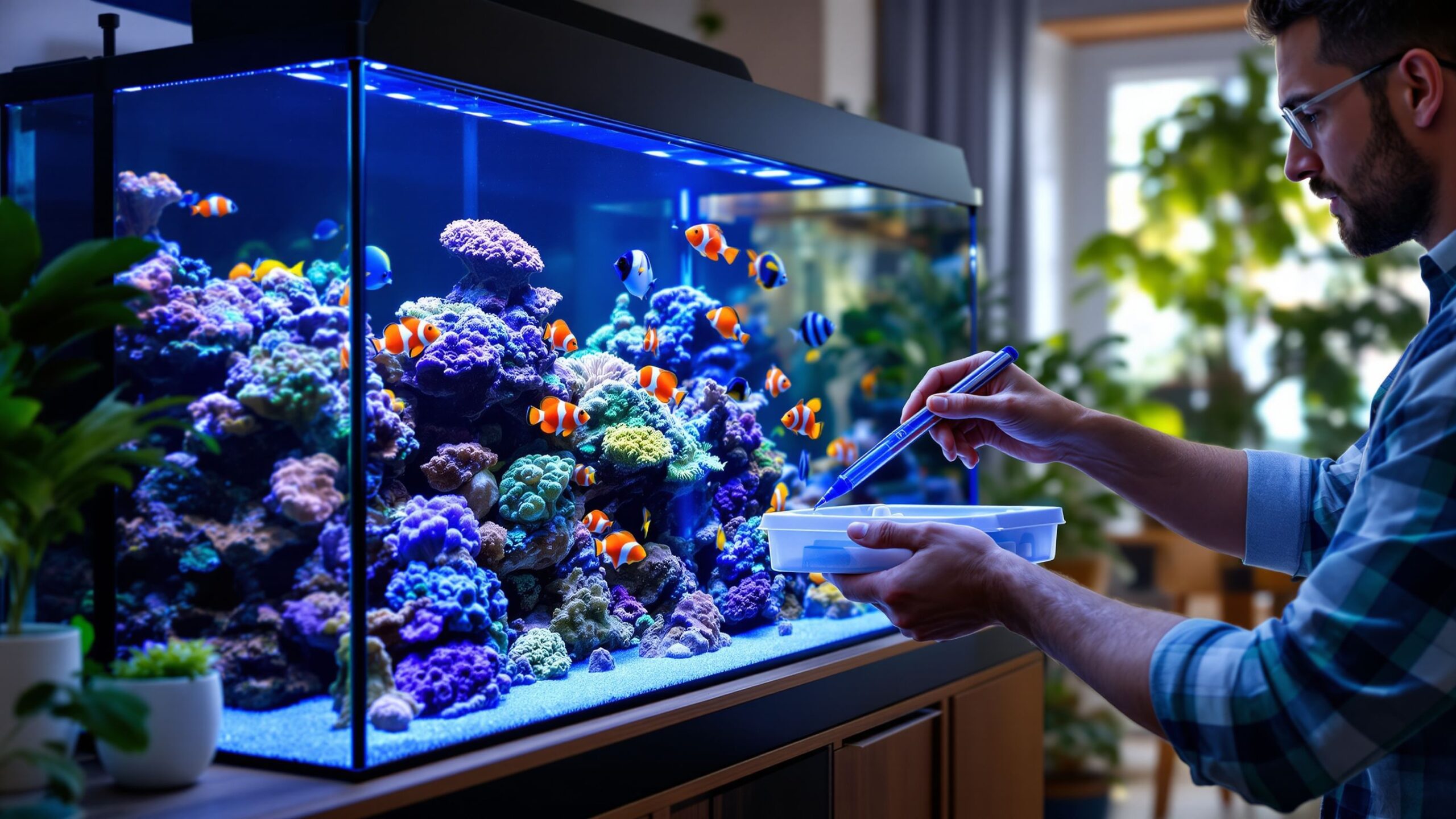
The first step each day should be observation. Before touching anything, spend a few minutes simply watching the tank. Fish behavior often tells you more than test kits ever will.
Look for normal swimming patterns, healthy breathing, and regular activity. Fish should not be gasping at the surface, hiding unusually, rubbing against rocks, or showing sudden aggression toward tank mates. These signs often reveal problems before water tests do.
Check corals as well. Closed polyps, unusual slime, tissue recession, or sudden color changes may signal stress, lighting issues, or water instability. Snails, shrimp, and other invertebrates also help indicate overall tank health.
Observation is the most powerful daily habit because problems caught early are always easier to fix.
Feed Carefully, Not Excessively
Feeding should be controlled and intentional, not automatic overfeeding. One of the fastest ways to damage a saltwater aquarium is adding more food than the system can handle.
Most fish do better with small consistent meals rather than heavy feeding. Offer only what they can eat within a few minutes. Uneaten food quickly becomes waste, raising nutrients and creating algae problems.
Different species have different needs. Tangs often benefit from algae sheets on clips, while wrasses and clownfish may prefer frozen mysis shrimp, pellets, or enriched brine shrimp. Variety supports both health and enrichment.
Watch each fish during feeding. Appetite changes are often one of the first signs of illness or stress, and daily feeding gives the perfect chance to notice them.
Check Temperature and Salinity
Temperature and salinity are two of the most important stability factors in a saltwater aquarium. Small daily checks help prevent major swings that stress fish and corals.
Heaters can fail without warning, and evaporation changes salinity faster than many beginners expect. A quick glance at temperature readings and top-off levels protects the entire system.
If you use an auto top-off system, confirm it is working properly rather than assuming it always is. A failed top-off system can create dangerous salinity shifts surprisingly fast.
Stable numbers matter more than chasing perfect numbers. Consistency keeps marine fish healthy.
Inspect Equipment Every Day
A reef tank depends on equipment working correctly. Pumps, protein skimmers, wavemakers, return systems, heaters, and lights all support life every hour of the day.
Daily checks should include making sure water flow looks normal, skimmers are functioning, and unusual noises are not coming from pumps or overflow systems. Weak flow or silent equipment often signals a problem before it becomes an emergency.
Look for salt creep, leaks, loose tubing, or blocked filter socks. Small maintenance issues become expensive problems when ignored too long.
Five minutes of equipment awareness can prevent major livestock losses later.
Remove Small Problems Immediately
One of the best habits in reef keeping is fixing small issues before they become large ones. A little algae on the glass, a clogged filter sock, or a loose frag should be handled right away rather than postponed.
Waiting often turns simple tasks into stressful repairs. Small algae becomes a major outbreak. One dying coral affects nearby livestock. Uneaten food trapped behind rockwork becomes a nutrient problem.
Daily care works best when maintenance feels light and manageable instead of building into overwhelming weekend cleanups.
Quick action protects both the system and your own motivation to stay consistent.
Watch Fish Behavior Around Territory
Territory matters in marine aquariums, especially with clownfish, tangs, dottybacks, angelfish, and wrasses. Daily observation should include watching how fish interact with each other.
Short playful chasing is normal, but repeated bullying, fin damage, or a fish hiding constantly often means aggression is becoming unhealthy. Rearranging rockwork, changing feeding strategy, or adjusting stocking plans may be necessary before stress becomes serious.
Fish behavior changes often happen gradually, and daily observation helps catch them before injuries happen.
Healthy tanks feel balanced, not tense.
Check Water Clarity and Surface Movement
Cloudy water, weak surface movement, or unusual film on the water surface often signals early trouble. These signs may point to overfeeding, poor oxygen exchange, weak filtration, or decaying organic matter.
The tank should look active and clear, with strong but balanced water movement and visible surface agitation supporting oxygen levels.
Fish breathing heavily near the surface is a warning sign that should never be ignored. Strong circulation is not only about appearance. It protects every fish in the system.
Daily visual checks make these subtle problems easier to catch before they become dangerous.
Keep Hands Out When Possible
Many beginners overmanage their reef tanks by constantly moving rockwork, adjusting coral placement, or making unnecessary corrections. Daily care should focus on observation first, not constant interference.
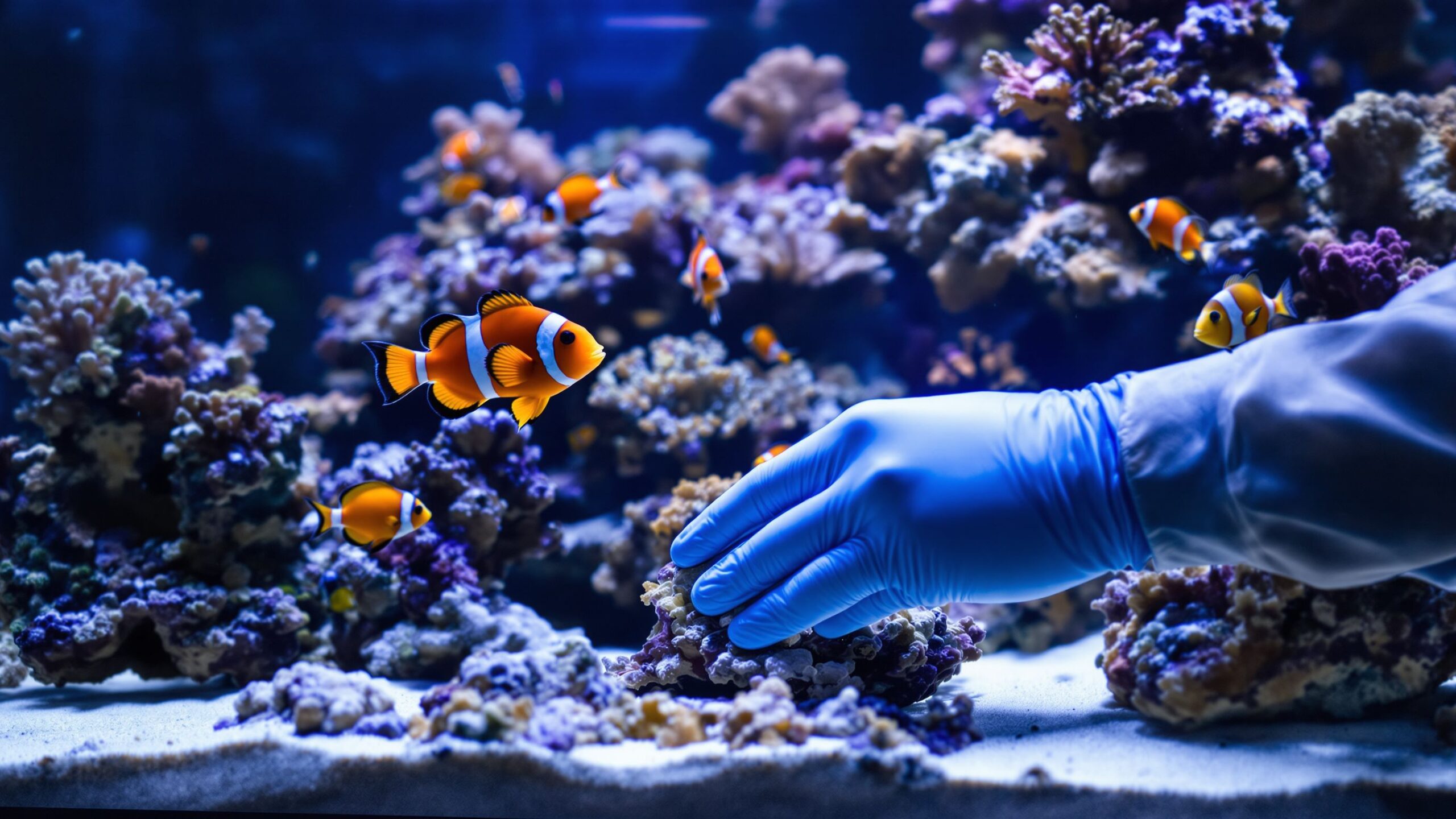
Every hand placed in the tank changes the environment. Fish become stressed, corals close, and stability decreases when the system is disturbed too often.
Only adjust what truly needs attention. Good reef keeping is often about patience rather than constant action.
Sometimes the best daily care choice is leaving the tank alone and letting stability do the work.
Maintain a Simple Log
A short daily note can make a huge difference over time. Recording feeding behavior, coral changes, equipment concerns, and small water observations helps identify patterns that are easy to miss day by day.
If a fish becomes sick later, knowing when appetite first changed can be valuable. If algae suddenly increases, earlier notes about feeding or filtration help explain why.
A log does not need to be complicated. Even quick notes on a phone can help build better decision-making.
The best aquarists often rely on observation records as much as test results.
Build Weekly and Monthly Tasks Around Daily Habits
Daily routines work best when they support larger weekly and monthly maintenance. Water changes, deep testing, skimmer cleaning, and coral trimming become easier when the tank is already stable from daily attention.
Instead of emergency fixes, maintenance becomes predictable. This reduces stress for both the owner and the livestock.
Daily observation also helps decide what weekly tasks actually matter most instead of cleaning blindly.
Strong daily habits make every other part of reef keeping easier.
Consistency Creates Healthy Fish
The healthiest saltwater tanks are usually not the most expensive or the most complicated. They are the ones cared for consistently every single day.
Fish thrive when feeding is predictable, water stays stable, and owners notice small changes before they become major problems. Corals respond the same way. Stability builds confidence in both the tank and the person caring for it.
Daily routines create trust. Fish recognize feeding times, settle into territories, and show more natural behavior when their environment feels safe and reliable.
This consistency is what turns a tank from a fragile setup into a true living ecosystem.
The Best Routine Is the One You Can Maintain
A perfect routine on paper means nothing if it cannot be followed consistently. The best daily care routine is one that fits real life and can be maintained without burnout.
Simple observation, careful feeding, equipment checks, and fast response to small problems are more powerful than complicated plans that never last.
Saltwater fishkeeping rewards patience and discipline far more than speed or expensive upgrades. Success comes from doing small things well, over and over again.
For saltwater fish owners, daily care is not just maintenance. It is the foundation of every healthy reef tank and every thriving marine fish that calls it home.
Pet Product Reviews
Explore Duffy Street’s Pet Product Reviews! Sniff out the top-rated toys, treats, gear, and gadgets for your pets with our fun, easy-to-read comparisons. We’ve done the digging so you can find the perfect products for your pet friends!