Few things get a guinea pig owner’s attention faster than an untouched food bowl. Guinea pigs have a well-earned reputation for loving food. Many learn the sound of the refrigerator opening, recognize the rustle of a vegetable bag from another room, and begin wheeking enthusiastically when they believe dinner is coming. Hay is normally an ongoing part of their day, with healthy guinea pigs returning to it repeatedly between naps, exploration, and social activities. When that enthusiasm suddenly disappears, it deserves attention. A guinea pig that is not eating may be experiencing something as relatively simple as stress or a sudden dislike of unfamiliar food, but appetite loss can also be associated with dental disease, gastrointestinal problems, pain, infection, urinary disease, vitamin C deficiency, respiratory illness, or another medical condition. Unlike some pets that may occasionally skip a meal without significant consequences, guinea pigs depend on regular food intake and dietary fiber to support normal digestive function. That makes appetite changes particularly important. The goal is not to panic every time your guinea pig leaves behind a piece of lettuce. Instead, owners should learn how to recognize meaningful changes, identify accompanying warning signs, and understand when professional veterinary care is necessary.
A: Yes. A significant reduction or complete loss of appetite can become serious because guinea pigs rely on frequent fiber intake to keep their digestive system functioning normally.
A: Dental disease is one possible cause. Your guinea pig may want to eat but have difficulty chewing comfortably.
A: Selective eating can sometimes occur with dental discomfort or dietary preferences. Because hay is essential to guinea pig health, a persistent refusal should be discussed with a veterinarian.
A: Stress can reduce appetite, but owners should not automatically assume stress is the cause because illness and pain can produce similar behavior.
A: Reduced fecal output often accompanies reduced food intake and can indicate that gastrointestinal movement is slowing.
A: Yes. An accurate weight can provide useful information, especially when compared with your guinea pig's normal baseline.
A: Familiar foods may help you determine whether appetite is reduced, but treats should not replace veterinary evaluation when a guinea pig is refusing normal food.
A: Assisted feeding is sometimes recommended, but contact a veterinarian for guidance because the underlying cause matters and feeding technique must be safe.
A: Contact an exotic-animal veterinarian promptly when your guinea pig significantly reduces or stops eating, especially if there are fewer droppings, weight loss, pain, bloating, breathing changes, diarrhea, weakness, or other symptoms.
A: Severe breathing difficulty, collapse, extreme weakness, significant bloating, severe diarrhea, neurological symptoms, major bleeding, or rapidly worsening illness require urgent veterinary care.
Why Eating Is So Important for Guinea Pigs
Guinea pigs are herbivores with digestive systems designed around frequent consumption of fibrous plant material. High-quality grass hay plays an especially important role because it provides fiber while encouraging the extensive chewing that helps maintain normal dental wear. A guinea pig’s gastrointestinal system also contains a complex population of microorganisms involved in digestion. When food consumption drops substantially, normal digestive activity can become disrupted. This is one reason appetite loss in guinea pigs can become more concerning than owners initially expect. Not eating can be both a symptom of an underlying illness and a factor that contributes to additional digestive problems. A guinea pig may stop eating because something hurts, and the reduction in food intake can then contribute to slowing gastrointestinal function, discomfort, and further reluctance to eat. Recognizing the original problem and interrupting this cycle is one reason veterinary evaluation can be so important.
How Can You Tell If Your Guinea Pig Is Really Eating Less?
Appetite loss is not always as obvious as an untouched bowl. Guinea pigs have several food sources in a typical enclosure, including hay, pellets, vegetables, and sometimes approved treats. A guinea pig may continue eating favorite vegetables while dramatically reducing hay consumption, making it appear that everything is normal. Pay attention to eating behavior itself. Does your guinea pig run toward food but hesitate once it arrives? Does it pick up a piece of food and then drop it? Is chewing unusually slow? Does food repeatedly fall from the mouth? Has your guinea pig stopped eating hay but continues accepting softer foods? These patterns can be especially important because they may suggest that the animal wants to eat but is physically having difficulty doing so. Droppings provide another clue. A reduction in food intake may eventually be reflected by fewer or smaller stools. Regularly weighing your guinea pig can also help identify gradual appetite problems that are difficult to notice simply by watching the food bowl.
Dental Problems Are a Major Cause of Eating Difficulties
Dental disease is one of the most important possibilities to consider when a guinea pig stops eating normally. Guinea pig teeth have specialized growth and wear requirements, and problems with alignment or normal wear can lead to overgrowth, sharp areas, pain, and difficulty chewing. The challenge for owners is that the most obvious teeth are not necessarily where the problem is located. A guinea pig’s front incisors may look relatively normal while significant abnormalities are occurring farther back in the mouth. Warning signs can include dropping food, chewing slowly, preferring softer foods, avoiding hay, drooling, developing a wet chin, losing weight, or approaching food enthusiastically but struggling to eat it. Some guinea pigs may appear hungry because they still show interest when food arrives. They simply cannot comfortably chew or swallow enough of it. Dental disease requires proper veterinary evaluation because adequately examining the back teeth can be difficult in an awake guinea pig, and diagnostic imaging may sometimes be necessary.
Gastrointestinal Stasis Can Become Serious
Gastrointestinal stasis, often shortened to GI stasis, refers to a significant slowing of normal digestive movement. Appetite loss can be both associated with and contribute to this problem. A guinea pig experiencing gastrointestinal trouble may eat less, become quiet, produce fewer or smaller droppings, sit hunched, develop abdominal discomfort, or appear bloated. The digestive system depends heavily on appropriate fiber intake and a healthy balance of intestinal microorganisms. When normal digestion becomes disrupted, gas and discomfort can develop, potentially making the guinea pig even less interested in eating. This creates a dangerous cycle: discomfort decreases appetite, reduced eating further disrupts digestion, and worsening digestive problems cause additional discomfort. Because gastrointestinal disease can progress rapidly in guinea pigs, substantial appetite loss accompanied by reduced fecal output, weakness, bloating, diarrhea, or obvious pain should receive prompt veterinary attention.
Pain Anywhere in the Body Can Reduce Appetite
The problem does not necessarily have to originate in the mouth or digestive tract. Pain anywhere in the body can cause a guinea pig to lose interest in food. Arthritis, injuries, bladder stones, urinary tract problems, abdominal discomfort, reproductive disease, foot problems, and other painful conditions may all interfere with normal eating behavior. This is why observing your guinea pig’s entire body and behavior is important. A guinea pig that is not eating and also sits hunched, squeals when urinating, limps, resists movement, reacts unusually when touched, or hides continuously may be experiencing pain. Guinea pigs do not always vocalize when something hurts. Sometimes refusing food or becoming unusually still is one of the strongest clues an owner receives.
Urinary Problems Can Make a Guinea Pig Stop Eating
Guinea pigs can develop urinary tract problems, including bladder stones and other painful conditions. A guinea pig experiencing urinary discomfort may eat less because pain suppresses its normal appetite. Watch for straining to urinate, squeaking during urination, frequent attempts to urinate, producing small amounts of urine, blood in the urine, a wet or stained rear end, or sitting in an unusually hunched posture. Complete inability to urinate can indicate an obstruction and requires urgent veterinary attention. Owners sometimes focus entirely on the digestive system when a guinea pig stops eating, but appetite loss is a general sign that can accompany illnesses elsewhere in the body. Looking for changes in urination alongside changes in eating can provide your veterinarian with valuable information.
Respiratory Illness Can Affect Appetite
Respiratory disease is another possible reason a guinea pig may stop eating. A guinea pig that feels weak, congested, feverish, or has difficulty breathing may lose interest in food. Warning signs can include sneezing accompanied by other symptoms, nasal discharge, eye discharge, noisy breathing, rapid breathing, lethargy, or difficulty breathing. Respiratory infections can become serious in guinea pigs, and obvious breathing difficulty should not be managed by simply waiting to see whether appetite returns. Open-mouth breathing is particularly concerning and requires immediate veterinary evaluation. A guinea pig that is simultaneously refusing food and struggling to breathe needs professional care rather than attempts to encourage eating at home.
Vitamin C Deficiency Can Contribute to Poor Appetite
Unlike many animals, guinea pigs cannot produce their own vitamin C and therefore need an adequate dietary source. Vitamin C deficiency, historically known as scurvy, can contribute to numerous health problems and may cause reduced appetite or difficulty eating. A deficient guinea pig may also develop weakness, weight loss, joint discomfort, a rough coat, lameness, dental abnormalities, or other symptoms. Appropriate guinea pig nutrition generally includes unlimited suitable grass hay, guinea pig-specific fortified pellets in appropriate amounts, and fresh vegetables, including suitable sources of vitamin C. Vitamin C in stored foods can degrade over time, making proper storage and fresh food important. Owners concerned about a possible deficiency should discuss diet and supplementation with a veterinarian rather than attempting to correct a sick guinea pig’s condition with random doses of supplements.
Sudden Diet Changes Can Cause Food Refusal
Not every case of reduced appetite begins with disease. Guinea pigs can develop strong food preferences and may be suspicious of unfamiliar foods. Suddenly changing pellet brands, hay varieties, or other components of the diet can cause some animals to hesitate or refuse the replacement. This is one reason dietary changes should generally be made gradually when possible. However, owners should be careful not to automatically blame a diet change for complete appetite loss. If your guinea pig refuses not only the new pellets but also familiar hay, favorite vegetables, and foods it normally loves, a health problem becomes more concerning. The same applies when food refusal is accompanied by reduced droppings, weight loss, lethargy, drooling, breathing abnormalities, or signs of pain.
Stress Can Make a Guinea Pig Eat Less
Guinea pigs are sensitive animals, and stressful events can temporarily affect eating behavior. Moving to a new home, traveling, introducing another animal, changing enclosures, loud construction, unfamiliar people, sudden environmental changes, or losing a bonded companion can all cause stress. A newly adopted guinea pig may initially hide and wait until the room becomes quiet before eating. Stress-related appetite changes should still be monitored carefully because guinea pigs need to continue consuming food. Providing secure hiding areas, maintaining a predictable routine, keeping familiar foods available, and minimizing unnecessary handling can help an anxious guinea pig settle. Persistent refusal to eat should not simply be attributed to nervousness, particularly when other symptoms appear.
Heat and Environmental Problems Can Affect Eating
Environmental conditions can influence appetite as well. Excessive heat can make guinea pigs lethargic and may reduce normal food consumption. Poor ventilation, extreme temperatures, dirty bedding, overcrowding, inadequate access to water, or other housing problems can contribute to stress and illness. Make sure your guinea pig’s water bottle is actually functioning rather than simply appearing full. Bottle mechanisms can occasionally become blocked or leak, leaving an animal without reliable access to water. Dehydration can worsen an already developing health problem. A comfortable, clean, appropriately ventilated environment with constant access to fresh water and hay supports normal eating and makes behavioral changes easier to recognize.
Watch the Droppings When Appetite Changes
The litter area can provide some of the most useful clues about what is happening inside your guinea pig’s digestive system. Healthy guinea pigs normally produce numerous formed droppings throughout the day. If your guinea pig begins eating less, you may notice that droppings become smaller, fewer, unusually shaped, softer, or absent. A substantial decrease in fecal production combined with appetite loss can indicate that digestive activity has slowed and deserves prompt attention. Diarrhea is also concerning, particularly when accompanied by weakness, dehydration, a dirty rear end, or refusal to eat. Cleaning the enclosure regularly makes monitoring easier because you know which droppings are fresh. For guinea pig owners, poop inspection may not be glamorous, but it is one of the simplest ways to notice an important health change.
Weigh Your Guinea Pig Regularly
Weight monitoring is extremely useful because guinea pigs can lose weight without looking dramatically thinner. Their compact bodies and thick coats can conceal changes in body condition. A digital kitchen scale capable of accurately measuring your guinea pig can help establish a normal baseline. Record the weight so you can recognize trends rather than relying on memory. A guinea pig may continue nibbling vegetables while consuming significantly less hay and gradually losing weight. By the time the difference becomes visually obvious, the underlying problem may have progressed. Unexplained weight loss combined with appetite changes is a strong reason to arrange a veterinary examination.
Signs That Your Guinea Pig Wants to Eat but Cannot
There is an important difference between a guinea pig that appears completely uninterested in food and one that seems hungry but cannot eat properly. Watch carefully when favorite food is offered. A guinea pig with a painful mouth or dental problem may rush toward the food, grab it, attempt to chew, and then drop it. It may repeatedly reposition food inside the mouth, chew strangely, take unusually long to finish a bite, or give up after several attempts. Drooling or wet fur beneath the chin can strengthen concern about oral discomfort. These signs should not be interpreted as pickiness. A guinea pig that wants to eat but physically cannot consume enough food needs veterinary evaluation.
Warning Signs That Should Never Be Ignored
Loss of appetite becomes particularly concerning when it appears alongside other symptoms. Severe lethargy, very few or no droppings, diarrhea, a swollen or painful abdomen, drooling, rapid weight loss, breathing difficulty, inability to urinate, blood in the urine, collapse, extreme weakness, abnormal body temperature, or significant changes in responsiveness can indicate a serious condition. Guinea pigs often conceal illness until they are significantly affected, which means waiting for dramatic symptoms can delay necessary treatment. If your guinea pig has stopped eating or is eating substantially less than normal, especially alongside other signs of illness, contacting a guinea pig-experienced veterinarian promptly is the safest approach.
Should You Syringe Feed a Guinea Pig That Will Not Eat?
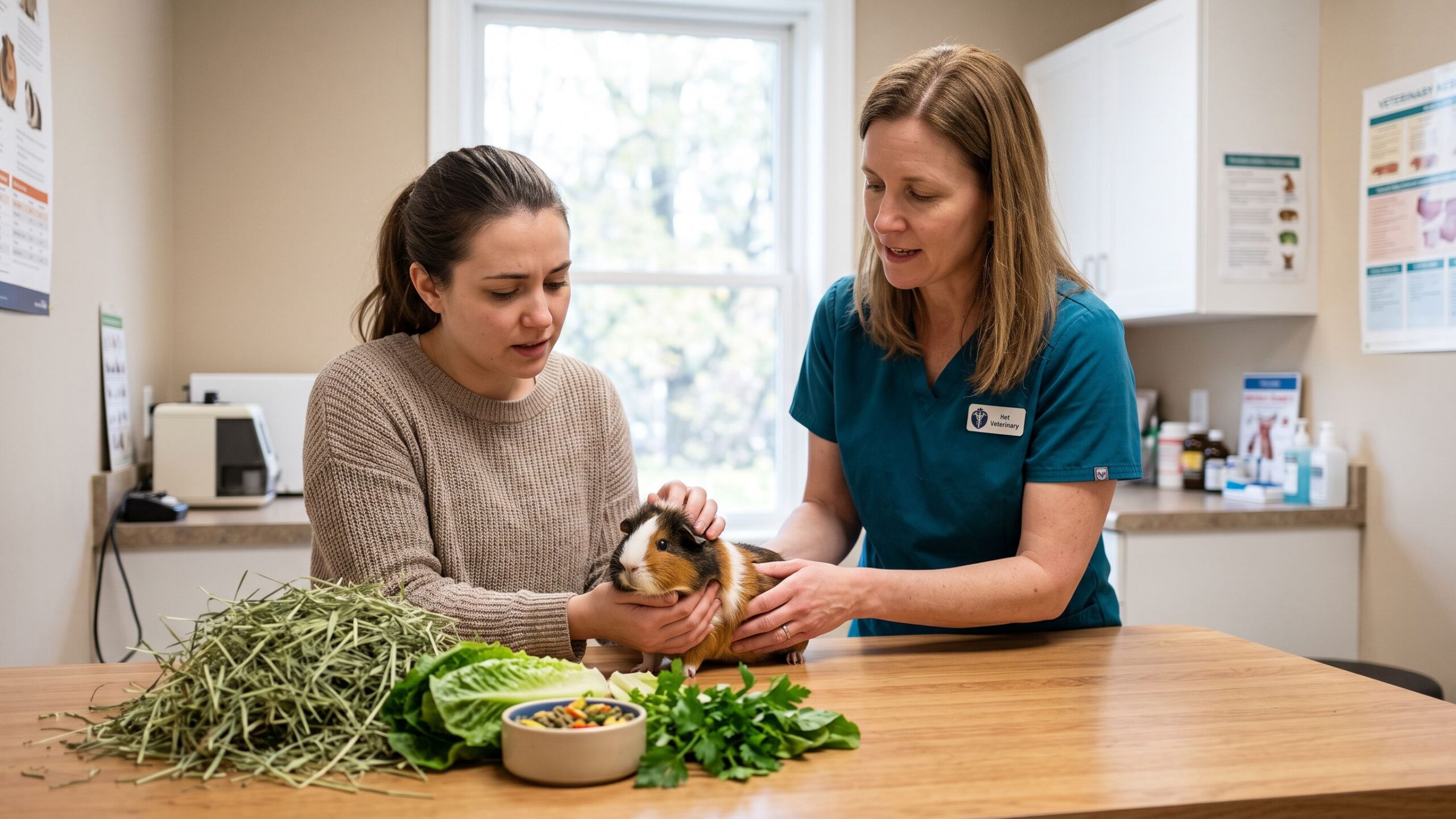
Owners frequently hear about syringe feeding when researching guinea pig appetite loss. Veterinarians do sometimes recommend assisted feeding with an appropriate recovery formula when a guinea pig cannot consume enough food independently. However, the reason the guinea pig stopped eating matters. Simply putting food into the digestive system does not diagnose or correct dental disease, severe pain, urinary obstruction, respiratory distress, gastrointestinal obstruction, or another underlying medical problem. In some situations, the veterinarian may want to evaluate the guinea pig before recommending a specific feeding strategy. Owners should therefore contact an experienced veterinarian for instructions rather than assuming syringe feeding is appropriate in every situation. If assisted feeding is recommended, the veterinarian can explain the correct formula, amount, frequency, and technique for the individual guinea pig.
Avoid Giving Random Medications at Home
Never give your guinea pig leftover antibiotics, human pain relievers, or medication prescribed for another pet unless a veterinarian specifically directs you to do so. Guinea pigs have important species-specific medication considerations, and certain antibiotics can severely disrupt their gastrointestinal bacterial population. Medication doses also depend on body weight, health status, diagnosis, and other factors. Trying to treat appetite loss without identifying its cause can delay appropriate care and potentially make the situation worse. Veterinary treatment may involve pain management, fluids, assisted nutrition, dental treatment, diagnostic imaging, medication, or another intervention depending on the underlying condition.
What a Veterinarian May Check
When evaluating a guinea pig that is not eating, a veterinarian will usually want to know when appetite changed, what the guinea pig normally eats, whether droppings have changed, whether weight has been lost, and whether other symptoms are present. The physical examination may include assessing hydration, body condition, abdomen, breathing, heart, mouth, teeth, and other systems. Depending on the suspected cause, additional diagnostic testing may be recommended. Dental problems involving the back teeth may require a more detailed oral examination and sometimes diagnostic imaging. Urinary symptoms may lead to urine testing or imaging, while suspected systemic illness may require bloodwork or other diagnostics. The purpose is not simply to make the guinea pig eat again but to determine why normal eating stopped.
How to Encourage Healthy Eating Before Problems Begin
Prevention starts with a diet designed for guinea pig physiology. Unlimited appropriate grass hay should generally form the foundation of an adult guinea pig’s diet because fiber supports digestion and chewing helps maintain dental wear. Appropriate portions of guinea pig-specific pellets and fresh vegetables provide additional nutrition, including dietary vitamin C. Fresh water should always be available. Avoid making abrupt dietary changes whenever possible, and introduce new foods gradually. Just as importantly, observe your guinea pig while it is healthy. Learn how enthusiastically it eats, which foods it prefers, how much hay disappears, what its normal droppings look like, and what it normally weighs. Establishing this baseline makes subtle appetite changes much easier to detect.
When Should You See a Vet?
Because guinea pigs can deteriorate rapidly when seriously ill, significant appetite loss should be taken seriously rather than watched for days. Contact a veterinarian experienced with guinea pigs when your pet stops eating, eats substantially less than normal, or develops appetite changes alongside weight loss, reduced droppings, diarrhea, drooling, pain, urinary problems, breathing changes, abdominal swelling, weakness, or unusual behavior. Severe breathing difficulty, collapse, inability to urinate, profound weakness, or other rapidly worsening symptoms require urgent veterinary attention. It is helpful to locate a veterinarian who treats guinea pigs before an emergency happens because not every general veterinary practice routinely treats exotic companion mammals.
Your Guinea Pig’s Appetite Is an Important Health Signal
For a healthy guinea pig, eating is much more than something that happens at breakfast and dinner. Hay chewing, vegetable excitement, pellet crunching, and food-related squeaking are woven throughout the animal’s daily routine. That makes appetite one of the clearest windows owners have into their guinea pig’s overall well-being. When a guinea pig stops eating, the cause may involve its teeth, digestive system, urinary tract, respiratory system, diet, environment, stress level, nutritional status, or another source of pain or illness. The underlying problem cannot always be identified at home, and waiting for additional symptoms can be risky when appetite loss is substantial. Know your guinea pig’s normal eating habits, monitor body weight and droppings, pay attention to changes in chewing behavior, and take persistent or significant food refusal seriously. Sometimes the smallest clue is an untouched pile of hay or a favorite vegetable left sitting in the bowl. For an attentive guinea pig owner, that small change can be the signal that leads to earlier veterinary care and a better opportunity to help a beloved pet recover.
Pet Product Reviews
Explore Duffy Street’s Pet Product Reviews! Sniff out the top-rated toys, treats, gear, and gadgets for your pets with our fun, easy-to-read comparisons. We’ve done the digging so you can find the perfect products for your pet friends!